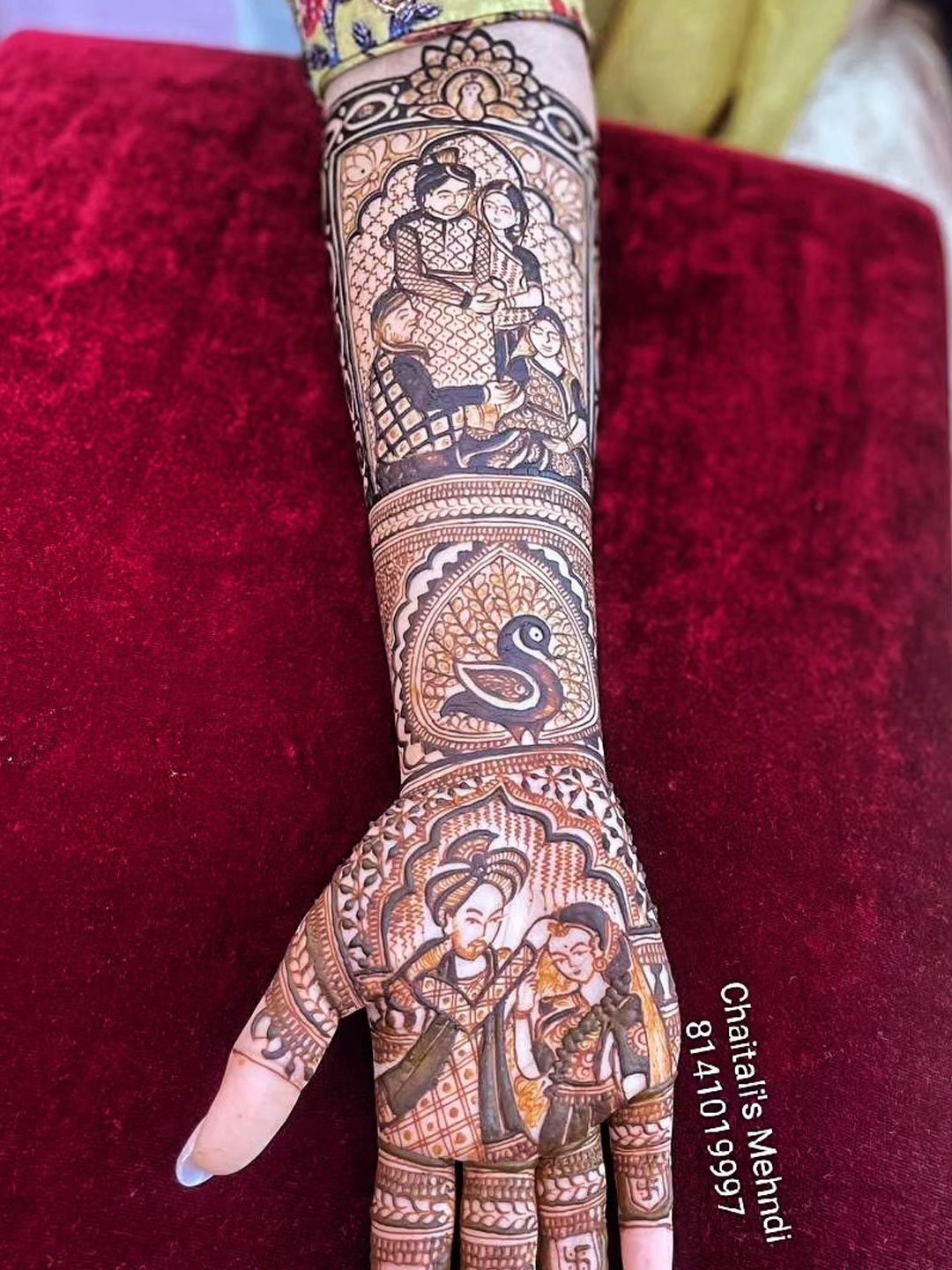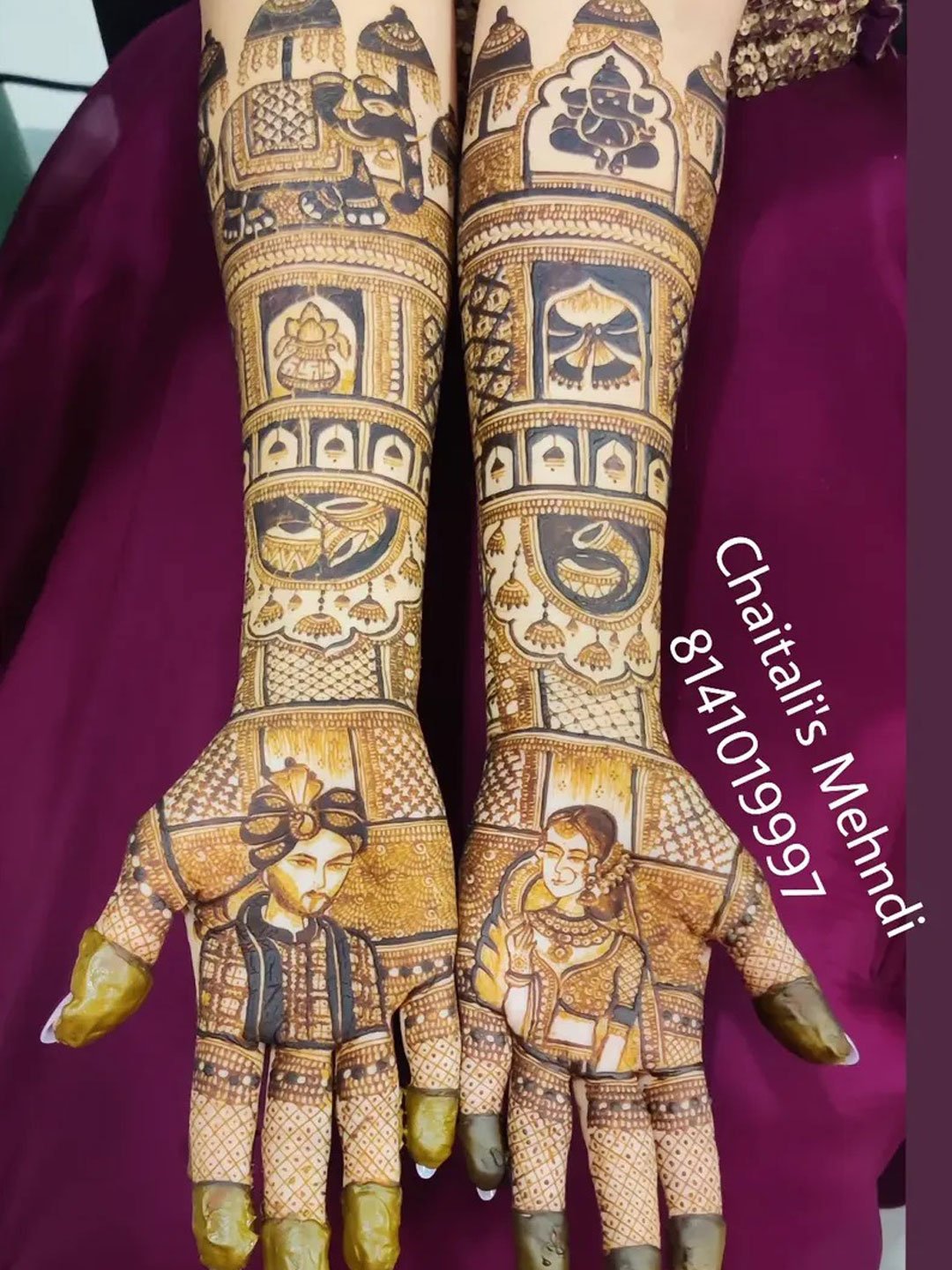
Choosing your bridal mehndi design is one of the most personal decisions of your wedding planning — right up there with your outfit and jewellery. It’s the one part of your bridal look that tells a story: your family’s traditions, your personality, and even little details about your relationship, all woven into intricate patterns across your hands and feet.
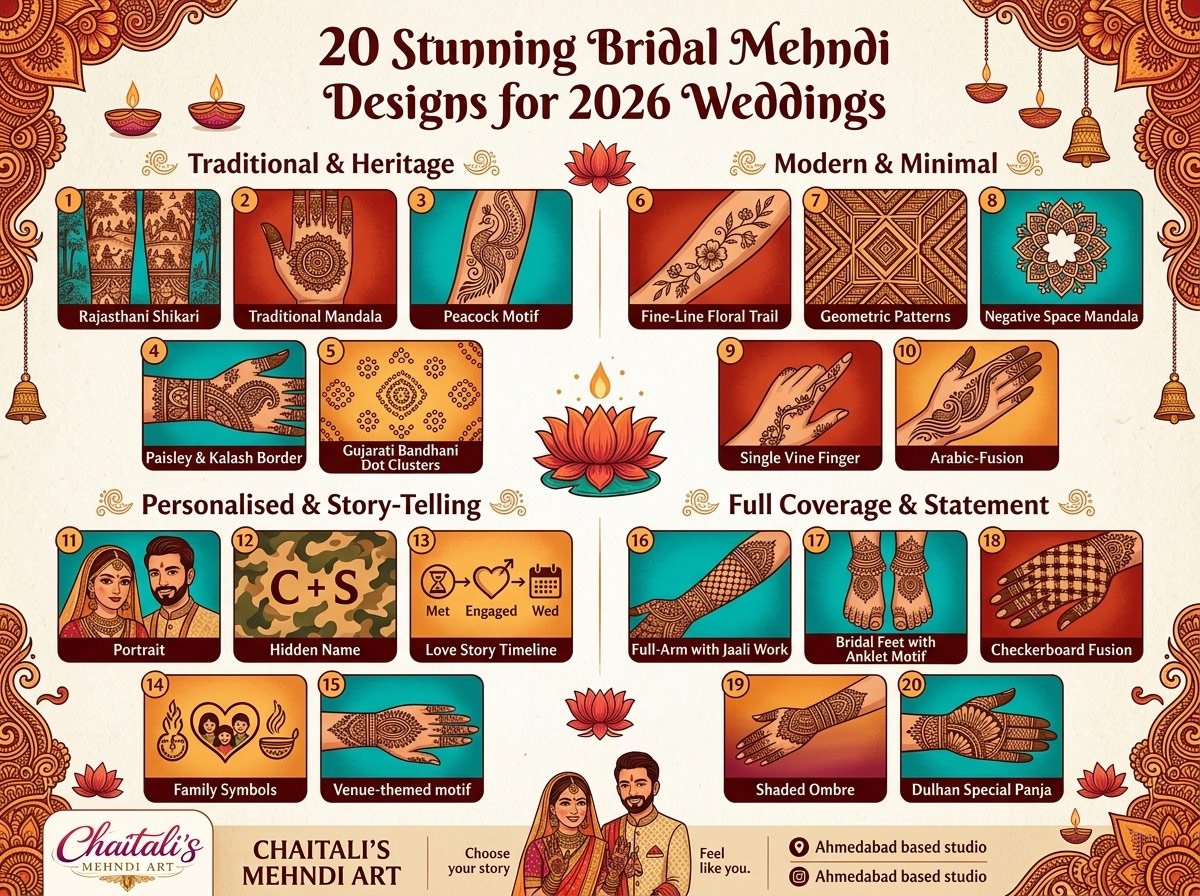
As 2026 weddings roll in, mehndi design trends are leaning into a mix of timeless traditional patterns and cleaner, more personalised modern styles. Whether you want a heavy, elaborate design that covers your arms and legs, or a minimal, elegant pattern that photographs beautifully in close-up shots, here are 20 bridal mehndi design ideas worth considering for your big day.
Traditional and Heritage-Inspired Designs
1. Rajasthani Shikari Mehndi
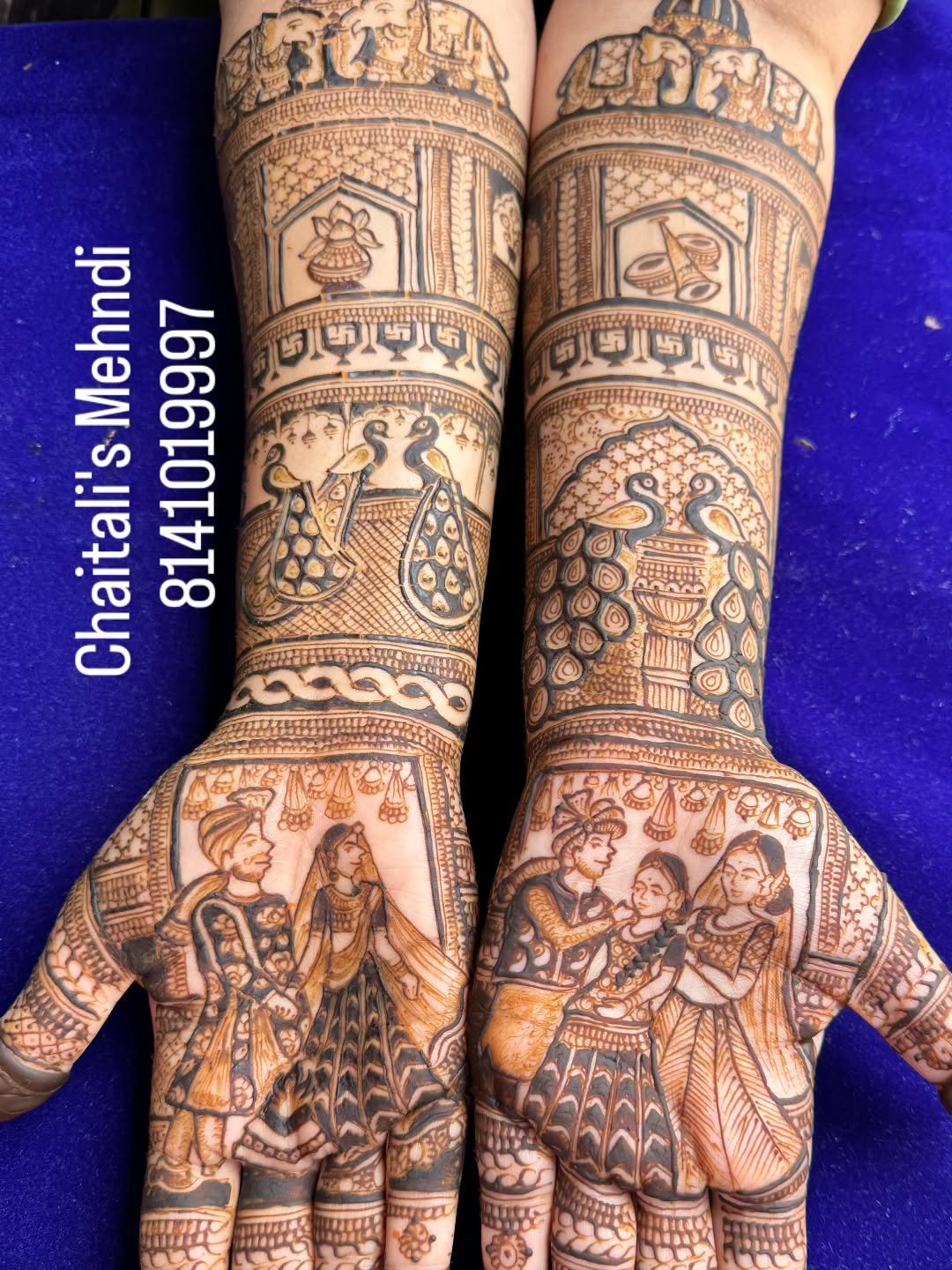
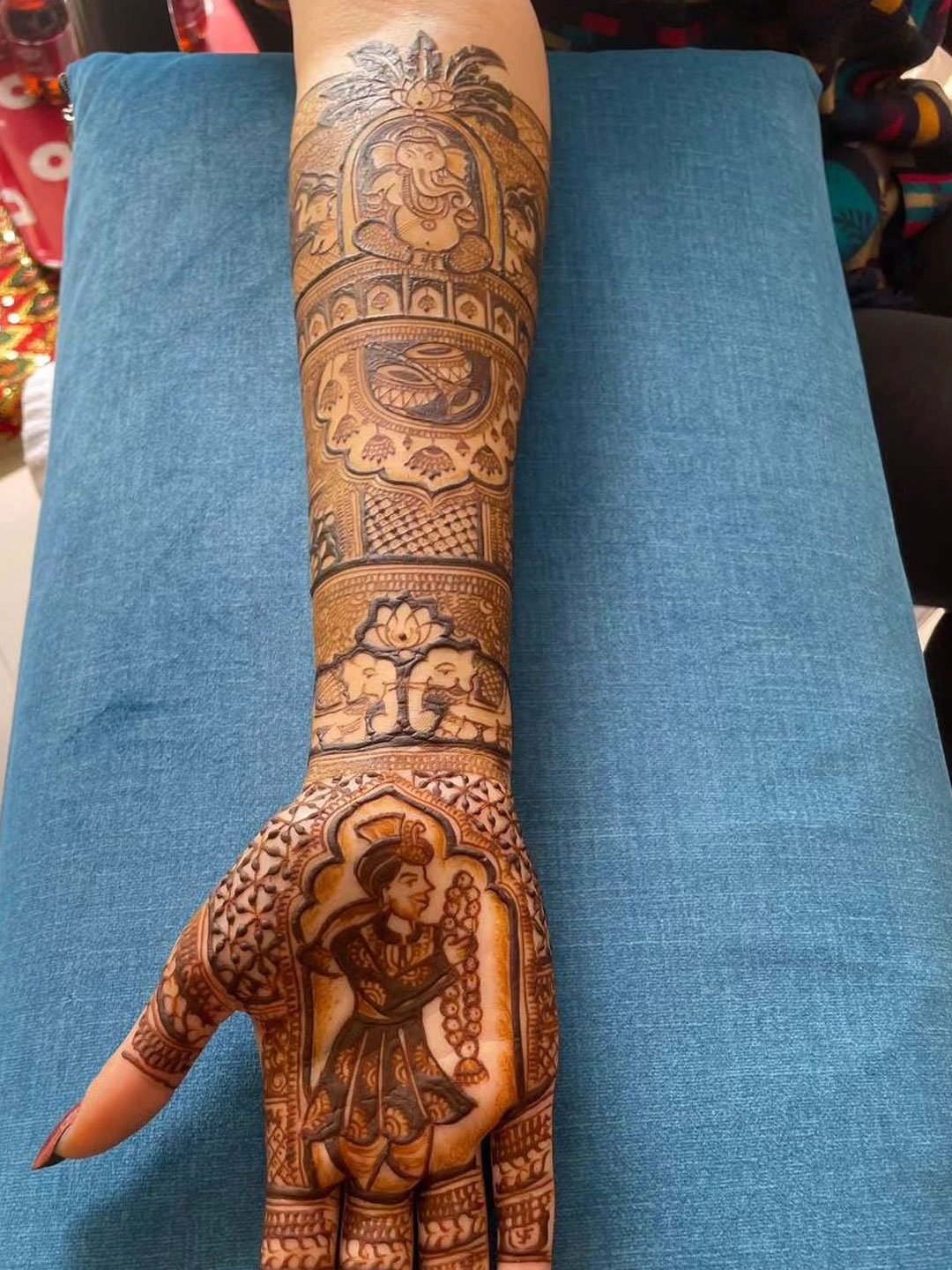
A regal, storytelling design featuring hunting scenes, royal figures, elephants, and peacocks woven into intricate patterns. This style is dense, detailed, and takes real skill to execute — perfect for brides who want a design that feels like a piece of heritage art on their hands.
2. Traditional Mandala Palm Design
A large, symmetrical mandala centred in the palm, surrounded by fine lace-like borders extending up the fingers and wrist. This is a classic that never really goes out of style, and works beautifully whether you want a full-arm design or just palm coverage.
3. Peacock Motif Bridal Mehndi
The peacock remains one of the most popular bridal motifs, symbolising grace and beauty. In 2026, expect to see peacocks rendered with finer, more delicate linework rather than bold, chunky outlines — giving the design a more refined, contemporary edge while keeping the traditional symbolism.
4. Paisley and Kalash Border Design
Rows of paisley (kairi) patterns combined with kalash (sacred pot) motifs along the wrist and ankle, symbolising prosperity and auspicious beginnings. This design works especially well for brides who want a strong traditional element without covering the entire hand.
5. Gujarati Bandhani-Inspired Mehndi
Drawing from Gujarat’s iconic Bandhani textile patterns, this design uses small dot clusters arranged into larger geometric shapes — diamonds, florals, and grids. It’s a beautiful nod to local heritage, especially fitting for Ahmedabad brides who want their mehndi to reflect Gujarati roots.
Modern and Minimalist Designs
6. Fine-Line Floral Trail
A single, delicate vine of flowers trailing from the fingertips to the wrist, with plenty of negative space left bare. This minimalist approach has grown significantly in popularity, especially among brides who want their mehndi to complement rather than overwhelm their bridal jewellery.
7. Geometric Bridal Mehndi
Clean lines, symmetrical shapes, and structured patterns replace the dense floral fills of traditional designs. This style suits brides with a more contemporary aesthetic overall — think minimalist decor, sleek outfits, and a modern wedding theme.
8. Negative Space Mandala
Instead of a fully filled mandala, this design uses outlines and selective shading to create a mandala effect while leaving significant bare skin visible. It’s striking in photographs and offers a fresher, lighter alternative to fully dense bridal patterns.
9. Single Vine Finger Design
A simple, elegant vine that winds around just the fingers, leaving the palm mostly bare. This is popular among brides who want a subtle mehndi look for smaller functions, or as a complement to a heavier design on the other hand.
10. Arabic-Fusion Bridal Mehndi
Combining bold Arabic floral strokes with fine Indian detailing, this fusion style creates a striking contrast between bold, sweeping lines and delicate fill work. It’s a strong choice for brides who want their design to stand out in photos from a distance, not just up close.
Personalised and Story-Telling Designs
11. Portrait Mehndi
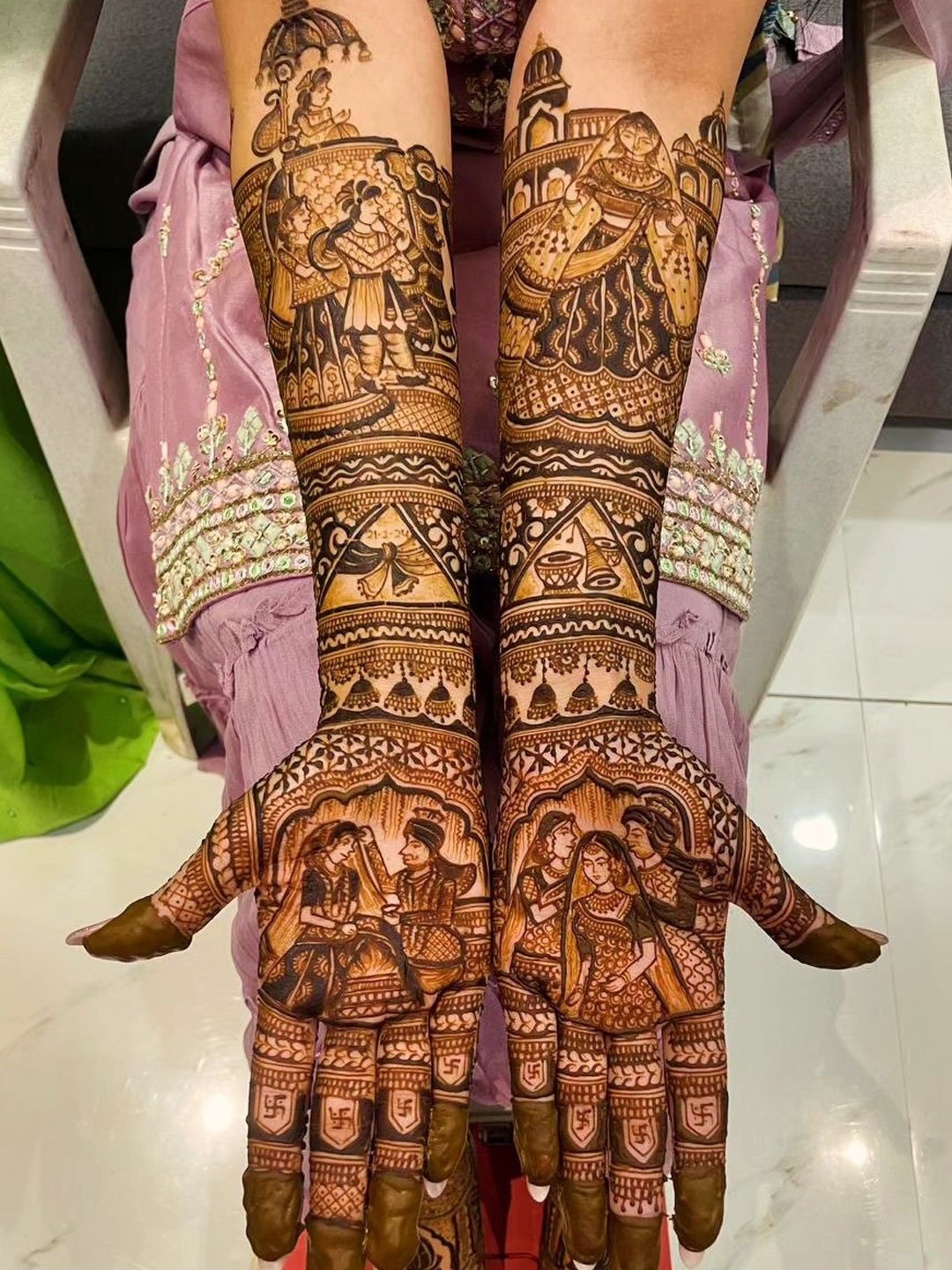
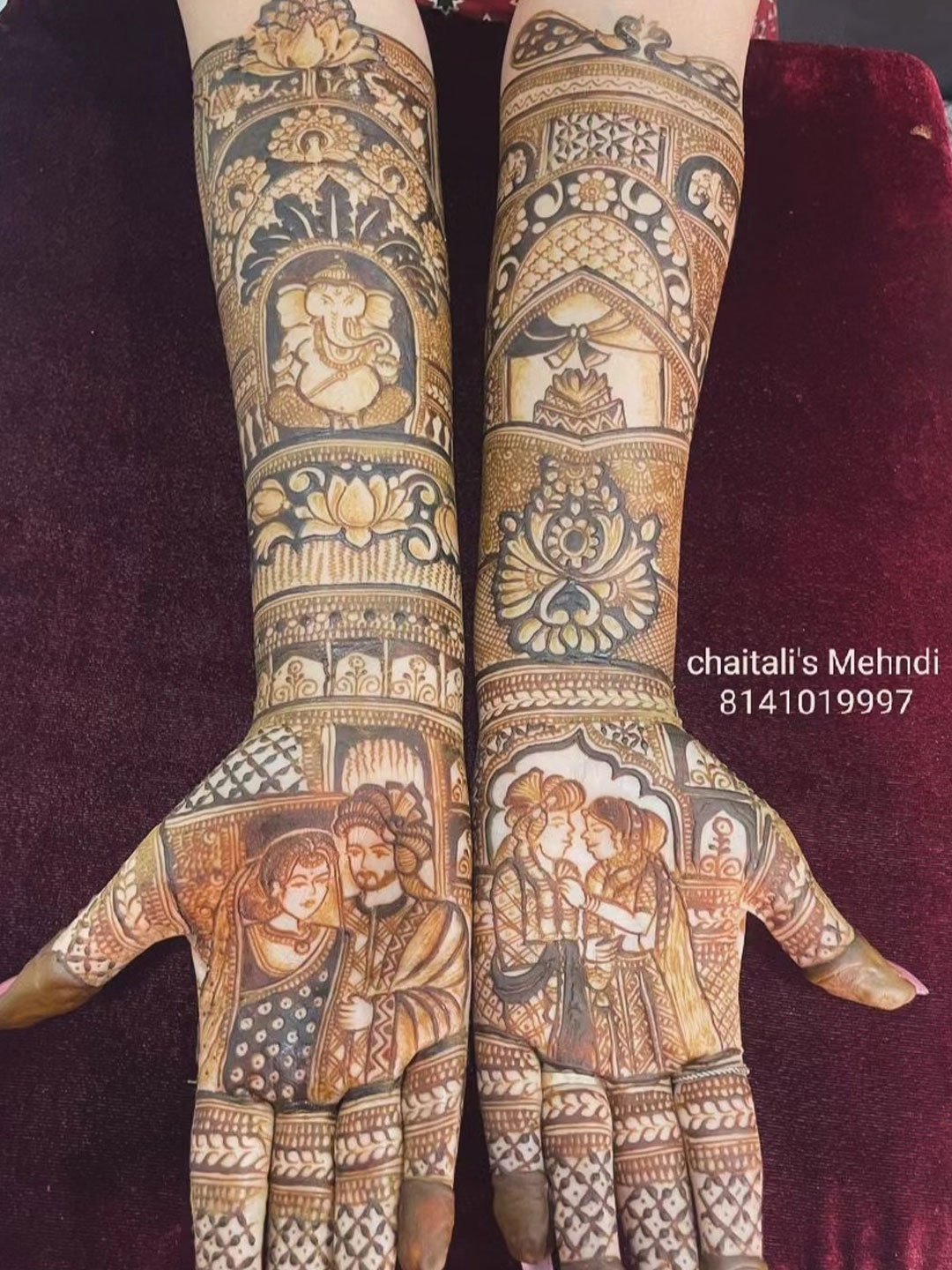
One of the most requested styles in recent years — a detailed portrait of the couple, often hidden within the palm design, revealed as a focal point once you know where to look. This works beautifully as a keepsake element, something the bride can point to years later in her wedding album.
12. Hidden Name Mehndi
A classic wedding tradition, updated for 2026: the groom’s name (or initials) worked subtly into the palm design, sometimes camouflaged within a floral or paisley motif rather than written boldly. It keeps the traditional “find the name” game alive while looking more artistic and less literal.
13. Love Story Timeline Mehndi
A design that maps out the couple’s journey — the date they met, their engagement date, and their wedding date — worked into small symbolic elements across the palm and wrist. This design requires a detailed consultation with your mehndi artist beforehand to plan out the story accurately.
14. Family Symbol Integration
Some brides choose to incorporate small family symbols, religious motifs, or elements representing their hometown or family traditions into their design. It’s a meaningful way to carry a piece of home into married life.
15. Wedding Venue or Motif-Themed Mehndi
For destination or theme weddings, some brides are incorporating subtle elements related to their venue or wedding theme — a small motif representing the location, or florals matching their wedding decor — into their bridal mehndi.
Full Coverage and Statement Designs
16. Full-Arm Bridal Mehndi with Jaali Work
Dense, net-like jaali (lattice) patterns combined with floral fills, extending from the fingertips all the way to the elbow. This is the go-to choice for brides who want a truly show-stopping, elaborate design that photographs dramatically in full-hand shots.
17. Bridal Feet Mehndi with Anklet Motif
Detailed feet designs that mimic the look of an intricate anklet, combined with smaller floral patterns extending up to the ankle. Feet mehndi is often overlooked in planning but makes a big visual impact, especially in traditional wedding photography where the bride’s feet are prominently featured.
18. Checkerboard and Floral Fusion
A structured checkerboard pattern combined with softer floral fill in alternating sections, creating a striking contrast between geometric precision and organic detailing. This design has been gaining popularity for brides who want something visually bold but still rooted in traditional techniques.
19. Shaded Ombre Mehndi
Using varying cone pressure and layering techniques to create a gradient, shaded effect within larger design elements — like a mandala or floral centrepiece that fades from dense to light. This technique requires a genuinely skilled artist, since shading is far more difficult to execute evenly than standard line work.
20. Dulhan Special Panja Design
A design centred around the fingers and back of the hand, radiating outward in a fan-like (panja) pattern rather than starting from the palm. This is a striking, distinctive choice for brides who want their mehndi to look different from the typical palm-centred layouts.
How to Choose the Right Design for You
With so many options, here’s how to narrow it down for your own wedding:
- Think about your outfit first. A heavily embellished, high-neck blouse with full sleeves might call for a simpler mehndi design, while a sleeveless or minimal outfit gives you more room for an elaborate full-arm pattern.
- Consider your wedding timeline. A dense, full-coverage design with jaali work and shading takes significantly longer to apply than a fine-line minimalist pattern — factor this into your mehndi ceremony schedule.
- Decide how personal you want it to be. If you want hidden names, portraits, or a love story woven in, plan for a proper design consultation with your artist well before the wedding day.
- Match it to your overall wedding theme. Traditional weddings often suit heritage-inspired heavy designs, while contemporary or destination weddings tend to pair better with minimalist or fusion styles.
- Talk to your artist about your skin type and stain preferences. Some designs rely heavily on fine detailing that needs a longer, more careful application for the stain to come out evenly dark.
Frequently Asked Questions
Which bridal mehndi design is trending for 2026? Fine-line minimalist designs and portrait mehndi are seeing a significant rise in popularity, alongside traditional heavy designs that remain a staple for larger, traditional weddings.
How do I decide between a full-arm design and a minimalist one? It largely comes down to your outfit, your wedding style, and how much time you have for your mehndi ceremony. Full-arm designs typically take longer to apply and work best for brides who want a dramatic, elaborate look.
Can I combine two design styles, like traditional and modern? Yes, fusion designs are increasingly popular — combining traditional motifs like paisleys or peacocks with modern minimalist spacing and fine-line detailing.
How far in advance should I finalise my mehndi design? Ideally, discuss your design preferences with your artist at least a few weeks before the wedding, especially if you want personalised elements like hidden names or portraits, since these require careful planning.
Do heavier designs take longer to apply? Yes. Full-coverage designs with jaali work, shading, or dense floral fills can take anywhere from 4 to 6 hours, while simpler or minimalist patterns can often be completed in 1 to 3 hours.
Final Thoughts
Your bridal mehndi is more than just a beauty ritual — it’s a piece of art that captures a moment in your life, one you’ll look back on in photographs for years to come. Whether you lean towards a heavily detailed traditional design or a clean, modern minimalist look, the most important thing is choosing a design that genuinely feels like you.
If you’re planning your 2026 wedding and want a design created specifically around your story, outfit, and vision, Chaitali’s Mehndi Art offers personalised bridal mehndi consultations, portrait mehndi, and engagement mehndi services across Ahmedabad. Get in touch to start planning your design.