

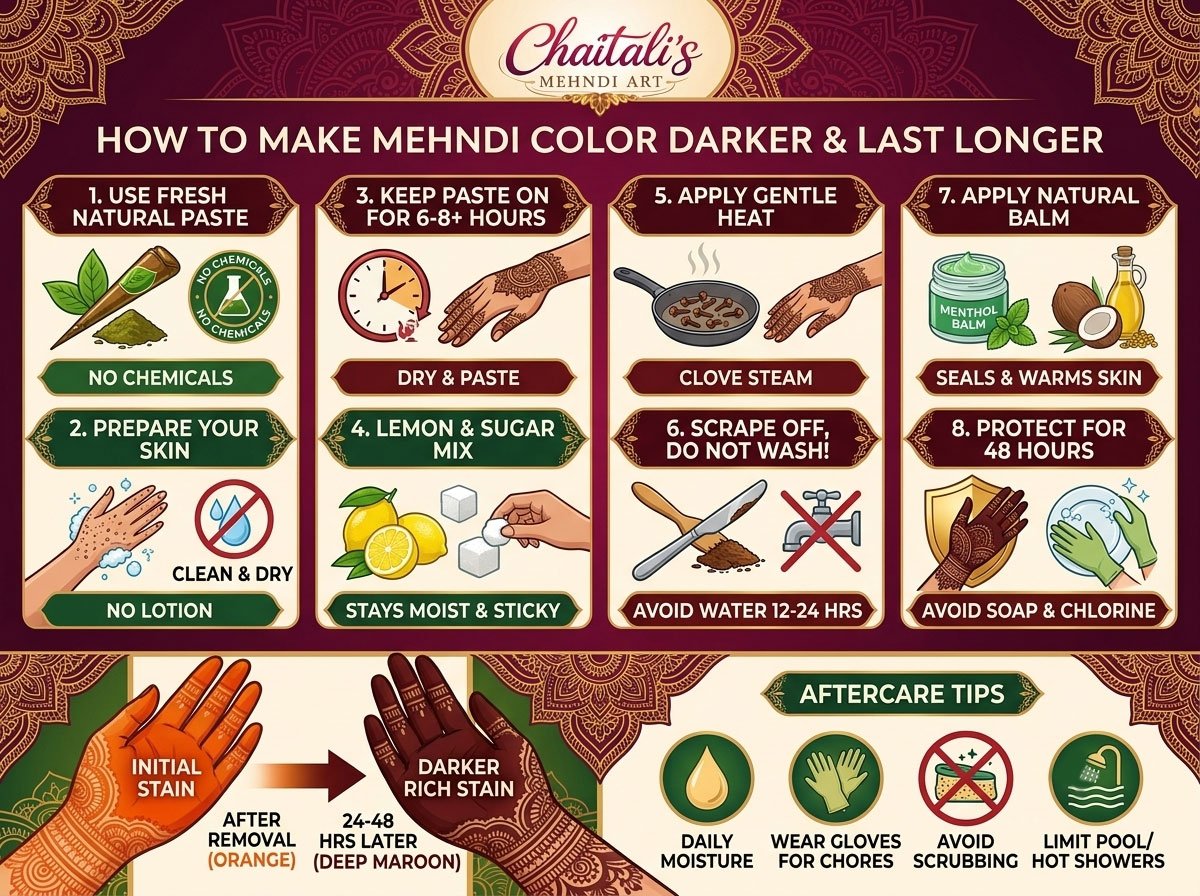
Introduction
Every bride dreams of a deep, rich mehndi stain, the kind that glows a dark maroon-brown in wedding photos. There is also an old belief that the darker the colour, the more the husband will love her. Whatever you believe, nobody wants a pale, orange mehndi after hours of sitting for a design.
The good news is that mehndi colour is not just luck. It depends on the quality of the paste, how well your skin is prepared, how long you leave the paste on, and what you do in the 48 hours after removing it. Get these right, and even a lighter-skinned bride or a first-time mehndi wearer can get a stain that lasts one to three weeks.
At Chaitali’s Mehndi Art, we have applied mehndi for hundreds of brides, so we know what works. This guide covers every step, from preparation to aftercare, so your colour turns out as dark as possible.
How Mehndi Colour Actually Develops
Understanding the science helps you follow the tips with confidence.
Henna powder comes from the leaves of the Lawsonia inermis plant. These leaves contain a dye molecule called lawsone. When the paste sits on your skin, lawsone slowly seeps into the top layer (the keratin in the outer skin) and binds to it.
Three things follow from this:
- The longer the paste stays on, the more lawsone transfers. Rushing this step gives a lighter stain.
- The stain darkens after removal. Fresh mehndi looks orange. Over 24 to 48 hours, oxidation turns it deep reddish-brown.
- Skin thickness matters. Palms and soles have thicker skin, so they take the darkest stain. Arms, thin skin and the back of the hands come out lighter.
Step 1: Start With Fresh, High-Quality Mehndi Paste
The most important factor in a dark stain is the paste. No amount of aftercare can fix poor-quality henna.
What to look for:
- Fresh paste. Henna loses its dye release over time. Paste made within 24 to 48 hours is ideal.
- Natural ingredients only. Good paste contains henna powder, lemon juice, sugar, and essential oils such as eucalyptus, tea tree or lavender. These oils help release the dye.
- A fine, sifted powder. Coarse powder gives patchy colour and blocks the cone.
- A deep green or olive colour. Brown or black paste often means old henna or added chemicals.
A serious safety warning: Avoid “black henna” and any cone that promises a jet-black stain in minutes. These often contain PPD (para-phenylenediamine), a hair-dye chemical that can cause burns, blisters, allergic reactions and permanent scarring. Natural henna never stains black. A genuine stain is orange at first and then darkens to brown or deep maroon.
This is why we mix our own fresh paste for every booking. You can read more about our process on our bridal mehndi services page.
Step 2: Prepare Your Skin Before Application
Good skin prep can make the difference between a mediocre and a stunning stain. This is the step most people skip.
Do this the day before:
- Exfoliate gently. Use a mild scrub on your hands and feet to remove dead skin, so lawsone reaches fresh skin.
- Wash with plain soap and water right before your session to remove oil and dirt.
- Remove nail polish. Henna cannot stain through polish.
- Do not apply lotion, oil or cream on the day of mehndi. Oil forms a barrier that stops the dye from absorbing.
- Skip waxing or threading on the same day. Do it at least 24 hours earlier to avoid irritation.
For a full routine, see our detailed guide: How to Prepare Your Skin Before a Bridal Mehndi Session.
Step 3: Keep the Paste On for as Long as Possible
Patience gives the biggest return. If you remember only one tip from this post, make it this one.
- Leave the paste on for a minimum of 6 to 8 hours. Overnight is best.
- Don’t pick it off as soon as it feels dry. Dry paste still releases dye.
- Keep the paste moist and in contact with your skin so it keeps transferring colour.
If you can’t sleep with mehndi on, wrap your hands loosely with tissue paper or medical tape. This holds the paste in place and prevents smudging while you rest. For brides applying mehndi the night before the ceremony, check our post on same-day mehndi booking in Ahmedabad to plan your timings.
Step 4: The Lemon-Sugar Trick (A Classic That Works)
This is the most trusted desi technique, and it works for a reason.
How to make the lemon-sugar solution:
- Mix 2 tablespoons of lemon juice with 1 tablespoon of sugar.
- Stir until the sugar dissolves into a sticky liquid.
How to apply:
- Once the paste is dry (usually after 2 to 3 hours), dab the mixture over the design with a cotton ball.
- Reapply every 30 to 45 minutes until you go to bed or remove the paste.
Why it works: The sugar keeps the paste sticky so it doesn’t crack and fall off. The lemon’s acidity keeps the skin slightly acidic, which helps the dye release.
Tip: Use fresh lemon juice only. Bottled juice is less effective.
Step 5: Add Gentle Heat (The Clove Steam Method)
Warmth opens the pores and helps skin absorb more lawsone. This is why the palms of people with warm hands often stain darker.
The clove steam method:
- Heat a pan on low flame.
- Add 6 to 8 cloves and warm them until they release a smoky aroma.
- Hold your mehndi-covered hands a safe distance above the steam. Don’t touch the pan.
- Stay there for a few minutes, with a safe gap between your skin and the heat.
Other safe ways to add warmth:
- Wrap your hands in a warm (not hot) cloth.
- Sit near a heater or warm room in winter.
- Wear cotton gloves or socks after wrapping.
Do not use boiling water, open flame near skin, or anything that risks a burn.
Step 6: Remove the Paste the Right Way
How you take off the mehndi matters as much as how long you leave it on.
- Scrape or flake it off. Use the back of a butter knife, a cotton ball or your fingers to gently peel off the dried paste.
- Do NOT wash with water. Water immediately cuts off the oxidation process and lightens the stain.
- Rub a little oil (mustard, coconut, olive or eucalyptus) over the design to remove leftover bits.
Avoid water for at least 12 hours after removal. Ideally keep it away for 24 hours. If you must wash your hands, apply a thick coat of balm or oil first to create a protective layer.
Step 7: Use a Natural Balm After Removal
A balm warms the skin and seals the stain. Two options work well:
- Vicks VapoRub or a similar menthol balm. Apply a thin layer over the design. The warming effect helps the colour deepen.
- Mustard oil, coconut oil or clove oil. These lock in moisture and darken the stain over the next day.
Apply a thin layer once or twice on the first day. Don’t overdo it. Too much oil can leave the skin greasy and lighten the stain over time.
Step 8: Protect the Stain for the First 48 Hours
The first two days after removal are when the colour peaks. After you scrape off the paste, the stain will look bright orange, and that is normal. It will go on to deepen to reddish-brown within 24 to 72 hours.
During this period:
- Keep your hands away from water as much as possible.
- Wear gloves while washing dishes or doing household work.
- Avoid harsh soaps, sanitiser, detergents and chlorine (swimming pools especially).
- Skip exfoliating scrubs on the area.
- Moisturise lightly with a natural oil to keep the skin from drying and peeling.
What Affects Mehndi Colour? Common Factors
Even with the best care, a few factors change how dark your stain turns out.
| Factor | Effect on Colour |
|---|---|
| Skin type and thickness | Thicker skin (palms, soles) stains darker |
| Body temperature | Warmer skin usually gives richer colour |
| Henna quality | Fresh, pure henna gives the best result |
| Time left on skin | Longer contact gives darker colour |
| Water contact | Early washing fades the stain |
| Health and hydration | Well-hydrated skin takes colour more evenly |
| Skin products | Oils, creams and sanitiser can weaken the stain |
How to Make Mehndi Last Longer (1 to 3 Weeks)
Getting a dark colour is the first goal. Making it last is the second. Here is how to extend the life of your design:
- Moisturise daily with a gentle, natural oil or lotion once the stain has fully developed.
- Avoid scrubbing your hands or feet. Exfoliation removes the outer skin layer where the dye sits.
- Use gloves for chores, especially washing utensils and clothes.
- Reduce chlorine exposure. Pools fade henna quickly.
- Limit hot showers on the area. Hot water speeds up fading.
- Pat dry, don’t rub after washing hands.
Realistic expectations: A good stain on the palms and feet may last two to three weeks. On the arms, expect about one to two weeks. Mehndi fades naturally as the skin sheds, so no method can make it permanent.
Common Mistakes That Make Mehndi Light and Short-Lived
Avoid these errors for a better stain:
- Washing the paste off with water too early
- Removing the paste after only 1 to 2 hours
- Applying lotion or oil before the session
- Using chemical or “instant” black cones
- Picking off dried paste too soon
- Skipping the lemon-sugar step
- Using old or expired henna
- Using sanitiser frequently in the first 2 days
Special Tips for Brides
A bridal design takes hours, and the stakes are high. A few extra points matter for your big day:
- Book your mehndi 1 to 2 days before the wedding or mehndi ceremony. This gives the stain time to reach its darkest shade, and the colour peaks around 24 to 48 hours after removal.
- Do a trial session. A trial shows how your skin takes the colour and helps you choose the design. Our post on pre-wedding shoot mehndi explains timing for photo sessions.
- Choose designs that suit your timeline. Dense, detailed patterns such as those in our Rajasthani bridal mehndi patterns post need more sitting time, so plan your day around it.
- Keep your hands protected during the wedding rituals. Be careful during the haldi and other ceremonies.
- Pick your artist carefully. An experienced artist who uses fresh, natural paste makes the biggest difference. Read why brides recommend us and the bridal mehndi FAQs that most Ahmedabad brides ask.
If you prefer a lighter, elegant design that still needs a rich stain, see Minimalist Bridal Mehndi for the Understated Bride. For bold patterns, explore Arabic Mehndi Designs for Brides.
For Festivals and Other Occasions
These colour tips work for every occasion, not only weddings. Whether you’re planning mehndi for Diwali, Karwa Chauth, Teej, Eid, an engagement or a sangeet, the same steps apply.
- Festive designs: Diwali Mehndi Designs for the Festive Season
- Pre-wedding events: Mehndi Designs for Engagement Ceremonies and Sangeet Night Mehndi Designs for the Bride
- Latest styles: Bridal Mehndi Trends to Watch in 2026 and 20 Stunning Bridal Mehndi Designs for 2026 Weddings
- Small ceremonies: Mehndi Artist for Court Marriage in Ahmedabad
Frequently Asked Questions
How can I make my mehndi darker naturally?
Use fresh, natural henna paste, keep it on for 6 to 8 hours or overnight, apply lemon-sugar solution, add gentle warmth, and avoid water for 12 to 24 hours after removal.
Does lemon and sugar really make mehndi darker?
Yes. The sugar keeps the paste moist and stuck to your skin, and the lemon’s acidity helps the dye release. This helps lawsone transfer for a longer time.
How long should I keep mehndi on for dark colour?
Aim for at least 6 to 8 hours. Overnight is best if you can manage it. The longer the paste stays on, the darker the stain.
Why is my mehndi colour light or orange?
Fresh mehndi always looks orange first. It darkens over 24 to 48 hours. If it stays pale, common causes are old paste, early removal, water contact or oily skin.
Does Vicks make mehndi darker?
Many people find that a thin layer of menthol balm after removing the paste helps the stain deepen, as the warming effect supports colour development. Results vary between people.
When does mehndi reach its darkest colour?
Usually 24 to 72 hours after you remove the paste.
How long does mehndi last?
Typically one to three weeks. Palms and soles last longest, and arms fade faster.
Is black henna safe?
No. Black henna often contains PPD, which can cause severe skin reactions. Always choose natural henna that stains orange-brown.
Can I swim or bathe after mehndi?
Avoid water for at least 12 to 24 hours after removal. After that, limit hot water and avoid chlorinated pools to keep the colour longer.
Can I get a dark stain with a same-day booking?
Yes, if you leave the paste on long enough and follow the aftercare. But booking 1 to 2 days before the event gives the colour time to peak.
Final Thoughts
A dark, long-lasting mehndi stain comes from a few smart habits: fresh natural paste, well-prepared skin, long contact time, the lemon-sugar trick, gentle warmth, and careful aftercare. Skip any of these, and the colour suffers. Follow them all, and you will have the deep, glowing stain every bride wants.
If you’d rather leave it to the experts, Chaitali’s Mehndi Art uses fresh, chemical-free henna paste and proven techniques to give you a rich, long-lasting colour for your wedding or special occasion.
Book Your Mehndi With Chaitali’s Mehndi Art
Planning a wedding, engagement, sangeet or festival in Ahmedabad? Get in touch for a design that looks stunning and stains beautifully.
👉 Visit Chaitali’s Mehndi Art
👉 Explore more mehndi tips on our blog