When it’s time to book mehndi for the wedding, most brides run into the same fork in the road: should you go with a dedicated bridal mehndi artist, or simply add mehndi to your salon’s pre-wedding package? On paper, both options promise the same end result — henna on your hands and feet before your wedding. In practice, the experience, the design quality, and even the stain you walk away with can be very different.
This guide breaks down exactly how a specialised bridal mehndi artist differs from salon mehndi services, so you can decide which one is right for your wedding day.
Why This Comparison Even Matters
Mehndi isn’t just a beauty add-on — for most Indian brides, it’s one of the most photographed and most emotionally significant parts of the wedding. Unlike a haircut or a facial, a mehndi design can’t be redone if you don’t like it. Once it’s on your hands, it’s on your hands for the ceremony, the photos, and the rest of the wedding season. That makes the “who should do it” decision worth more thought than it usually gets.
Salons are convenient because brides are often already there for skincare, hair, or makeup trials. A dedicated bridal mehndi artist, on the other hand, is a specialist who does nothing but mehndi — often exclusively bridal mehndi — day in and day out. That single difference in focus shapes almost everything else on this list.
Specialisation: A Core Skill vs an Add-On Service
At most salons, mehndi is one service among dozens — haircuts, facials, waxing, bridal makeup, saree draping, and mehndi are all offered under one roof. The artist applying your mehndi may be trained in it, but it’s rarely their primary craft, and it’s often assigned to whichever staff member is free that day rather than a specialist.
A bridal mehndi artist, by contrast, has built an entire career around henna application. Their training, practice hours, and portfolio are all concentrated in one skill. This shows up in the fine details — how clean the linework is, how consistent the fill patterns are, and how well the design is proportioned across your hands, wrist, and arm.
Design Depth and Personalisation
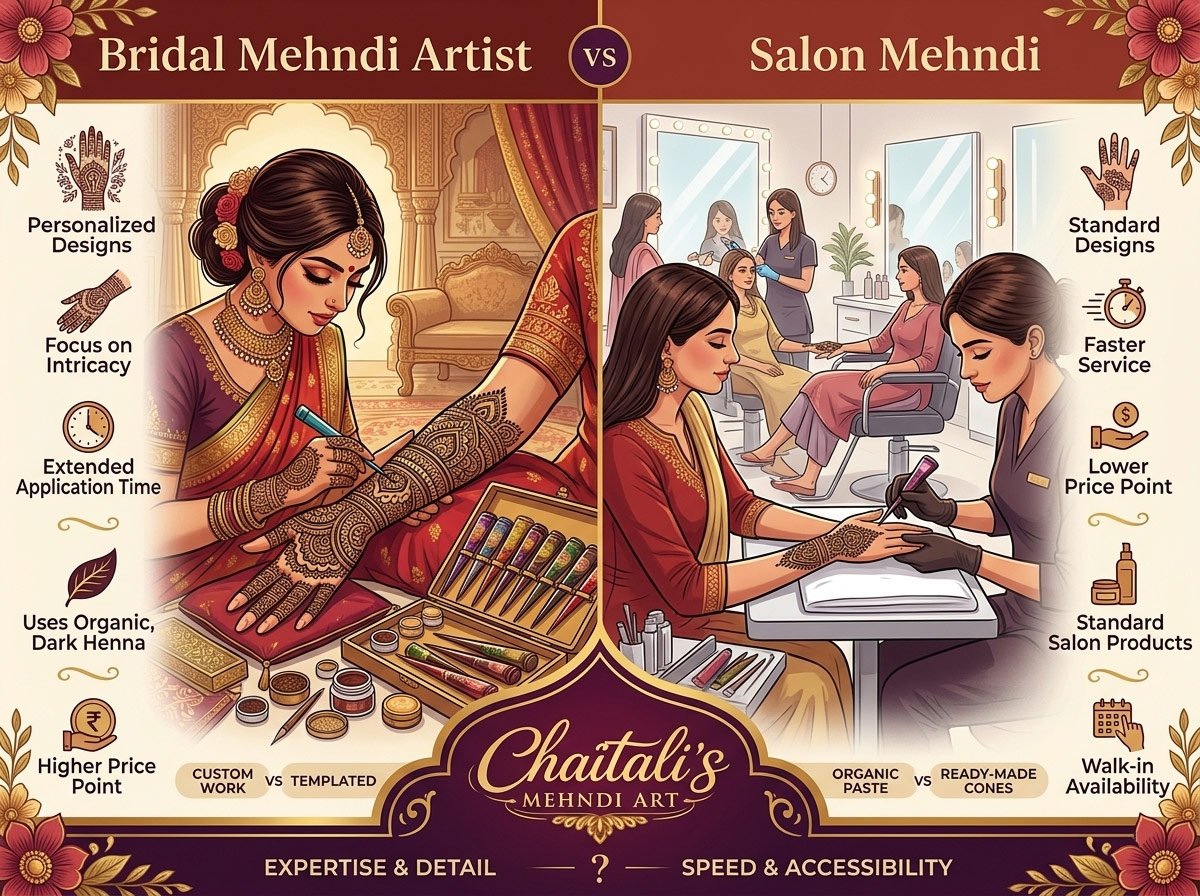
This is where the gap tends to be widest. Salon mehndi packages usually work from a limited set of standard patterns that get repeated across many brides — practical for a salon trying to serve high volumes of clients, but not built around your specific outfit, jewellery, or personal story.
A dedicated bridal mehndi artist typically starts with a proper design consultation before your wedding date. They’ll ask about your outfit colour and neckline, whether you want your partner’s initials or portrait worked in, how much coverage you want on your arms and feet, and what style — Rajasthani, Arabic, Indo-Arabic, or a fusion of these — matches your taste. The final design is built around you, not pulled from a repeat pattern book.
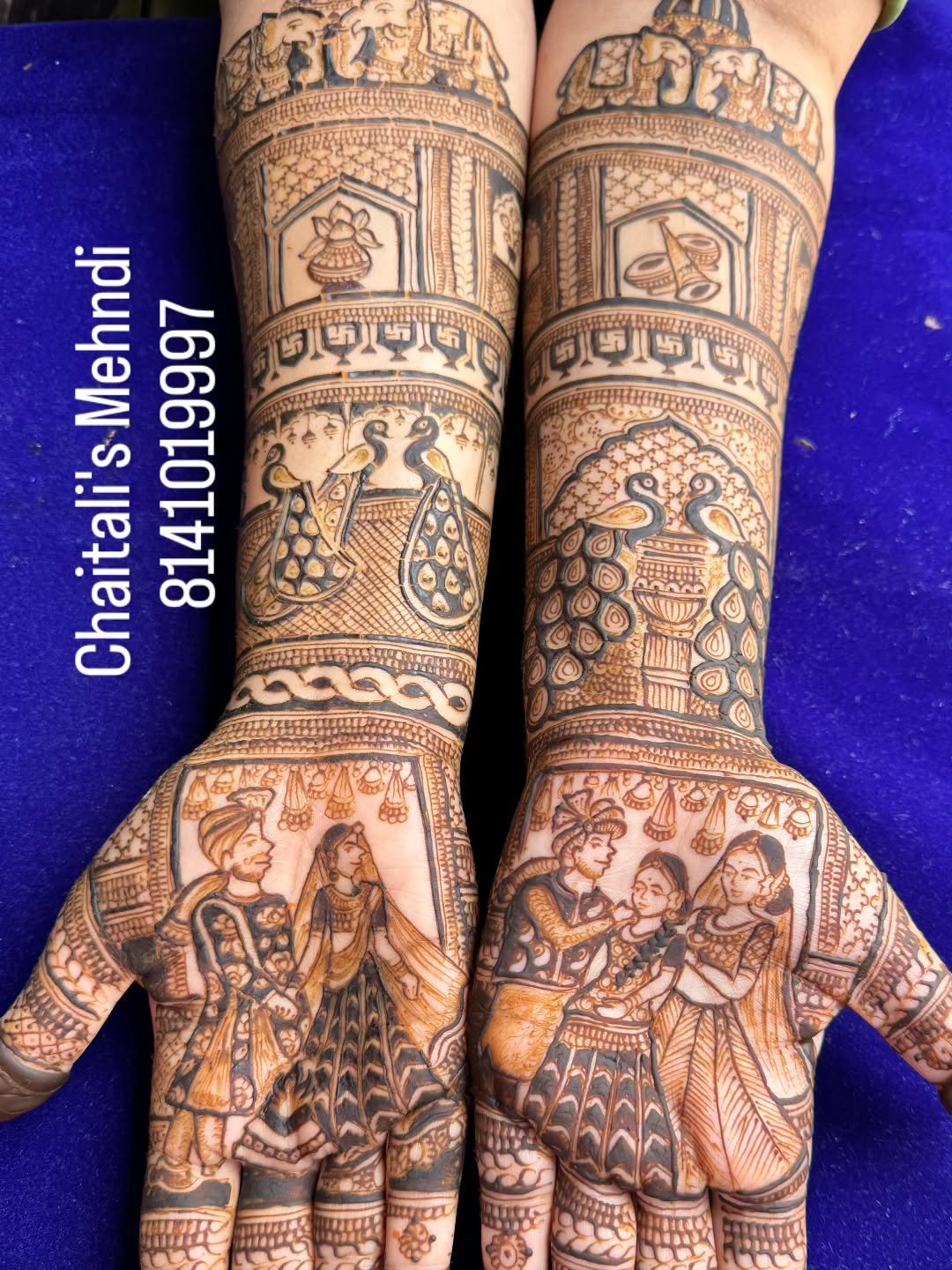
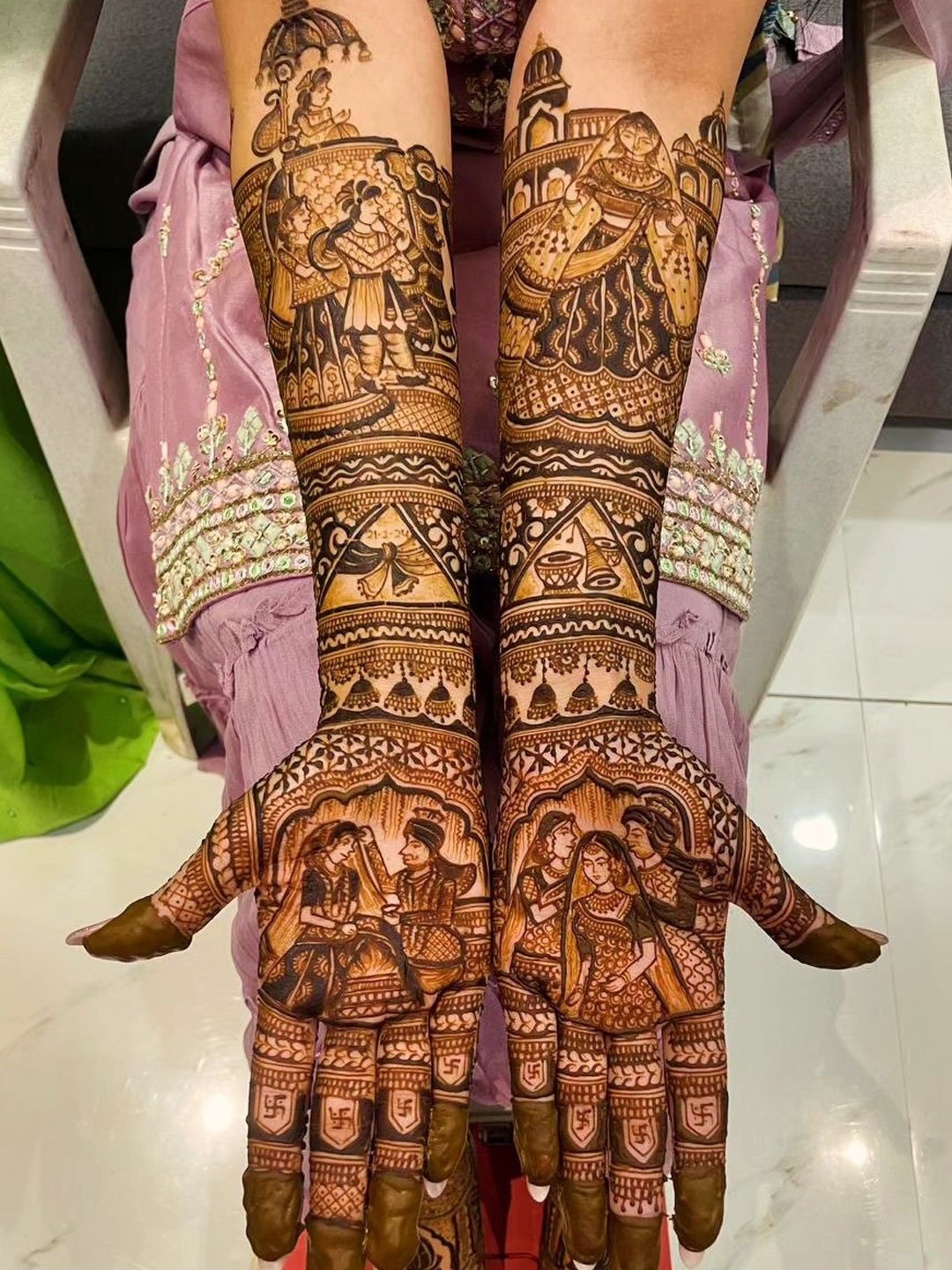
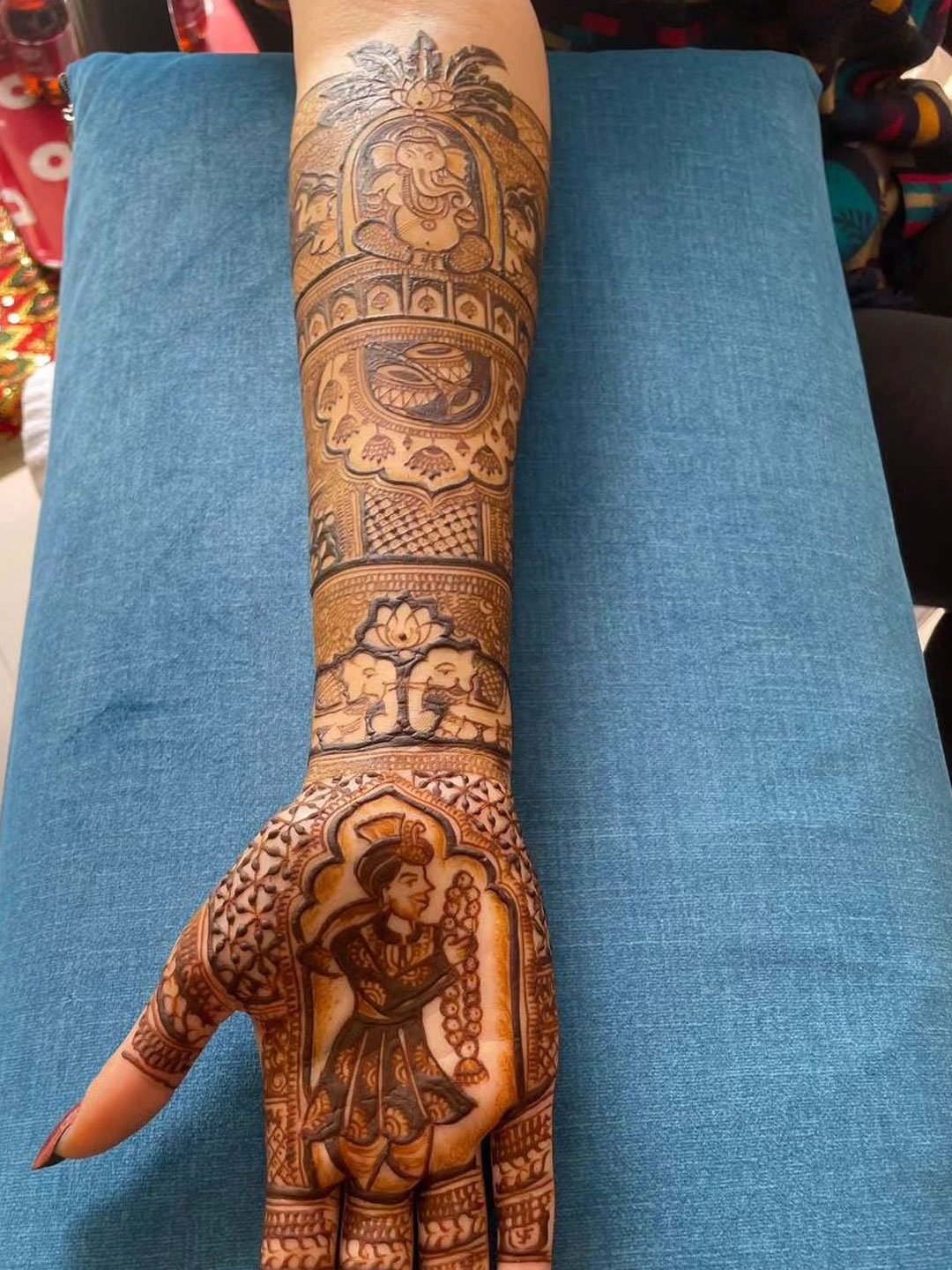
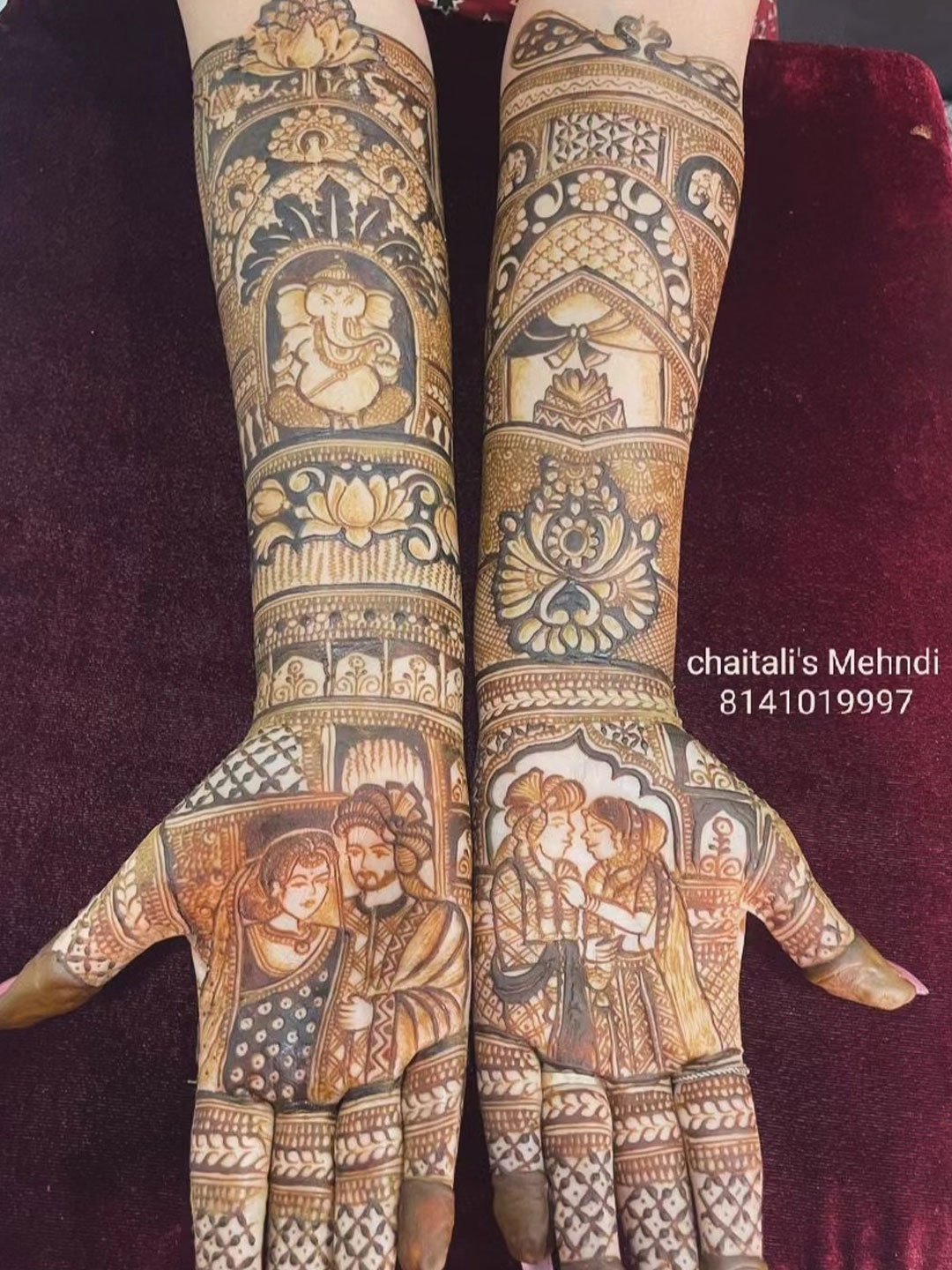
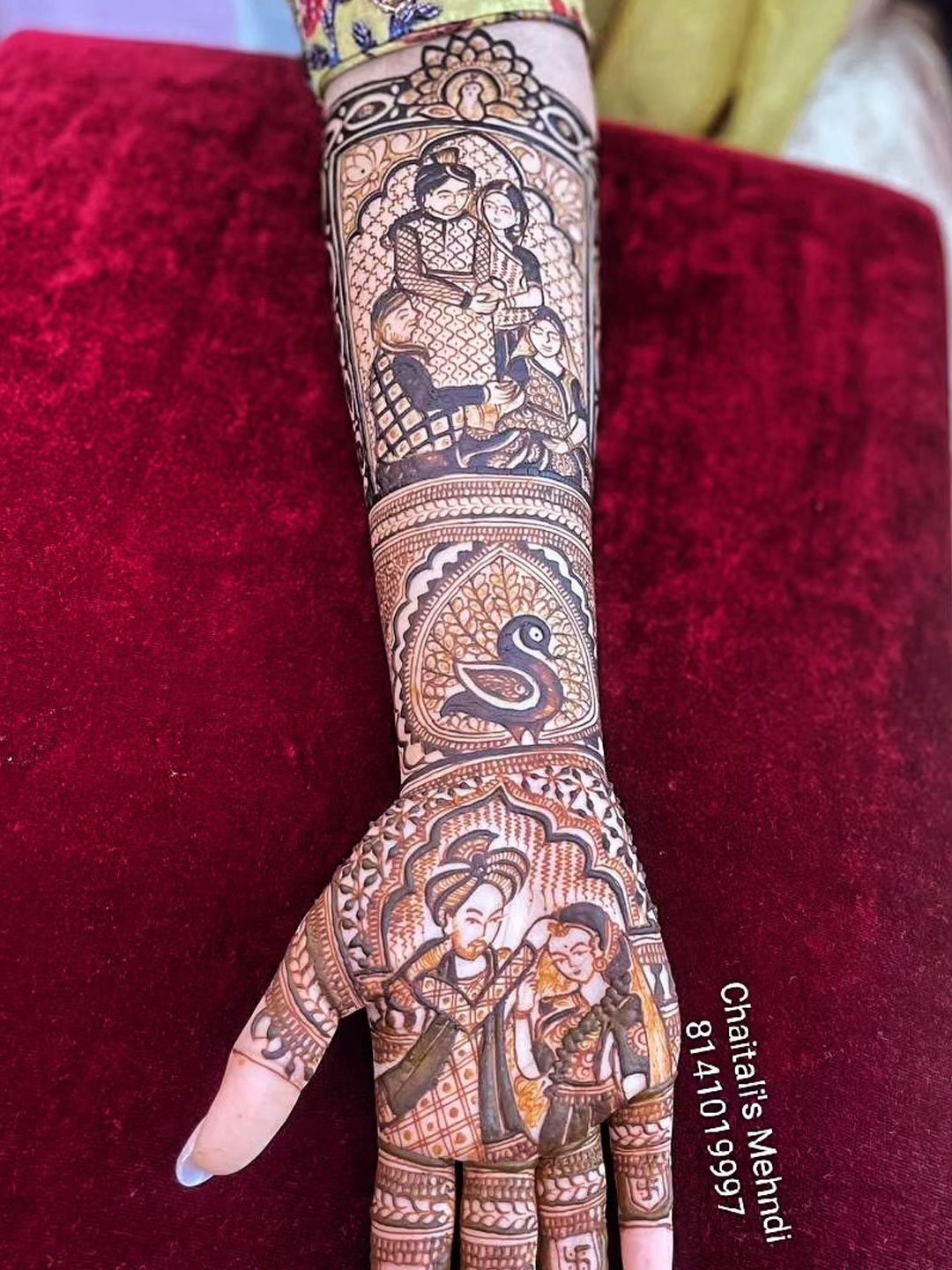
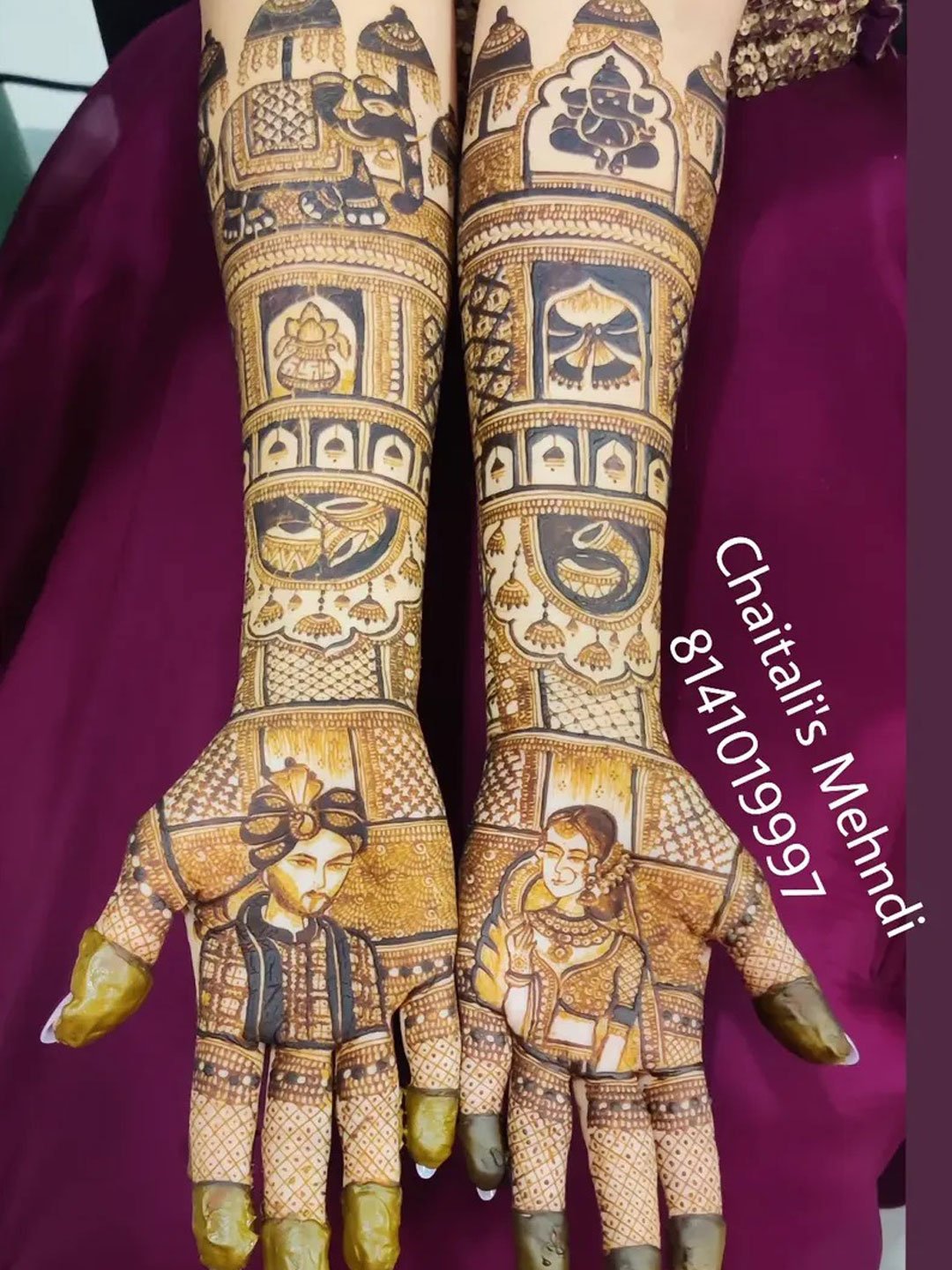
For brides who want something more elaborate — a portrait of the groom, a wedding scene with the varmala or pheras, or a fully custom motif incorporating family symbols — a specialist bridal artist is generally the only realistic option. This level of illustrative, freehand work requires years of dedicated practice that a general salon mehndi artist usually hasn’t had the chance to develop.
Henna Quality and Stain Colour
The quality of henna used has a direct impact on how dark your stain turns out and how long it lasts — and this is one of the most overlooked differences between the two options.
Many salons use commercially manufactured, pre-made mehndi cones bought in bulk, which prioritise convenience and shelf life over stain quality. Dedicated bridal mehndi artists, especially experienced ones, are more likely to use hand-rolled cones made from high-quality natural henna powder, often sourced from regions known for producing strong-staining henna, such as Sojat in Rajasthan. The difference isn’t always obvious in the first hour, but it becomes very clear over the following two to three days, when a good natural henna stain deepens into a rich maroon, while a lower-quality commercial cone often leaves a flatter, more orange-toned result that fades faster.
If a deep, long-lasting stain matters to you — and for most brides, it does — asking directly about the cone and henna source is one of the most useful questions you can ask, whichever route you choose.
Time, Attention, and the Day-Of Experience
On your wedding day, a salon is managing multiple clients and multiple services simultaneously. Your mehndi artist may be pulled between your session and someone else’s blow-dry or facial appointment, and the pace can feel rushed, especially if your design is detailed.
A dedicated bridal mehndi artist, especially one booked specifically for your bridal session, is focused entirely on you for the duration of the appointment. Bridal mehndi sessions for a full, detailed design often take three to six hours — time that a solo bridal specialist has planned for, but that a salon juggling a full appointment book may not be able to comfortably allocate. This matters not just for design quality, but for your comfort — a rushed session sitting still with wet henna is far less pleasant than a relaxed, well-paced one.
Team Capability for Larger Bridal Parties
If it’s just you needing mehndi, either option can usually accommodate you. But most Indian weddings involve a mehndi ceremony with sisters, cousins, and friends all wanting designs on the same day.
Salons typically have a small, fixed number of staff trained in mehndi, which can mean long waits if your entire bridal party wants to be done in one sitting. Established bridal mehndi artists, particularly those who work regularly on weddings, often bring a team of assistants trained specifically to handle group mehndi alongside the bride’s own detailed design — so your close family isn’t left waiting hours for a simple pattern while your bridal set is being completed.
Portfolio and Proof of Bridal Experience
One practical way to tell the two apart before booking is to look at portfolios. Salons will often show you a general beauty portfolio — hair, makeup, skin — with mehndi as a smaller section, sometimes filled with stock-style sample images rather than real bridal work.
A dedicated bridal mehndi artist’s portfolio, on the other hand, is usually built entirely around real weddings — actual brides, in their actual outfits, with the mehndi shown at different stages: right after application, and again once the stain has developed. This gives you a far more honest sense of what your own finished design and stain colour will realistically look like, rather than a polished sample photo taken under studio lighting.
Pricing: What You’re Really Paying For
It’s a common assumption that salon mehndi is automatically cheaper, and sometimes it is — particularly for simple, minimal designs. But once you account for design intricacy, coverage, and henna quality, the price gap often narrows, or even reverses for detailed bridal work.
Salons frequently price mehndi as a bundled add-on within a larger bridal package, which can make it hard to know exactly what you’re paying for the mehndi itself. Dedicated bridal mehndi artists generally price transparently based on coverage and design complexity — hands only, hands and feet, or a full grand bridal set — so you know upfront what you’re getting for the amount quoted.
The real question isn’t which option costs less on paper, but which one delivers better value for what you specifically want: if you’re after a simple, minimal design, a salon add-on may serve you fine. If you want a detailed, personalised bridal set with strong staining and a design consultation, a specialist is generally worth the investment.
When Salon Mehndi Might Still Make Sense
To be fair, salon mehndi isn’t a bad choice in every situation. It can work well if:
- You want a simple, minimal mehndi design rather than dense bridal coverage.
- You’re already booked into the salon for hair and makeup and prefer the convenience of one location.
- Your budget is genuinely tight, and a basic design is enough for your day.
- You’re mehndi-ing for a smaller, more casual function rather than the main wedding ceremony.
When a Dedicated Bridal Mehndi Artist Is the Better Call
A specialist bridal mehndi artist tends to be the stronger choice when:
- You want a detailed, personalised bridal design — portrait work, family motifs, or dense traditional coverage.
- A deep, long-lasting stain matters to you for your wedding photos and the days following.
- You have a bridal party that also needs mehndi and don’t want anyone rushed.
- You want a proper design consultation ahead of the big day, rather than deciding on the spot.
- Reliability matters — an experienced bridal specialist has typically handled dozens of wedding days and knows how to manage timing, touch-ups, and last-minute changes calmly.
A Note on Chaitali’s Mehndi Artist
At Chaitali’s Mehndi Artist, bridal mehndi is the primary craft, not an add-on. Every bride gets a proper design consultation before the wedding date, hand-rolled natural henna for a richer, longer-lasting stain, and a team capable of handling the bride’s own detailed design alongside mehndi for the wider bridal party — so no one is left waiting. To see real bridal work and current package options, browse the gallery or check the bridal mehndi services page, or get in touch to discuss your wedding date and design ideas.
Frequently Asked Questions
Is a bridal mehndi artist always more expensive than salon mehndi? Not necessarily. Simple, minimal designs at a salon can sometimes cost less, but once you factor in design intricacy, coverage, and henna quality, the difference often narrows — and a specialist frequently offers better value for detailed bridal work.
Can salons do portrait or 3D bridal mehndi? It’s possible in theory, but portrait and 3D-style mehndi require a high level of illustrative skill built through years of focused practice, which most general salon staff haven’t had the opportunity to develop. This style is usually better suited to a dedicated bridal specialist.
Why does henna quality matter so much for a stain? The type of henna used directly affects how dark the stain develops and how long it lasts. Hand-rolled natural henna, often made from good-quality henna powder, typically produces a deeper, longer-lasting stain than commercial pre-made cones.
How far in advance should I book a bridal mehndi artist compared to a salon? Experienced bridal mehndi artists tend to get booked out early during wedding season, sometimes several months in advance, so it’s worth reaching out early. Salons can sometimes accommodate mehndi bookings closer to the date since it’s one of several services they offer.
Can a bridal mehndi artist also do mehndi for my bridal party? Yes — established bridal mehndi artists often bring a team specifically for this, so your bridal party can be covered alongside your own bridal design without long waits, something salons with limited mehndi-trained staff sometimes struggle with.
What should I ask before booking either option? Ask about the type of henna and cones used, whether a design consultation is included, how much coverage the price includes (hands only versus hands and feet), and whether the artist has a portfolio of real bridal work rather than sample designs.
Final Thoughts
Both salon mehndi and a dedicated bridal mehndi artist can get henna onto your hands before your wedding — but the similarities largely end there. Salons offer convenience and simplicity, which works well for minimal designs or smaller functions. A specialist bridal mehndi artist offers deeper personalisation, better henna quality, more patient sessions, and the ability to comfortably handle your whole bridal party — all of which tend to matter more the closer you get to your actual wedding day.
If your bridal mehndi needs to look and last its best for the most photographed day of your life, working with a dedicated specialist is generally the safer, more rewarding choice. Reach out to Chaitali’s Mehndi Artist to discuss your wedding date, design preferences, and bridal party needs.
When it’s time to book mehndi for the wedding, most brides run into the same fork in the road: should you go with a dedicated bridal mehndi artist, or simply add mehndi to your salon’s pre-wedding package? On paper, both options promise the same end result — henna on your hands and feet before your wedding. In practice, the experience, the design quality, and even the stain you walk away with can be very different.
This guide breaks down exactly how a specialised bridal mehndi artist differs from salon mehndi services, so you can decide which one is right for your wedding day.
Why This Comparison Even Matters
Mehndi isn’t just a beauty add-on — for most Indian brides, it’s one of the most photographed and most emotionally significant parts of the wedding. Unlike a haircut or a facial, a mehndi design can’t be redone if you don’t like it. Once it’s on your hands, it’s on your hands for the ceremony, the photos, and the rest of the wedding season. That makes the “who should do it” decision worth more thought than it usually gets.
Salons are convenient because brides are often already there for skincare, hair, or makeup trials. A dedicated bridal mehndi artist, on the other hand, is a specialist who does nothing but mehndi — often exclusively bridal mehndi — day in and day out. That single difference in focus shapes almost everything else on this list.
Specialisation: A Core Skill vs an Add-On Service
At most salons, mehndi is one service among dozens — haircuts, facials, waxing, bridal makeup, saree draping, and mehndi are all offered under one roof. The artist applying your mehndi may be trained in it, but it’s rarely their primary craft, and it’s often assigned to whichever staff member is free that day rather than a specialist.
A bridal mehndi artist, by contrast, has built an entire career around henna application. Their training, practice hours, and portfolio are all concentrated in one skill. This shows up in the fine details — how clean the linework is, how consistent the fill patterns are, and how well the design is proportioned across your hands, wrist, and arm.
Design Depth and Personalisation
This is where the gap tends to be widest. Salon mehndi packages usually work from a limited set of standard patterns that get repeated across many brides — practical for a salon trying to serve high volumes of clients, but not built around your specific outfit, jewellery, or personal story.
A dedicated bridal mehndi artist typically starts with a proper design consultation before your wedding date. They’ll ask about your outfit colour and neckline, whether you want your partner’s initials or portrait worked in, how much coverage you want on your arms and feet, and what style — Rajasthani, Arabic, Indo-Arabic, or a fusion of these — matches your taste. The final design is built around you, not pulled from a repeat pattern book.
For brides who want something more elaborate — a portrait of the groom, a wedding scene with the varmala or pheras, or a fully custom motif incorporating family symbols — a specialist bridal artist is generally the only realistic option. This level of illustrative, freehand work requires years of dedicated practice that a general salon mehndi artist usually hasn’t had the chance to develop.
Henna Quality and Stain Colour
The quality of henna used has a direct impact on how dark your stain turns out and how long it lasts — and this is one of the most overlooked differences between the two options.
Many salons use commercially manufactured, pre-made mehndi cones bought in bulk, which prioritise convenience and shelf life over stain quality. Dedicated bridal mehndi artists, especially experienced ones, are more likely to use hand-rolled cones made from high-quality natural henna powder, often sourced from regions known for producing strong-staining henna, such as Sojat in Rajasthan. The difference isn’t always obvious in the first hour, but it becomes very clear over the following two to three days, when a good natural henna stain deepens into a rich maroon, while a lower-quality commercial cone often leaves a flatter, more orange-toned result that fades faster.
If a deep, long-lasting stain matters to you — and for most brides, it does — asking directly about the cone and henna source is one of the most useful questions you can ask, whichever route you choose.
Time, Attention, and the Day-Of Experience
On your wedding day, a salon is managing multiple clients and multiple services simultaneously. Your mehndi artist may be pulled between your session and someone else’s blow-dry or facial appointment, and the pace can feel rushed, especially if your design is detailed.
A dedicated bridal mehndi artist, especially one booked specifically for your bridal session, is focused entirely on you for the duration of the appointment. Bridal mehndi sessions for a full, detailed design often take three to six hours — time that a solo bridal specialist has planned for, but that a salon juggling a full appointment book may not be able to comfortably allocate. This matters not just for design quality, but for your comfort — a rushed session sitting still with wet henna is far less pleasant than a relaxed, well-paced one.
Team Capability for Larger Bridal Parties
If it’s just you needing mehndi, either option can usually accommodate you. But most Indian weddings involve a mehndi ceremony with sisters, cousins, and friends all wanting designs on the same day.
Salons typically have a small, fixed number of staff trained in mehndi, which can mean long waits if your entire bridal party wants to be done in one sitting. Established bridal mehndi artists, particularly those who work regularly on weddings, often bring a team of assistants trained specifically to handle group mehndi alongside the bride’s own detailed design — so your close family isn’t left waiting hours for a simple pattern while your bridal set is being completed.
Portfolio and Proof of Bridal Experience
One practical way to tell the two apart before booking is to look at portfolios. Salons will often show you a general beauty portfolio — hair, makeup, skin — with mehndi as a smaller section, sometimes filled with stock-style sample images rather than real bridal work.
A dedicated bridal mehndi artist’s portfolio, on the other hand, is usually built entirely around real weddings — actual brides, in their actual outfits, with the mehndi shown at different stages: right after application, and again once the stain has developed. This gives you a far more honest sense of what your own finished design and stain colour will realistically look like, rather than a polished sample photo taken under studio lighting.
Pricing: What You’re Really Paying For
It’s a common assumption that salon mehndi is automatically cheaper, and sometimes it is — particularly for simple, minimal designs. But once you account for design intricacy, coverage, and henna quality, the price gap often narrows, or even reverses for detailed bridal work.
Salons frequently price mehndi as a bundled add-on within a larger bridal package, which can make it hard to know exactly what you’re paying for the mehndi itself. Dedicated bridal mehndi artists generally price transparently based on coverage and design complexity — hands only, hands and feet, or a full grand bridal set — so you know upfront what you’re getting for the amount quoted.
The real question isn’t which option costs less on paper, but which one delivers better value for what you specifically want: if you’re after a simple, minimal design, a salon add-on may serve you fine. If you want a detailed, personalised bridal set with strong staining and a design consultation, a specialist is generally worth the investment.
When Salon Mehndi Might Still Make Sense
To be fair, salon mehndi isn’t a bad choice in every situation. It can work well if:
- You want a simple, minimal mehndi design rather than dense bridal coverage.
- You’re already booked into the salon for hair and makeup and prefer the convenience of one location.
- Your budget is genuinely tight, and a basic design is enough for your day.
- You’re mehndi-ing for a smaller, more casual function rather than the main wedding ceremony.
When a Dedicated Bridal Mehndi Artist Is the Better Call
A specialist bridal mehndi artist tends to be the stronger choice when:
- You want a detailed, personalised bridal design — portrait work, family motifs, or dense traditional coverage.
- A deep, long-lasting stain matters to you for your wedding photos and the days following.
- You have a bridal party that also needs mehndi and don’t want anyone rushed.
- You want a proper design consultation ahead of the big day, rather than deciding on the spot.
- Reliability matters — an experienced bridal specialist has typically handled dozens of wedding days and knows how to manage timing, touch-ups, and last-minute changes calmly.
A Note on Chaitali’s Mehndi Artist
At Chaitali’s Mehndi Artist, bridal mehndi is the primary craft, not an add-on. Every bride gets a proper design consultation before the wedding date, hand-rolled natural henna for a richer, longer-lasting stain, and a team capable of handling the bride’s own detailed design alongside mehndi for the wider bridal party — so no one is left waiting. To see real bridal work and current package options, browse the gallery or check the bridal mehndi services page, or get in touch to discuss your wedding date and design ideas.
Frequently Asked Questions
Is a bridal mehndi artist always more expensive than salon mehndi? Not necessarily. Simple, minimal designs at a salon can sometimes cost less, but once you factor in design intricacy, coverage, and henna quality, the difference often narrows — and a specialist frequently offers better value for detailed bridal work.
Can salons do portrait or 3D bridal mehndi? It’s possible in theory, but portrait and 3D-style mehndi require a high level of illustrative skill built through years of focused practice, which most general salon staff haven’t had the opportunity to develop. This style is usually better suited to a dedicated bridal specialist.
Why does henna quality matter so much for a stain? The type of henna used directly affects how dark the stain develops and how long it lasts. Hand-rolled natural henna, often made from good-quality henna powder, typically produces a deeper, longer-lasting stain than commercial pre-made cones.
How far in advance should I book a bridal mehndi artist compared to a salon? Experienced bridal mehndi artists tend to get booked out early during wedding season, sometimes several months in advance, so it’s worth reaching out early. Salons can sometimes accommodate mehndi bookings closer to the date since it’s one of several services they offer.
Can a bridal mehndi artist also do mehndi for my bridal party? Yes — established bridal mehndi artists often bring a team specifically for this, so your bridal party can be covered alongside your own bridal design without long waits, something salons with limited mehndi-trained staff sometimes struggle with.
What should I ask before booking either option? Ask about the type of henna and cones used, whether a design consultation is included, how much coverage the price includes (hands only versus hands and feet), and whether the artist has a portfolio of real bridal work rather than sample designs.
Final Thoughts
Both salon mehndi and a dedicated bridal mehndi artist can get henna onto your hands before your wedding — but the similarities largely end there. Salons offer convenience and simplicity, which works well for minimal designs or smaller functions. A specialist bridal mehndi artist offers deeper personalisation, better henna quality, more patient sessions, and the ability to comfortably handle your whole bridal party — all of which tend to matter more the closer you get to your actual wedding day.
If your bridal mehndi needs to look and last its best for the most photographed day of your life, working with a dedicated specialist is generally the safer, more rewarding choice. Reach out to Chaitali’s Mehndi Artist to discuss your wedding date, design preferences, and bridal party needs.