
Every wedding season, Gujarat’s bridal mehndi scene shifts a little — some patterns fade out, others get reinvented, and a handful of new ideas take over Pinterest boards and bridal group chats. 2026 is shaping up to be a season where brides are moving away from one-size-fits-all designs and leaning into mehndi that actually reflects them — their outfit, their story, and increasingly, a bit of their personality too.
If you’re currently planning your bridal look, here’s a breakdown of what’s actually trending across Gujarat weddings this year, and which of these trends might genuinely suit your hands.
Why Gujarat’s Mehndi Trends Move Differently
Gujarat has one of the most mehndi-heavy wedding cultures in the country — between the Mehndi ceremony itself, Garba nights, and multiple pre-wedding functions, brides here often want more coverage and more occasions to show it off than in many other regions. That cultural weight is part of why trends here tend to favour intricate, statement-making designs over minimalist ones, even as the broader Indian bridal mehndi scene has flirted with simpler styles in recent years.
At the same time, Ahmedabad and Gujarat’s other major cities sit close enough to Rajasthan and Mumbai’s bridal circuits that trends travel in fast — Rajasthani fine-line work, Mumbai-style portrait mehndi, and more contemporary Indo-Arabic fusion styles all show up in the same wedding season here, often blended together rather than kept separate.
1. Portrait and Storytelling Mehndi
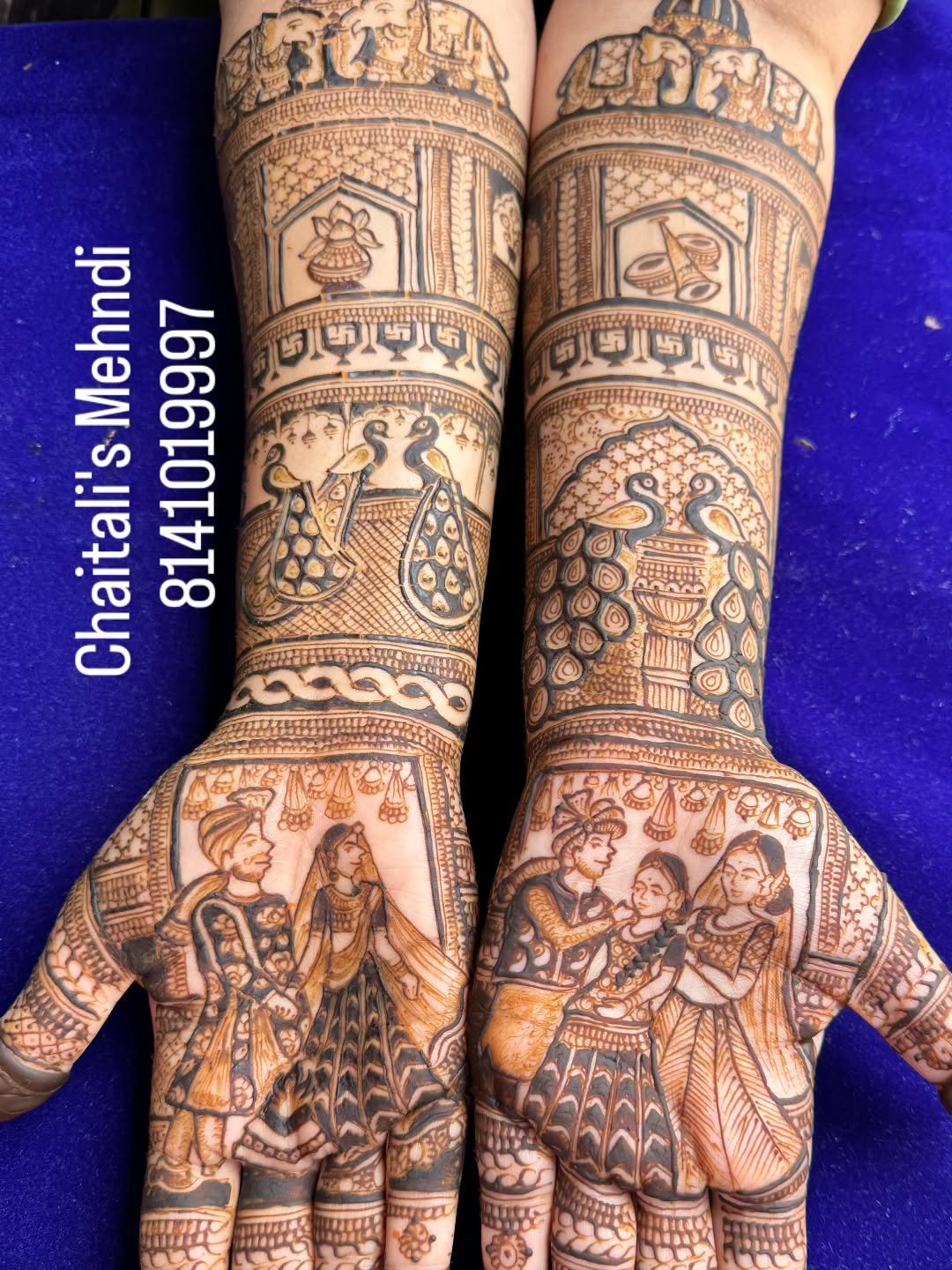
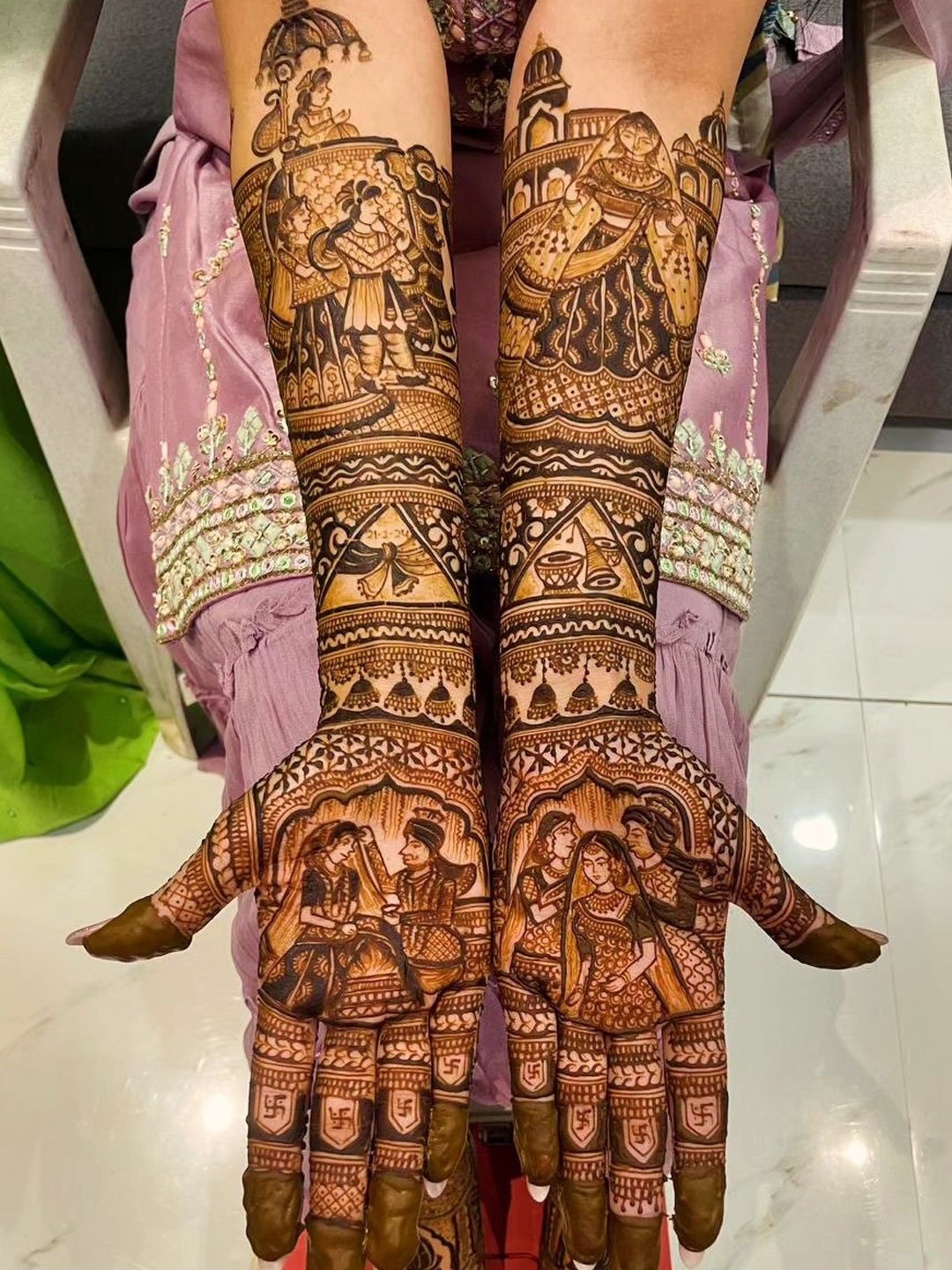
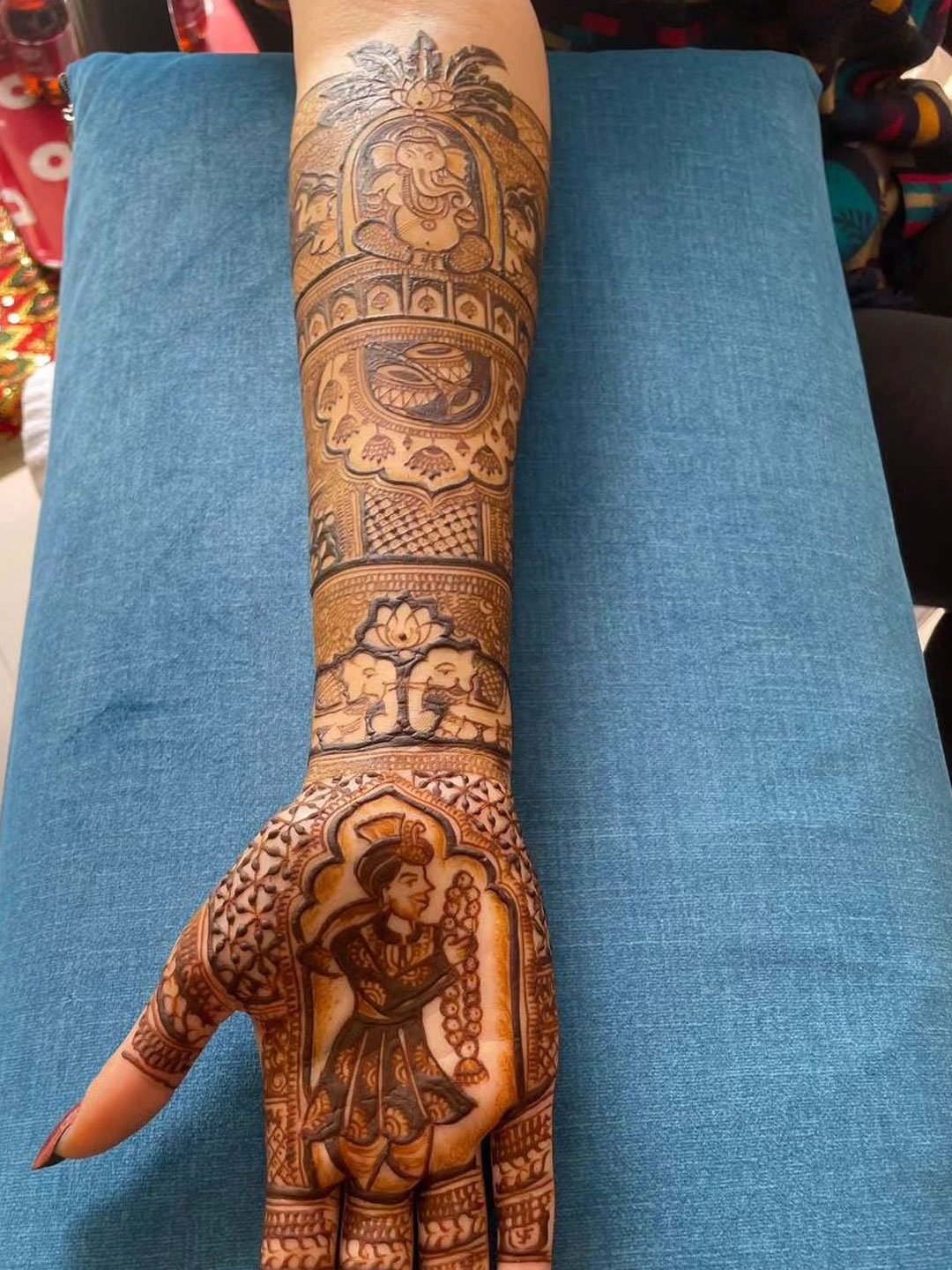
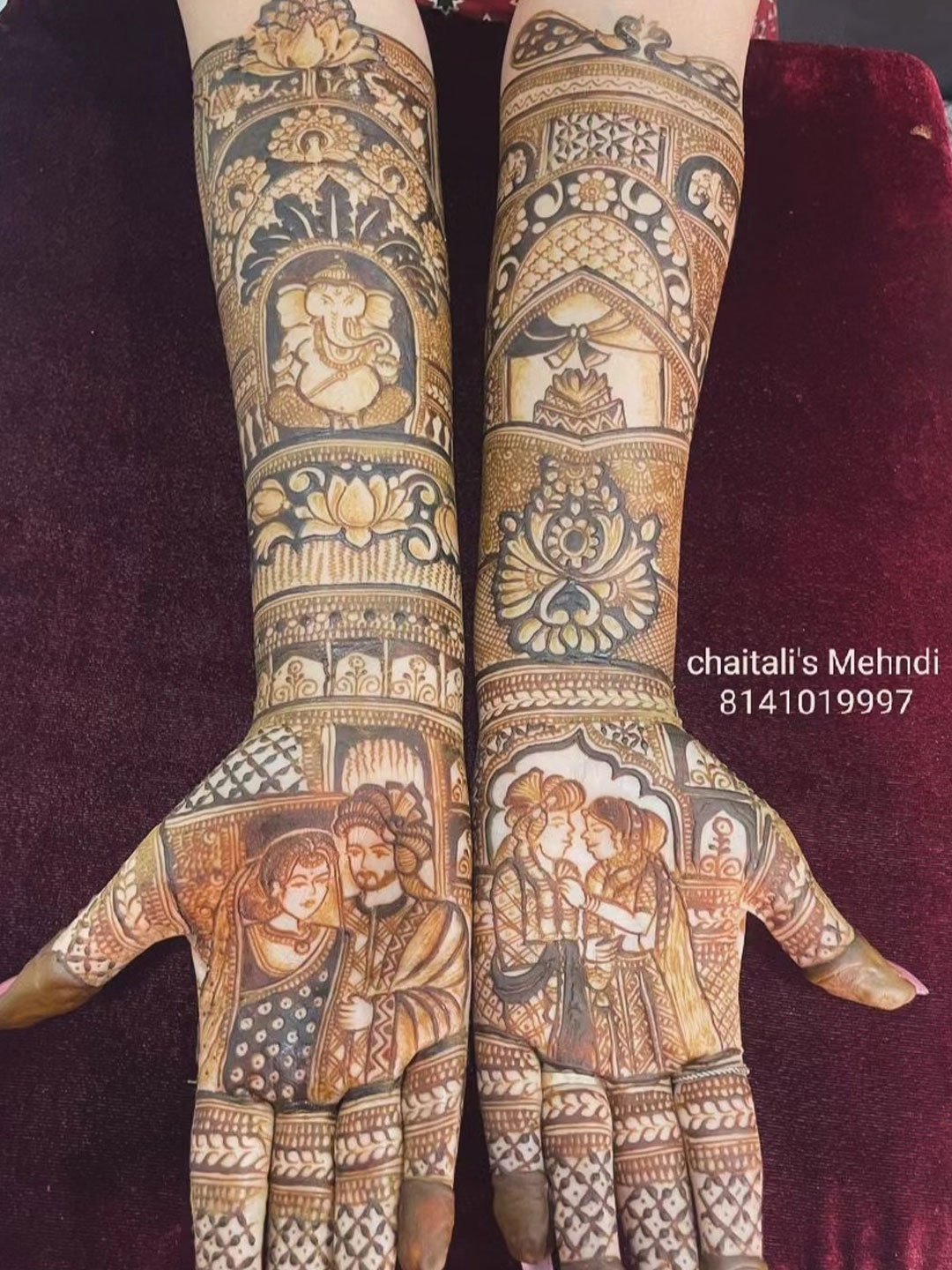
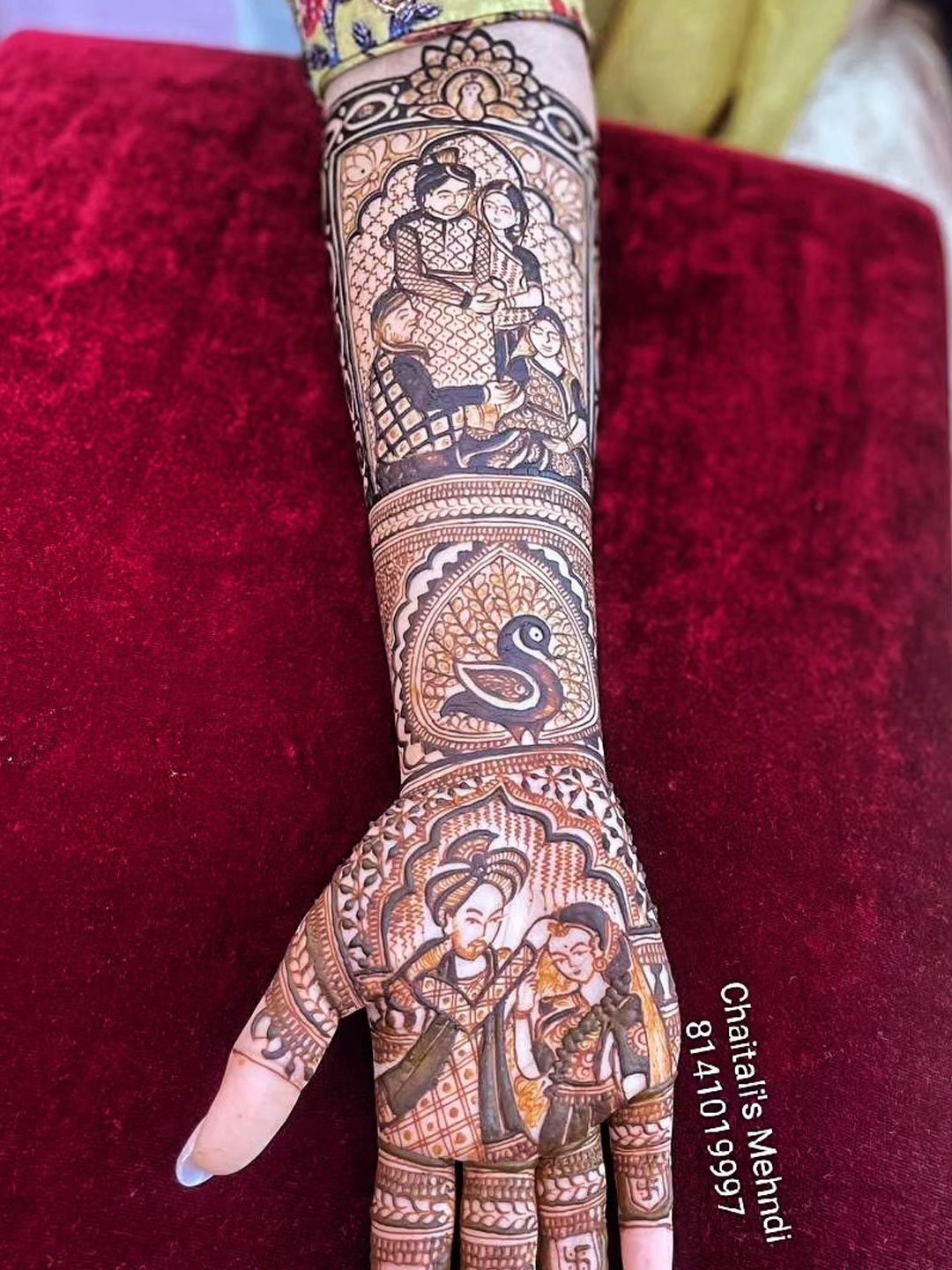
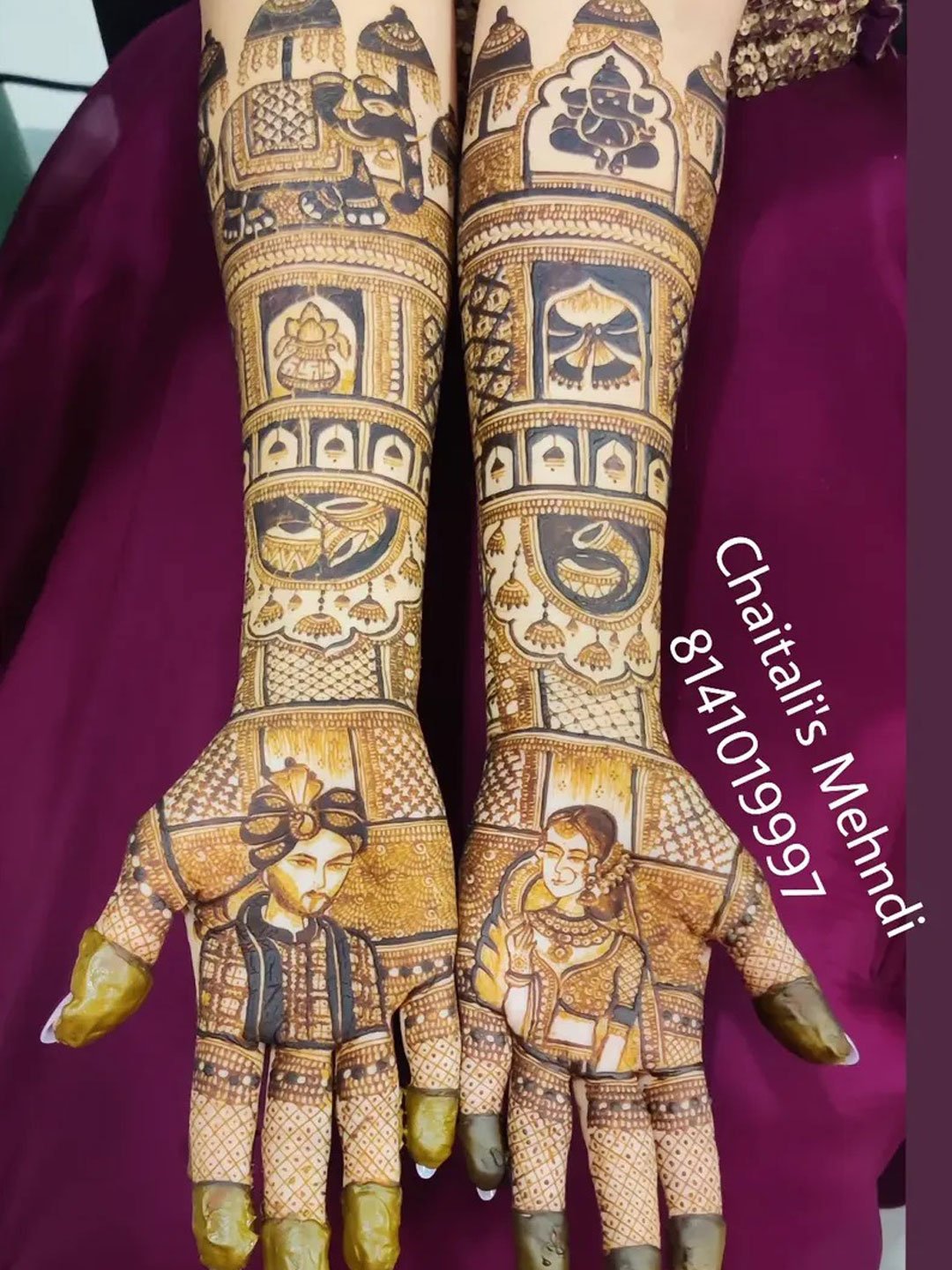
Portrait mehndi — where the groom’s face, a wedding scene like the varmala or pheras, or a couple’s love story is worked directly into the bridal design — has moved from a niche request to one of the most in-demand styles across Gujarat this year. Brides are asking for their engagement story, a favourite shared memory, or even their pet worked into a corner of the palm.
This trend requires a mehndi artist with genuine illustrative skill, not just pattern-filling ability, so it’s worth booking well in advance with an artist whose portfolio actually shows real portrait work rather than sample designs.
2. Fusion of Rajasthani and Arabic Styles
Pure traditional Rajasthani mehndi — dense fill patterns, fine linework, paisleys, and jaali (net) work — remains a strong favourite, especially for brides who want a classic, heavily-covered bridal look. But 2026 is seeing more brides ask for a fusion approach: bold Arabic-style floral trails combined with traditional Rajasthani fill patterns in the same design.
The appeal is practical as much as aesthetic — Arabic elements tend to apply faster and read well even at lower density, while Rajasthani fill gives the deep, traditional bridal look many Gujarati families still expect. Blending the two gives brides a design that feels both contemporary and rooted in tradition.
3. Personalised Name and Initial Placements
Hiding the groom’s name within the design has been a mehndi tradition for years, but the way it’s being done in 2026 has gotten more creative. Instead of a single hidden name in the standard spot on the palm, brides are asking for:
- Both partners’ initials worked into a small motif near the wrist
- The wedding date subtly integrated into a mandala or floral element
- Family members’ initials scattered through the design as a personal touch
This trend works well precisely because it’s subtle — it photographs beautifully without overwhelming the overall pattern, and it gives the design a personal layer that a purely decorative pattern doesn’t have.
4. Minimal-Fill, Statement Border Designs
Not every bride wants dense, heavy coverage, and 2026 has a growing segment of Gujarati brides opting for a lighter overall fill with one strong statement element — usually an elaborate cuff-style border at the wrist or a detailed centrepiece on the palm, surrounded by comparatively open space.
This style suits brides who want their mehndi to feel elegant rather than “loud,” particularly those pairing it with heavily embellished bridal outfits where a busier hand design would compete visually with the outfit itself rather than complement it.
5. Mandala-Centric Palm Designs
Large, symmetrical mandala patterns as the centrepiece of the palm continue to trend strongly this year, often combined with a more open, minimal-fill approach on the fingers and wrist. The appeal is largely photographic — a well-executed mandala looks striking in the classic “bride holding hands” wedding photo, and the symmetry translates well across both close-up and wide shots.
Brides going for this look often pair it with fine trailing vine work up the arm, keeping the overall design elegant rather than densely packed.
6. Bridal Feet Getting More Attention
Historically, a lot of design focus went into the hands, with feet treated as a simpler, secondary element. That’s shifting in 2026 — Gujarat brides are increasingly asking for feet designs with the same intricacy as their hands, particularly anklet-style patterns that wrap the ankle and extend partway up the shin.
This trend is partly driven by outfit choices — with more brides opting for lehengas with visible slits or shorter hemlines during the mehndi and sangeet functions specifically, detailed feet mehndi actually gets seen rather than hidden under fabric.
7. Two-Tone and Contrast Mehndi
A newer trend gaining traction is the use of contrast — combining traditional henna with jagua-based black-brown ink or white henna accents for a two-tone effect. This isn’t about replacing red-brown henna entirely, but layering it strategically — for instance, white dot work along the outer edges of a traditional henna pattern for added texture and photographic contrast.
This trend tends to suit brides looking for something visually distinct on Instagram and wedding albums, though it’s worth discussing durability and skin sensitivity with your artist beforehand, since contrast inks behave differently on skin than traditional henna.
8. Sleeve-Style Arm Coverage
Where “grand bridal” mehndi once typically stopped at the mid-forearm, 2026 is seeing more brides push coverage further up the arm in a continuous “sleeve” style, particularly for brides wearing sleeveless or cap-sleeve blouses during their mehndi ceremony. The design flows without an obvious stopping point, rather than ending in a clean horizontal line at the elbow.
This is a significant time investment for the artist and a longer sitting for the bride, so it’s a trend best planned for with a clear conversation about session length during your consultation.
9. Symbolic and Cultural Motifs
Alongside portrait work, there’s a growing appetite for mehndi that incorporates specific cultural or religious symbolism relevant to the couple — a small temple motif, a specific flower tied to family tradition, or symbols connected to the couple’s community. This is less about following a broad design trend and more about making the mehndi meaningful in a way that’s specific to the individual couple, which is part of why 2026 has seen a rise in longer, more detailed pre-booking consultations.
10. Coordinated Bridal Party Mehndi
Rather than the bride’s design standing entirely apart from her bridesmaids’ and sisters’, more Gujarati brides are asking for a shared design language across the bridal party — matching motifs, a consistent colour or fill style, or a simplified version of the bride’s own pattern extended to close family. It photographs cohesively in group shots and has become a natural extension of the broader trend toward coordinated bridal party looks across outfits and jewellery.
How to Choose the Right Trend for You
With this many options, it’s easy to get overwhelmed scrolling through inspiration photos. A few practical questions can help narrow things down:
- What’s your outfit like? Heavily embellished lehengas often pair better with minimal-fill mehndi, while simpler outfits can carry denser, more traditional coverage.
- How much time do you realistically have? Sleeve-style coverage and dense portrait work both require long sessions — factor this into your wedding-day or pre-wedding-day schedule.
- What matters more to you — tradition or personalisation? Some brides want the classic dense Rajasthani look their mothers and grandmothers had; others want their own love story worked into the design. Neither is more “correct” — it’s a matter of what feels right for you.
- Will your bridal party need mehndi too? If coordinated designs matter to you, mention this during your consultation so the artist can plan timing and design language across everyone, not just the bride.
A Note on Chaitali’s Mehndi Artist
At Chaitali’s Mehndi Artist, every bridal design starts with a proper consultation — understanding your outfit, your story, and which of these 2026 trends genuinely suits your style, rather than applying a repeat pattern. From dense traditional Rajasthani sets to personalised portrait mehndi and coordinated bridal party designs, the goal is always a design that’s built around you specifically. Browse recent bridal work in the gallery, explore bridal mehndi services, or get in touch to discuss which trend fits your wedding date and outfit best.
Frequently Asked Questions
Which mehndi trend is most popular in Gujarat right now? Portrait and storytelling mehndi, along with Rajasthani-Arabic fusion designs, are currently among the most requested styles for Gujarati brides in 2026, though minimal-fill statement designs are gaining ground with brides who prefer a lighter look.
Is dense traditional mehndi still in style, or has it been replaced by minimal designs? Both are trending simultaneously. Dense, traditional Rajasthani-style coverage remains a strong favourite, especially for larger, more traditional weddings, while minimal-fill designs are growing among brides who want an elegant, less busy look.
How early should I decide on a mehndi trend before booking my artist? It’s best to have at least a general direction in mind — traditional, fusion, portrait, or minimal — before your consultation, so your artist has enough time to plan a design and, for more elaborate styles like portraits, adequate session time.
Can I combine more than one trend in my design? Yes, and many brides do — a common combination is a mandala centrepiece with Rajasthani-Arabic fusion fill, or a minimal-fill design with one detailed portrait element worked in near the wrist.
Do these trends apply to feet as well as hands? Increasingly, yes. Feet mehndi is getting more detailed attention in 2026, particularly anklet-style patterns, especially for brides whose mehndi or sangeet outfits show more of the feet and ankles.
What should I bring to my mehndi consultation to help pick the right trend? Bring photos or details of your bridal outfit, any inspiration images you like, and be ready to share anything personal — a shared story, symbols, or names — you’d like worked into the design.
Final Thoughts
2026’s Gujarat wedding mehndi trends reflect a broader shift: brides want designs that are beautiful, yes, but also personal and specific to them, rather than a repeated pattern applied to every bride that season. Whether that means a fusion of traditional and contemporary styles, a portrait telling your love story, or a minimal design that lets your outfit shine, the best approach is choosing what genuinely feels like you — not just what’s trending on Instagram this month.
If you’d like help figuring out which of these trends would suit your outfit, venue, and wedding style, reach out to Chaitali’s Mehndi Artist for a personalised consultation ahead of your big day.