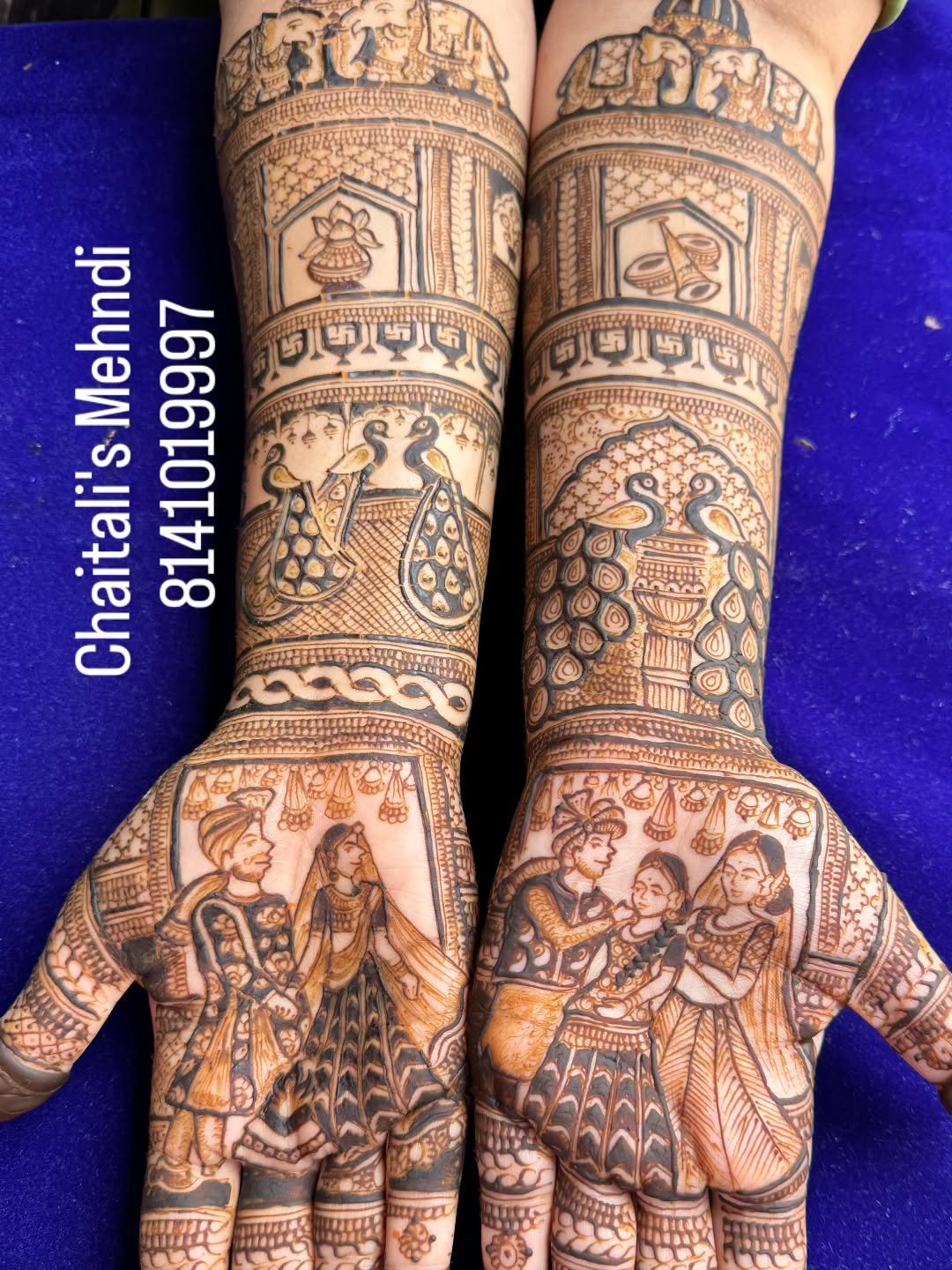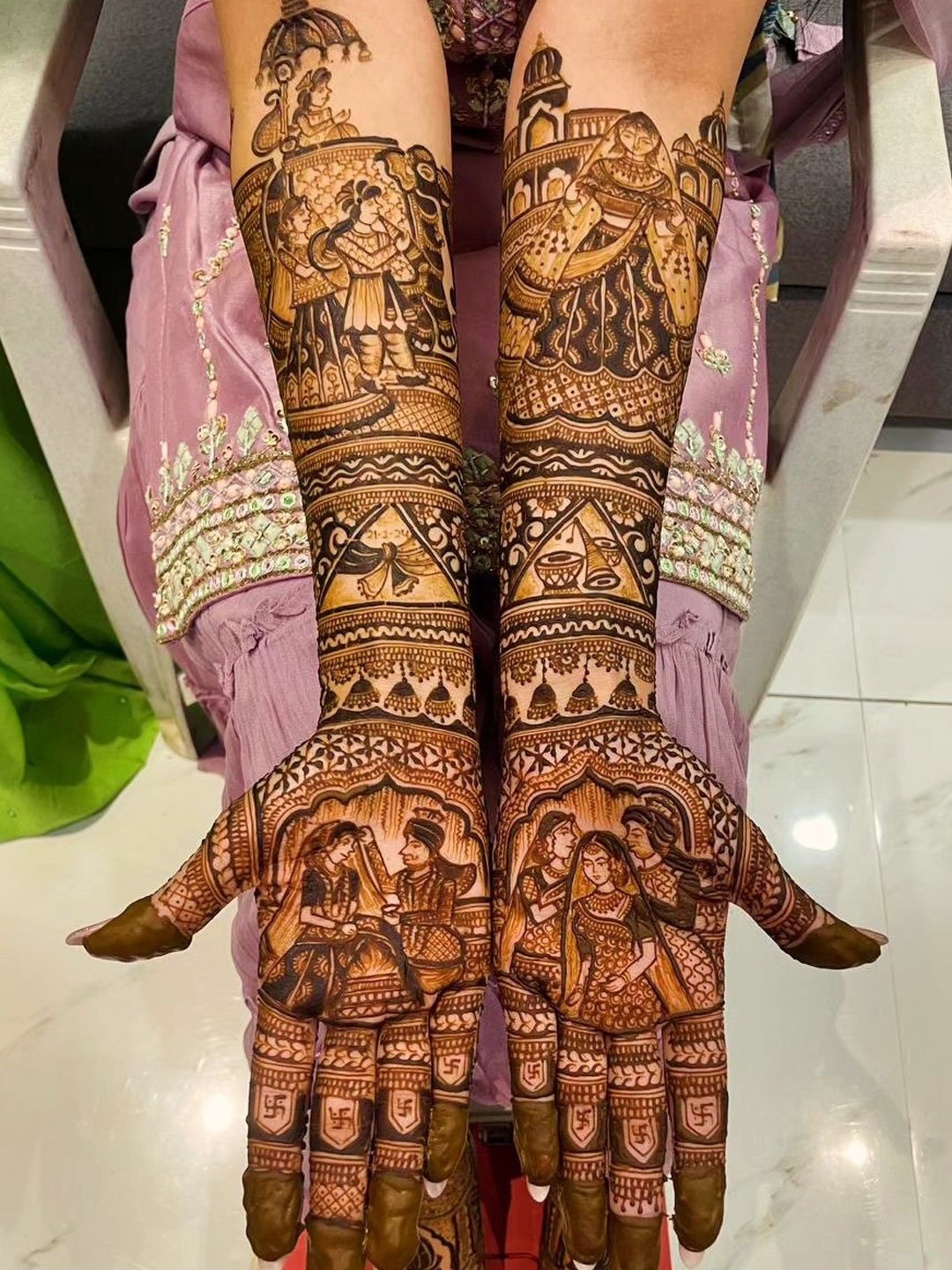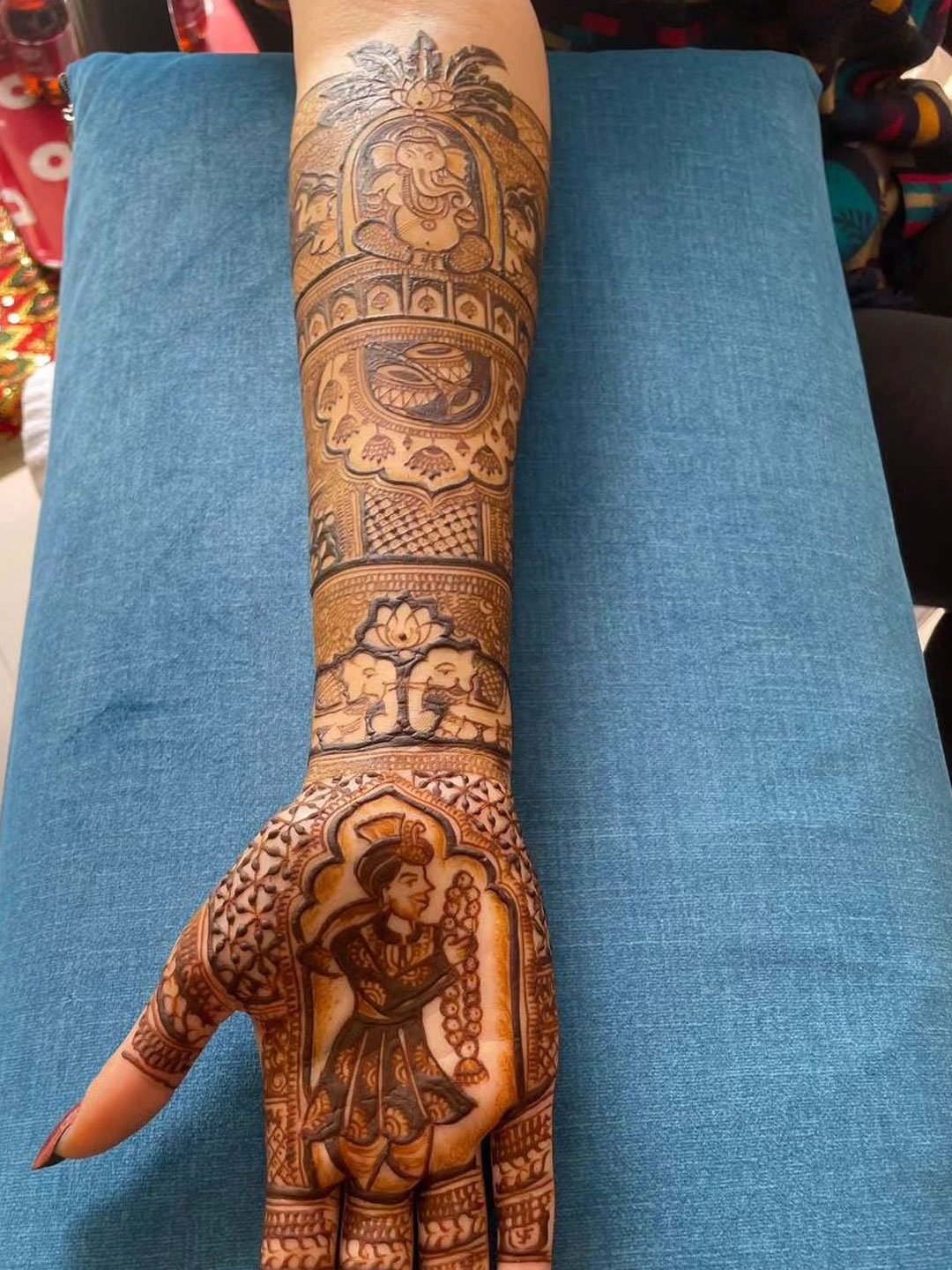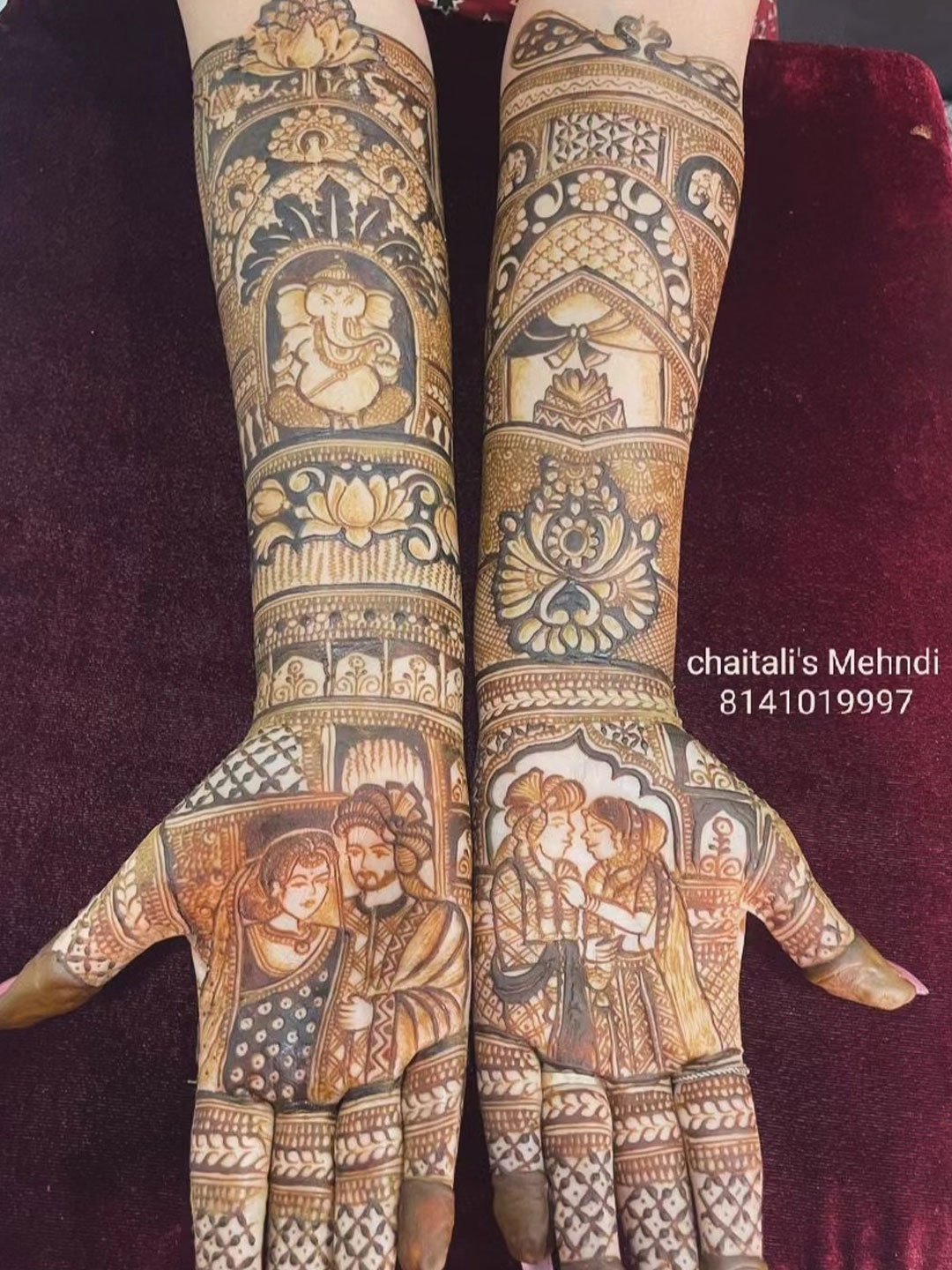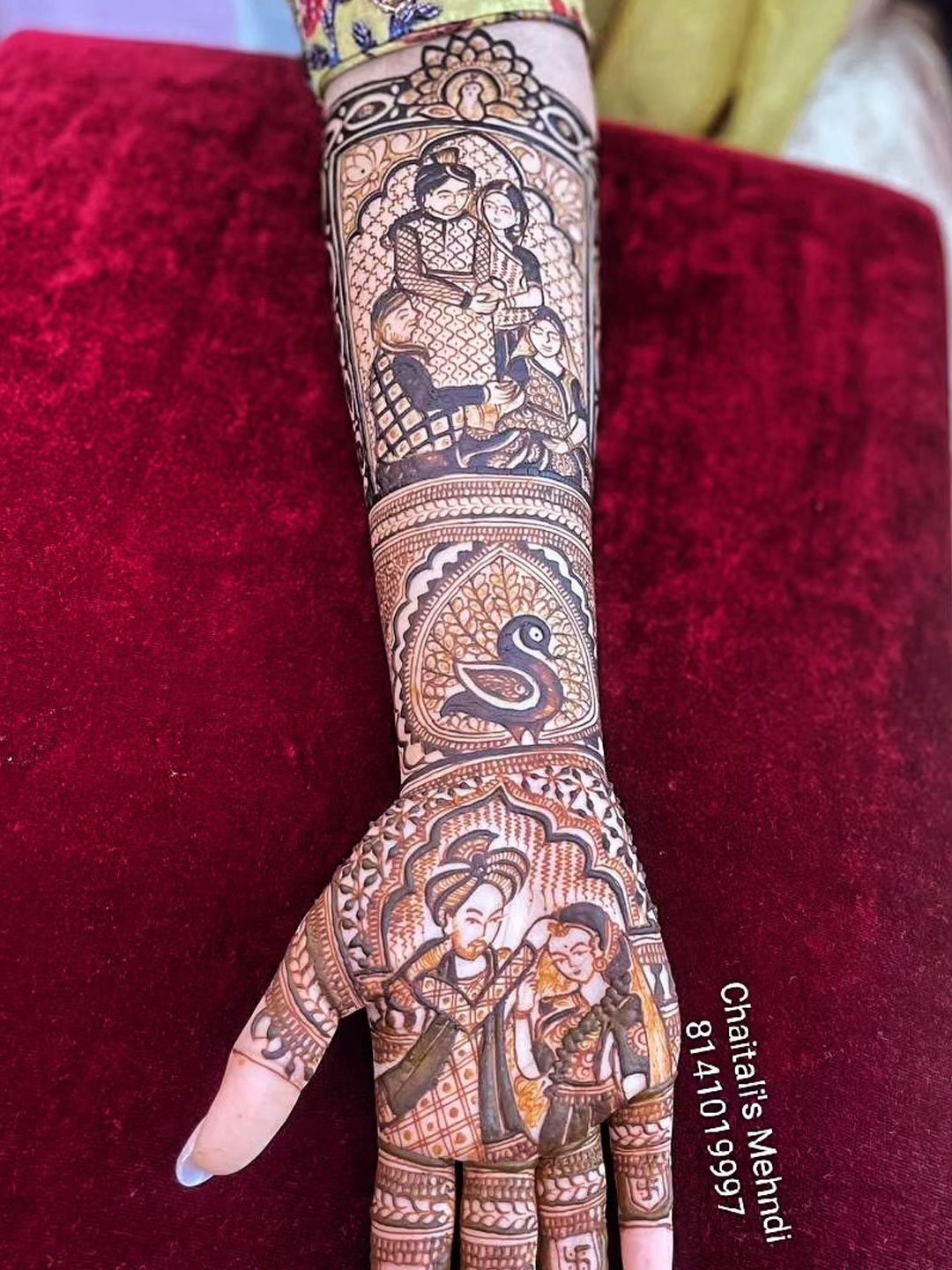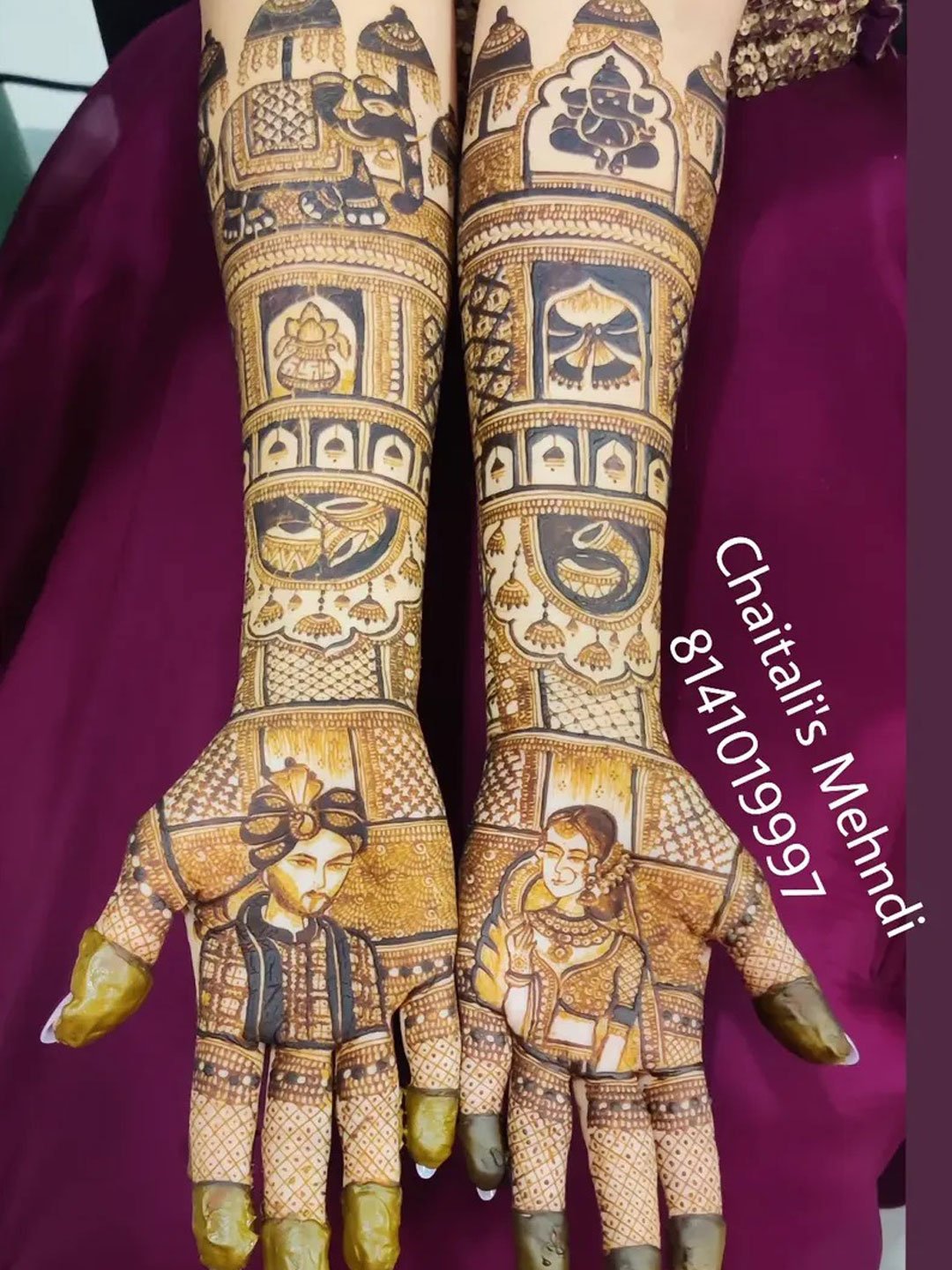
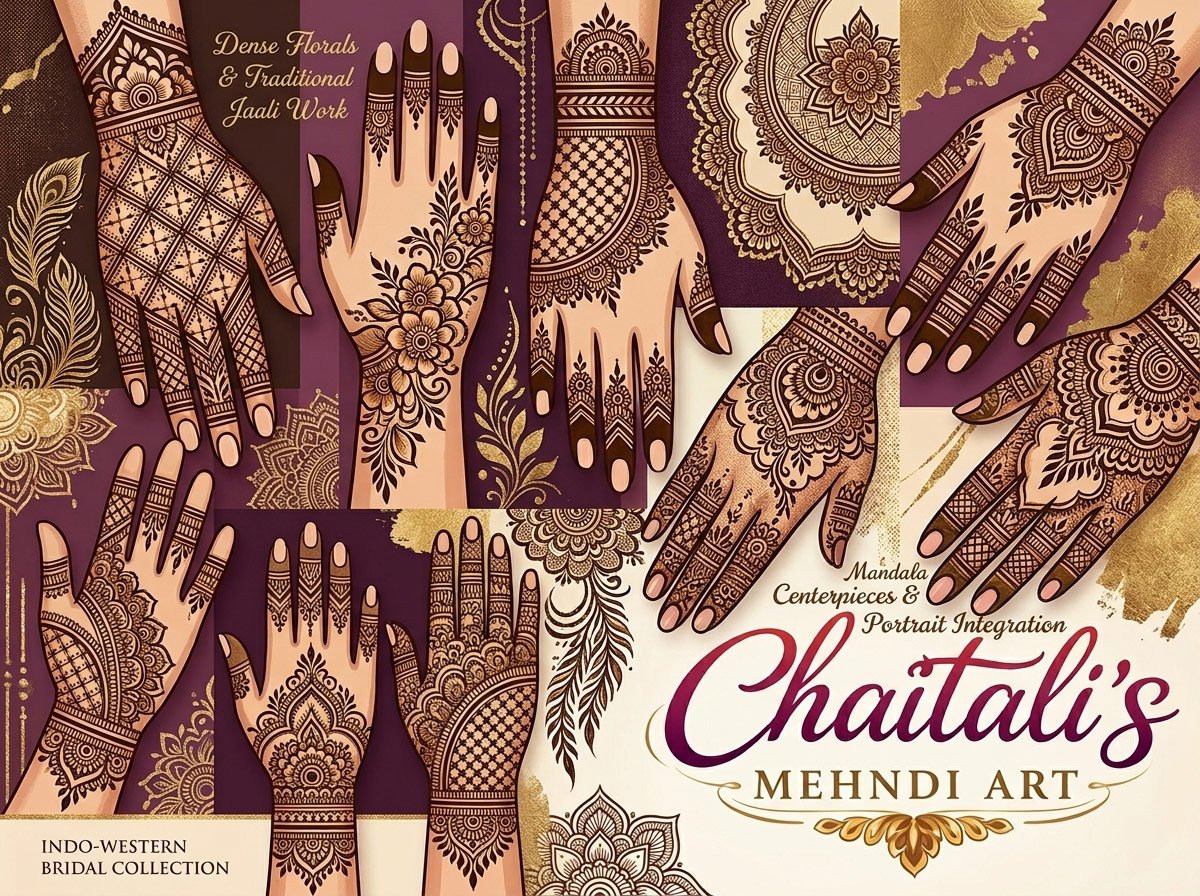
There’s a reason full-hand bridal mehndi has stayed at the top of most brides’ wishlists no matter how many minimalist trends come and go. A hand covered edge to edge in fine detailing — dense florals, mandalas, jaali work, all flowing seamlessly from fingertip to elbow — simply makes a statement that a smaller design can’t quite replicate. It’s the design brides picture when they imagine their hands on their wedding day, and it photographs with a kind of drama that suits the biggest day of your life.
If you’re leaning toward a full-hand design for your own wedding, this guide walks through the patterns worth considering, what actually goes into a design this detailed, and how to plan for it properly so the end result lives up to the moment.
Why Brides Still Choose Full-Hand Mehndi
Full-hand bridal mehndi has never really gone out of style, even as fine-line and minimalist trends have grown in popularity over the past few years. Part of the appeal is simply visual impact — in wedding photography, a fully covered hand reads as unmistakably bridal, distinct from the mehndi you’d wear to any other function. It also gives the artist far more room to work in meaningful detail: hidden names, motifs representing family or heritage, and layered symbolism that a smaller design simply can’t accommodate.
There’s also a practical side to it. Full-hand mehndi tends to hold its stain color for longer and more evenly, since the dense fill work means more surface area is soaking in the paste. For brides who want their mehndi looking rich and dark well past the wedding day itself, a full-hand design often delivers the most lasting result.
What Counts as “Full-Hand” Mehndi
Before getting into specific patterns, it’s worth clarifying what the term actually covers, since it means slightly different things depending on the bride and the region.
At its most complete, full-hand bridal mehndi covers the palm, the back of the hand, all fingers, and extends up the forearm to the elbow — sometimes further, up to the upper arm for a truly maximalist look. The equivalent design is usually done on the feet, covering the sole, the top of the foot, and extending up to the ankle or calf. Some brides choose full coverage on the hands but a lighter design on the feet, or vice versa, depending on which will be more visible in their wedding outfit and photography.
Full-Hand Bridal Mehndi Designs Worth Considering
1. Dense Floral and Paisley Fill
The most classic full-hand approach: layered paisleys, florals, and fine dot-work covering every inch of the palm and fingers, with almost no bare skin left visible. This style is endlessly adaptable — the size, density, and specific florals can all be tailored to the bride’s preference, but the underlying principle of complete coverage stays the same.
2. Jaali (Net) Work Full Coverage
Jaali work uses fine, lattice-like netting to connect larger motifs and fill background space, creating a cohesive, almost lace-like texture across the entire hand. This is one of the most labor-intensive full-hand styles, since the netting has to stay consistent in spacing and pressure across a large surface area, but the finished result has a texture and depth that’s hard to achieve any other way.
3. Mandala Centrepiece with Full Radiating Fill
A large, symmetrical mandala anchors the centre of the palm, with detailed patterns radiating outward to cover the fingers, back of the hand, and wrist. This design works especially well for brides who want a strong focal point rather than an evenly distributed pattern — the eye is drawn to the centre first, then moves outward through the surrounding detail.
4. Shikari (Hunting Scene) Full-Arm Design
Rooted in Rajasthani tradition, this design depicts a royal hunting scene — horses, elephants, hunters, and dense forest motifs — worked into the palm and extending up the arm. It’s one of the most detailed and storytelling-heavy full-hand styles available, and it requires real skill from the artist to keep every figure clear and proportionate within such a dense composition.
5. Arabic-Fusion Full Coverage
Combining bold, sweeping Arabic floral strokes with fine Indian fill techniques, this fusion style still achieves full coverage but with a different visual rhythm — larger shapes with dense detailing inside them, rather than uniformly small motifs throughout. It tends to photograph well from a distance as well as up close, since the bold outlines remain visible even in wider shots.
6. Checkerboard and Floral Fusion
Structured checkerboard sections alternate with dense floral fill, creating a striking contrast between geometric precision and organic detailing across the full hand. This design has grown in popularity among brides who want a full-hand look but with a more graphic, contemporary edge than purely traditional florals.
7. Shaded Ombre Full-Hand Design
Using varying cone pressure and layering, this technique creates a gradient effect within a full-hand composition — sections that fade from dense, dark fill to lighter, finer detailing. It’s a genuinely difficult technique to execute evenly across a full hand, so it’s worth confirming your artist has specific experience with shading before committing to this style.
8. Portrait-Integrated Full-Hand Design
A detailed portrait of the couple is worked into the centre of an otherwise fully covered hand, hidden within the surrounding floral or paisley pattern until you know where to look. This combines the visual impact of full-hand coverage with the deeply personal, keepsake quality of portrait mehndi.
9. Bandhani-Inspired Dot Cluster Fill
Drawing from Gujarat’s traditional Bandhani textile patterns, this design uses small dot clusters arranged into larger geometric shapes — diamonds, grids, and florals — to achieve full coverage with a distinctly regional character. It’s a strong option for Gujarati brides who want their full-hand design to carry a specific cultural reference.
10. Full-Hand Design with Panja (Fan) Extension
Rather than a palm-centred layout, this design radiates outward from the fingers in a fan-like pattern, covering the back of the hand and wrist in the process. It gives a full-hand design a distinctive silhouette that stands out from the more common palm-first compositions.
Full-Hand Bridal Feet Designs
A full-hand look is rarely complete without an equally detailed feet design, especially since traditional wedding photography often features the bride’s feet prominently during rituals. Common full-coverage feet designs include an anklet-mimicking pattern that extends from the toes to the ankle, dense floral fills across the top of the foot, and jaali work along the sole’s visible edges. Matching the density of your hand design to your feet design creates a more cohesive overall bridal look, though some brides intentionally keep feet designs lighter simply for comfort during long ceremony hours.
How Long Does Full-Hand Bridal Mehndi Take?
Full-hand designs are, understandably, one of the most time-intensive mehndi styles. Depending on the specific pattern and how far up the arm and leg it extends, a complete full-hand and full-feet bridal design can take anywhere from 5 to 8 hours to apply. Highly detailed styles like Shikari scenes or shaded ombre work tend to sit at the longer end of that range, since the fine detailing simply can’t be rushed without affecting the final result.
This is one of the most important practical factors to plan around. Most brides choosing a full-hand design schedule their mehndi ceremony a full day, or at least a full evening, ahead of the wedding itself — both to allow enough time for the application and to give the paste adequate time to dry and the stain to develop before other pre-wedding events begin.
Tips for Planning Your Full-Hand Bridal Mehndi
- Block out enough time. A full-hand design isn’t something to schedule the morning of your wedding. Plan your mehndi ceremony with enough buffer that a longer-than-expected session doesn’t push into other events.
- Prioritise comfort during application. Sitting through 5-plus hours of mehndi application is genuinely demanding. Wear comfortable clothing, keep snacks and water nearby, and plan for breaks if needed, especially around the wrist and finger sections.
- Discuss density levels in advance. Not every “full-hand” design needs to be equally dense everywhere — some brides prefer denser coverage on the palm and lighter detailing toward the fingers, or vice versa. Talk this through with your artist before the session starts.
- Think about your outfit sleeves. A full-arm design extending to the elbow or beyond will be far more visible in a sleeveless or short-sleeved outfit, so factor your bridal outfit into how far up the arm you want the design to go.
- Plan your aftercare window. The longer the paste stays on and the longer you avoid water afterward, the darker and longer-lasting your stain will be — this matters even more with full-hand designs, since you’ll want that investment of time to show in the final color.
- Ask to see the artist’s past full-hand work specifically. Full coverage requires a different kind of consistency and stamina than smaller designs. Reviewing past full-hand bridal work, not just general portfolio pieces, gives you a clearer sense of what to expect.
Choosing an Artist for a Full-Hand Design
Not every mehndi artist has equal experience with full-hand bridal work, and it’s worth being deliberate about who you book for a design this involved. Full coverage demands consistency over several hours — the pressure, line thickness, and paste flow need to stay even from the first hour to the last, which is a very different skill from executing a smaller, quicker design well.
When reviewing an artist’s portfolio, look specifically for full-hand bridal examples rather than general mehndi work, and pay attention to how consistent the detailing looks across the entire hand, not just in the centrepiece. It’s also worth asking directly about their experience with the specific technique you want — shading, jaali work, or storytelling scenes like Shikari designs all require slightly different skill sets, and an artist who’s excellent at fine-line minimalist work isn’t automatically the right fit for a dense, full-coverage bridal look.
Frequently Asked Questions
How long does a full-hand bridal mehndi design actually take to apply? Most full-hand designs, covering both hands to the elbow and feet to the ankle or higher, take between 5 and 8 hours depending on the density and detail level of the chosen pattern.
Is full-hand mehndi more expensive than a partial design? Generally, yes, since pricing is largely based on time and detail. A full-hand, full-feet bridal design requires significantly more application time than a palm-focused or minimalist design.
Will a full-hand design feel too heavy with a modern outfit? Not necessarily. Many brides pair full-hand mehndi with contemporary outfits by choosing sleeve lengths and jewellery that complement the density of the design rather than compete with it. Discussing your outfit with your artist beforehand helps balance the overall look.
Does full-hand mehndi stain darker than smaller designs? The stain depth depends primarily on paste quality and aftercare rather than design size, but because full-hand designs cover more surface area, the overall hand often reads as richer and darker once fully developed.
Can I get a full-hand design without traditional motifs like peacocks or paisleys? Yes. Full-hand coverage can be achieved with geometric patterns, checkerboard fusion, or Bandhani-inspired dot work just as effectively as with traditional florals — the density is a separate choice from the specific motifs used.
Final Thoughts
A full-hand bridal mehndi design is a genuine commitment — of time, of planning, and of trust in your artist’s skill — but for brides who want their wedding mehndi to feel like a true statement piece, nothing else quite compares. Whether you choose a dense floral fill, a storytelling Shikari scene, or a hidden portrait woven into the detail, a well-executed full-hand design is something you’ll be looking back at in your wedding photographs for years to come.
If you’re planning your wedding and want a full-hand design created around your story, outfit, and timeline, Chaitali’s Mehndi Art offers personalised bridal mehndi consultations, portrait mehndi, and engagement mehndi services across Ahmedabad. Get in touch to start planning a full-hand design that truly wows.