Navratri isn’t just nine nights of dance — it’s nine nights of dressing up, and for most Gujarati women, that means fresh mehndi is non-negotiable. But garba mehndi has a completely different job to do compared to bridal or festive mehndi for other occasions. It has to look stunning under the dandiya lights, survive hours of twirling, clapping, and hand movement, and still look fresh enough to repeat (or refresh) across multiple nights of celebration.
If you’ve been searching for Navratri mehndi designs that are actually practical for garba nights — not just pretty in photos — this guide covers everything: the most popular design styles this season, how to pick a pattern based on how many nights you’re playing garba, placement ideas that photograph beautifully during raas, and tips to make sure your mehndi lasts the whole navratra.
Why Garba Mehndi Is Different From Regular Mehndi
Before jumping into designs, it’s worth understanding why Navratri mehndi needs its own approach.
During garba and dandiya raas, hands are in constant motion — clapping, twirling dandiya sticks, linking arms in circles. That kind of movement puts real stress on a fresh mehndi design, especially in the first few hours after application when the paste is still delicate. A dense, heavily detailed bridal-style design that needs hours of stillness to set properly simply isn’t practical if you’re heading straight to the garba ground.
There’s also the multi-day factor. Most brides get mehndi done once for their wedding. Navratri revellers, on the other hand, are often looking for something that either lasts the full nine nights with minimal touch-up, or a quicker design they’re happy to redo every two to three days. That changes the entire design brief — from intricacy level to placement to even the type of henna cone used.
Finally, garba mehndi is meant to be seen while dancing. Designs that photograph well in movement — bold linework, symmetrical patterns, and motifs that catch the eye from a few feet away — tend to work better than ultra-fine detailing that only shows up in close-up shots.
Popular Navratri Mehndi Design Styles This Season
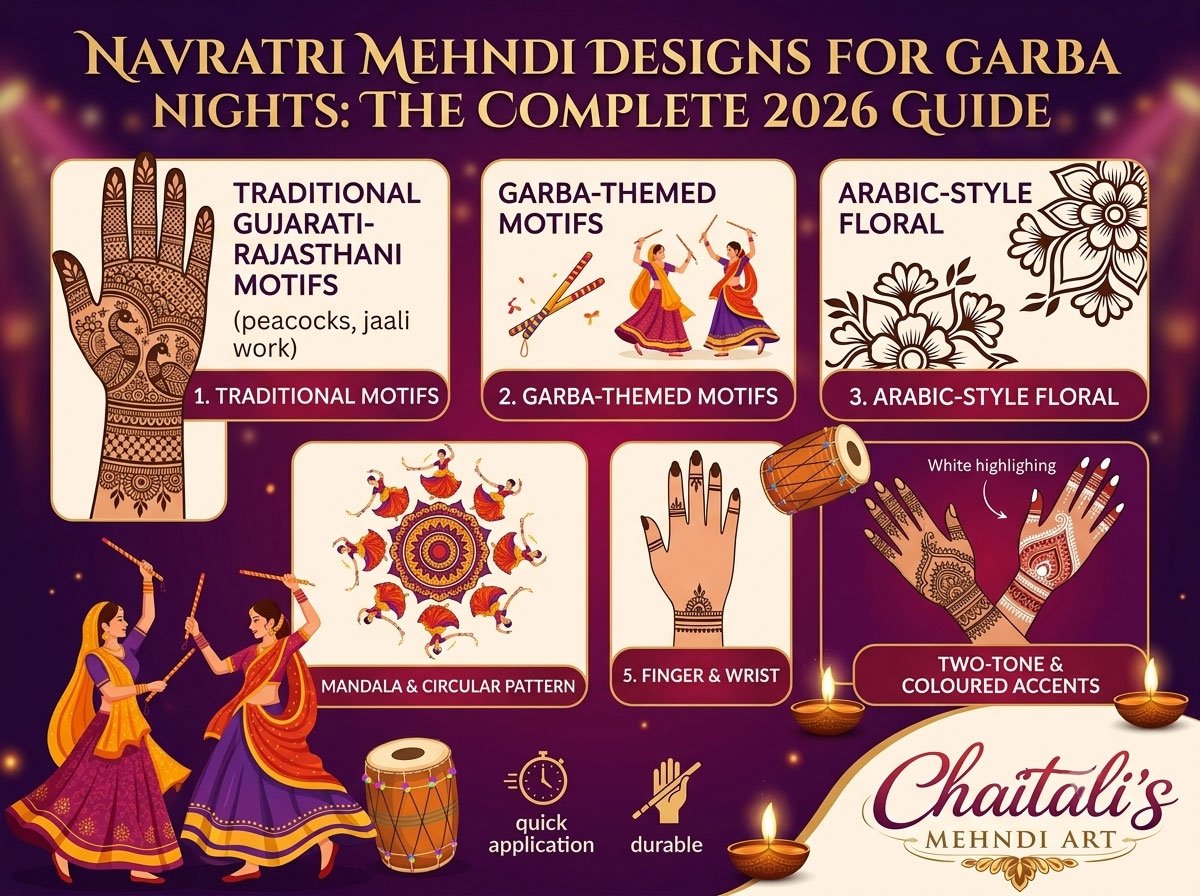
1. Traditional Rajasthani-Gujarati Motifs
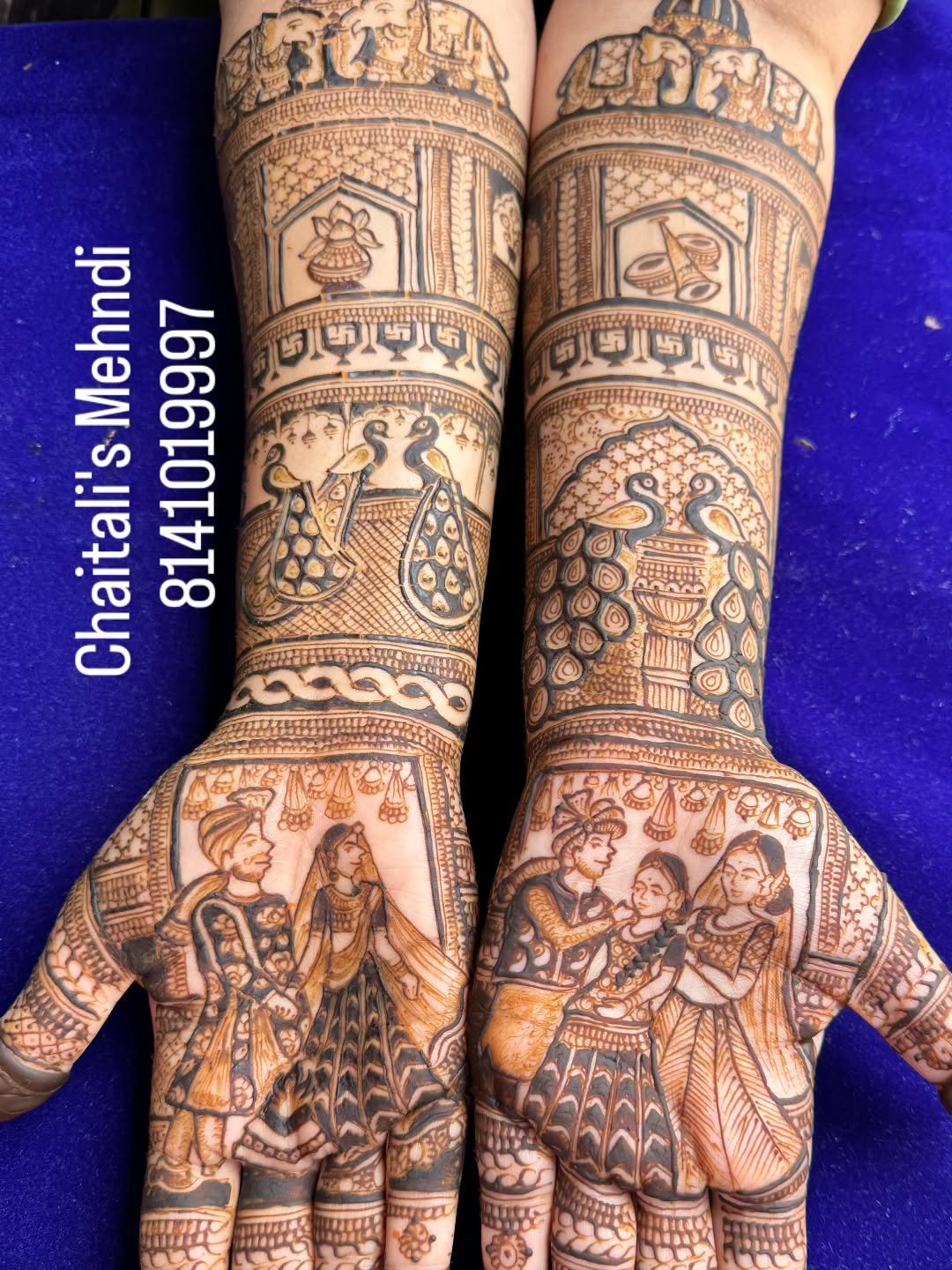
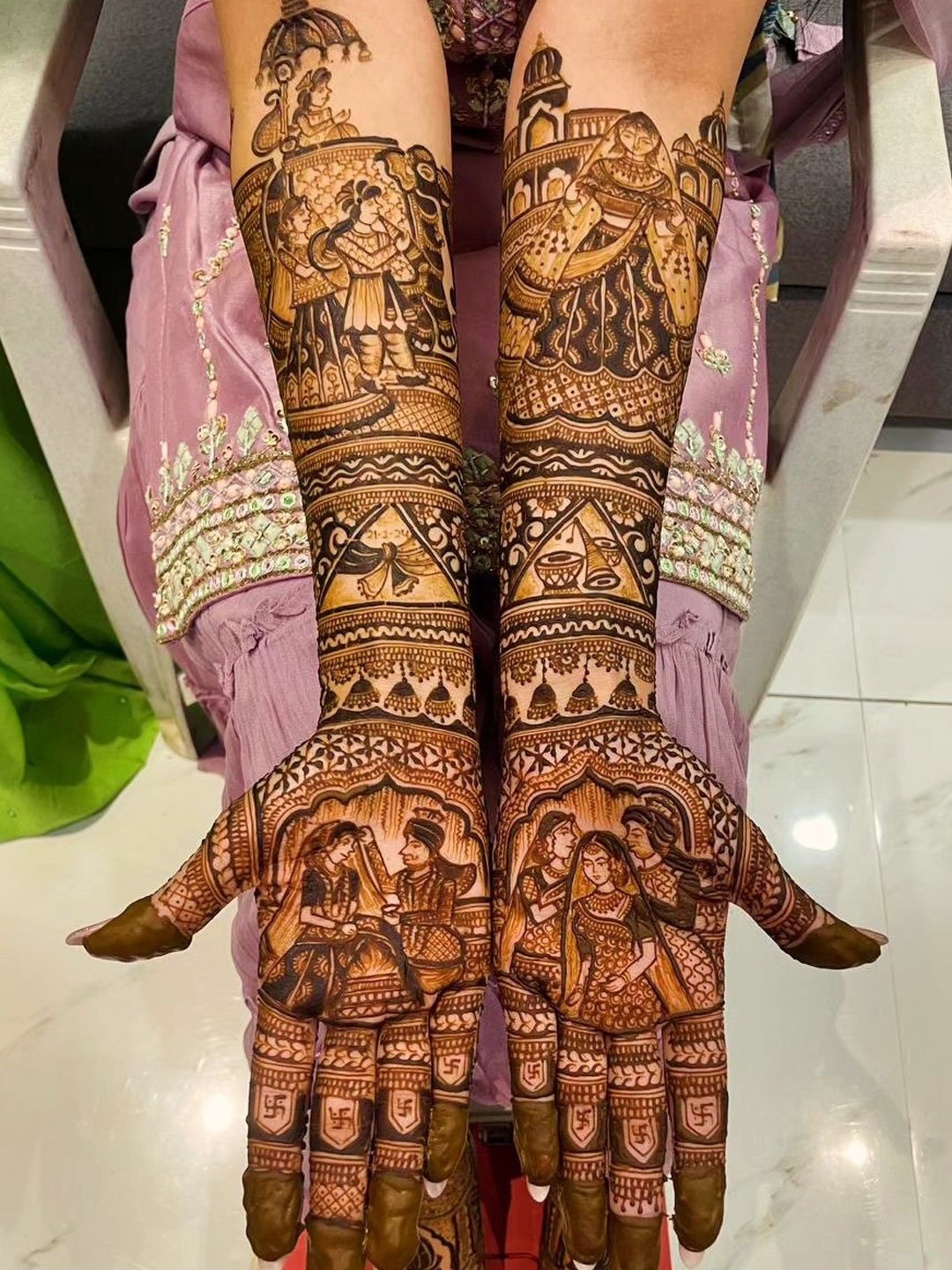
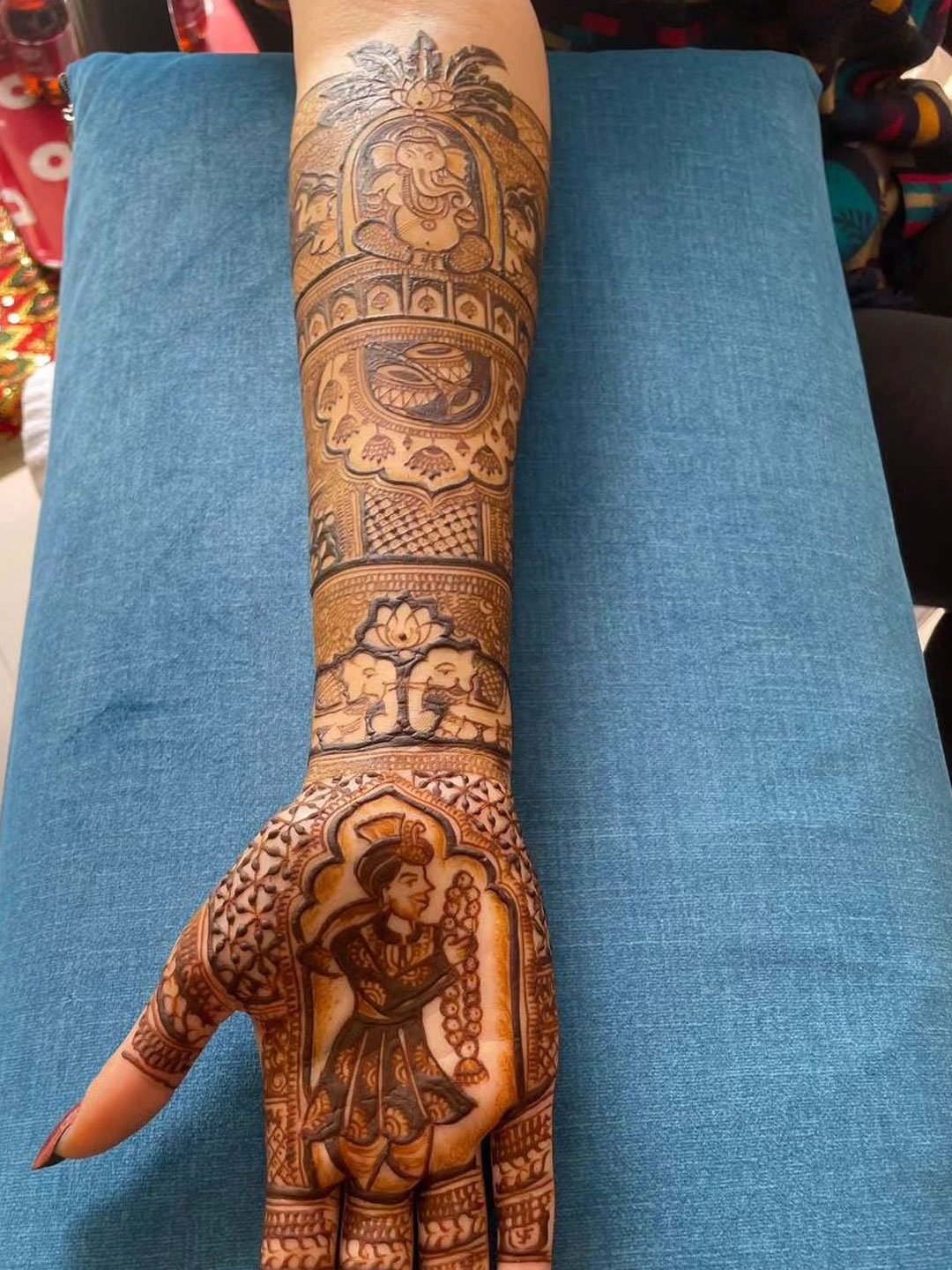
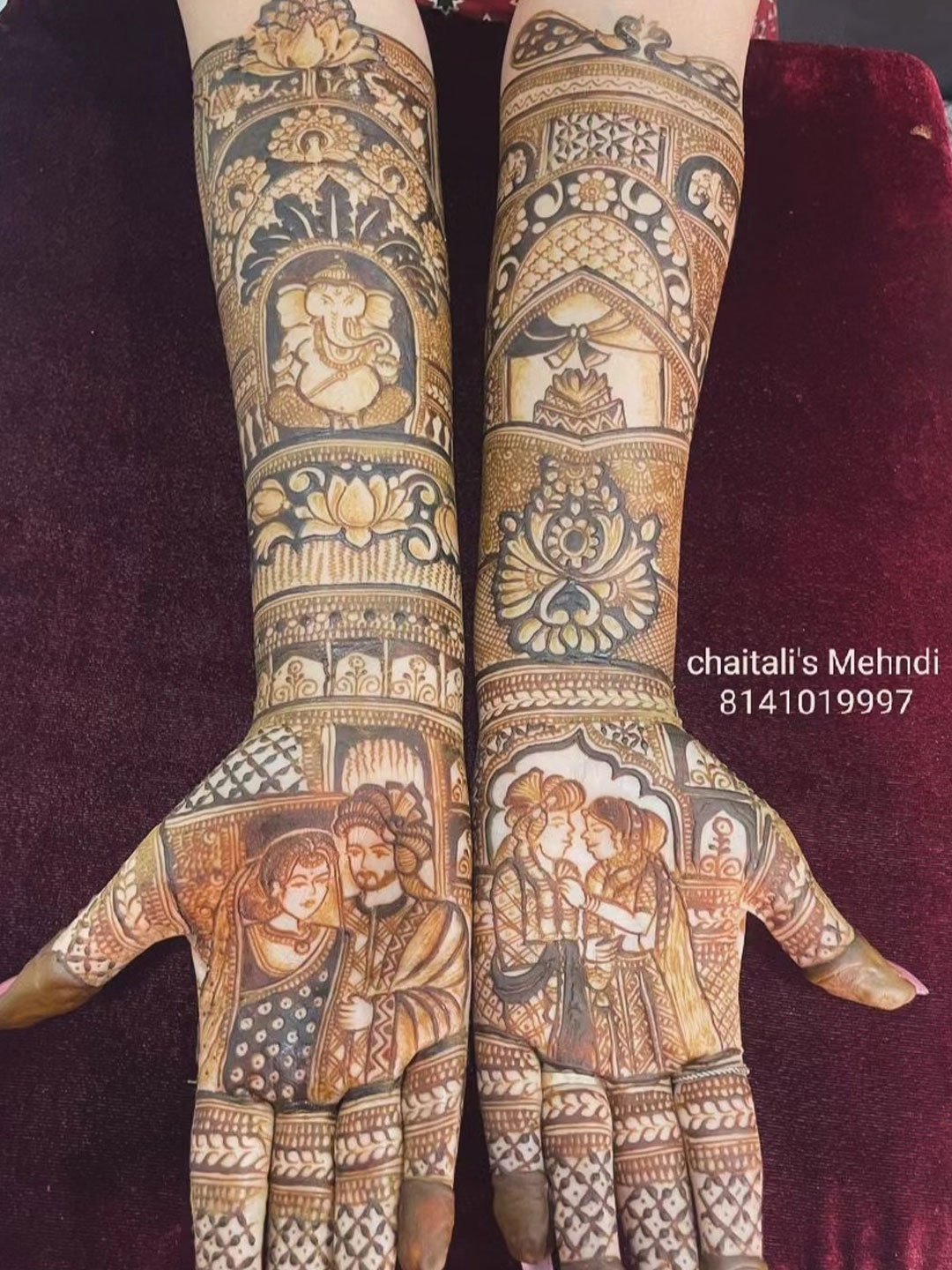
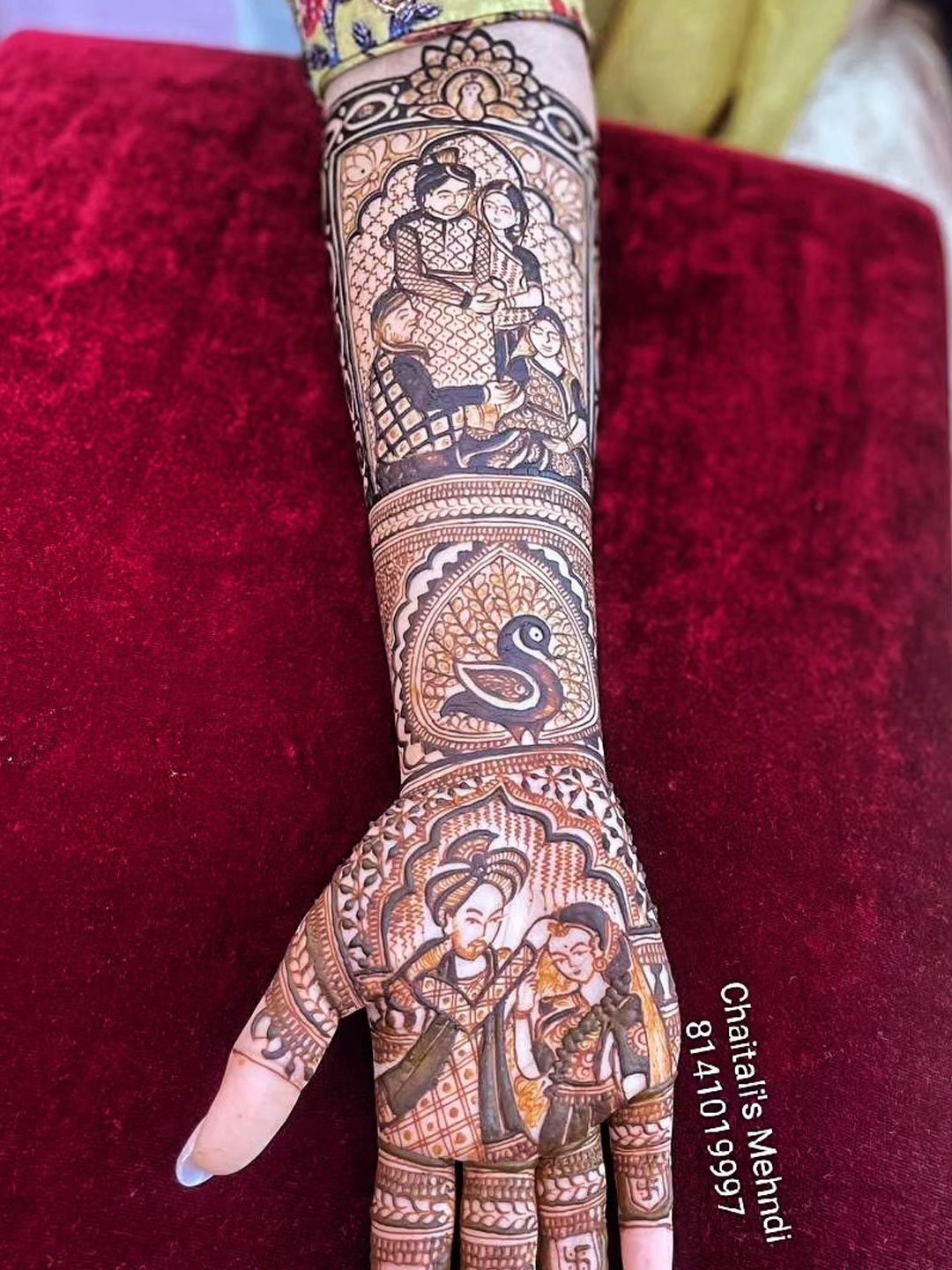
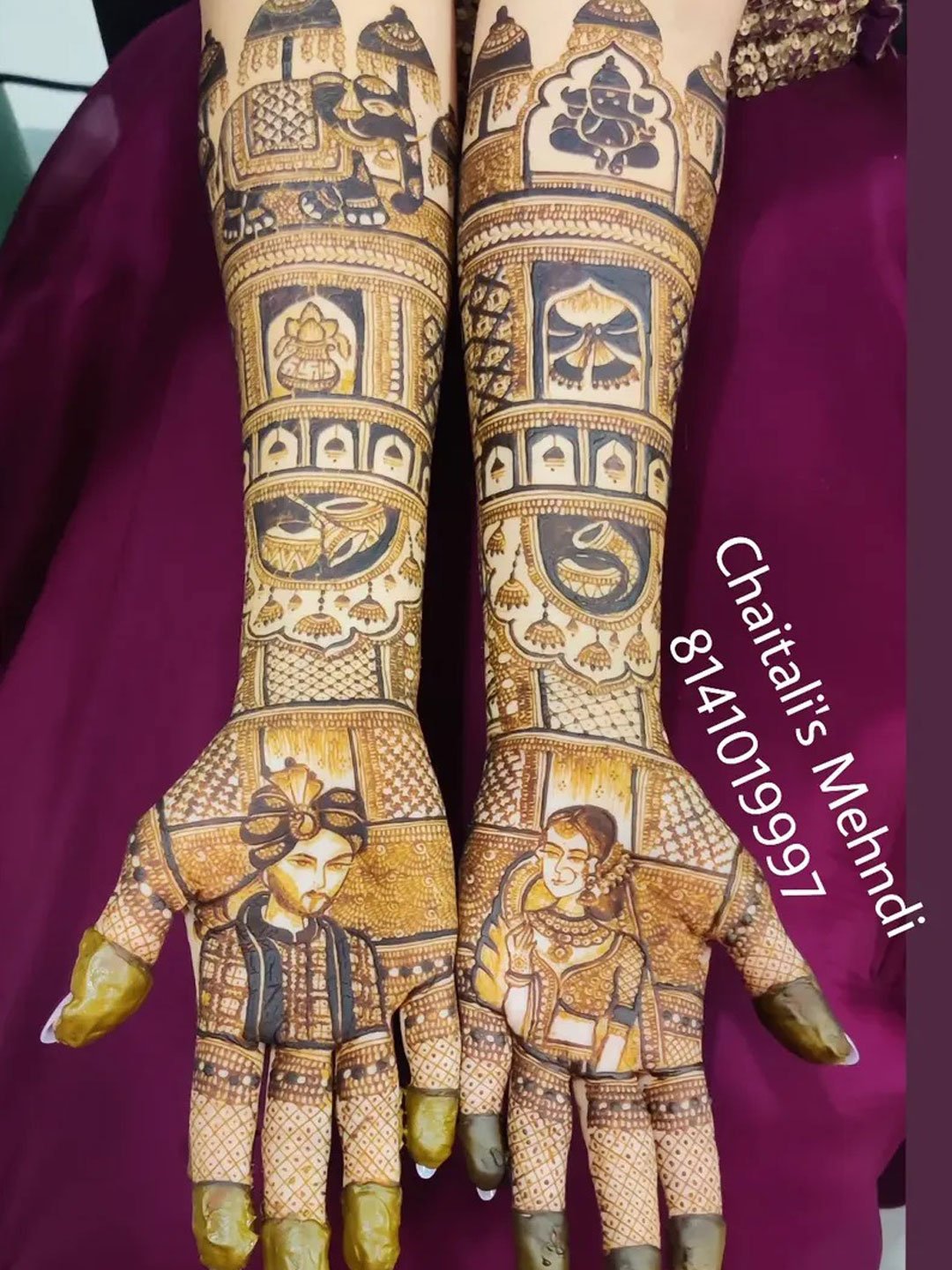
Given that Navratri is rooted in Gujarati and Rajasthani culture, many women lean into traditional motifs for the occasion — peacocks, mor (peacock) chains, paisley (kairi) patterns, and lattice-style jaali work. These designs feel culturally rooted and pair beautifully with traditional chaniya choli and ghagra outfits. They tend to be full-coverage on the palm with a border running up toward the wrist, striking a balance between festive and elegant.
2. Garba-Themed Motifs
This is one of the biggest trends for Navratri specifically — mehndi that references the festival itself. Think tiny dandiya sticks worked into the design, garba dancers in a circular formation around the wrist, a small Durga Maa silhouette near the base of the palm, or a dholak (drum) motif tucked into a corner. These designs are playful, unique, and instantly recognisable as “Navratri mehndi” in photos, which makes them a favourite for anyone posting their garba looks online.
3. Arabic-Style Floral Mehndi
For those who want something quicker to apply and lighter to wear, Arabic-style mehndi — bold, spaced-out floral and vine patterns with visible negative space — is a strong choice. It takes noticeably less time than dense traditional fill-work, dries faster, and still makes a strong visual statement under stage or fairy lights. It’s particularly popular for anyone attending garba on multiple nights who doesn’t want to commit to a long sitting each time.
4. Mandala and Circular Patterns
Circular, mandala-style designs centred on the palm have become a Navratri favourite, partly because the circular symmetry visually echoes the garba raas formation itself — dancers moving in a circle around a central point. A mandala centrepiece with a simpler linework border is a good middle ground between traditional density and Arabic-style simplicity.
5. Minimalist Finger and Wrist Mehndi
Not everyone wants full-hand coverage for nine nights of dancing. A growing number of women — especially those balancing work or college with evening garba — opt for minimalist mehndi: a few delicate motifs on the fingers, a wrap-around design on the wrist, or a single statement motif on the back of the hand. It’s quick to apply, doesn’t restrict hand movement, and can easily be touched up or changed between nights.
6. Two-Tone and Coloured Mehndi Accents
For those wanting something more experimental, subtly combining traditional brown/maroon henna stain with a touch of white mehndi highlighting (using cosmetic-grade white henna paste, not natural henna) along key lines can make a design pop further under garba lighting, especially in photos taken under coloured stage lights.
Choosing a Design Based on How Many Nights You’re Celebrating
One of the most practical questions to ask before booking or applying Navratri mehndi is: how many nights are you actually playing garba?
If you’re attending just one or two nights, a fuller design — traditional motifs or a mandala centrepiece — makes sense, since you’re not worried about it needing to last through repeated hand-washing and dancing over more than a week.
If you’re playing garba across most or all nine nights, it’s usually smarter to go with a lighter, faster-drying design (Arabic-style or minimalist) that you’re comfortable reapplying every few days, rather than trying to stretch one dense design across the entire festival. Henna stains naturally fade with repeated hand-washing, dandiya stick friction, and general wear, so a design meant to last nine days straight often ends up patchy by the final few nights.
A popular middle-ground approach many Ahmedabad brides-to-be and regular garba players use: a slightly more detailed design for the first one or two “big” nights (often the eighth or ninth night, or whichever night has a special family gathering), and simpler touch-up designs for the nights in between.
Placement Ideas That Work Well for Garba Nights
Where you apply mehndi matters just as much as the design itself when you’ll be dancing for hours.
- Palms and back of hands: The classic choice, and still the most visible during garba’s characteristic clapping and hand movements.
- Wrist wraps: A band-style design around the wrist stays visible even when hands are raised or gripping dandiya sticks, and tends to survive friction better than palm-centre designs.
- Fingers: Delicate finger mehndi photographs beautifully in close-up shots and is quick enough to redo between nights.
- Forearms: For those wearing three-fourth or full-sleeve blouses with their chaniya choli, forearm mehndi extending from the wrist is a striking option that doesn’t interfere with hand movement at all.
Avoid extremely intricate palm-centre fill-work if you’re playing garba the same evening — the centre of the palm takes the most friction from dandiya sticks and clapping, and dense wet paste in that exact spot is the most likely to smudge before it’s had time to set.
Tips to Make Navratri Mehndi Last Through Garba Nights
- Apply mehndi with enough buffer time before garba starts. Natural henna paste typically needs to sit for a minimum of a few hours (many artists recommend leaving it on for 6-8 hours where possible, though even 3-4 hours undisturbed will still give a decent stain) before it’s dry enough to handle without smudging. Applying it hours before you need to be at the garba ground gives the stain time to develop properly.
- Avoid water contact immediately after removing dried paste. Once you scrape off the dried henna, avoid washing your hands with water for as long as possible — the stain continues to darken over the following 24-48 hours.
- Apply a lemon-sugar solution while the paste is drying. A light dab of lemon and sugar mixture on the drying paste helps it stay moist longer, which typically deepens the final stain.
- Moisturise, don’t over-wash. Once the stain has set, applying a light balm, mustard oil, or coconut oil helps preserve the colour and prevents premature fading from repeated hand-washing across the festival.
- Go lighter for repeat nights. If you know you’ll be redoing mehndi every 2-3 nights, ask your artist for a design that’s quicker to apply and doesn’t require dense fill-work, so touch-ups don’t become a long sitting each time.
- Book your artist in advance. Navratri is one of the busiest seasons for mehndi artists in Ahmedabad, right alongside wedding season. Artists who do garba mehndi in bulk (for kitty parties, college groups, and friend circles heading to garba together) tend to get booked out well ahead of the festival, so early booking is worth it if you want a specific artist or design style.
Group and Friend-Circle Garba Mehndi
Navratri mehndi is rarely a solo affair. Many women book mehndi sessions with their friend groups, college batches, or family kitty parties before heading out for the evening’s garba. If you’re planning something similar, a few practical notes:
- Group bookings usually work out more cost-effective per person than individual sittings.
- Coordinating a shared design theme (matching motifs or a shared colour accent) across the group photographs well for Instagram and reels, which has become a popular trend during Navratri specifically.
- Booking a mobile mehndi artist who can come to a home or a pre-garba get-together saves time compared to everyone travelling separately to a studio.
Frequently Asked Questions
How long before garba should I apply mehndi? Ideally, apply mehndi at least 3-4 hours before you plan to leave for garba, giving the paste time to dry and set properly so it doesn’t smudge once you start dancing. If your design is more detailed, allowing 6+ hours (or applying it the night before an early event) gives an even better stain.
Which mehndi design lasts the longest for multiple garba nights? Bold, well-outlined designs with thicker linework (rather than fine, delicate detailing) tend to hold up better and stay visible longer across multiple nights of hand-washing and dandiya movement, compared to intricate fill patterns that fade unevenly.
Is Arabic mehndi a good choice for Navratri? Yes — Arabic-style mehndi is one of the most practical choices for garba because it applies faster, dries quicker, and still makes a strong visual statement, which matters if you’re attending multiple nights and don’t want a long sitting each time.
Can I get matching mehndi designs with my friends for garba? Absolutely, and it’s a growing trend. Coordinated or matching mehndi across a friend group is popular for Navratri specifically, especially for group photos and reels during the festival.
Should I choose a different design for Navratri than I would for a regular festival? It’s not mandatory, but many women do lean toward garba-specific motifs (dandiya sticks, circular dance formations, Durga Maa silhouettes) specifically for Navratri, since it makes the mehndi feel tied to the occasion rather than generic festive mehndi.
Do I need to book a mehndi artist in advance for Navratri? Yes, especially if you want a specific artist, a group booking, or a home visit. Navratri is peak season for mehndi artists in Ahmedabad, and slots — particularly for the more popular nights like Ashtami or the final night — fill up quickly.
Final Thoughts
Navratri mehndi for garba nights is really about balancing three things: how the design looks under lights while you’re dancing, how well it survives hours of movement and hand-washing, and how practical it is to reapply if you’re celebrating across multiple nights. Whether you go for a traditional Gujarati motif, a playful garba-themed design, quick Arabic-style florals, or a minimalist finger design, the best choice is the one that matches how many nights you’re actually playing and how much time you realistically have before each one.
At Chaitali’s Mehndi Art, we design Navratri mehndi specifically with garba nights in mind — from single-session designs meant to last the full festival to quick touch-up patterns for those celebrating every single night. We also take group and friend-circle bookings ahead of Navratri, including home visits for kitty parties and pre-garba get-togethers.
To book your Navratri mehndi session or see more design inspiration, visit our blog and galleries at Chaitali’s Mehndi Art or get in touch directly for available dates before the festival season books out.