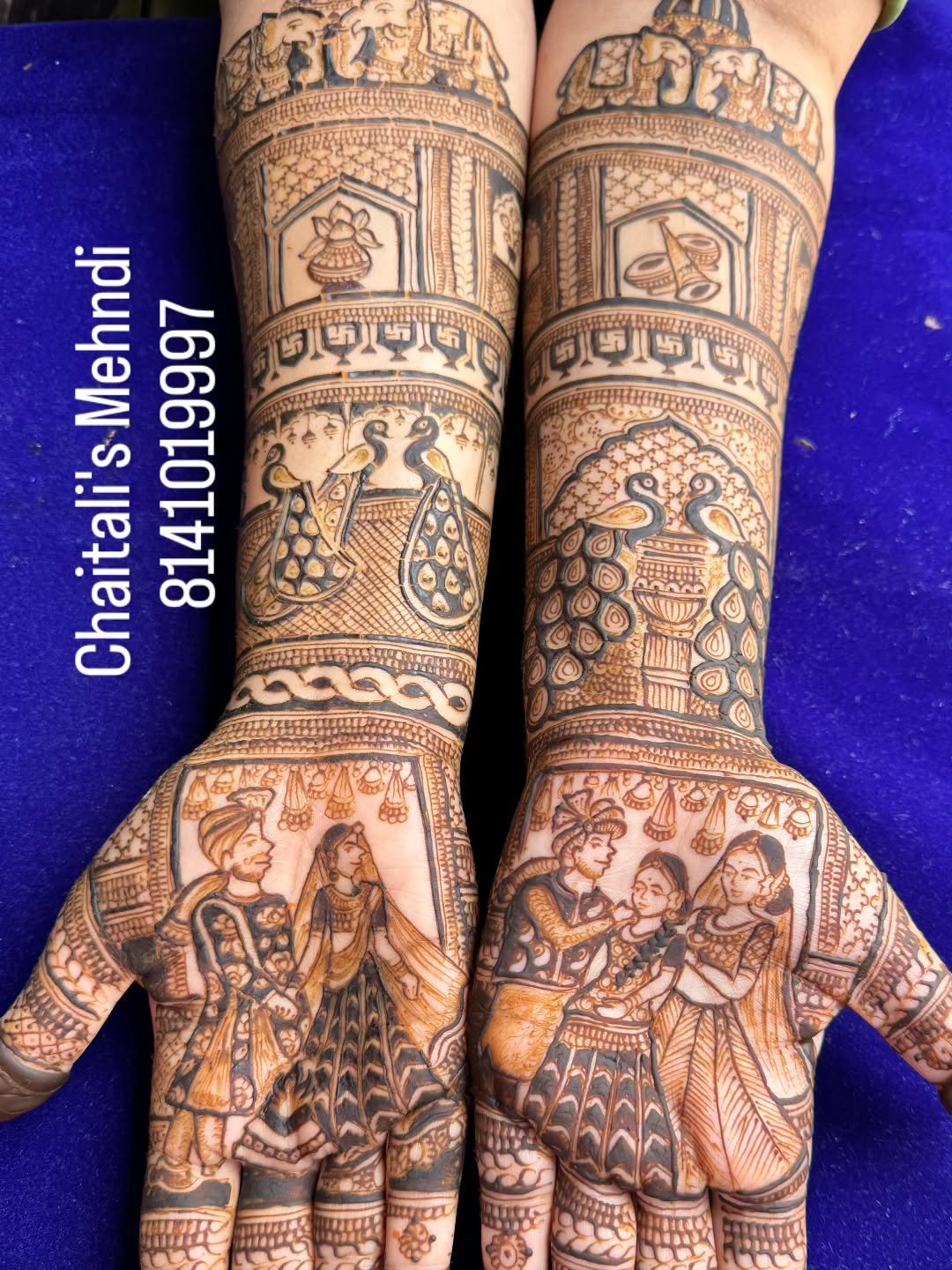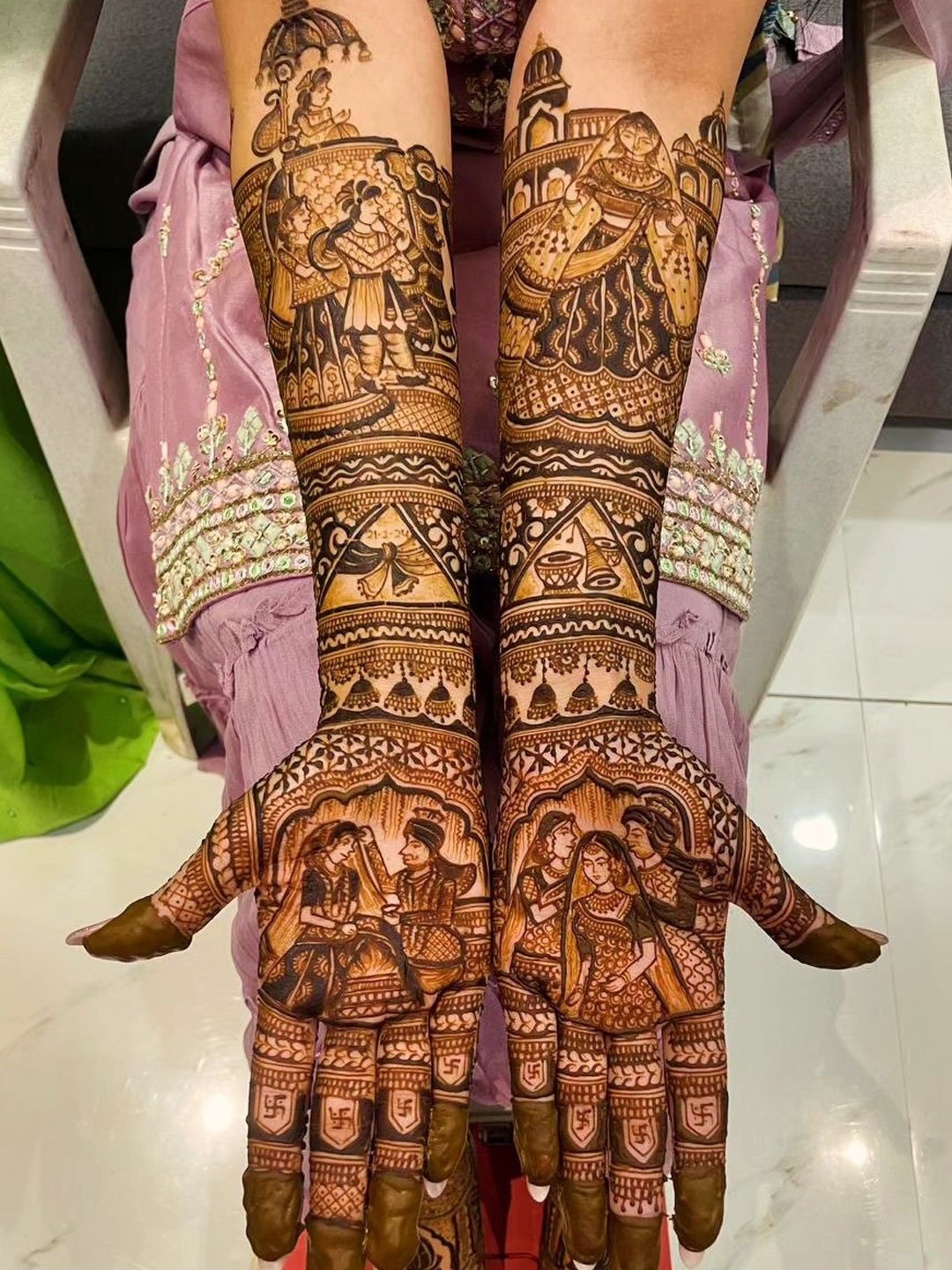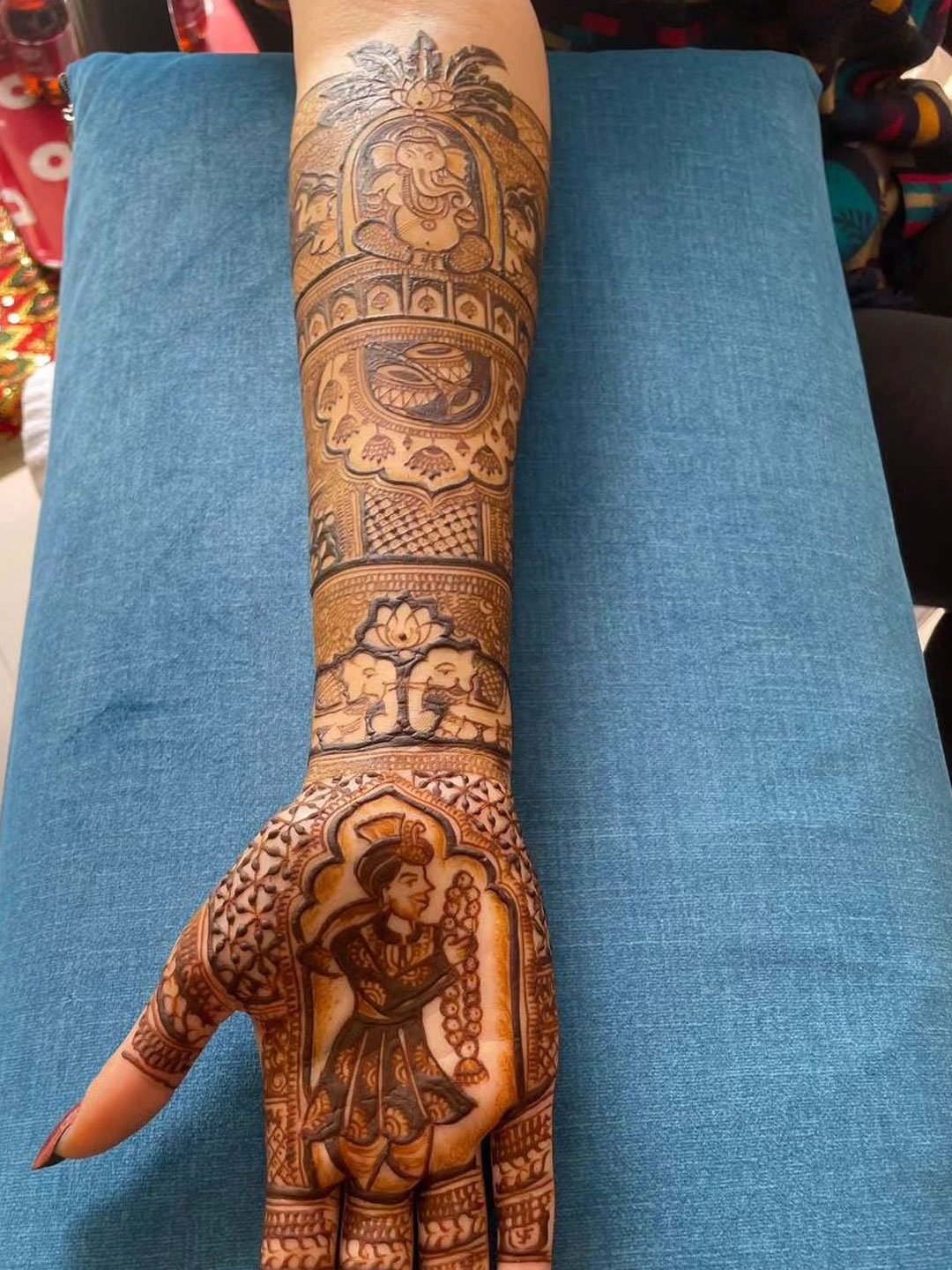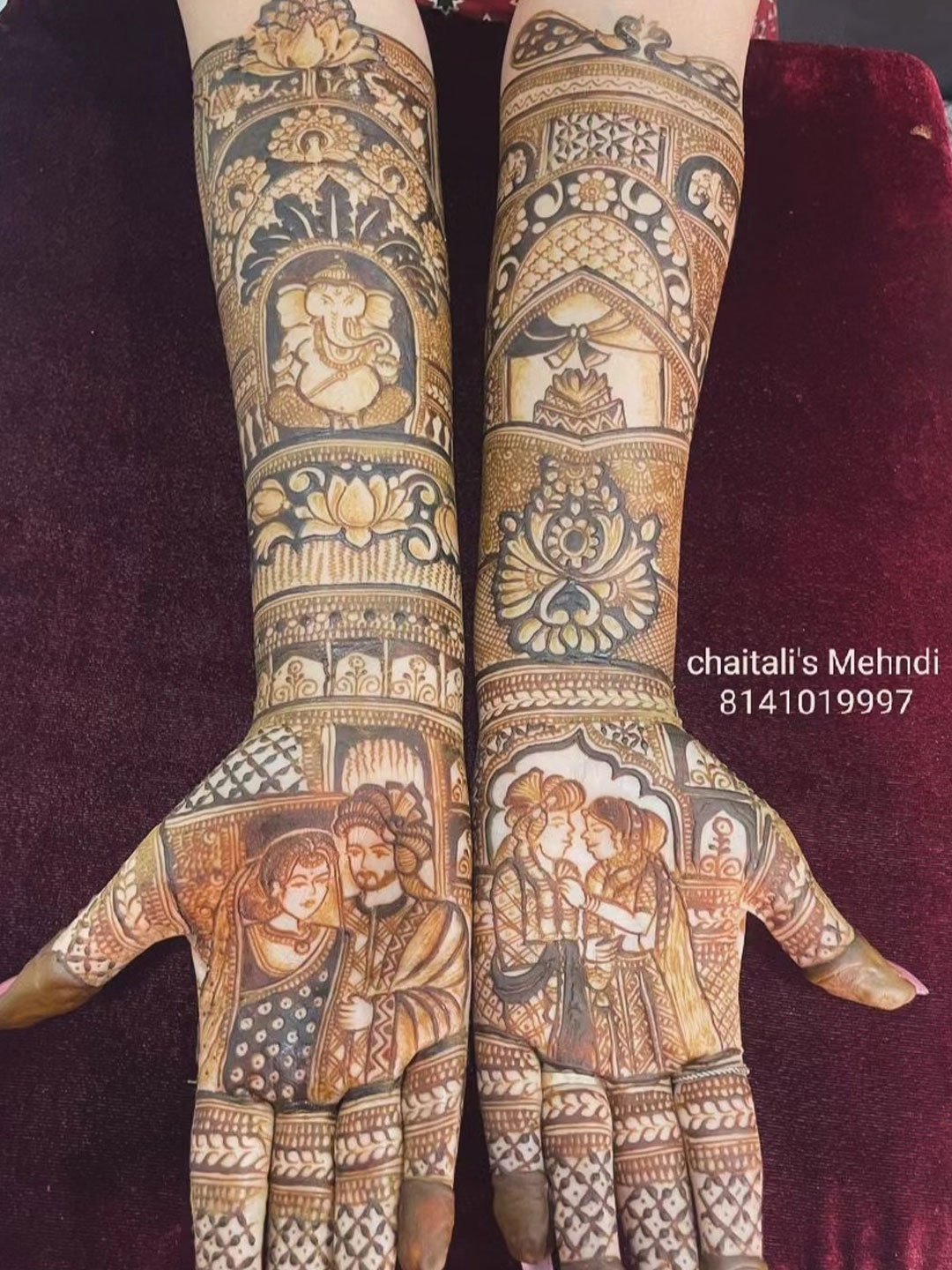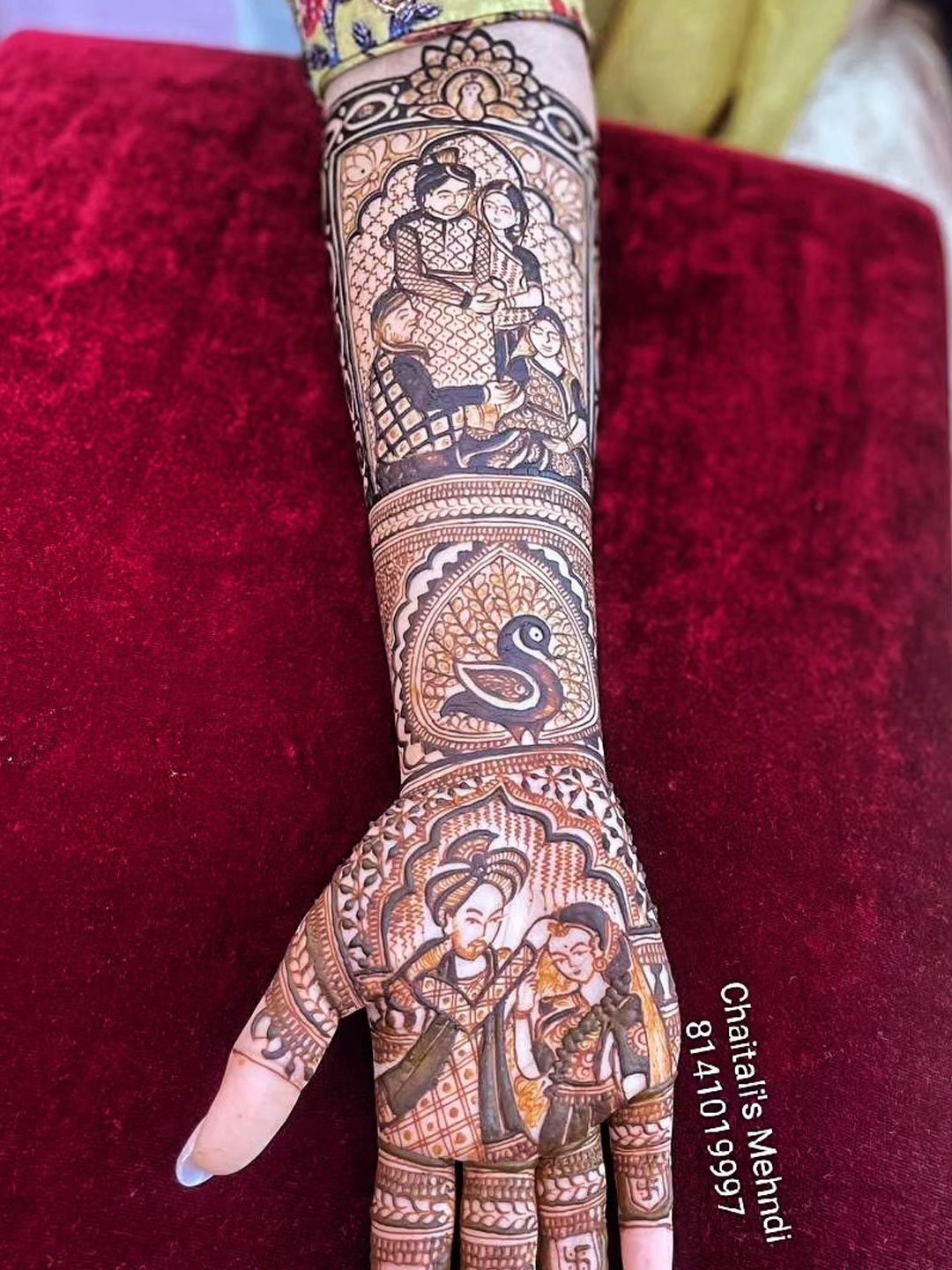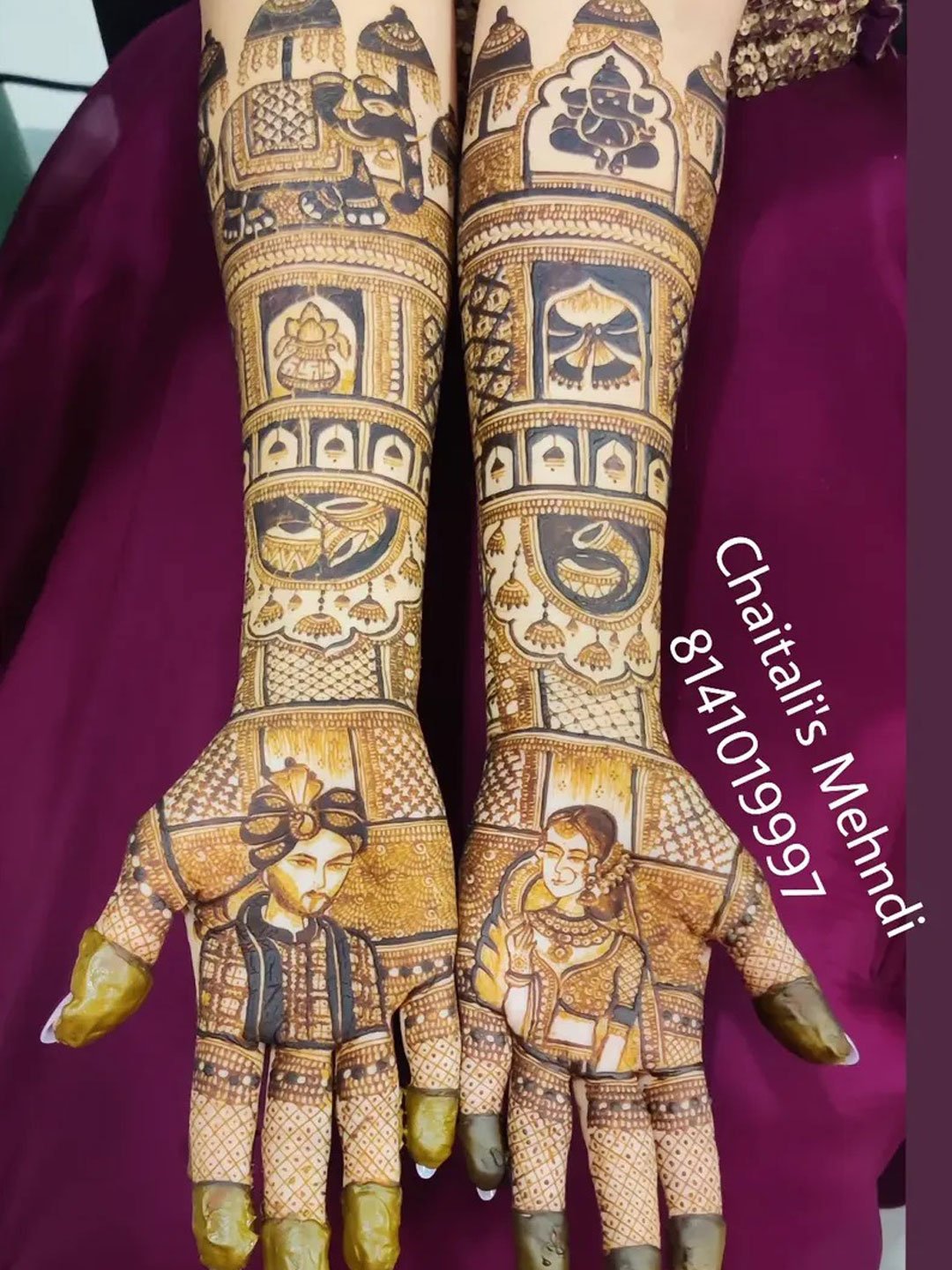
There’s a particular moment during a bridal mehndi session when the artist moves past the florals and the jaal patterns and begins sketching something entirely different — a tiny face, a familiar profile, two figures standing beneath a mandap. That’s when most brides sit up a little straighter. Portrait mehndi has quietly become one of the most requested styles in bridal henna, and for good reason: it turns a beautiful but generic tradition into something that belongs to exactly one couple.
At Chaitali’s Mehndi Art, we’ve watched this shift happen in real time over the last few wedding seasons. Brides no longer just want their hands to look bridal — they want their hands to tell their story. And nothing does that quite like a couple illustration worked directly into the palm.
This guide walks through what portrait mehndi actually is, why it’s become such a defining bridal trend, how skilled artists execute it, and everything you should know before asking your own mehndi artist to attempt one.
What Is Portrait Mehndi, Exactly?
Portrait mehndi — sometimes called figurative mehndi — is a specialised henna technique where an artist draws recognisable human figures, faces, or full scenes into a traditional mehndi design, rather than relying purely on floral, paisley, or geometric motifs. Instead of abstract patterns filling the palm, you get a couple standing together, a bride and groom exchanging garlands, or even a tiny caricature-style illustration of the two of you tucked into the centre of an otherwise classic design.
Unlike a regular decorative pattern, portrait mehndi demands the same eye a portrait sketch artist needs: proportion, expression, and likeness all have to come through in reddish-brown henna paste on a curved, moving surface. It’s part traditional craft, part fine art — which is exactly why it takes years of practice to do well.
Most portrait mehndi work appears on the centre of the palm, where there’s enough flat space to render a detailed scene, though skilled artists also work smaller portraits into the back of the hand, the wrist, or even along the forearm as part of a larger composition.
Why Couple Illustrations Are Trending in Bridal Mehndi Right Now
A few years ago, portrait mehndi was a niche request — something only a handful of specialised artists in any given city could execute confidently. Today, it’s one of the top design trends we hear about from brides before they’ve even finished describing what they want.
A few reasons this shift has happened:
- Weddings have become more personal. From custom invitation illustrations to personalised wedding hashtags, today’s couples want every element of their wedding to reflect their specific relationship, not a generic template. Mehndi is no exception.
- Social media rewards originality. A beautifully filled traditional palm photographs well, but a couple illustration hidden in the design gives guests — and Instagram followers — something to genuinely discover and talk about.
- It doubles as a keepsake. Mehndi fades within a couple of weeks, but the photograph of it doesn’t. Many brides now think of their mehndi design the way they think of their wedding invitation: a piece of art worth preserving in photos long after the henna itself is gone.
- Grooms are getting involved in the planning. Where mehndi was once considered purely the bride’s domain, more grooms are now weighing in on the design — asking specifically for their own likeness, their initials, or a shared illustration to be worked into the bride’s hands.
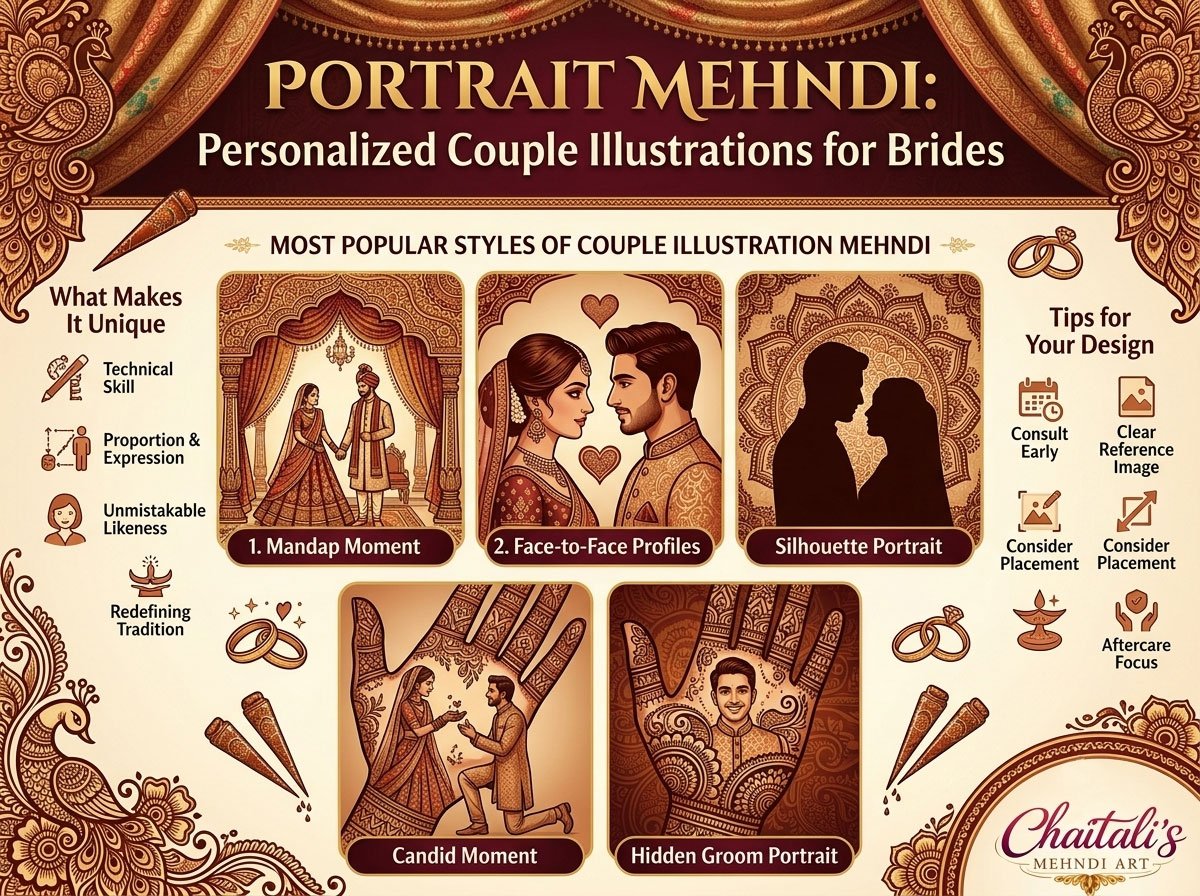
The Most Popular Styles of Couple Illustration Mehndi
Not every couple portrait looks the same, and part of working with a skilled artist is understanding which style actually suits your hands, your outfit, and the rest of your design. Here are the styles we see requested most often at Chaitali’s Mehndi Art.
1. The Mandap Moment
A miniature scene of the couple standing beneath a wedding mandap, often with a priest or fire ceremony sketched in the background, is one of the most requested portrait styles. It works especially well in the centre of the palm, surrounded by a traditional floral border.
2. Face-to-Face Profiles
Rather than a full scene, some brides prefer a simpler, more elegant version: just the bride and groom’s profiles facing each other, sometimes with a small heart or floral motif between them. This style is quicker to execute and pairs beautifully with minimal-fill mehndi, which is also trending this season.
3. The Silhouette Portrait
A softer, more abstract take on portrait mehndi, silhouette designs render the couple as solid shapes rather than detailed line art. This style photographs particularly well and tends to age gracefully as the henna stain darkens and settles over the following days.
4. Candid Moment Illustrations
Some couples ask their artist to recreate a specific candid photo — a proposal moment, a first-dance pose, or even a favourite pre-wedding shoot picture — as a mehndi illustration. This is the most technically demanding version of portrait mehndi and requires an artist with genuine figurative drawing experience, not just henna application skill.
5. Hidden Groom Portraits
A long-standing mehndi tradition gets a personalised update here: instead of hiding the groom’s initials somewhere in the design (a classic “find the groom’s name” game at the wedding), some brides now ask the artist to hide a small illustrated portrait of the groom’s face instead — a modern twist on an old ritual.
What Makes Portrait Mehndi Difficult to Get Right
It’s worth being upfront about this: portrait mehndi is not something every mehndi artist can execute well, even if they’re excellent at traditional bridal patterns. A few specific challenges separate a genuinely skilled portrait artist from someone attempting it for the first time on your wedding day.
- Henna doesn’t erase. Unlike a pencil sketch, there’s no undo button once the cone touches skin. An artist needs to be confident enough in their linework to get proportions right on the first attempt.
- Skin isn’t paper. Hands move, joints bend, and the surface curves — all of which distort a portrait mid-application in ways a flat canvas never would.
- Stain development changes the image. Fresh henna paste is a solid, dark line. As it dries, flakes off, and the stain develops over the following 24–48 hours, fine facial details can either sharpen beautifully or blur into an unrecognisable smudge, depending on the artist’s technique and paste quality.
- Likeness is subjective — and personal. A slightly imperfect floral motif is forgivable. A groom portrait that doesn’t quite look like the groom is a lot more noticeable, especially in wedding photos that will be looked at for decades.
This is exactly why we recommend asking to see an artist’s specific portfolio of portrait and figurative mehndi — not just their general bridal work — before booking them for this style.
How to Prepare If You Want Portrait Mehndi on Your Wedding Day
If a couple illustration is high on your mehndi wish list, a little preparation goes a long way toward getting a result you’ll love.
1. Bring a clear reference image. Whether it’s a professional pre-wedding photograph, a simple couple illustration you found online, or just a clear description of the pose and expression you want, give your artist something concrete to work from. Vague requests like “something romantic with both of us” are much harder to execute well than a specific reference.
2. Ask for a consultation before the big day. At Chaitali’s Mehndi Art, every bridal booking begins with a design consultation — not a fixed template pick. This matters even more for portrait work, since the artist needs time to plan composition, sizing, and placement around the rest of your hand design, rather than improvising on the wedding morning.
3. Consider a trial portrait. If a detailed couple illustration is central to your mehndi plan, ask your artist about doing a small trial version on your arm a few weeks before the wedding. This lets you see their figurative style in person and confirm it matches what you had in mind, well before there’s no room left to adjust.
4. Decide on placement early. Portrait mehndi typically works best in the centre of the palm, where there’s a natural, uninterrupted canvas. If you want it elsewhere — the back of the hand, the wrist, or worked into a sleeve-style forearm design — mention this during the consultation, since it changes how the rest of the pattern is planned around it.
5. Talk about size and prominence. Some brides want the couple illustration to be the clear centrepiece of the entire design. Others prefer it smaller and more discoverable, tucked into a corner as a personal detail rather than the main event. Both are valid choices — but your artist needs to know which one you’re going for.
Pairing Portrait Mehndi with Other 2026 Bridal Trends
Portrait mehndi doesn’t have to stand alone. Many of this year’s most photographed bridal designs combine a central couple illustration with one or two complementary trends:
- Indo-Arabic fusion borders around a central portrait give the design a bold, structured frame without competing with the illustration itself.
- Minimal-fill styling elsewhere on the hand lets the portrait remain the clear visual focus, rather than getting lost among dense traditional fill patterns.
- Personalised motifs — a wedding date, initials, or small symbols tied to the couple’s story — worked in around the portrait add another layer of meaning without overwhelming the design.
- Two-tone and glitter accents, added once the stain has developed, can be used sparingly to highlight the portrait for evening functions like the sangeet or reception.
Caring for Your Stain After a Detailed Portrait Design
Because so much of a portrait’s final impact depends on how the stain develops, aftercare matters more here than with a typical floral design.
- Leave the paste on for as long as possible — ideally overnight — before flaking it off. Never wash it off with water.
- Avoid water contact on the design for at least the first six to eight hours after removing the dried paste.
- Apply a lemon-sugar mix or expose the area to clove smoke shortly after the paste comes off, both of which are commonly used methods for deepening the final stain.
- Avoid excessive scrubbing or exfoliating over the design in the days that follow, since fine linework — like facial features in a portrait — is the first detail to blur if the surface skin is disturbed too early.
Ask your artist for their specific aftercare recommendations, since techniques can vary slightly depending on the cone recipe they use.
Frequently Asked Questions
Is portrait mehndi more expensive than traditional bridal mehndi? Generally, yes. Because figurative work takes longer, requires more skill, and often needs a dedicated consultation beforehand, most artists charge a premium for detailed portrait or couple illustration work compared to standard bridal fill patterns.
How long does a portrait take to apply compared to regular mehndi? A detailed couple illustration can add anywhere from thirty minutes to over an hour to a session, depending on its size and complexity, on top of the standard four-to-eight-hour bridal mehndi timeline.
Can portrait mehndi be added to an otherwise simple, minimal design? Yes — in fact, this pairing is increasingly popular. A single, well-executed portrait surrounded by minimal-fill linework often makes more visual impact than a portrait competing with a dense, fully-filled traditional pattern.
What if I want a portrait but I’m nervous about the likeness not turning out well? This is exactly what a pre-wedding trial session is for. Ask to see the artist’s past portrait work first, and consider a small trial on your arm to confirm their figurative style before committing to it for the wedding day itself.
Do I need to bring my own reference photo? It helps enormously. A clear photo — even a casual one — gives your artist something specific to work from, which almost always produces a better likeness than a verbal description alone.
Final Thoughts
Portrait mehndi represents something bigger than a passing design trend — it reflects a broader shift toward weddings that feel genuinely personal rather than assembled from a template. A couple illustration worked into your bridal mehndi isn’t just decoration; it’s a small, permanent-feeling piece of art documenting the exact moment you’re standing in, long after the henna itself has faded.
If you’re considering portrait mehndi for your own wedding, the most important step is choosing an artist with real, demonstrable experience in figurative work — not just floral bridal patterns. At Chaitali’s Mehndi Art, every bridal booking starts with a personal design consultation, which is especially important for couple illustrations and portrait work, where getting the likeness and composition right matters as much as the henna technique itself.
We offer bridal, engagement, and portrait mehndi services across Ahmedabad, including Vastrapur, Navrangpura, Usmanpura, Sabarmati, Shahibaug, Vejalpur, and Nava Vadaj. If a couple illustration is part of your bridal mehndi vision, get in touch for a design consultation — we’d love to help you plan something that’s entirely, unmistakably yours.