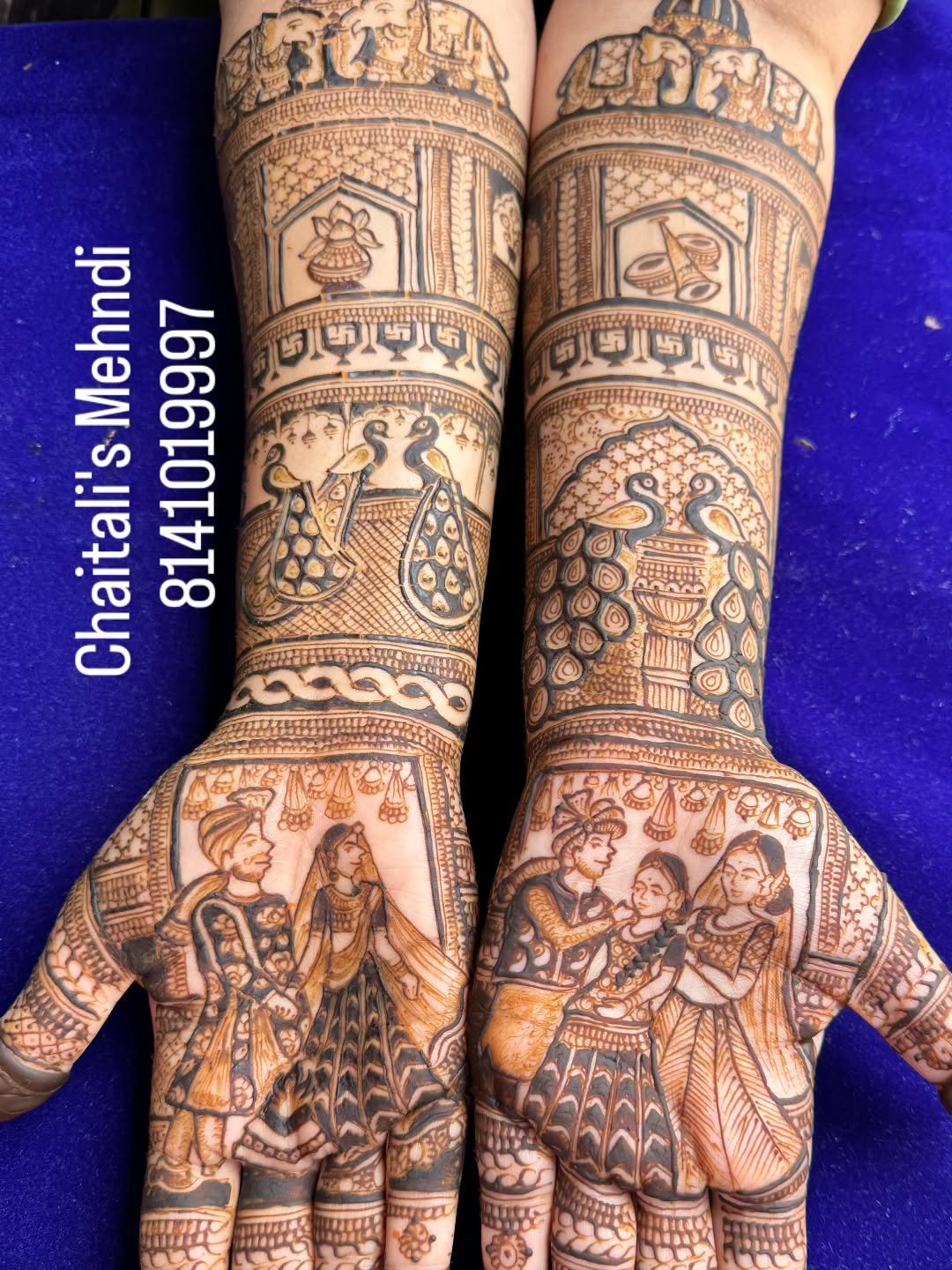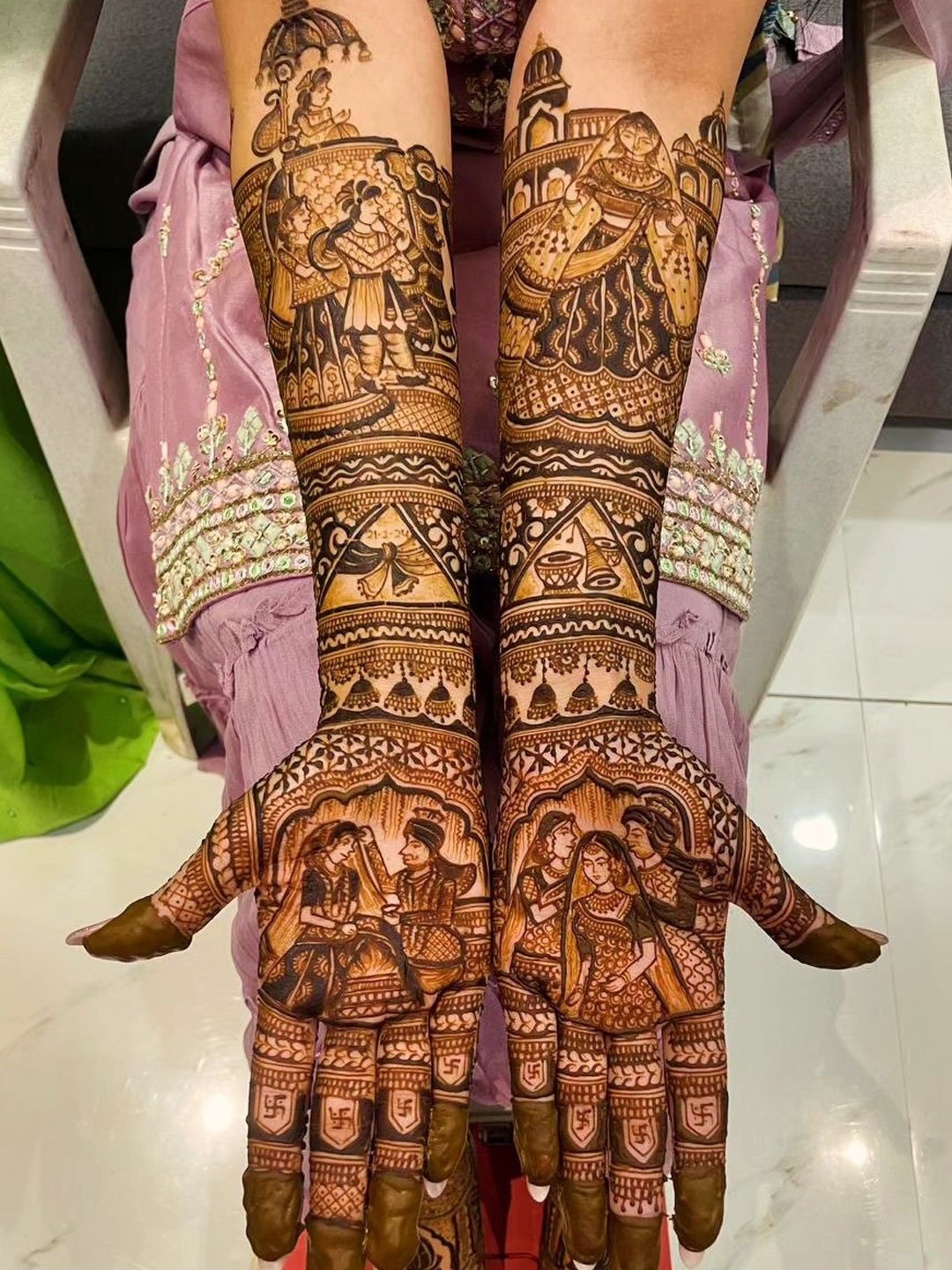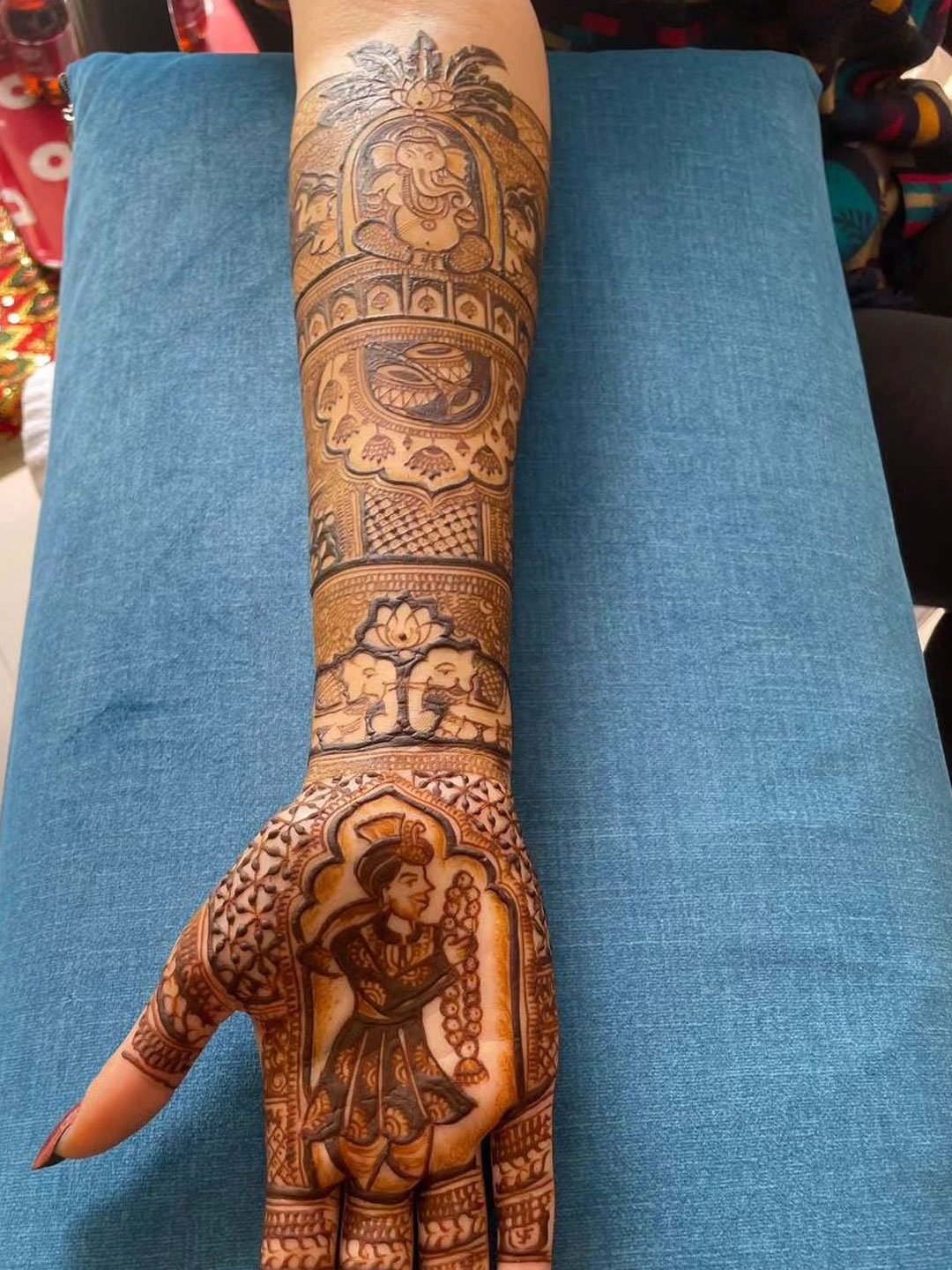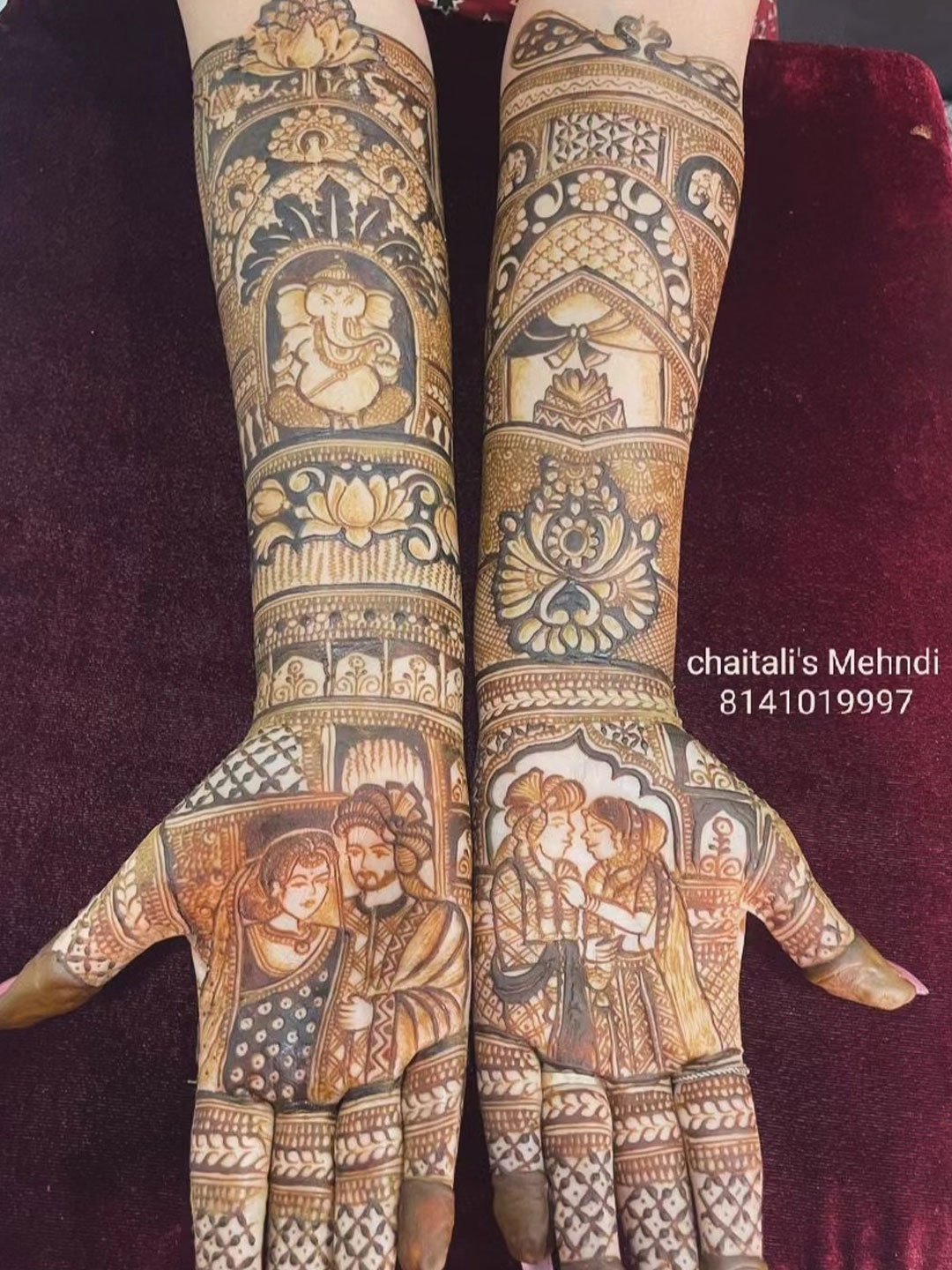
For years, the palm got most of the attention in bridal mehndi conversations — it’s where the dense, traditional detailing has always lived, and it’s the side of the hand most people picture when they think “bridal henna.” But the back of the hand has quietly become just as important, if not more so, for one simple reason: it’s the side the camera actually sees. Ring shots, hand-clasping moments, candid shots at the mandap — almost all of it captures the back of the hand, not the palm.
If you’re planning your bridal mehndi and want a design that photographs as beautifully as it looks in person, this guide walks through why back-hand designs have become such a priority, the styles worth considering, and how to plan one that genuinely steals the show.
Why the Back of the Hand Matters So Much
Think about the mehndi photos you’ve actually seen from weddings — the ring being slid onto the finger, hands resting together during the vows, a candid shot of the bride holding a cup of chai between ceremonies. In almost every one of these moments, it’s the back of the hand facing outward, not the palm. The palm tends to face inward, holding a bouquet, resting against a groom’s hand, or simply out of frame.
This has quietly shifted how a lot of brides think about their mehndi planning. Where the palm used to get the most elaborate, dense detailing almost by default, more brides now treat the back of the hand as the true centrepiece — the side worth investing the most design thought into, since it’s the side that ends up in the photographs they’ll keep for decades.
There’s also a practical visual reason back-hand designs tend to stand out: the skin tone and texture on the back of the hand often shows the henna stain slightly differently than the palm, and the visible tendons, knuckles, and finger structure give an artist more natural lines to work a design around, rather than the comparatively flat canvas of the palm.
What Makes a Back-Hand Design Different to Plan
Designing for the back of the hand isn’t simply a matter of moving the same palm pattern to the other side. The back of the hand has a different shape to work with — narrower, more elongated, broken up visually by the fingers, and centred around the prominent line of bones and knuckles running from wrist to fingers.
Good back-hand designs tend to work with this structure rather than against it. Artists often anchor a design along the natural line of the hand — following the space between the index and middle finger down toward the wrist, or building a symmetrical pattern that uses the knuckles as natural break points between sections. Density also tends to be handled differently: because the back of the hand is smaller and more visually broken up by fingers, overly dense fill can start to look cluttered in a way it wouldn’t on the more open canvas of the palm. Many of the most striking back-hand designs lean toward open, breathable patterns instead — enough detail to feel bridal, without crowding the hand’s natural structure.
Back-Hand Bridal Mehndi Designs to Consider
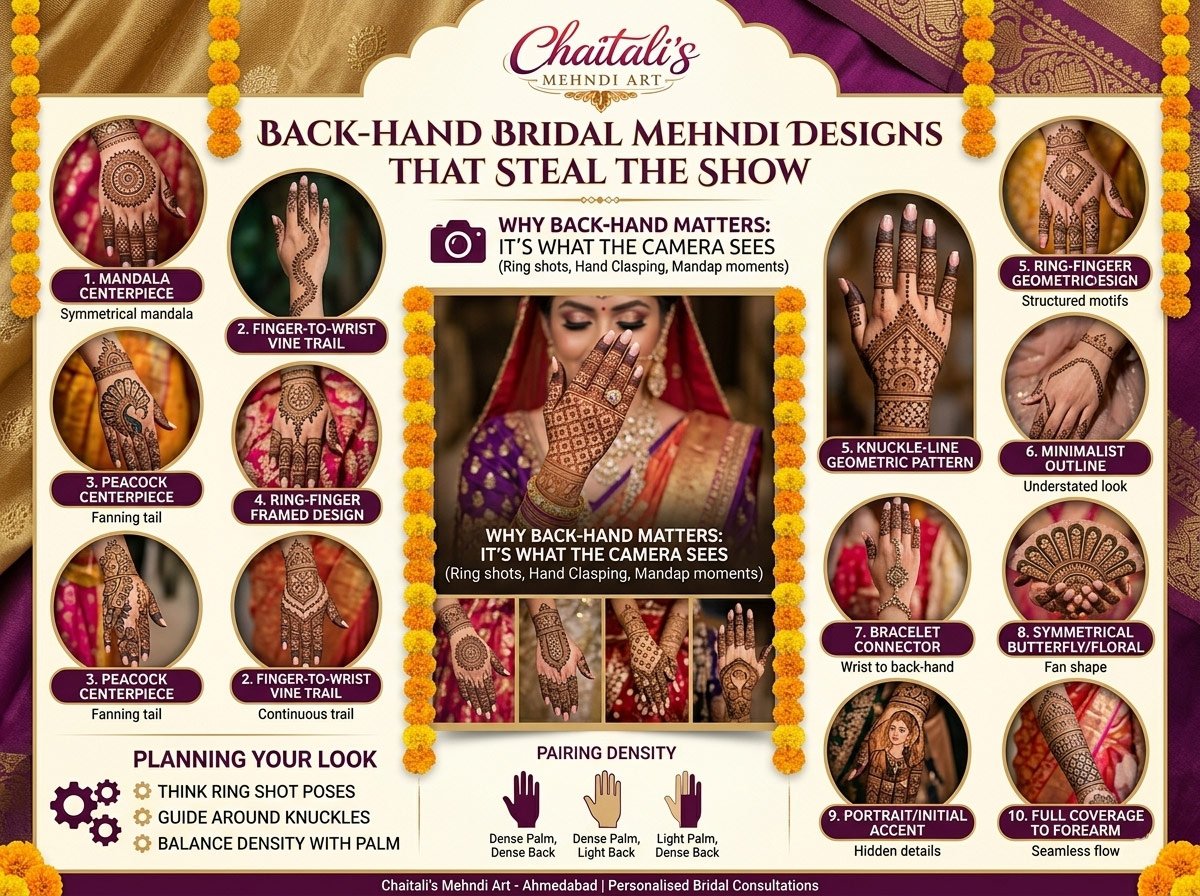
1. Back-of-Hand Mandala
A symmetrical mandala centred on the back of the hand, usually positioned just below the knuckles, creates a striking focal point that reads clearly in ring shots and close-up photography. Its geometric precision tends to photograph exceptionally well against the more structured shape of the hand’s back.
2. Finger-to-Wrist Vine Trail
A single, continuous floral or paisley vine trails from the middle finger down through the back of the hand to the wrist, following the hand’s natural centre line. It’s one of the more elegant, less bulky options, since the design stays narrow and doesn’t compete with the fingers on either side.
3. Peacock Centrepiece
A peacock positioned on the back of the hand, tail fanning out toward the wrist, takes full advantage of the visibility this placement offers — it’s a design built to be seen, and the back of the hand puts it directly in frame for most bridal photography.
4. Ring-Finger Framed Design
The design is built specifically around the ring finger, with detailing that frames or leads the eye toward it — a deliberate choice for brides who know a ring shot is coming and want the mehndi to complement that exact moment.
5. Knuckle-Line Geometric Pattern
Rather than one large centrepiece, this style uses a series of smaller geometric or floral motifs placed along each knuckle, creating a rhythmic, structured look that plays directly off the hand’s natural bone structure.
6. Minimalist Back-Hand Outline
A light, mostly outlined design with selective fill, positioned centrally on the back of the hand. This has become an increasingly popular choice for brides who want their bridal mehndi to feel modern and understated rather than dense and traditional.
7. Bracelet-to-Back-of-Hand Connector
A wrist “bracelet” motif connects upward into a design on the back of the hand via a fine chain-like linework, sometimes extending to a ring on one finger — a popular jewellery-inspired style that ties the whole back-of-hand composition together.
8. Symmetrical Butterfly or Floral Fan
A fan-shaped arrangement of florals or a stylised butterfly motif spreads from the wrist upward across the back of the hand, tapering as it approaches the fingers. The fan shape naturally suits the elongated proportions of this side of the hand.
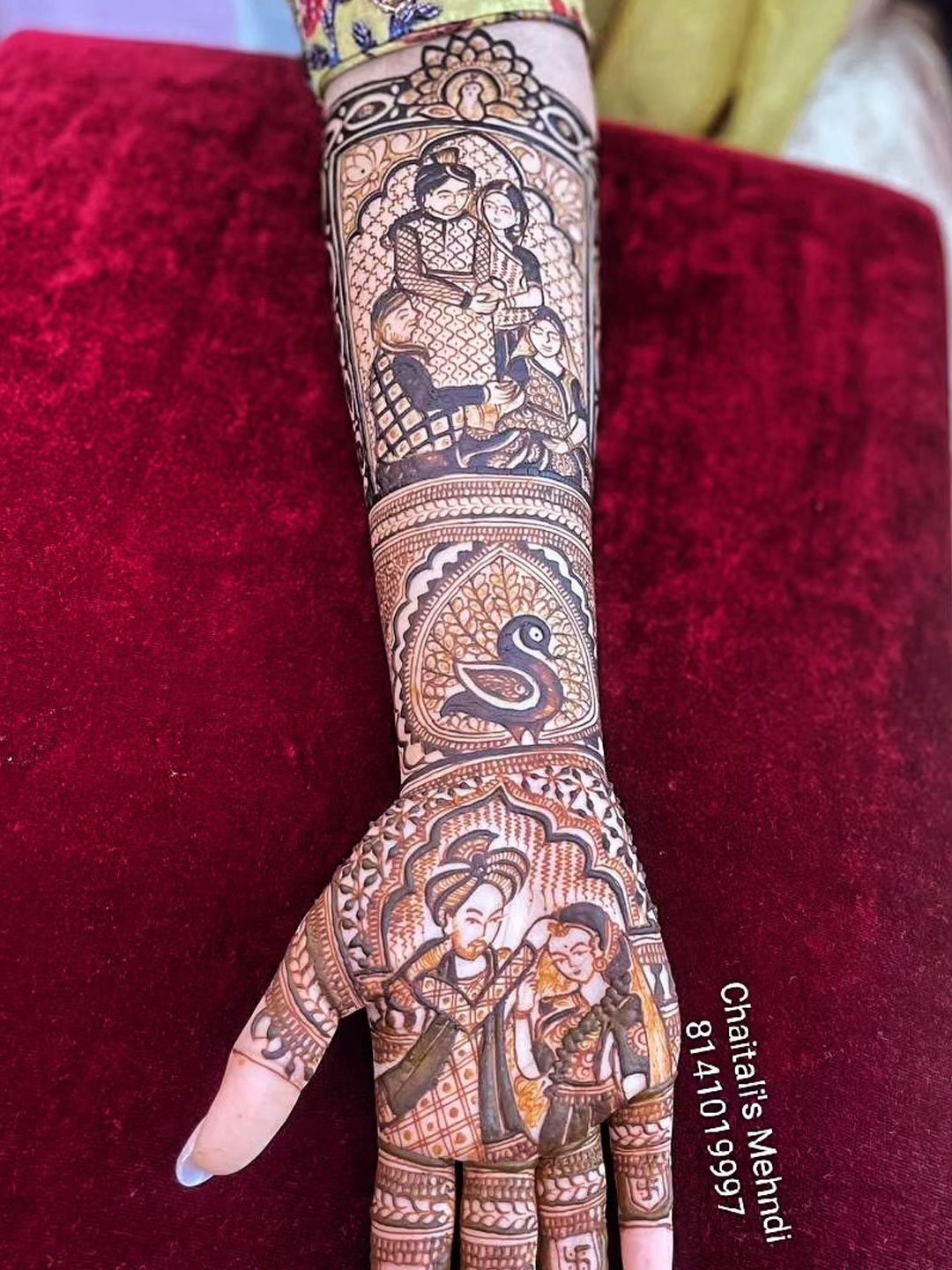
9. Portrait or Initial Accent Design
For brides who want a personal touch specifically where it’ll be seen, a small hidden initial or delicate accent detail is worked into the back-of-hand pattern, positioned so it’s visible in close-up shots without overwhelming the rest of the design.
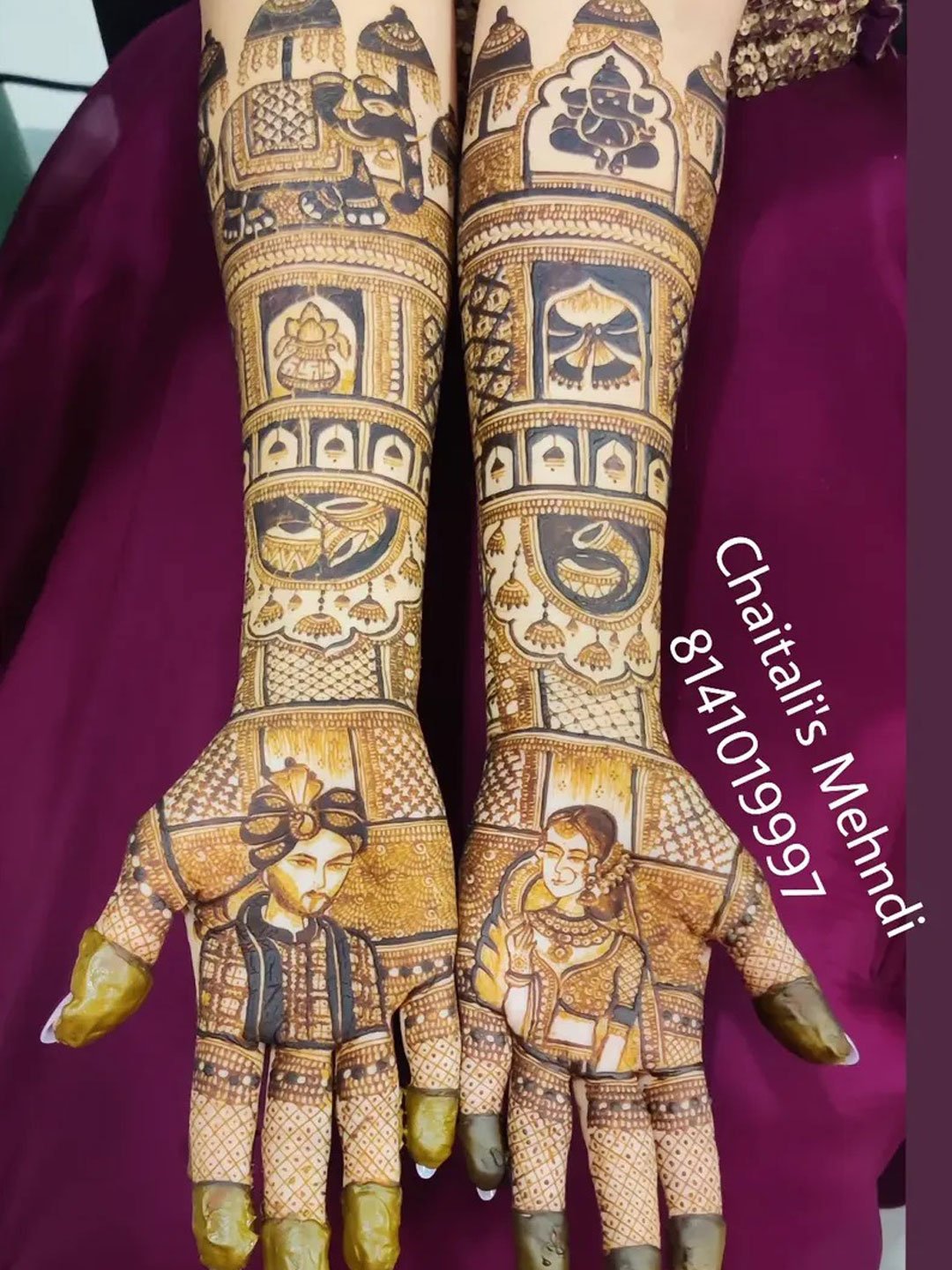
10. Full Coverage Back-of-Hand to Forearm
For brides planning a full-arm bridal look, the back-of-hand design becomes the starting point that flows upward into forearm detailing, creating one continuous, photograph-ready design from fingertips to elbow.
Pairing Back-Hand Designs With Palm Detailing
Most bridal mehndi still includes palm work, even when the back of the hand is the priority — the question is usually how the two sides relate to each other.
Matching density on both sides creates a traditional, fully coordinated look, where the palm and the back of the hand carry equally elaborate detailing that reads as one cohesive design when the hand is turned either way.
Dense palm, lighter back-of-hand puts the bulk of the traditional detailing on the palm while keeping the back of the hand cleaner and more photograph-friendly — a popular middle ground for brides who want tradition on one side and a camera-ready finish on the other.
Light palm, dense back-of-hand flips the usual approach entirely, prioritising the visible side of the hand for maximum photographic impact while keeping the palm comparatively simple. This has become more common as brides increasingly plan mehndi with photography specifically in mind.
Tips for Planning a Back-Hand Focused Design
- Think about your ring shot in advance. If you know your photographer plans a specific ring or hand-clasping shot, mention it during your mehndi consultation so the design can be built to complement that exact moment.
- Ask your artist to sketch the flow around your knuckles first. The back of the hand’s structure should guide the design, not fight against it — a good artist will plan the pattern’s break points around your natural hand shape before adding density.
- Don’t over-fill a smaller canvas. The back of the hand has less open space than the palm, so a design that would look balanced on the palm can look crowded here. Ask your artist for their read on how dense the pattern should go.
- Decide your density balance between palm and back-of-hand early. Since this affects the whole design plan, settle on whether you want matching density, or a deliberate contrast between the two sides, before the session starts.
- Bring reference photos of hand poses you love, not just design patterns. Since this placement is so tied to photography, seeing how a design looks in a held or clasped hand position can be more useful than seeing it flat.
How Long Does a Back-Hand Design Take?
Application time depends on density and how far the design extends. A minimalist back-hand outline with light detailing can take as little as 30 to 45 minutes. A denser back-of-hand centrepiece — a mandala or peacock design with surrounding fill — typically takes 1 to 2 hours on its own. If the back-hand design connects into a full-arm composition, budget the same way you would for any full-coverage bridal mehndi session, with several hours set aside and enough buffer that the finer knuckle and finger detailing isn’t rushed.
Back-Hand Mehndi Across Different Wedding Styles
Back-hand designs adapt easily across a range of bridal aesthetics, which is part of why they’ve become such a consistent request regardless of overall wedding style.
For a traditional Indian wedding, a dense mandala or peacock centrepiece on the back of the hand, paired with equally elaborate palm work, keeps the design fully bridal while still being camera-ready. For a contemporary or fusion wedding, a minimalist outline or finger-to-wrist vine trail on the back of the hand offers a cleaner, more modern finish that photographs beautifully without heavy density. For a destination wedding, a moderate back-hand design — enough detail to feel bridal without requiring hours of application — often works best given tighter schedules around travel and multiple outfit changes.
Frequently Asked Questions
Should the back of my hand or my palm get more detail? There’s no fixed rule — it comes down to your priorities. If photography is a major focus, many brides now lean toward more detail on the back of the hand. If you want a fully traditional look, matching density on both sides is still the classic approach.
Do back-hand designs take longer than palm designs? Not necessarily. Because the back of the hand is a smaller surface, back-hand designs are often quicker to complete than an equally dense palm design, especially if the style leans toward open, breathable patterns rather than dense fill.
Can I get a peacock or mandala centrepiece specifically for the back of my hand? Yes, both motifs work very well in this placement and are among the most requested back-hand centrepieces, largely because their symmetry and structure photograph clearly.
Will a back-hand focused design still look complete if I turn my palm outward? A well-planned design accounts for both sides working together, even if the back of the hand carries more visual weight. Mention to your artist that you want both sides to feel finished, and they’ll balance the palm accordingly.
Is this placement suitable for a minimalist bride? Very much so. The back of the hand is actually one of the most popular placements for minimalist bridal mehndi, since a light, well-placed design here can still feel bridal and photograph beautifully without covering the whole hand.
Final Thoughts
The back of the hand has earned its place as one of the most important parts of bridal mehndi planning, simply because it’s the side that ends up in almost every photograph from the day. Whether you choose a bold peacock centrepiece, a symmetrical mandala, or a light minimalist outline, a well-planned back-hand design is one of the surest ways to make sure your mehndi looks just as striking in your wedding album as it did on the day itself.
If you’re planning your wedding mehndi and want a back-hand design built around your hand shape, outfit, and the moments your photographer has planned, Chaitali’s Mehndi Art offers personalised bridal mehndi consultations, engagement mehndi, and portrait mehndi services across Ahmedabad. Get in touch to start planning a design that’s ready for every camera pointed your way.