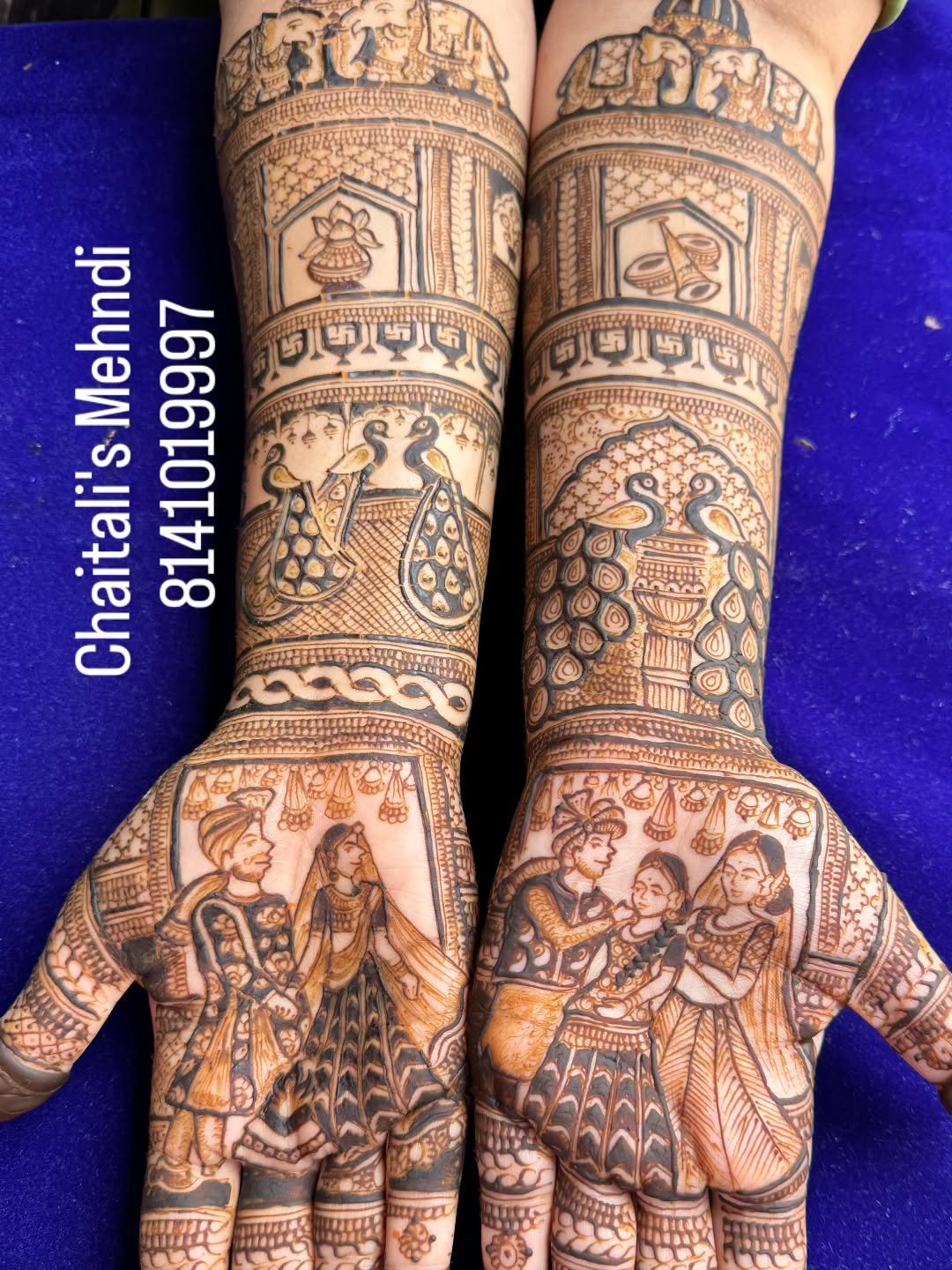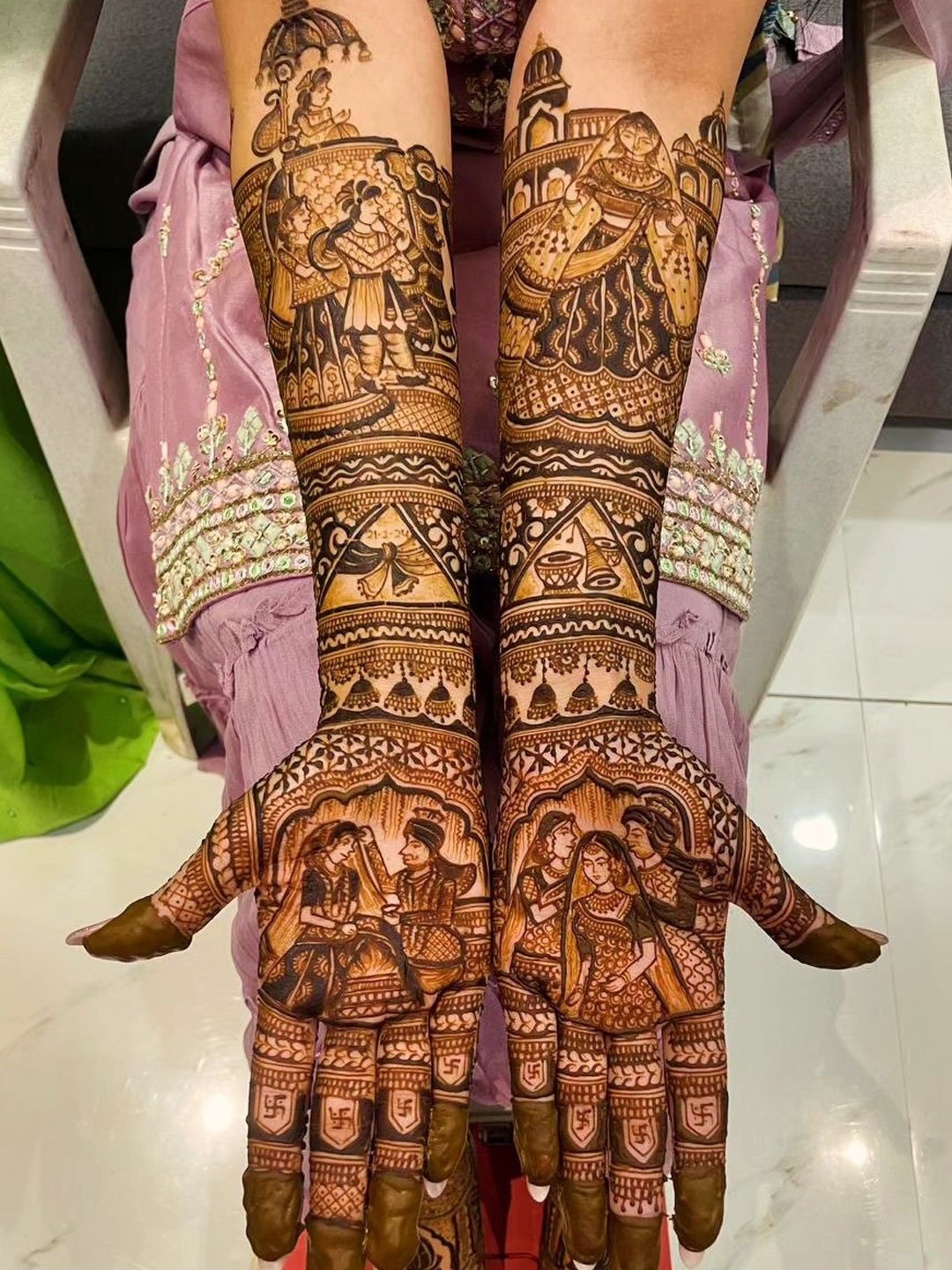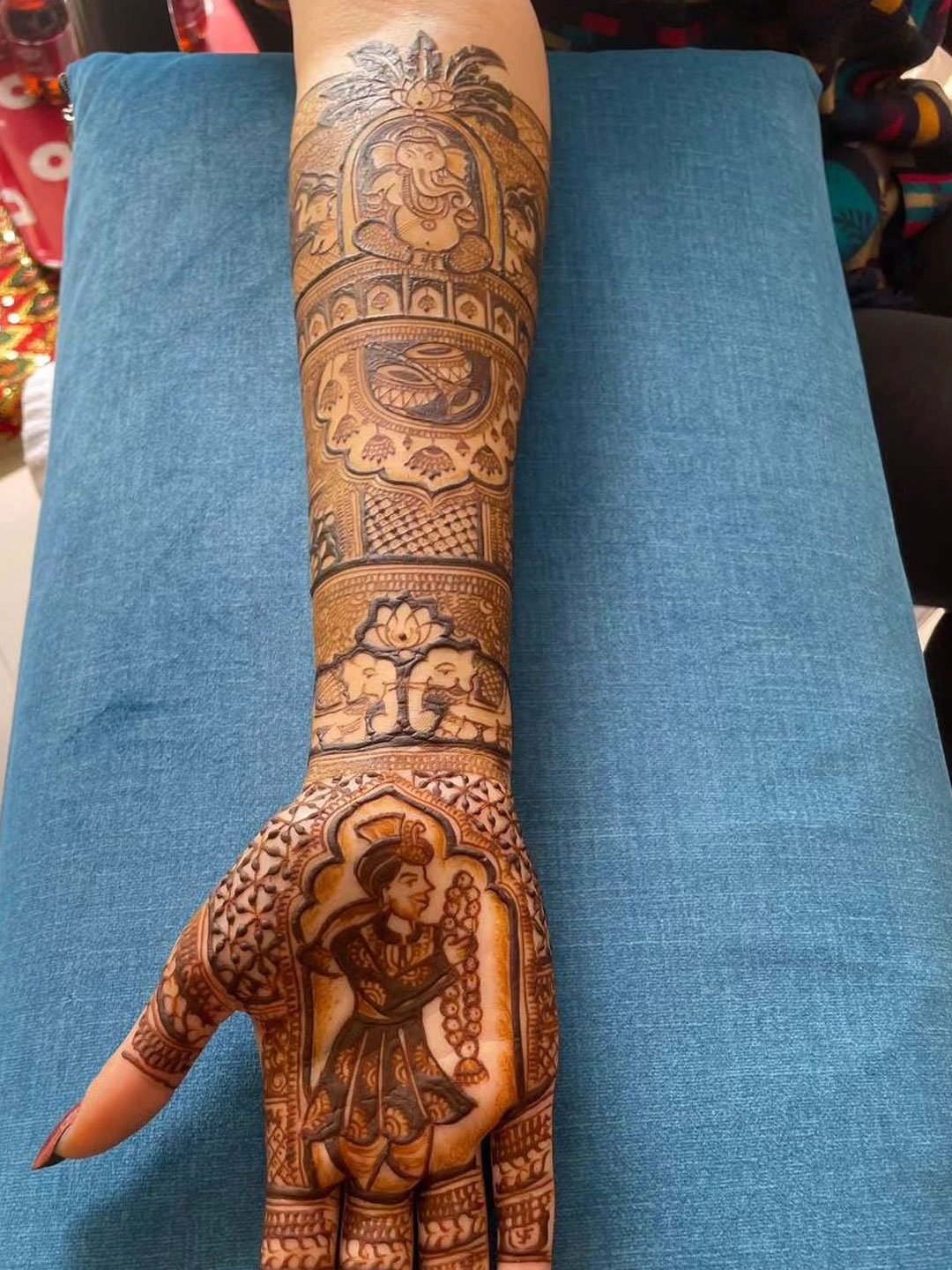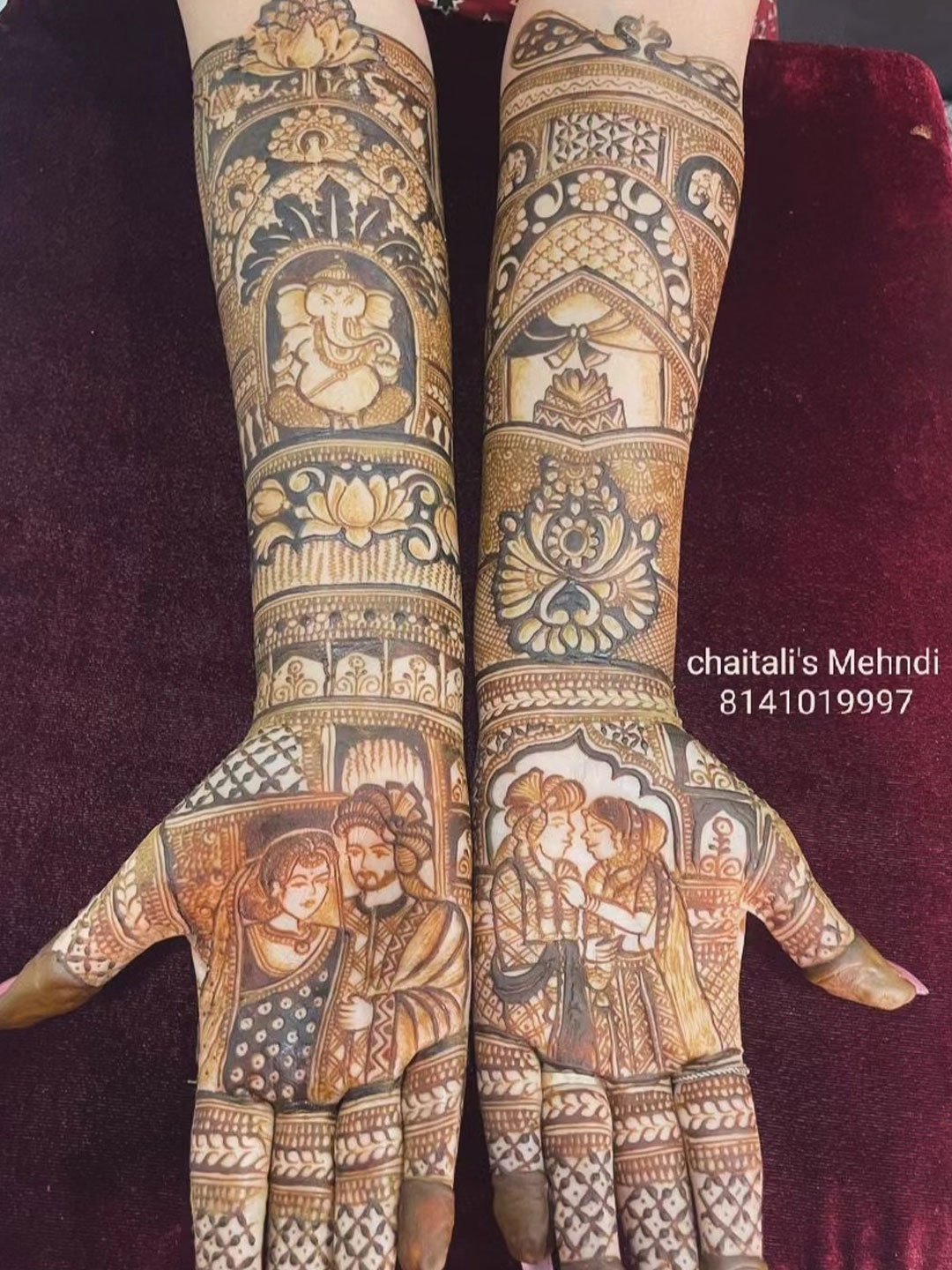
Somewhere between tradition and a small private joke, the hidden initial has become one of the most requested details in bridal mehndi. It’s not a motif in the traditional sense — no symbolism dating back centuries, no regional origin story. It’s simply a modern addition that brides and grooms have taken to because it turns an already personal art form into something even more personal: a tiny detail meant for two people to find, tucked somewhere in a design that everyone else sees but very few people ever spot.
If you’re considering weaving your groom’s initials into your bridal mehndi, this guide walks through why the trend has caught on, the different ways artists hide initials within a design, where to place them, and what to keep in mind when planning it with your artist.
Why Brides Ask for Hidden Initials
The tradition of searching for a groom’s name hidden in bridal mehndi actually predates the initials trend by a long way. In many parts of India, it’s customary to hide the groom’s full name somewhere in the bride’s mehndi, and on the wedding night, the groom is expected to find it — a playful ritual that’s stayed popular precisely because it gives the couple a lighthearted moment amid an otherwise long, ceremonial day.
The initials version is a newer, more understated take on the same idea. Rather than spelling out a full name in a dedicated section of the palm, a single letter or two is worked so seamlessly into the pattern that it reads as pure decoration to anyone who isn’t looking for it. For brides who love the sentiment of the name-hiding tradition but want their mehndi to look purely artistic rather than having an obvious “search here” section, initials offer a quieter way to keep the custom alive.
There’s also a simple emotional pull to it. A wedding day is full of details other people notice and comment on — the outfit, the jewellery, the venue. A hidden initial is one of the only elements that belongs entirely to the couple. Even after the mehndi fades, it tends to be one of the details brides remember most fondly.
How Artists Hide Initials in a Design
The skill in this kind of work isn’t in drawing the letter itself — it’s in disguising it well enough that it doesn’t disrupt the flow of the surrounding pattern. A mehndi artist experienced in this technique typically works the initial in after the main structure of the design is planned, choosing a spot where the letter’s natural shape can borrow lines from a flower, a leaf, or a paisley curve that would have been there anyway.
Most artists lean on a handful of reliable techniques:
Curved letters worked into florals. Letters like C, S, O, and G have natural curves that blend easily into the swirl of a paisley or the curl of a flower’s petal, making them some of the easiest initials to disguise well.
Straight letters worked into borders or lattice work. Letters like I, L, T, and H fit naturally into the straight or grid-like lines of border patterns, jaali work, or the veins of a leaf motif, where a straight stroke wouldn’t look out of place regardless.
Letters broken across two motifs. For trickier shapes, some artists split the letter across two adjoining elements — half hidden in one petal, half in the one beside it — so that neither half reads as a letter unless you already know where to look and how the two pieces connect.
Mirrored or stylised lettering. Rather than a standard block letter, the initial is stretched, curved, or stylised to match the flow of the surrounding vine or floral trail, sacrificing a bit of legibility for a much more seamless blend.
The best hidden initials are usually the ones that took the least obvious approach — a letter that could pass as a stem or a petal edge unless someone points it out.
Popular Ways to Hide a Groom’s Initial in Bridal Mehndi
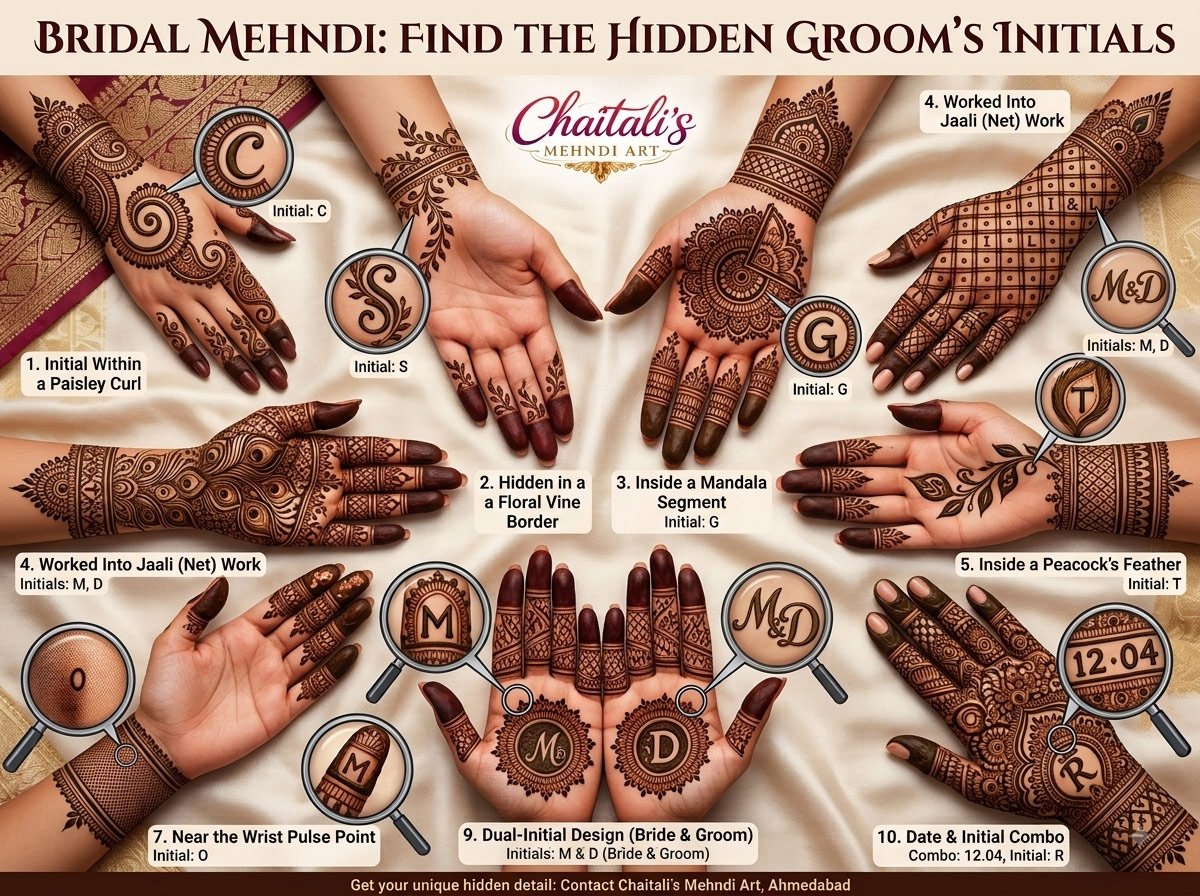
1. Initial Within a Paisley Curl
The natural curve of a paisley motif is one of the most forgiving shapes to hide a letter in, particularly rounded letters. The initial is worked into the paisley’s spiral so it looks like an extension of the pattern rather than a separate addition.
2. Initial Hidden in a Floral Vine Border
A trailing floral vine running along the wrist or fingers offers plenty of small gaps between leaves and blooms where a single letter can sit almost invisibly, especially when the vine’s natural curls already echo the letter’s shape.
3. Initial Inside a Mandala Segment
One of the mandala’s repeating outer segments is subtly altered to contain the initial, disrupting the pattern just enough to hide a letter but not enough to break the mandala’s overall symmetry to a casual glance.
4. Initial Worked Into Jaali (Net) Work
The grid-like structure of jaali work is well suited to straight-lined letters, which can be worked into one of the lattice’s intersections without standing out from the surrounding net pattern.
5. Initial Within a Peacock’s Feather Detailing
For brides already planning a peacock motif, the fine linework inside individual tail feathers offers a natural hiding spot — a small letter tucked into the feather’s “eye” pattern or along one of its inner lines.
6. Initial Disguised as a Leaf
A leaf’s natural asymmetry gives an artist room to bend a letter’s shape into the leaf’s outline itself, so the initial essentially becomes the leaf rather than sitting inside it.
7. Initial Hidden Near the Wrist Pulse Point
Rather than embedding the letter within another motif, some artists place a small, delicately styled initial directly at the wrist, disguised through fine shading or surrounding dot work so it reads as part of a bracelet-style border rather than standing alone.
8. Initial Within Fingertip Detailing
Fingertips are often finished with small motifs of their own — a good spot for a tiny initial worked into the tip pattern, small enough that it’s easy to miss unless someone is looking closely at that specific finger.
9. Dual-Initial Design (Bride and Groom)
Some couples ask for both initials hidden within the same design, usually on opposite hands or at mirrored points on the same hand, so the two letters form a subtle pair without ever being placed obviously side by side.
10. Date or Initial Combination
A small number worked in alongside the letter — often the wedding date — creates a slightly more elaborate hidden detail, usually placed within a larger, denser section of the design where the extra characters have enough surrounding detail to stay disguised.
Where to Hide the Initial
Placement has a big effect on how easy or difficult the initial is to find, and it’s worth discussing with your artist based on how much of a challenge you want it to be.
Palm centre, within a mandala or floral centrepiece, tends to be the most traditional spot, mirroring where the older name-hiding custom usually placed a groom’s full name.
Back of the hand works well if you’d rather keep the palm’s design uninterrupted, and it also tends to be more visible in candid photography, in case the initial ends up in a wedding photo without anyone realising.
Wrist, tucked into a border or bracelet-style pattern, is a popular choice for brides who want the initial somewhere it won’t disrupt the density of the palm or fingers.
Fingertips offer the most challenging hiding spot, since the small scale naturally makes the letter harder to spot, which some couples specifically want for a longer, more playful search.
How to Plan This With Your Mehndi Artist
Getting a hidden initial right is less about the letter itself and more about communication with your artist ahead of time.
- Tell your artist early, ideally at the design consultation stage rather than the day of, so the initial can be planned into the composition rather than squeezed in as an afterthought.
- Decide how difficult you want it to be to find. Some couples want the groom to spot it almost immediately as a sweet, easy moment; others want a genuine search that takes a while. Let your artist know which experience you’re going for.
- Choose a letter style you’re comfortable with. If your groom’s initial is a tricky shape to disguise, ask your artist which motifs they’d recommend building it into, since some letters simply hide more naturally than others.
- Decide who else should know. Many brides keep the exact hiding spot a secret even from close family, since part of the fun is the groom searching for it in front of everyone.
- Ask to see the initial before the design is finalised, particularly if you want to make sure it’s subtle enough not to be spotted by guests during the ceremony.
Does Hiding an Initial Add to Application Time?
Not significantly. Since the initial is worked into a motif that would likely have been part of the design anyway — a paisley, a leaf, a section of jaali work — it adds only a small amount of extra time for the artist to plan and execute the disguise carefully. Where it can add time is in the planning conversation itself, since getting the placement and style right benefits from being discussed before the session rather than during it. For most bridal mehndi appointments, factoring in an extra 15 to 20 minutes for this detail is a reasonable expectation.
Hidden Initials Across Different Design Styles
The technique adapts well to almost any bridal mehndi style, which is part of its appeal.
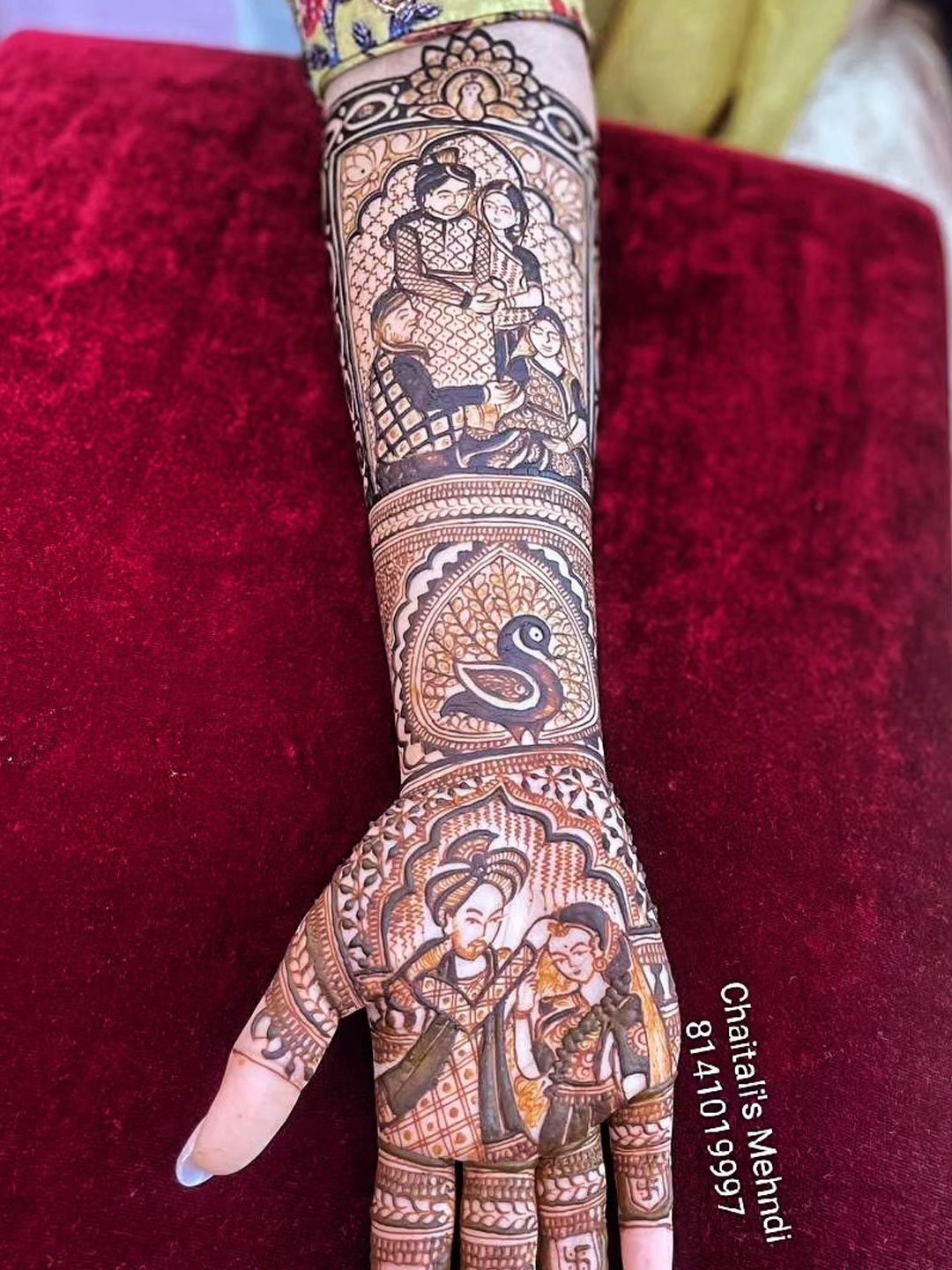
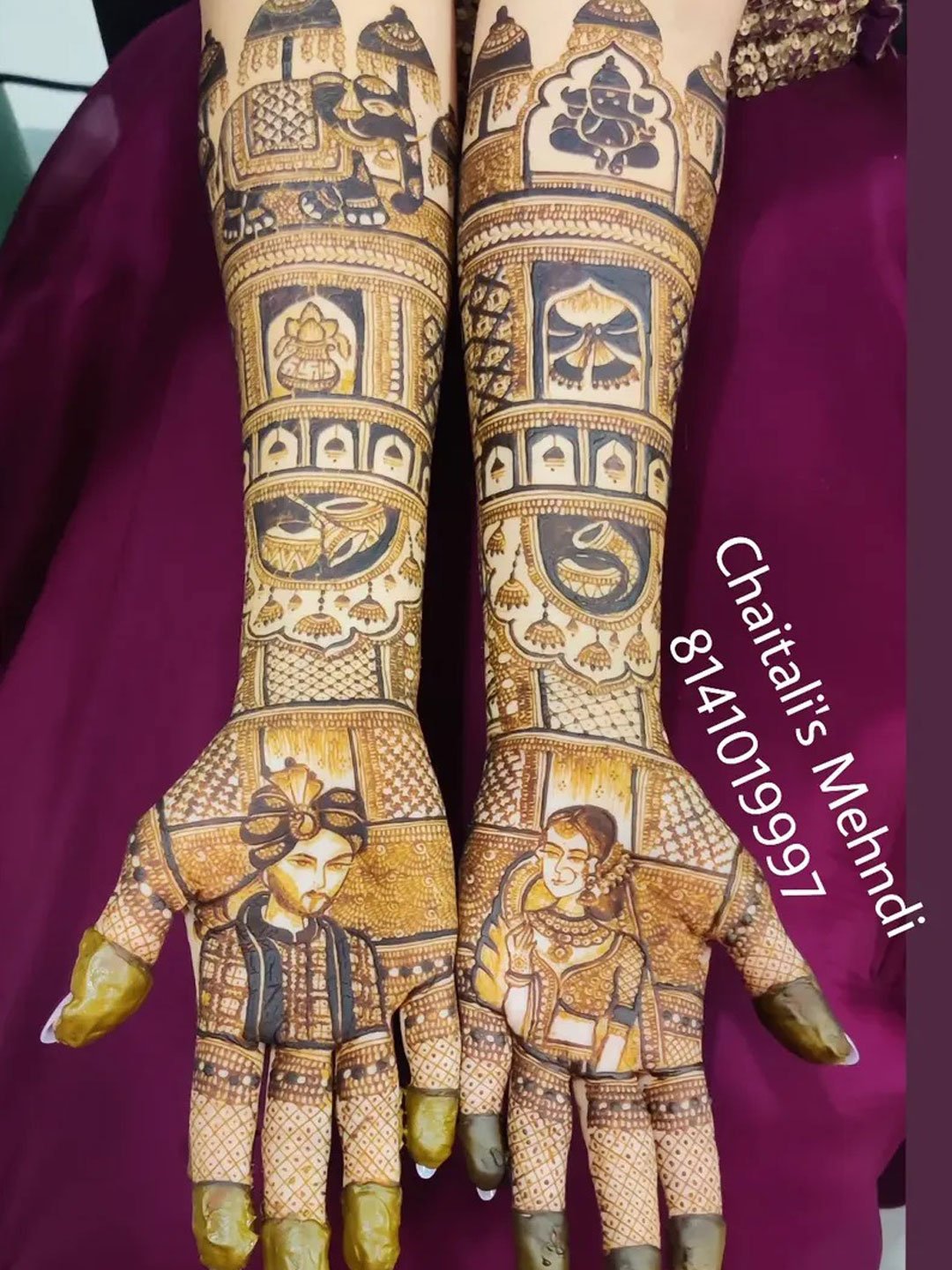
For a traditional, dense bridal design, an initial hidden within a paisley or floral vine blends in easily among the existing detail, making it nearly impossible for anyone but the groom to find. For a minimalist or contemporary design, where there’s less surrounding pattern to hide within, artists usually recommend embedding the initial into whatever central motif exists — a small mandala segment or a single floral element — so it still has enough surrounding detail to stay disguised. For a peacock or portrait-centred design, the fine linework within feathers or decorative framing offers a natural spot that fits the composition without requiring an entirely separate section of the hand.
Frequently Asked Questions
Will the hidden initial be obvious to guests at the wedding? Not if it’s planned well. A skilled artist disguises the letter within an existing motif so thoroughly that it reads as decoration to anyone who isn’t specifically looking for it.
Can both the bride’s and groom’s initials be hidden in the same design? Yes, this is a common request, usually with the two letters placed at mirrored points on the hand or on opposite hands, so they form a quiet pair without being placed obviously together.
What if the groom’s initial is a difficult letter to disguise, like a K or a Z? Angular letters can still be worked into jaali, geometric border patterns, or broken across two adjoining motifs. Your artist can recommend the best approach based on the letter and the rest of your design.
Is this only for hands, or can it be hidden in foot mehndi too? It can be done on the feet as well, though hands remain the more common choice since the ritual of the groom searching for it traditionally happens there.
Does asking for a hidden initial limit the rest of the design? Not usually. Since the letter is worked into a motif that’s already part of the composition, it rarely restricts the overall design style, whether you’re going for a dense traditional look or a minimalist contemporary one.
Final Thoughts
A hidden initial doesn’t change how your bridal mehndi looks to anyone else — the design still reads as beautifully as it would without it. What it adds is a small, private layer meant for exactly one person to find, turning an already meaningful art form into something quietly personal. Whether you choose a paisley curl, a mandala segment, or a single feather detail as the hiding spot, it’s a small addition with an outsized amount of sentiment attached.
If you’re planning your wedding mehndi and want your groom’s initial worked seamlessly into your design, Chaitali’s Mehndi Art offers personalised bridal mehndi consultations, engagement mehndi, and portrait mehndi services across Ahmedabad. Get in touch to start planning a design with a hidden detail that’s just for the two of you.