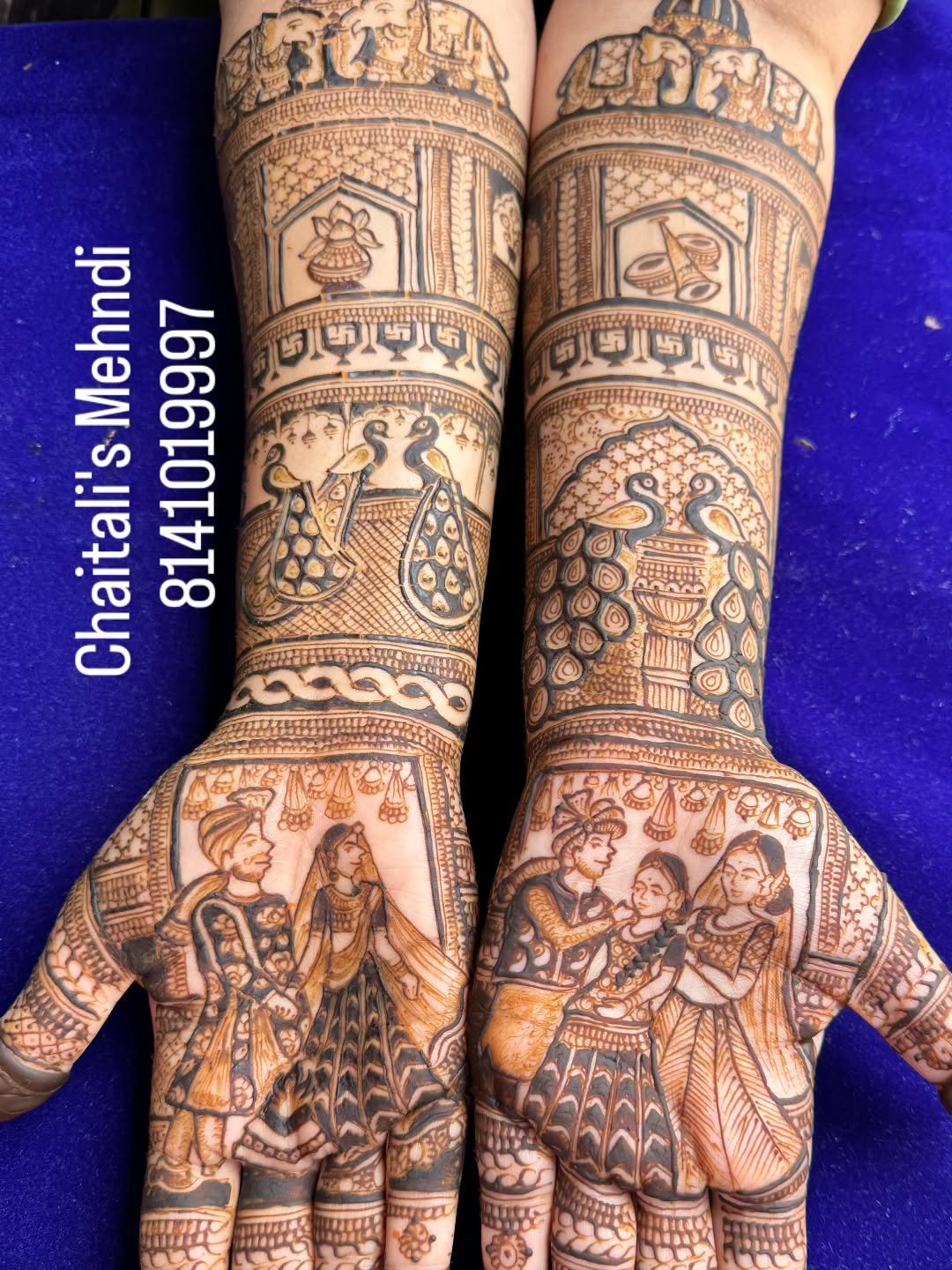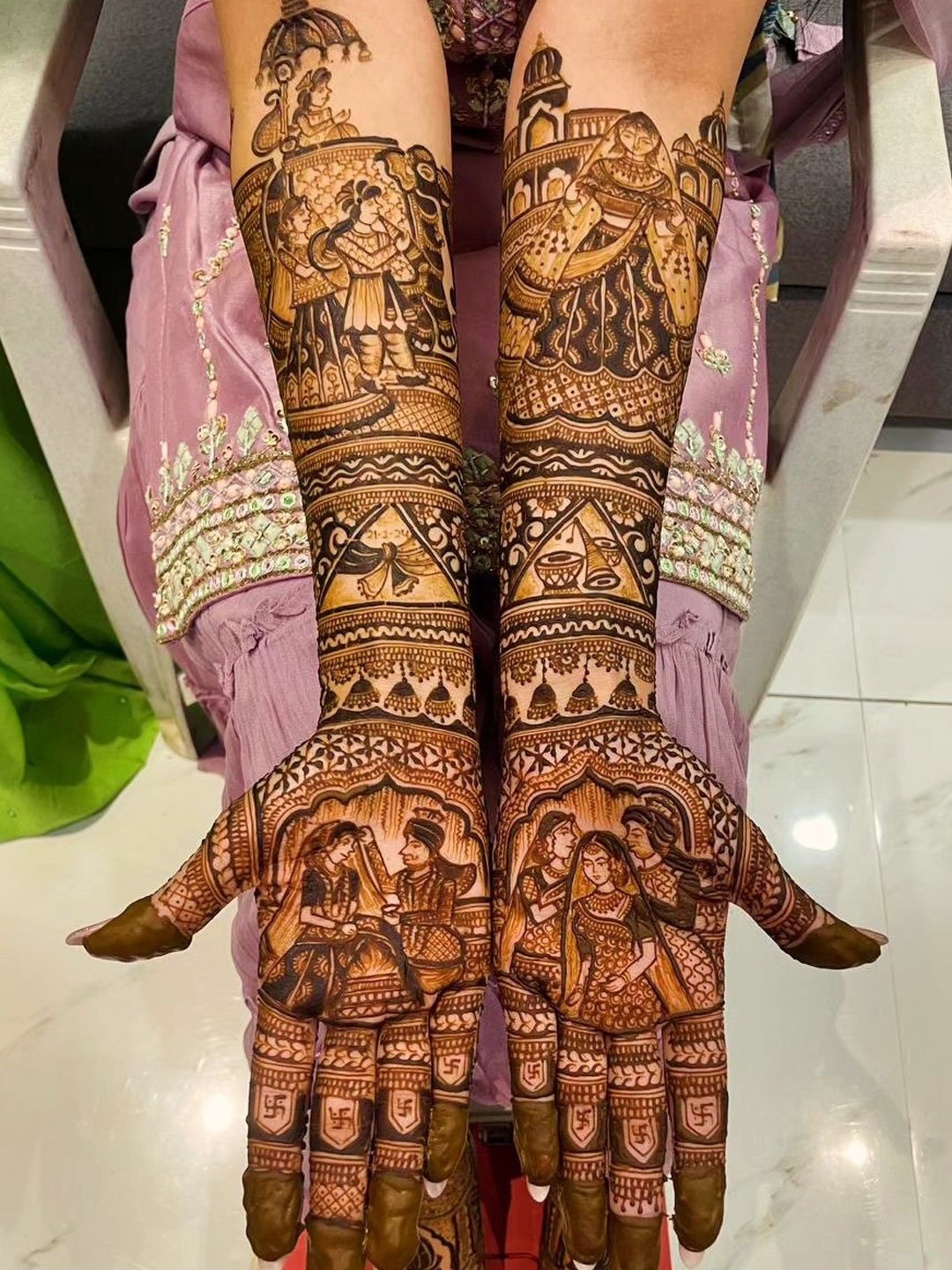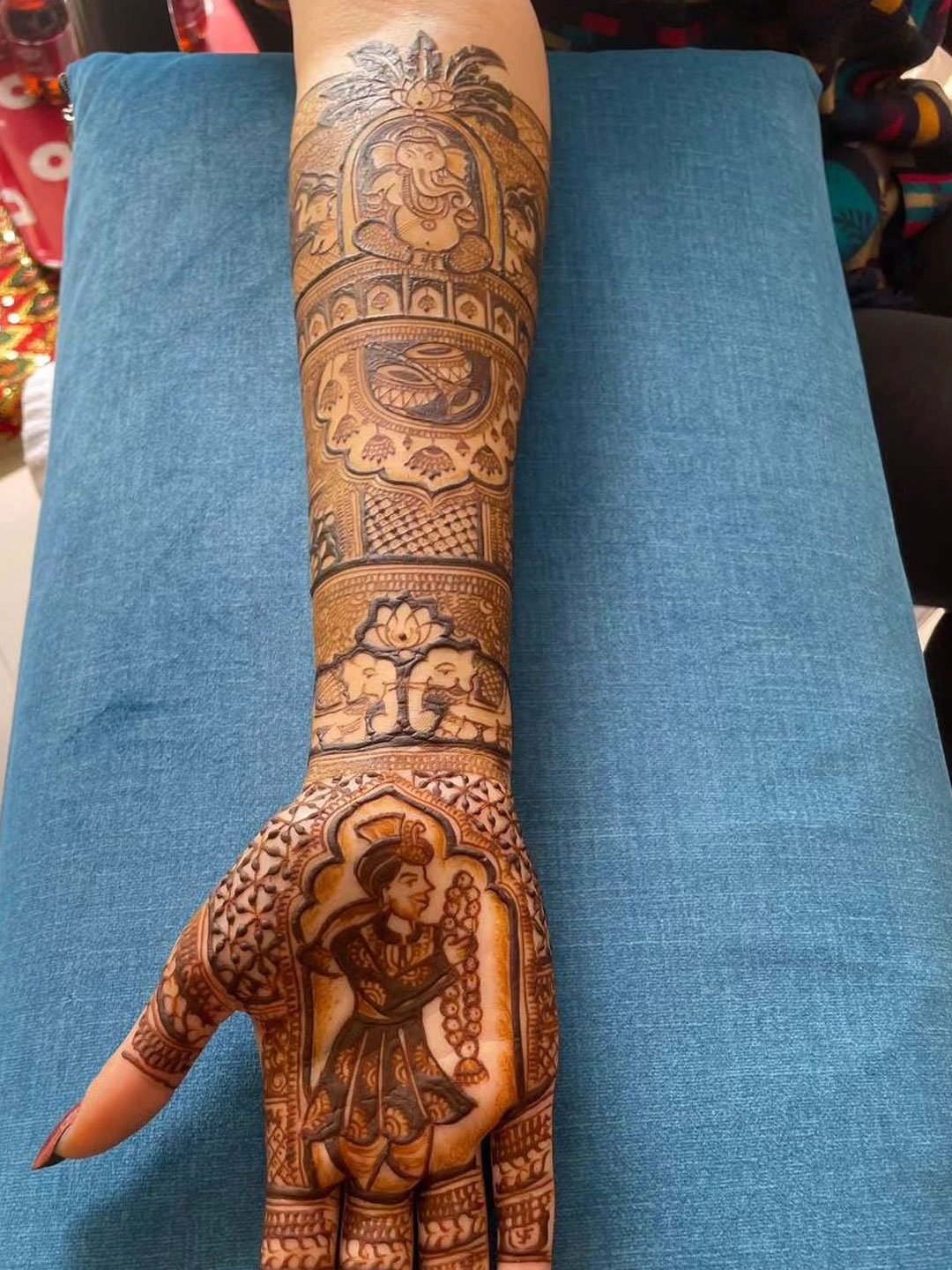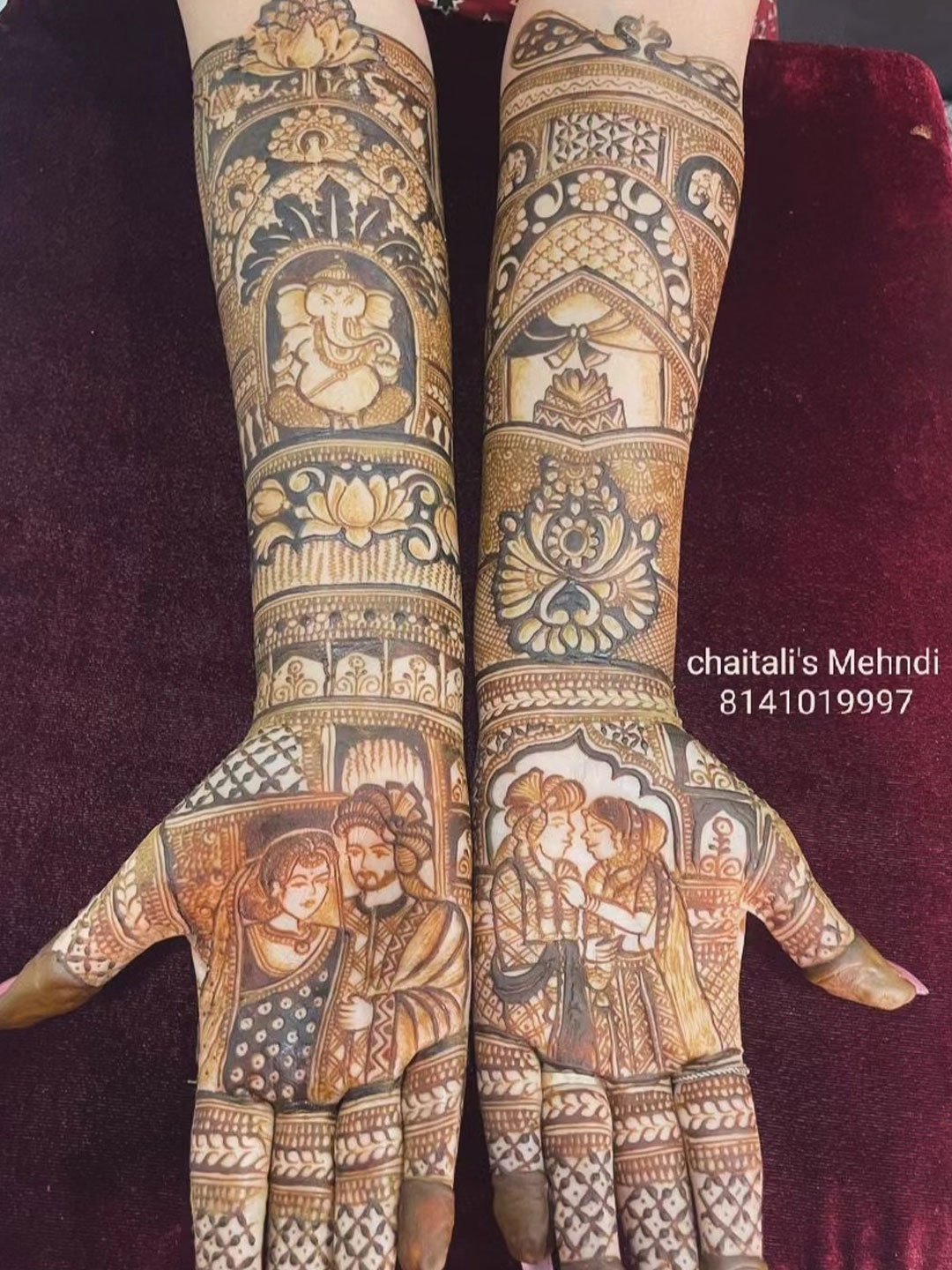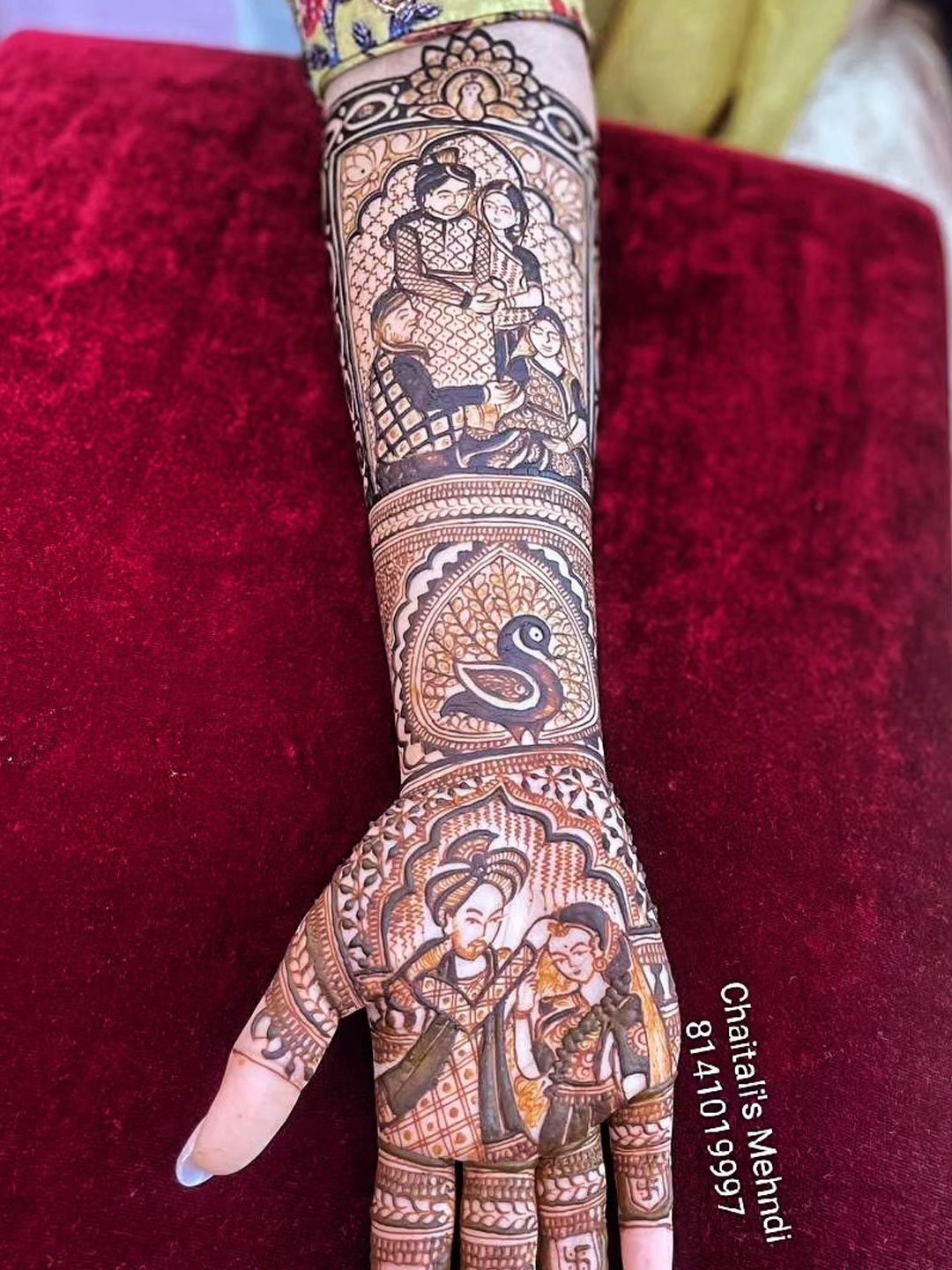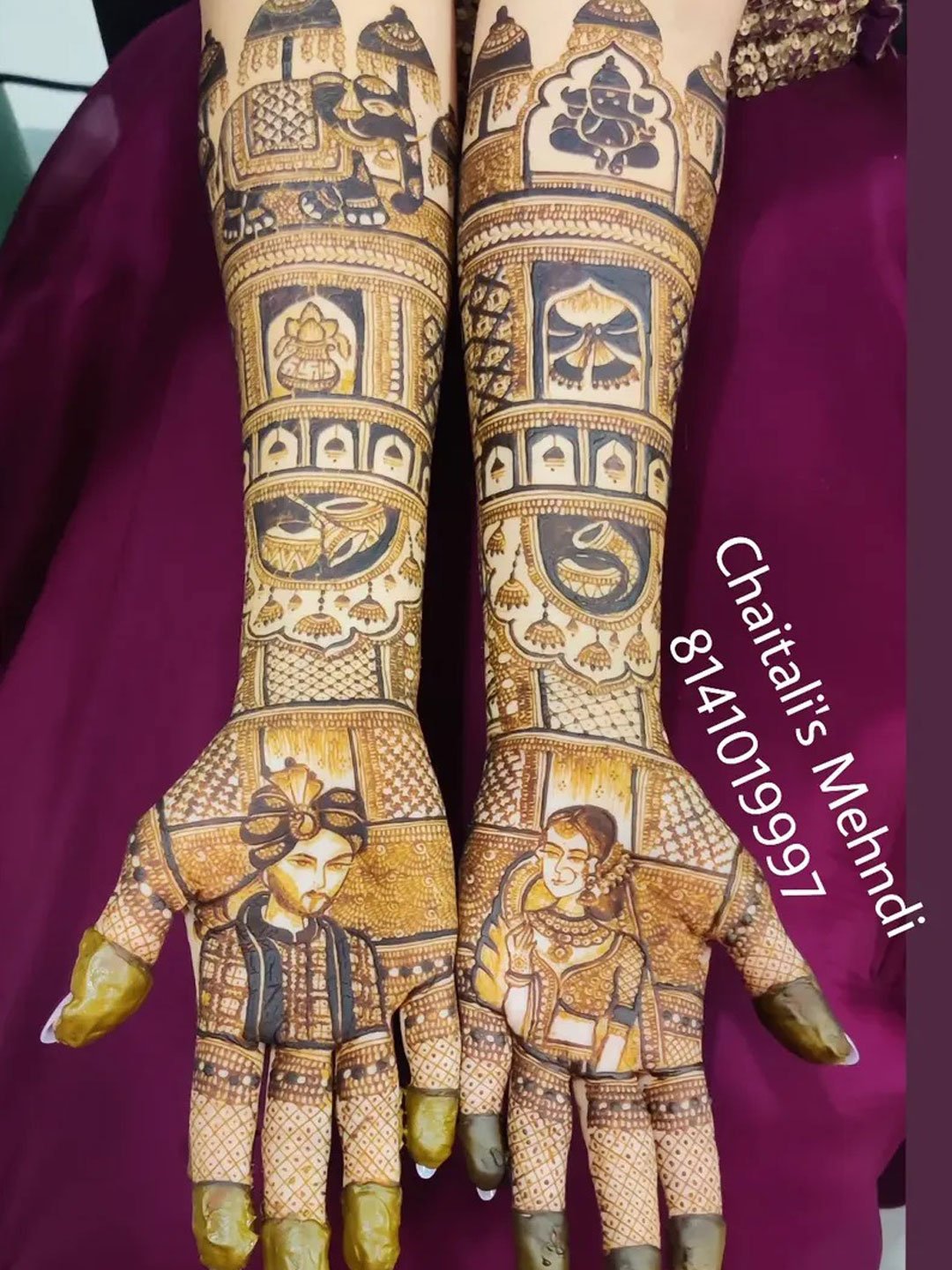

There’s a reason the peacock keeps returning to bridal hands, generation after generation, style after style. It isn’t just a pretty shape to fill negative space — it’s one of the few motifs in mehndi that carries as much meaning as it does visual drama. A well-drawn peacock, feathers fanned mid-dance, has a way of becoming the centrepiece of a design without ever needing to dominate the whole hand.
If you’re deciding whether a peacock belongs in your bridal mehndi, this guide walks through where the motif comes from, what it symbolises, the different ways artists interpret it today, and how to plan for one as part of your overall bridal look.
Where the Peacock Motif Comes From
The peacock’s place in Indian bridal art goes back centuries, long before mehndi trends had names or hashtags. It appears in temple carvings, miniature paintings, bridal textiles, and jewellery across nearly every region of the country — usually tied to themes of love, monsoon, and renewal. In Hindu iconography, the peacock is closely associated with Lord Krishna, who is almost always depicted with a peacock feather in his crown, and with Goddess Saraswati, whose vehicle is the peacock itself.
By the time the motif made its way into henna art, it had already accumulated centuries of symbolic weight. Bridal mehndi artists didn’t invent the peacock’s meaning — they inherited it, and that’s part of why the motif still feels significant rather than decorative. When a bride chooses a peacock for her hands, she’s drawing on the same visual language that’s shown up in her grandmother’s wedding jewellery and her family’s old wedding photographs.
What the Peacock Symbolises in Bridal Mehndi
The peacock carries several layers of meaning, and different brides tend to connect with different aspects of it.
Love and romance. The peacock’s courtship dance — feathers fanned wide, moving in slow circles — has long been read as a symbol of romantic devotion in Indian folklore. It’s one of the more direct reasons the motif feels so at home in bridal art specifically, rather than in mehndi designed for other occasions.
Beauty and grace. Beyond romance, the peacock is simply associated with elegance — a creature that seems to know exactly how striking it is. For brides who want their mehndi to feel confident and statement-making rather than purely traditional, the peacock does a lot of that visual work on its own.
Good fortune and prosperity. In several regional traditions, the peacock is considered an auspicious sign, particularly around the arrival of the monsoon, which itself symbolises renewal and abundance. Including a peacock in bridal mehndi is, for many families, a small nod toward wishing the couple a fortunate start.
Protection. Peacock feathers appear in several protective and devotional contexts across Indian tradition, often linked to Krishna. Some brides and families view the motif as carrying a quiet protective symbolism into the marriage, alongside its more visible romantic and aesthetic meaning.
None of this means a peacock design requires deep symbolic intent to be worn well — plenty of brides simply love how the motif looks on the hand. But it’s worth knowing the meaning is there if you want it, layered quietly under the artwork itself.
What Goes Into Drawing a Peacock Well
A peacock is one of the more demanding figurative motifs in bridal mehndi, mainly because it has to read clearly as a peacock while still looking cohesive with the rest of the hand’s pattern work. Unlike a mandala or a paisley trail, where the shape itself is abstract and forgiving, a peacock has anatomy — a curved neck, a distinct head and crest, a body, and most importantly, a tail that has to feel like it’s actually fanning outward rather than just filling space.
Most artists begin with the body and neck in a light outline, establishing the curve and posture before committing to detail. The tail is usually built feather by feather, working outward from the body, with each feather layered in fine linework, dots, or shading to suggest the “eye” pattern peacock feathers are known for. Getting the proportions right — a head too large or a neck too straight — is often what separates a peacock that looks graceful from one that looks stiff, which is why this motif tends to be best left to artists with specific experience drawing figurative and bird motifs, not just florals and geometric fill.
Popular Peacock Mehndi Designs to Consider
1. Classic Full-Tail Peacock Centrepiece
A single large peacock positioned on the palm or back of the hand, its tail fanned out fully to fill much of the surrounding space. This is the most traditional and recognisable interpretation — bold, symmetrical in its own way, and unmistakably bridal.
2. Peacock with Radiating Floral Fill
The peacock’s body anchors the design while floral and paisley motifs extend outward to fill the rest of the hand, blending the figurative centrepiece with dense traditional bridal detailing.
3. Pair of Peacocks Facing Each Other
Two peacocks positioned facing one another, often on the palm or forearm, symbolising the union of the couple. This design works especially well as a centrepiece for full-arm bridal mehndi, where there’s enough space to let both birds have real presence.
4. Minimalist Line-Art Peacock
A single-line or lightly shaded peacock outline, with little to no dense fill inside the body or tail. It keeps the recognisable silhouette and symbolism of the motif while giving the overall design a much lighter, more contemporary finish.
5. Peacock and Mandala Fusion
A mandala anchors the centre of the palm while peacock motifs extend outward from its edges toward the fingers and wrist, bringing together two of the most enduring bridal motifs in a single cohesive composition.
6. Peacock Feather Trail
Rather than a full bird, this design uses individual peacock feathers scattered or trailing across the hand and up the arm — a subtler way to reference the motif without a full figurative centrepiece.
7. Back-of-Hand Peacock
The peacock is positioned on the back of the hand instead of the palm, a placement that tends to be more visible in ring shots and candid wedding photography, and works well for brides who want their palms to stay comparatively bare.
8. Shaded Ombre Peacock Tail
Using varying cone pressure, this technique creates a gradient effect across the peacock’s tail feathers, darkest near the body and gradually lightening toward the tips. It’s a visually striking variation that takes genuine shading skill to execute evenly.
9. Peacock with Bridal Portrait
For brides drawn to portrait mehndi, a peacock is sometimes worked into the same composition as a bridal or couple portrait, using the bird’s fanned tail as a natural decorative frame around the central image.
10. Miniature Peacock Cluster
Instead of one large bird, this design scatters several small peacocks across the hand and wrist, each fully detailed on its own but arranged loosely as a group — a middle ground between a bold centrepiece and subtler, all-over detailing.
Placement Options for a Peacock Motif
Where the peacock sits on your hand changes how much presence it has and how it photographs, so it’s worth thinking through deliberately.
Palm centre gives the peacock maximum visibility and impact, particularly during ceremonies where hands are held up or clasped together, and it remains the most traditional placement for a figurative centrepiece.
Back of the hand suits brides who want the motif to show clearly in ring shots and candid photography, especially if the palm will spend much of the day facing inward or holding a bouquet.
Forearm gives an artist enough room to let the tail fan out fully with dramatic scale, making it a strong choice for brides planning full-arm bridal mehndi.
Foot placement, typically on the top of the foot, mirrors the hand design and helps tie the peacock motif into a cohesive design across both hands and feet.
Pairing a Peacock Design With the Rest of Your Bridal Look
Because the peacock is such a visually rich, figurative motif, it tends to pair particularly well with certain aesthetic choices elsewhere in your bridal styling.
- Jewel-toned or richly embroidered outfits echo the peacock’s own visual drama rather than competing with it.
- Statement jewellery with floral or nature-inspired motifs, common in many traditional bridal sets, naturally complements a peacock centrepiece.
- Monsoon or garden-themed wedding décor ties in thematically with the peacock’s traditional association with renewal and the rains.
- Photography that captures the full hand or arm benefits especially from a peacock design, since the motif’s impact depends on the tail having room to read clearly.
How Long Does a Peacock Design Take?
Application time varies significantly depending on how large and detailed the peacock is, and how much of the surrounding hand it fills. A minimalist line-art peacock with little surrounding detail can be completed in around 45 minutes to an hour. A dense, full-tail peacock centrepiece with radiating floral fill extending up the hand and arm can take 2 to 4 hours, similar to other elaborate bridal centrepiece motifs.
If you’re planning a peacock as part of a full-hand or full-arm bridal design, budget your mehndi session the way you would for any full-coverage bridal look — several hours at minimum, with enough buffer built in so the artist isn’t rushed through the tail’s finer detailing.
Tips for Planning Your Peacock Mehndi
- Look at portfolio examples of figurative work specifically. Not every mehndi artist has equal experience drawing birds and figures. Ask to see peacock or portrait work in particular, not just floral and geometric designs, before booking.
- Decide how large you want the tail to be. A peacock’s visual impact comes almost entirely from how the tail is styled — full and fanned, or smaller and more contained. Settle on scale early, since it affects both placement and application time.
- Think about symmetry if you’re planning a pair. Two facing peacocks need careful planning to look balanced on the hand, so mention this intention to your artist ahead of time rather than deciding mid-session.
- Consider whether you want the peacock to stand alone or blend into denser fill. Some brides let the peacock be the singular focal point with open space around it, while others prefer it woven into a fuller traditional design. Both work — it depends on the overall look you’re going for.
- Build in extra time for shaded or ombre variations. Gradient tail work takes longer to execute evenly, so if you’re drawn to that style specifically, plan your mehndi ceremony schedule with some buffer.
Peacock Mehndi Across Different Wedding Styles
The peacock motif is versatile enough to suit a wide range of wedding aesthetics, which is part of why it has stayed a bridal favourite across regions and generations.
For a traditional Indian wedding, a dense, full-tail peacock centrepiece with radiating floral or paisley detailing fits naturally alongside heavier bridal jewellery and a richly embroidered outfit. For a contemporary or fusion wedding, a minimalist line-art peacock offers the same symbolic centrepiece with a cleaner, more modern finish that pairs well with simpler outfits and statement jewellery. For a destination wedding, a mid-sized peacock with moderate surrounding detail often strikes the right balance — substantial enough to feel bridal, without requiring the multi-hour commitment of a full traditional design.
Frequently Asked Questions
Is a peacock motif suitable for both hands, or should it stay on one? It depends on the overall design. Some brides prefer a single large peacock as the focal point on one hand, with the other hand carrying complementary floral or paisley detailing. Others opt for a smaller peacock or peacock feather motif on both hands for symmetry — either approach works well.
Does a peacock design suit every hand shape? Yes. A skilled artist adjusts the bird’s proportions, tail spread, and placement to suit the specific size and shape of each bride’s hand and palm, so the motif reads clearly regardless of natural hand proportions.
Can a peacock be combined with a hidden name or initial? Yes. A small initial or symbol can often be worked into the tail’s feather detailing or hidden within the surrounding fill, without disrupting the bird’s overall silhouette.
Is the peacock motif tied to a specific region or wedding tradition? The peacock appears across numerous Indian regional traditions rather than belonging to just one, which is part of why it works well for a wide range of bridal styles, from traditional to fusion weddings.
What if I want a peacock but also want other traditional motifs like mandalas or paisleys? This is a very common request. Most artists are happy to build a design where the peacock anchors the centre while mandala or paisley detailing extends outward from its edges, giving you both the figurative centrepiece and traditional fill in one cohesive composition.
Final Thoughts
Few motifs in bridal mehndi carry as much history and symbolism as the peacock, and fewer still manage to look this striking while doing it. Whether you choose a bold, full-tail centrepiece or a subtler line-art version tucked into the rest of your design, the peacock brings a sense of romance and grace to bridal mehndi that has held its place for centuries — and shows no sign of going anywhere.
If you’re planning your wedding mehndi and want a peacock design tailored to your hand, outfit, and overall bridal look, Chaitali’s Mehndi Art offers personalised bridal mehndi consultations, engagement mehndi, and portrait mehndi services across Ahmedabad. Get in touch to start planning a peacock design that’s as graceful and meaningful as you imagine it.