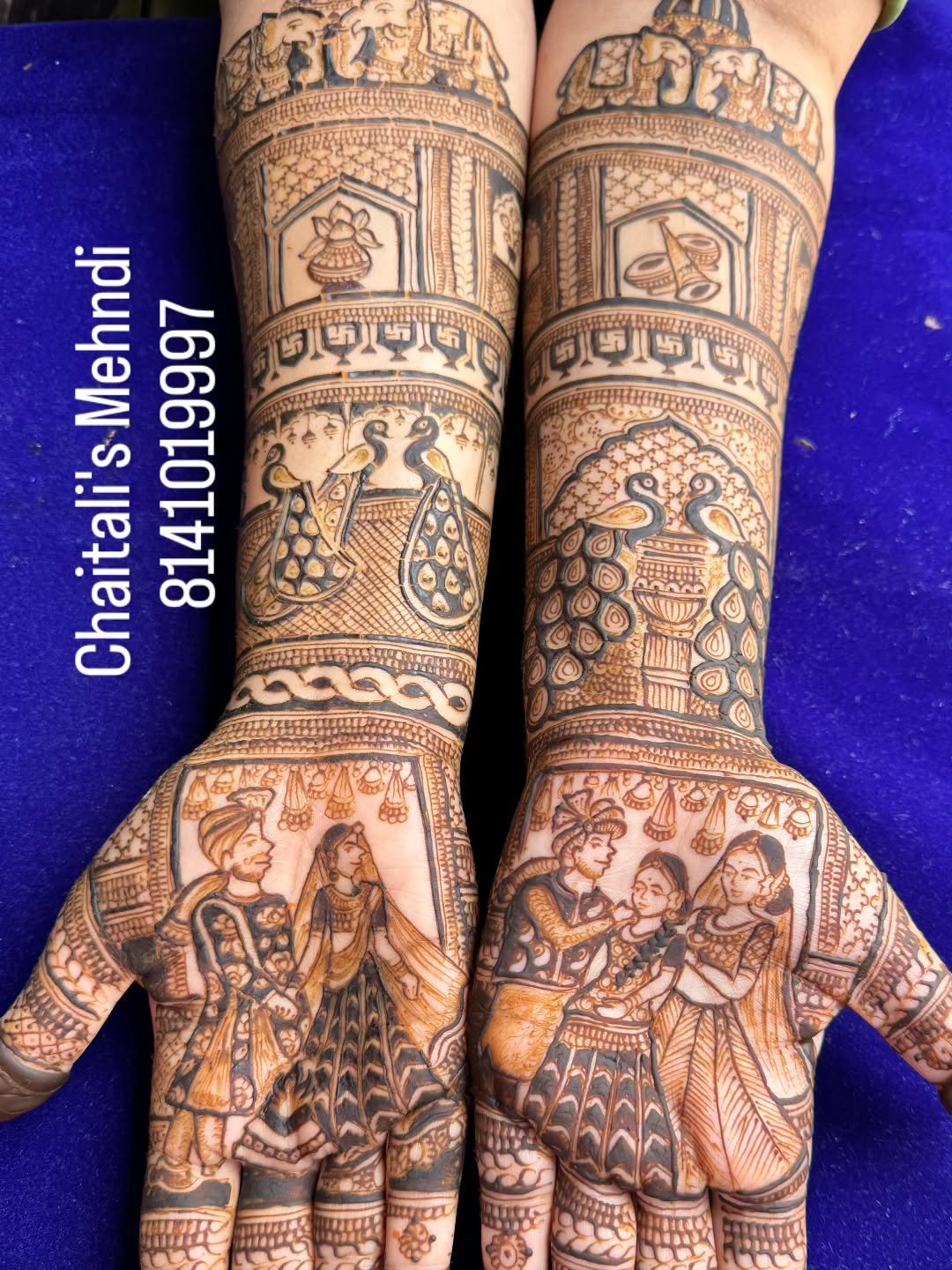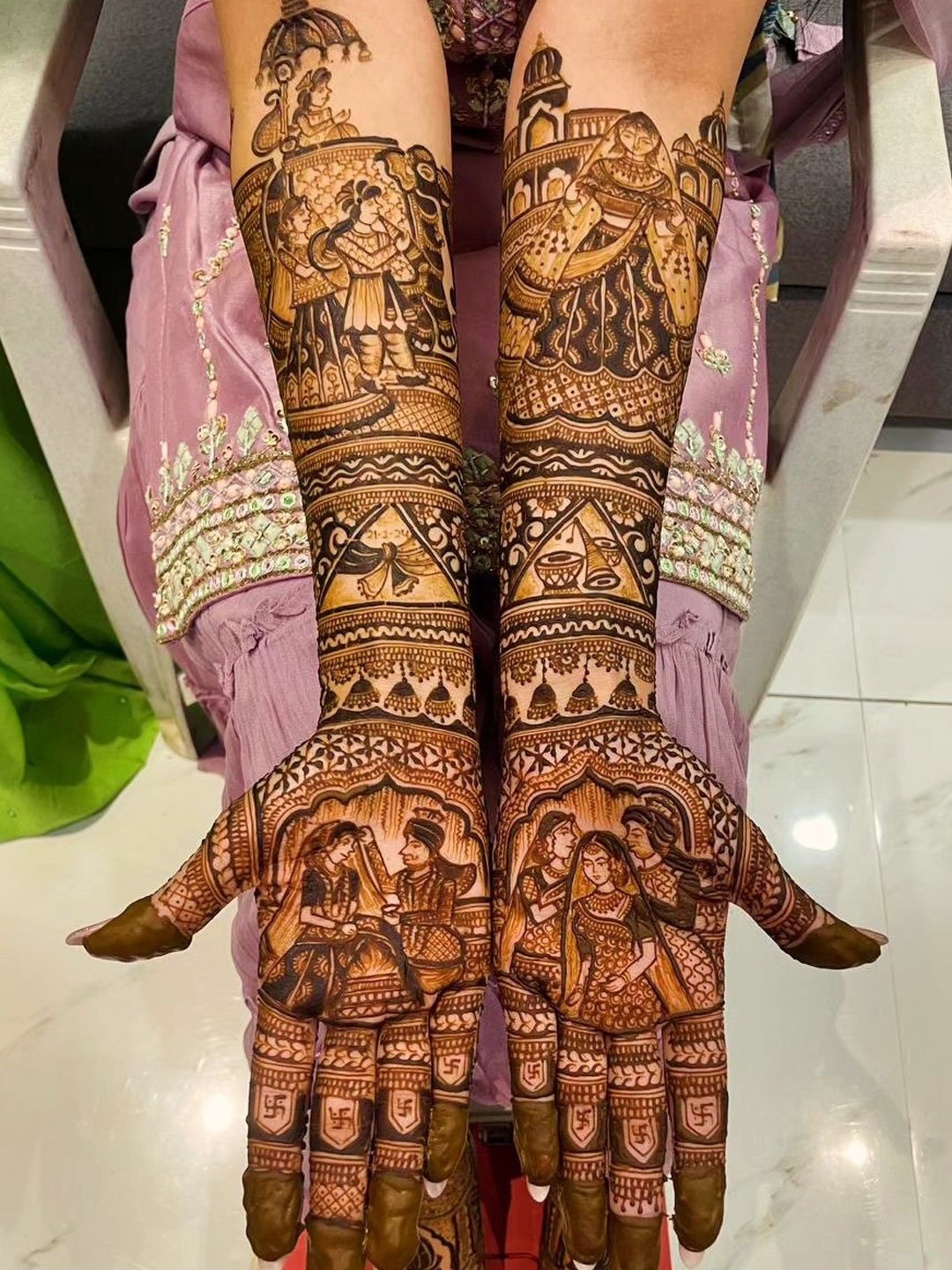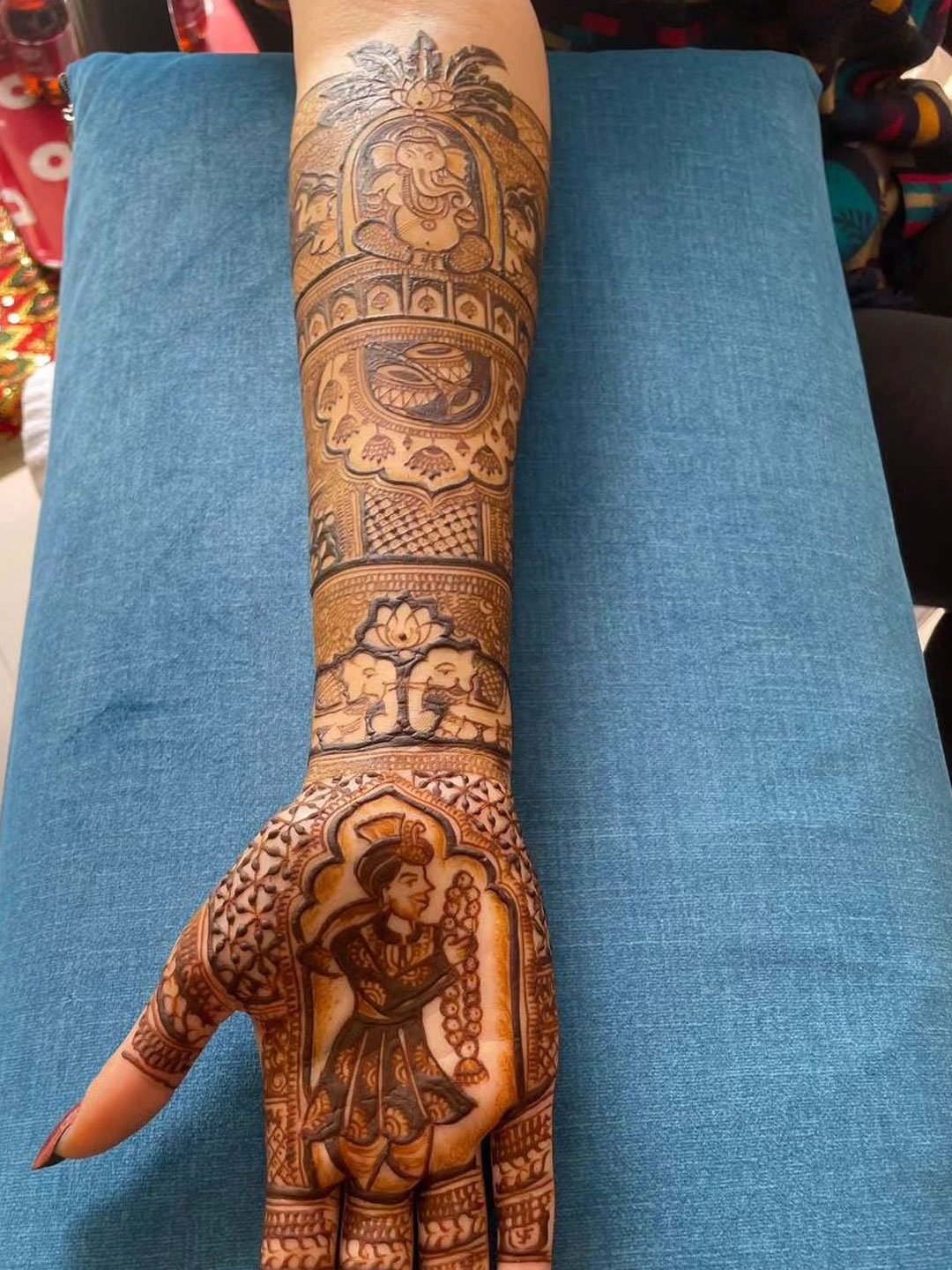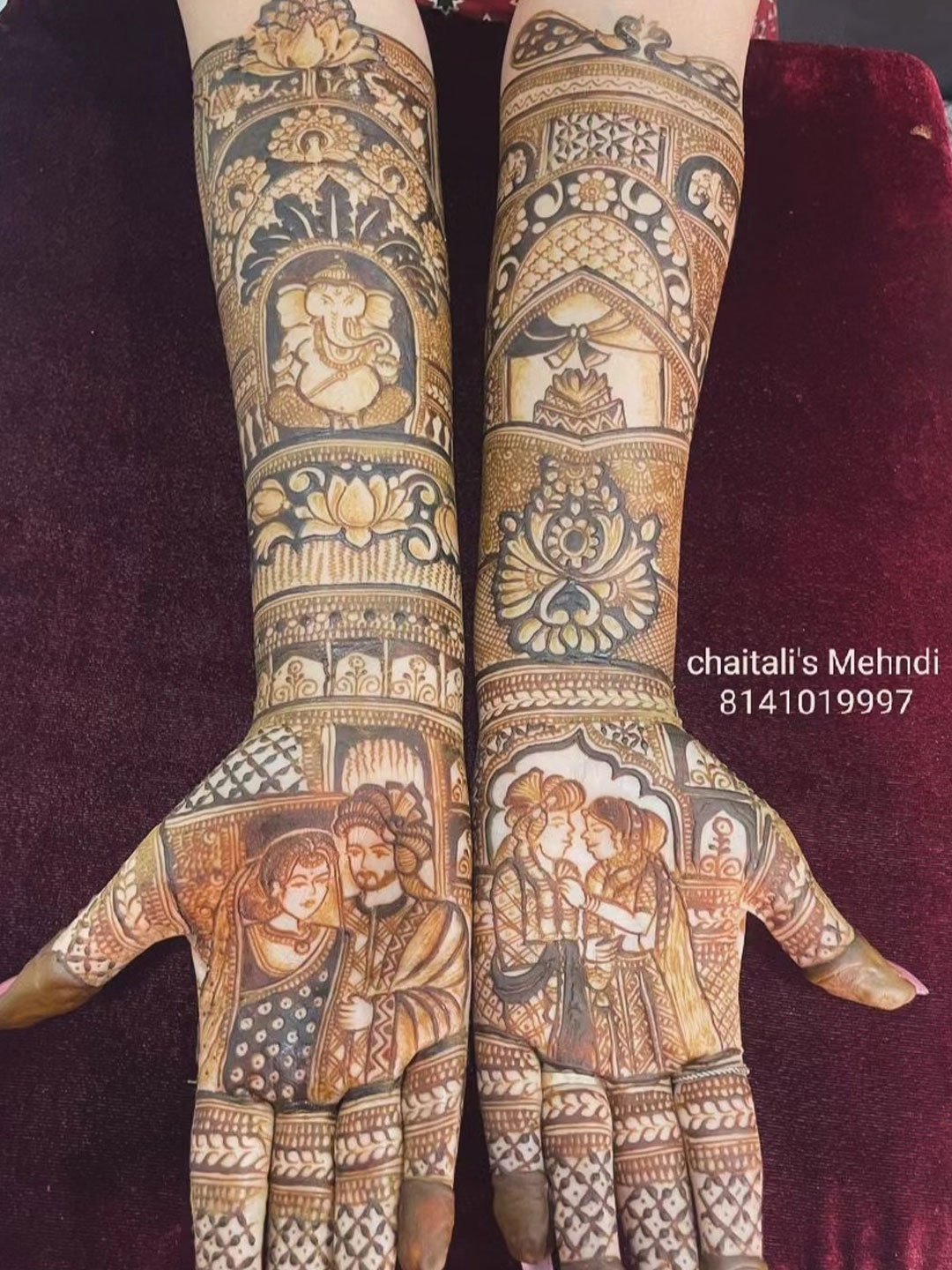
Destination weddings have changed the way Indian brides think about almost every part of their big day — and mehndi is no exception. A henna design that works beautifully in a banquet hall back home doesn’t always survive a humid Goa afternoon or hours under the Rajasthani sun in Udaipur. At Chaitali’s Mehndi Art, we’ve designed bridal mehndi for both settings, and the honest answer is: Goa and Udaipur call for two genuinely different approaches.
This guide walks through what actually works for each location, the trends shaping 2026 destination weddings, and how to plan your mehndi session around a multi-day, multi-location celebration.
Why Destination Weddings Need a Different Mehndi Approach
A destination wedding isn’t just a regular wedding with better scenery — it comes with its own practical constraints that directly affect your henna:
- Climate: Goa’s coastal humidity keeps henna paste from drying the way it would in a dry climate, while Udaipur’s dry desert heat can make it dry and flake off too fast if the paste isn’t mixed correctly.
- Multi-day events: Most destination weddings span 3–5 days — sangeet, haldi, mehndi, wedding, reception — often at different venues. Your mehndi needs to look fresh across the whole timeline, not just on day one.
- Photography-first weddings: Destination weddings are shot heavily for social media and wedding films, often against beaches, lake backdrops, or palace courtyards. Design choices that photograph well matter more here than almost anywhere else.
- Travel logistics: Brides are often getting mehndi done away from home, sometimes with the artist flying in, which changes how sessions get scheduled around rehearsal dinners, welcome parties, and travel days.
Related reading: if you’re comparing regional bridal styles, see our post on Top Wedding Mehndi Trends in Gujarat for 2026.
Mehndi Designs for a Goa Beach Wedding
Goa weddings lean breezy, relaxed, and sun-drenched — and the best mehndi designs for this setting reflect that mood rather than fighting it.
1. Airy, Open-Pattern Designs
Dense, heavy coverage can look out of place against a beach backdrop and takes longer to dry in humid air. Brides marrying in Goa are increasingly choosing open, lattice-style patterns with generous negative space — enough detail to photograph beautifully, without the multi-hour application time.
2. Seashell, Wave & Palm Motifs
Destination-inspired mehndi is one of the biggest trends for 2026 weddings, and Goa is the easiest place to lean into it. Subtle wave lines along the wrist, a small seashell tucked into a floral cluster, or palm-leaf detailing near the fingertips ties the design directly to the venue without looking like a costume theme.
3. Arabic-Style Bridal Mehndi
Bold, flowing Arabic florals with clean open spaces are a natural fit for Goa’s laid-back destination-wedding energy. They dry faster than dense traditional Indian coverage, hold up well through beach humidity, and photograph beautifully in golden-hour sunset shots.
4. Barefoot Bridal Mehndi for Beach Ceremonies
If your ceremony or reception is barefoot on sand, foot and ankle mehndi becomes just as important as your hands. Anklet-style bands, toe detailing, and a light vine running up toward the shin are popular choices that photograph well in beach shoot compositions.
5. Quick-Drying, Travel-Friendly Application
Because Goa’s humidity slows drying time, we adjust the henna paste consistency and pair it with a faster-setting sealant so the design stays intact through a beach evening — sea breeze, sand, and all.
Looking for a Goa-specific booking? Explore our Destination Wedding Mehndi services or browse Bridal Mehndi Packages for full-day event coverage.
Mehndi Designs for an Udaipur Palace Wedding
Udaipur brings grandeur — lake views, marble courtyards, and a royal Rajasthani backdrop — and bridal mehndi here is generally expected to match that scale.
1. Traditional Rajasthani Coverage
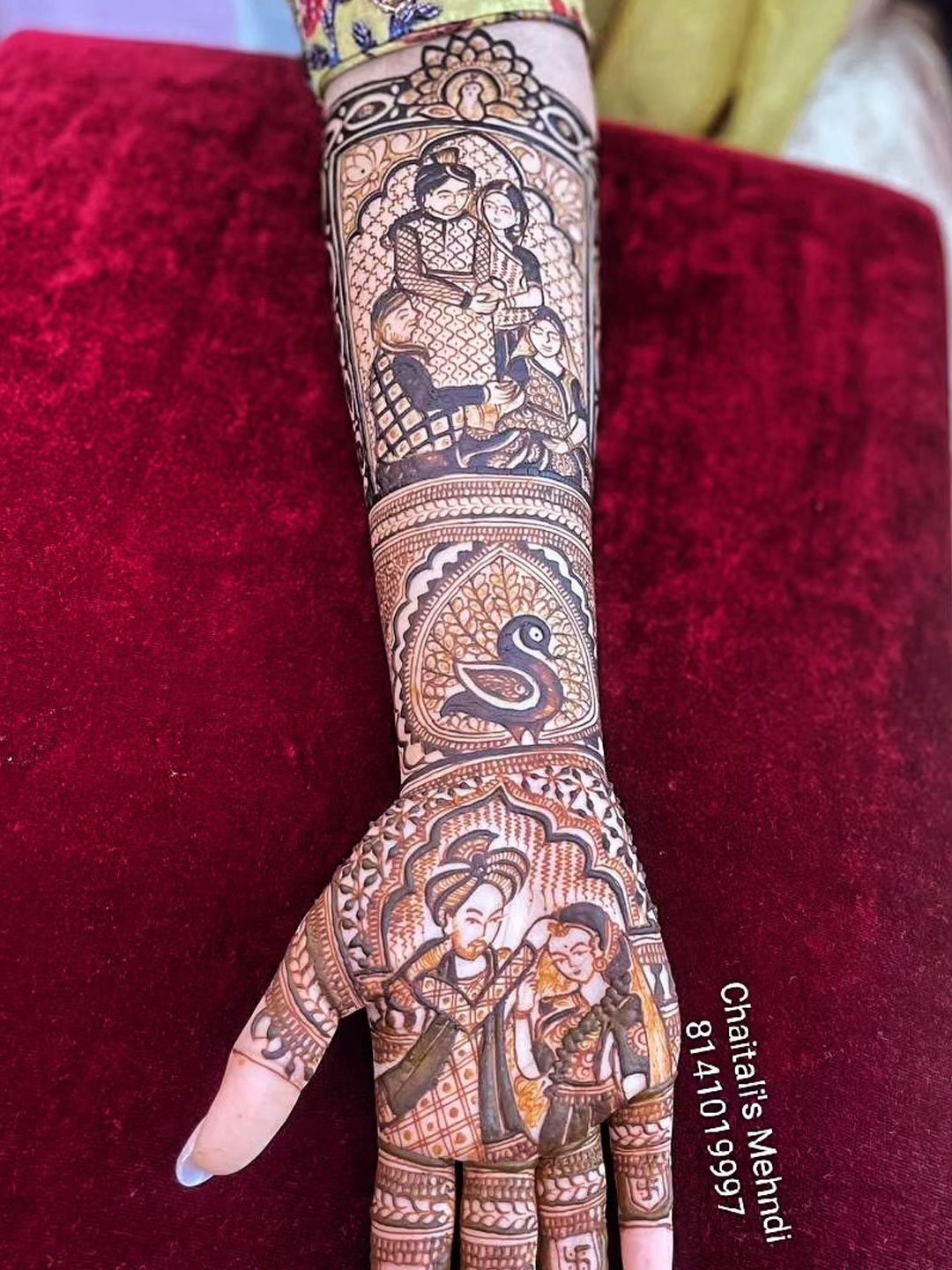
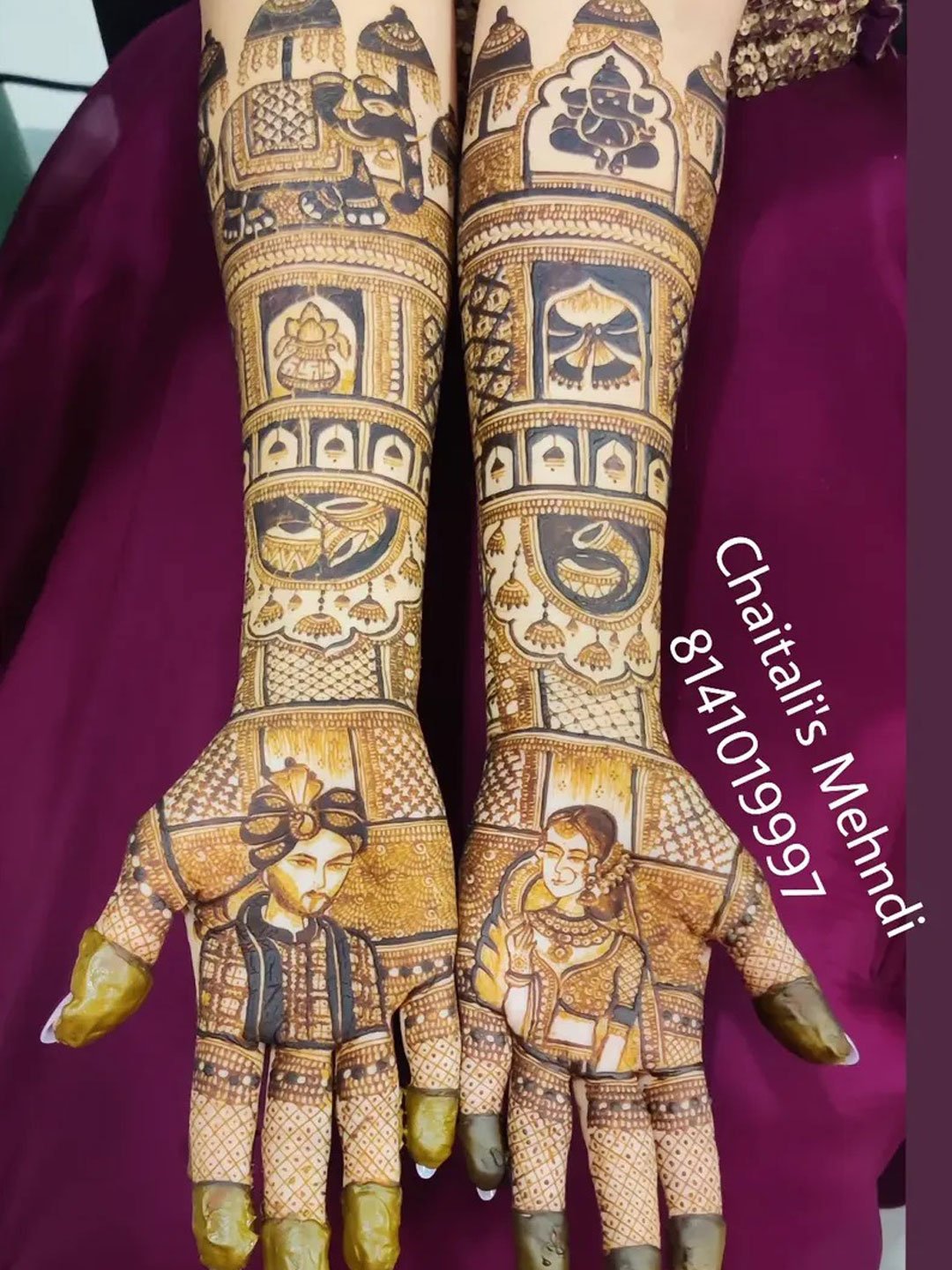
Udaipur weddings still favor rich, full-arm bridal mehndi with dense floral and paisley fill, often extending well past the elbow. It’s the design language that suits a palace setting and heavier bridal lehengas without looking understated against the surroundings.
2. Mandala Centres with Royal Detailing
A large mandala centrepiece on the palm, bordered by fine jaali (lattice) work, is a signature Rajasthani bridal choice — and it photographs exceptionally well against Udaipur’s carved stone architecture and lake-facing venues.
3. Peacock & Lotus Motifs
Peacocks and lotus flowers are strongly associated with Rajasthani and Udaipur bridal mehndi, and remain one of the most requested combinations for 2026 weddings — intricate peacock figures on the palms with lotus detailing filling the wrists and forearms.
4. Hidden Groom’s Name or Initials
A classic ritual that translates beautifully to a destination setting: the groom’s name or initials hidden within the dense filling, giving guests something fun to search for during the mehndi ceremony — especially memorable when it’s being filmed for a wedding video.
5. Heat-Resistant, Long-Lasting Paste
Udaipur’s dry heat needs a different henna mix than Goa’s humidity — one that won’t crack or flake before the paste has fully released its color. Getting this right matters even more on a multi-day itinerary where the mehndi has to last from the mehndi ceremony through the wedding day itself.
For palace and heritage wedding bookings, see our Rajasthan & Destination Bridal Mehndi services, and check out related inspiration in our Bridal Mehndi Designs category.
Goa vs. Udaipur: Quick Comparison
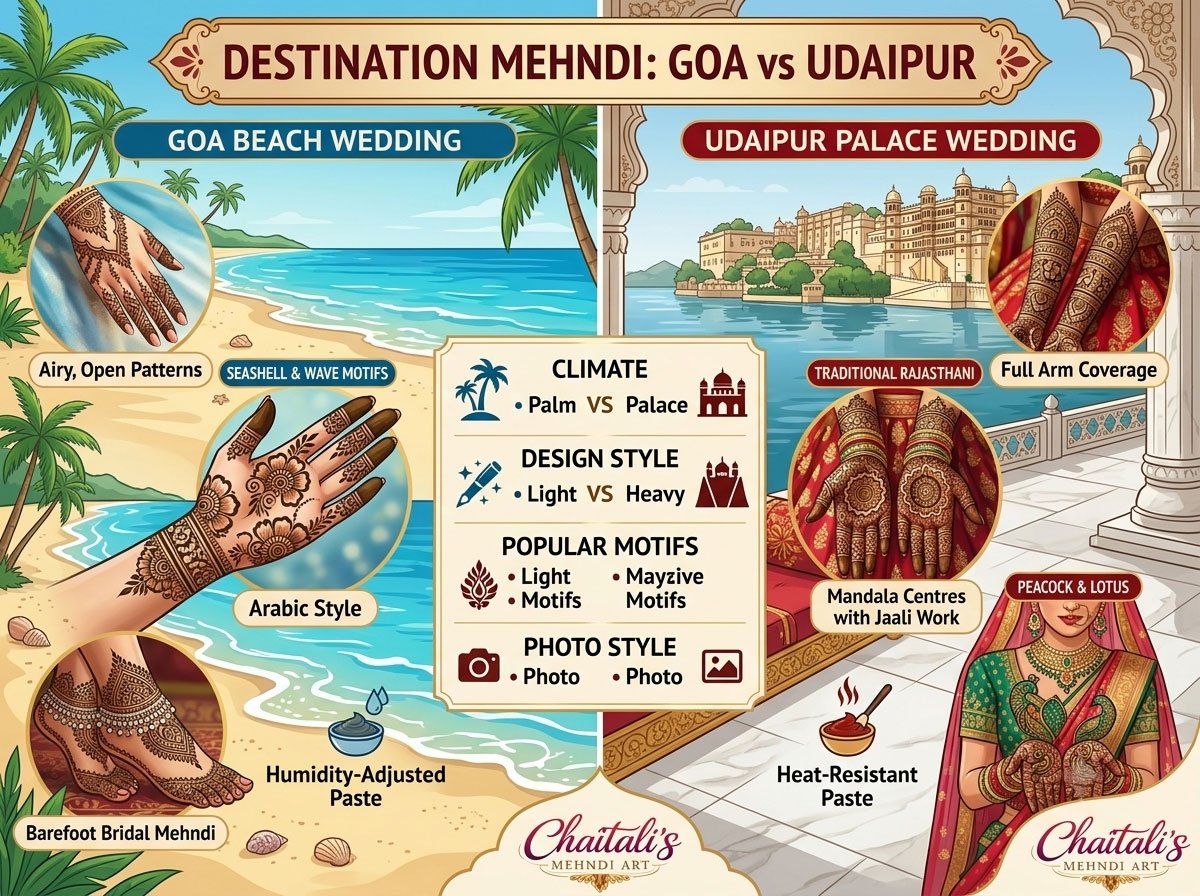
| Goa (Beach Wedding) | Udaipur (Palace Wedding) | |
|---|---|---|
| Design style | Open, airy, minimal-to-medium coverage | Dense, traditional, full-arm coverage |
| Popular motifs | Waves, shells, palm leaves, Arabic florals | Mandalas, peacocks, lotus, jaali work |
| Climate consideration | Humidity slows drying — needs fast-set paste | Dry heat — needs a paste that won’t crack |
| Best suited to | Beach ceremonies, barefoot rituals, sunset shoots | Palace courtyards, lake-view venues, heavy lehengas |
| Foot mehndi | Often essential (barefoot ceremonies) | Optional, usually paired with jewellery |
Planning Your Destination Wedding Mehndi: A Practical Checklist
- Book early — ideally 6–8 weeks ahead. Destination wedding season books up fast, and if your artist is travelling with you, flights and stay need to be arranged well in advance.
- Share your full event schedule with your artist. A 4-day Udaipur wedding and a 2-day Goa wedding need very different mehndi timelines — your artist should know which events need fresh mehndi and which can carry over.
- Match your design to your outfit fabric. Breezy, non-clingy fabrics prevent smudging fresh henna — especially relevant for Goa’s humidity and Udaipur’s layered lehengas.
- Do a patch test 4–5 days before travelling, especially if this is a destination wedding in a climate you’re not used to.
- Plan foot mehndi if your ceremony is barefoot (common for beach weddings and some Rajasthani rituals) — factor in extra application time.
- Ask about climate-adjusted henna paste. A good artist will mix the paste differently for Goa’s humidity versus Udaipur’s dry heat rather than using one formula everywhere.
- Build in a buffer day. Mehndi reaches its deepest color 24–48 hours after application, so schedule your mehndi ceremony with enough runway before the main wedding day.
Frequently Asked Questions
Does mehndi last as long in Goa’s humidity as it does elsewhere? It can, but the paste and sealing routine need to be adjusted for humidity. A henna mix that works perfectly in a dry city can stay tacky longer or come out lighter in Goa’s coastal air if it isn’t formulated for it.
Is full-arm bridal mehndi necessary for a beach wedding? No — many Goa brides choose lighter, open-pattern coverage that suits the relaxed setting and dries faster, while still looking striking in photos.
Can I get the same artist for both my Goa and Udaipur wedding events (if I’m having a multi-location wedding)? Yes, many couples now book one artist to travel across multiple wedding locations for design consistency across all their ceremonies — worth asking about when you book.
How far in advance should I book a destination wedding mehndi artist? 6–8 weeks is a safe window, especially during peak wedding season (October–February), when travel-based bookings fill up quickly.
Final Thoughts
Whether you’re saying your vows barefoot on a Goa beach or under a Udaipur palace dome, your mehndi should feel like it belongs to that setting — not like it was copied from a completely different kind of wedding. Airy, destination-inspired patterns for the coast; rich, traditional Rajasthani coverage for the palace. Getting the paste formulation right for the local climate matters just as much as the design itself.
At Chaitali’s Mehndi Art, we plan destination wedding mehndi around your actual event schedule, venue, and climate — not a one-size-fits-all template. If you’re getting married in Goa, Udaipur, or anywhere else this season, get in touch to book your consultation or browse our full range of mehndi services.
You may also like: Top Wedding Mehndi Trends in Gujarat for 2026