Karva Chauth is one of the few festivals where mehndi isn’t just decoration — it’s part of the ritual itself. From the fast to the evening puja to the moment a husband lifts the sieve to look at his wife’s face, the day is built around devotion, and the henna on a woman’s hands has quietly become one of its most personal traditions.
At Chaitali’s Mehndi Art, Karva Chauth is one of our busiest weeks of the year, and also one of our favorites — married women coming in not for a wedding event, but simply to mark a day that belongs to their marriage. This guide walks through the most-requested Karva Chauth mehndi styles this season, how they differ from bridal mehndi, and how to make sure your design (and your husband’s hidden name) is ready in time for the moon to rise.
Why Karva Chauth Mehndi Is Different From Bridal Mehndi
It’s tempting to assume Karva Chauth mehndi is simply a “smaller version” of bridal mehndi, but the occasion actually calls for a different set of priorities altogether.
Speed matters more. Most women are fasting from sunrise, juggling puja preparations, and often getting mehndi done the same morning or the evening before — so designs need to look complete and rich without requiring the six-to-eight-hour sitting a full bridal hand demands.
The “find the name” tradition is central. Unlike most other festival mehndi, Karva Chauth almost always includes the husband’s name hidden somewhere in the design — a tradition that’s as much a part of the day as the fast itself.
It needs to last, not just look good on day one. Karva Chauth mehndi often needs to stay presentable through Diwali and the following days of festivities, so stain depth and paste quality matter more here than in a one-day-only occasion.
If you’re comparing this to other festival mehndi bookings, our festival mehndi service covers this same philosophy — designs built for how a day will actually be lived in, not just photographed.
Popular Karva Chauth Mehndi Styles This Season
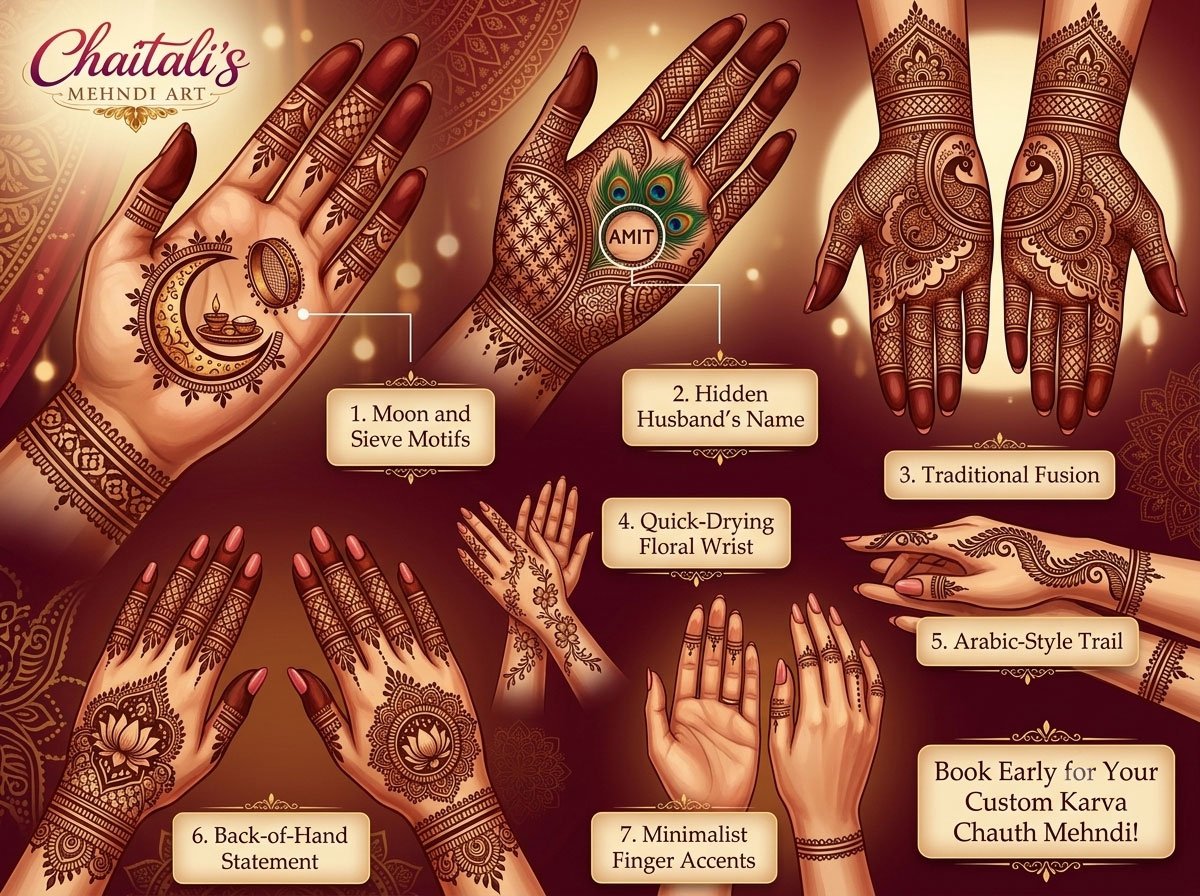
1. Moon and Sieve (Chalni) Motifs
The most iconic Karva Chauth symbols — a crescent moon, a decorative chalni (sieve), and sometimes a small thali — worked into the centerpiece of the palm. This style leans directly into the ritual itself, making it an easy, meaningful choice for women who want their mehndi to visibly reflect the occasion.
2. Hidden Husband’s Name Mehndi
By far the most requested Karva Chauth style. The husband’s name (or initials) is cleverly disguised within a mandala, tucked into jaali linework, or hidden along the side of the palm where it takes a moment to spot — turning the design into a small ritual of its own once he tries to find it in the evening.
3. Traditional Rajasthani-Gujarati Fusion
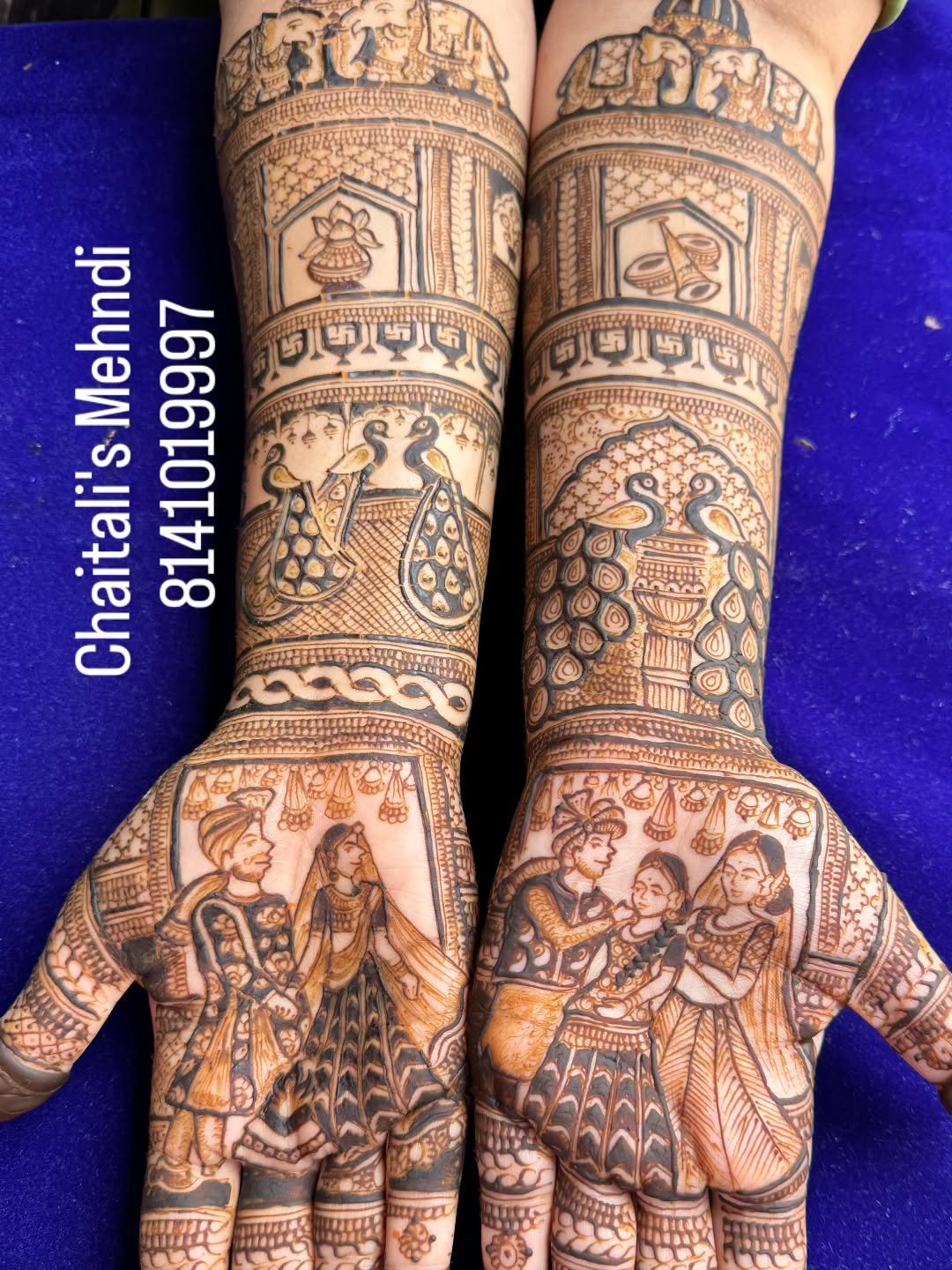
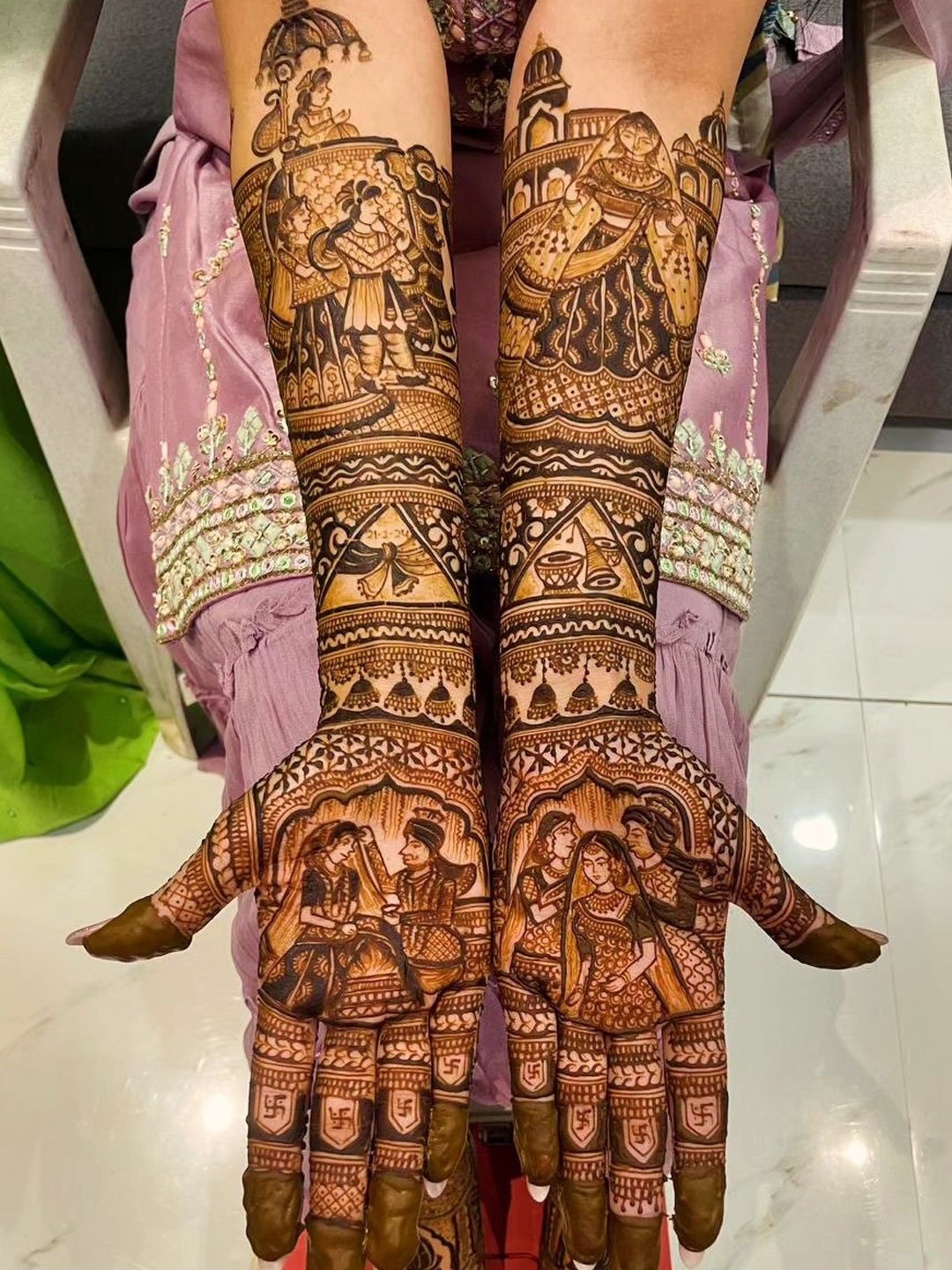
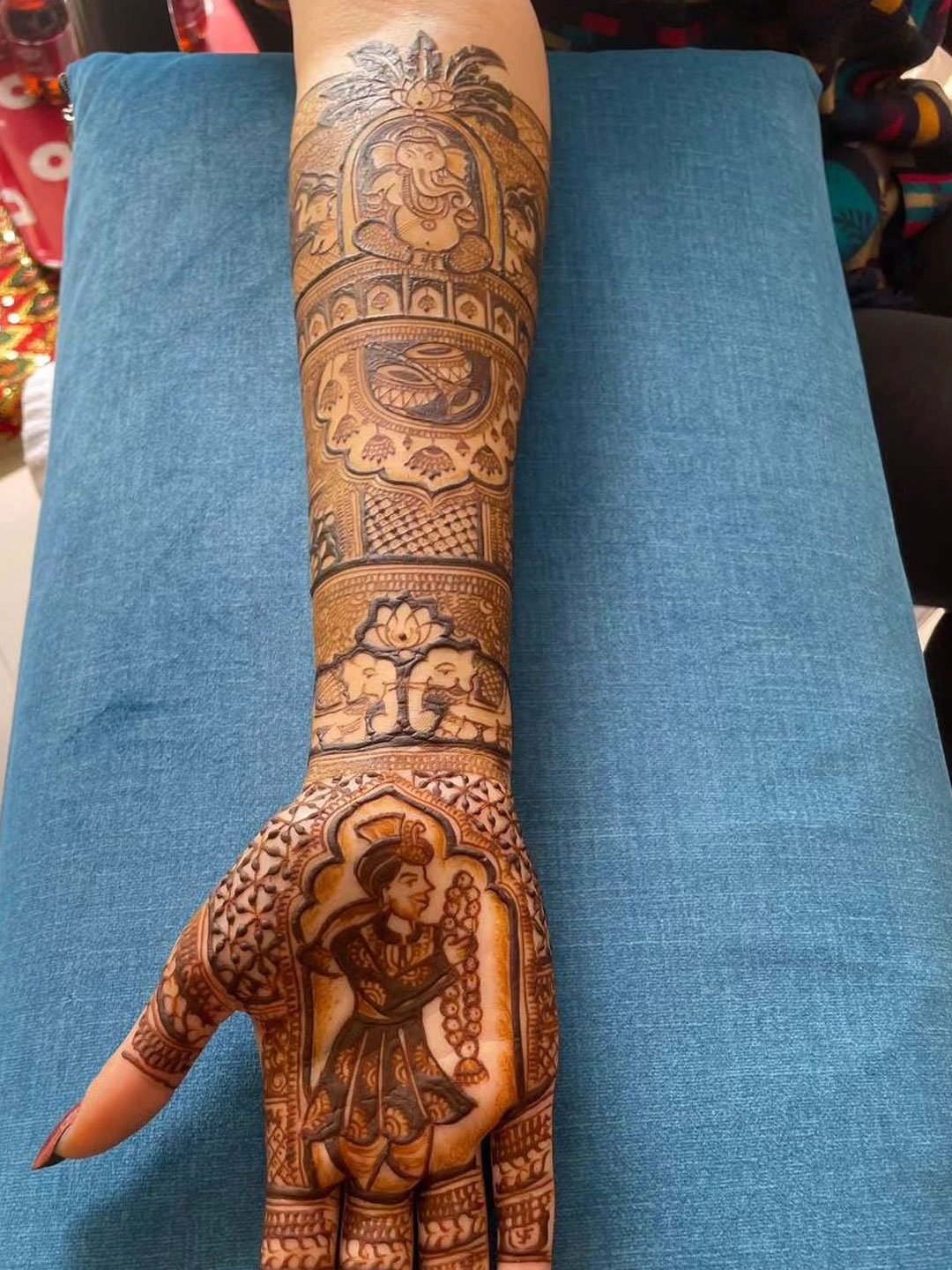
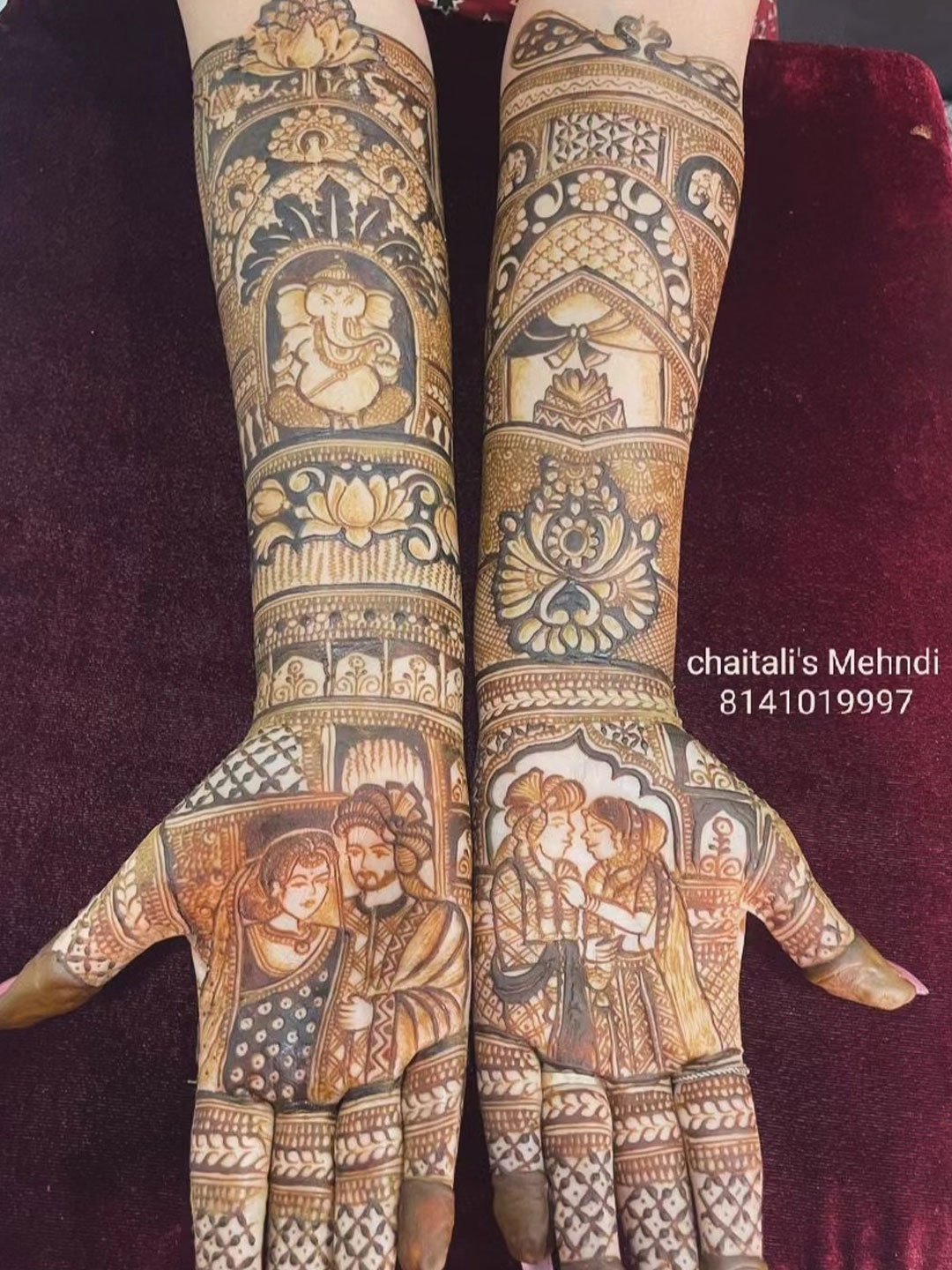
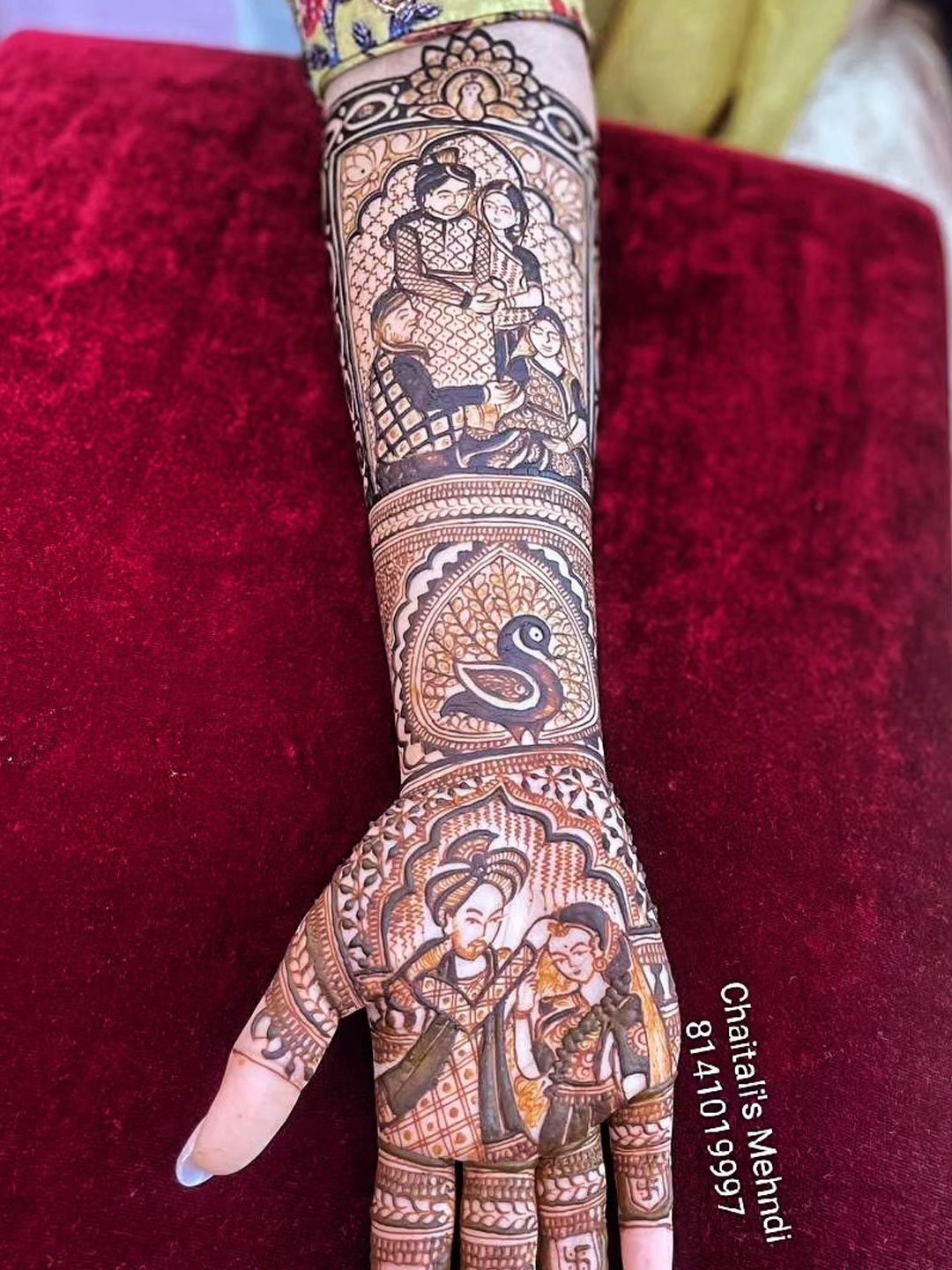
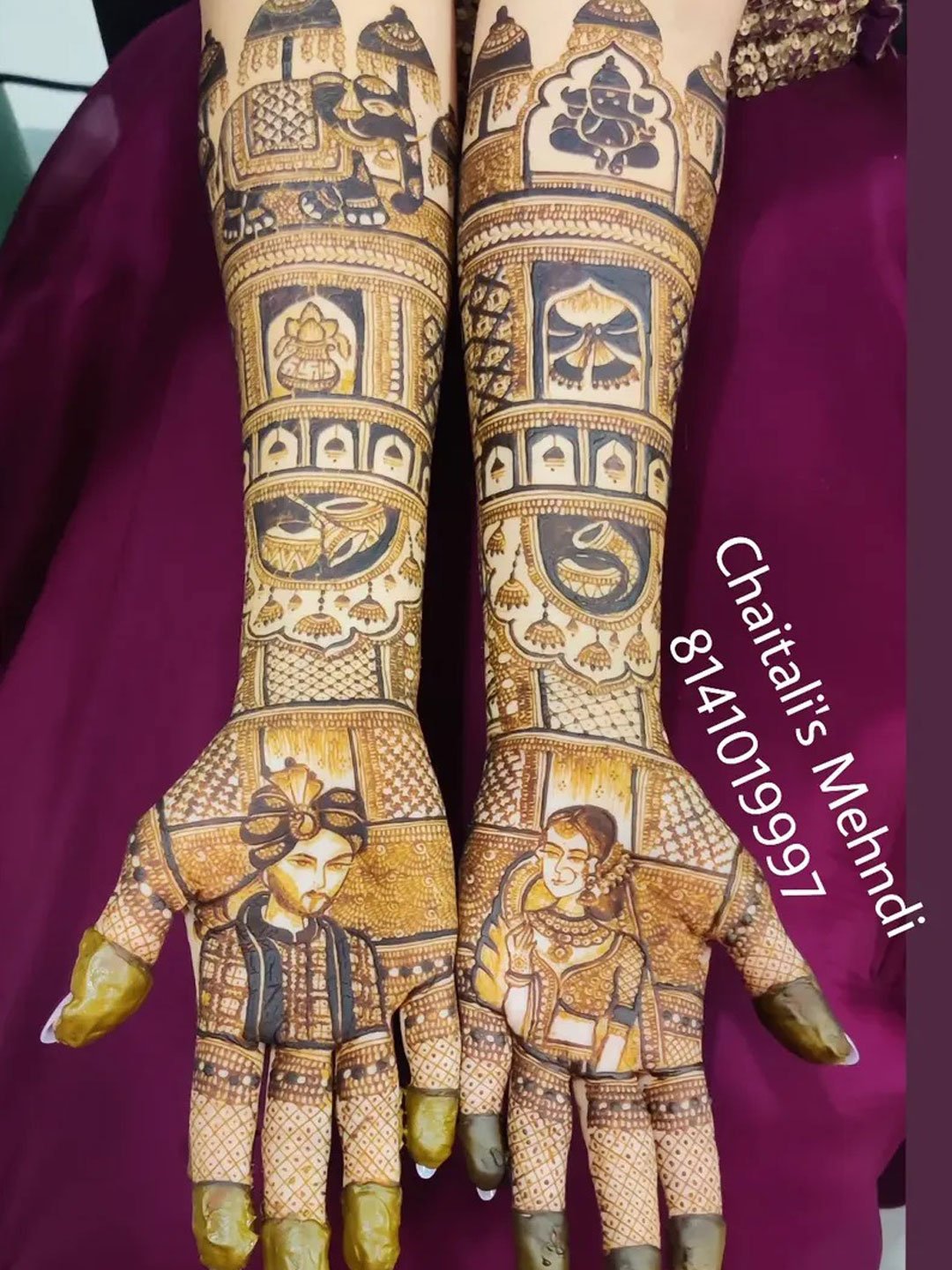
Dense, symmetrical patterns featuring peacocks, paisleys, and fine jaali detailing — a heritage-leaning option for women who want their Karva Chauth mehndi to echo the same traditional richness as their bridal mehndi once did.
4. Quick-Drying Floral Wrist and Palm Designs
For women short on time before the fast begins, a floral centerpiece on the palm paired with a simple vine trailing to the wrist gives a complete, elegant look in well under an hour — ideal for anyone juggling puja preparations the same morning.
5. Arabic-Style Trail Designs
Bold, sweeping floral trails running from the fingers to the wrist are quick to apply and photograph beautifully, especially for women who prefer a more contemporary look over dense traditional fill.
6. Back-of-Hand Statement Mehndi
With Karva Chauth photos increasingly shared on social media, a bold back-hand centerpiece — a lotus, a small mandala, or a moon motif — has become popular for how cleanly it shows up in evening puja photos, even under indoor lighting.
7. Minimalist Finger and Wrist Accents
For women who want to mark the occasion without a full design commitment, delicate finger accents paired with a thin wrist band offer a subtle nod to the festival that pairs easily with any outfit or jewelry.
How to Choose the Right Karva Chauth Design for You
A few honest questions can help narrow things down quickly:
- How much time do you actually have? If you’re getting mehndi done the same morning as your fast, prioritize palm-and-wrist designs over full-arm coverage.
- Do you want the hidden-name tradition? If yes, let your artist know upfront — it changes how the overall composition is planned, since the name needs a natural place to “hide” within the pattern.
- How long does it need to last? If your mehndi needs to carry through Diwali celebrations a few days later, ask your artist about paste quality and aftercare that support a deeper, longer-lasting stain.
- Is this a solo booking or a family occasion? Many households now do sisters, mothers-in-law, and daughters-in-law together — in which case coordinated but individually personal designs work better than identical patterns across the family.
Karva Chauth Mehndi for the Whole Family
Karva Chauth has increasingly become a shared occasion rather than an individual one, with mothers, daughters-in-law, and sisters-in-law all getting mehndi done together the same day. If you’re planning a multi-person booking, the same coordination principles we use for family mehndi designs for wedding functions apply here too — a shared design language (a common motif, similar density) keeps everyone’s hands looking connected without forcing identical patterns on every person.
If your Karva Chauth celebration overlaps with a wedding season for someone in the family, it’s also worth looking at our guide on mehndi ideas for mehndi ceremony themes and décor, since many of the same coordinated-group principles carry over.
Pairing Karva Chauth Mehndi With Your Outfit and Jewelry
Karva Chauth outfits tend to lean festive and traditional — reds, maroons, and heavily embellished sarees or lehengas are common. A few pairing notes worth keeping in mind:
- Heavier jewelry (kadas, bangles stacked high) pairs best with simpler mehndi — a dense palm design with a lighter wrist area, so the jewelry has room to stand out rather than getting visually lost.
- Minimal jewelry pairs beautifully with a jewelry-style henna centerpiece, giving the same ornate look without the physical weight — the same idea behind the jewelry-inspired mehndi we see requested often during bridal season.
- If you’re wearing a heavily embroidered outfit, a fine-line, negative-space design tends to photograph more elegantly than a dense, solid-fill pattern that can visually compete with embellished fabric.
For brides who got married more recently and are experiencing their first Karva Chauth, some choose to echo elements of their original bridal mehndi design — a smaller callback to their wedding day mehndi, worked into this year’s Karva Chauth pattern.
Aftercare Tips to Get the Deepest Stain
Since Karva Chauth mehndi often needs to last through several days of festivities, aftercare matters more than usual:
- Let the paste sit as long as possible before flaking it off naturally — avoid washing it off with water.
- Apply a lemon-sugar mix lightly over the dried paste to help lock in moisture and deepen the eventual stain.
- Avoid water contact for at least 6–8 hours after the paste comes off, giving the stain time to fully oxidize and darken.
- Apply a light balm or clove oil once the color has developed, to protect and extend the stain’s life through the following days.
- Avoid frequent hand-washing with soap in the first day or two, since repeated washing fades the stain faster than natural wear.
Booking Your Karva Chauth Mehndi
Karva Chauth falls on a fixed lunar date each year, which means demand for appointments clusters heavily into just a few days. A few practical tips:
- Book at least one to two weeks in advance — last-minute slots fill up quickly as the date approaches.
- Decide your design style ahead of time if you want the hidden-name tradition, since it benefits from a little more planning than a straightforward floral design.
- Consider a home appointment if you’re coordinating mehndi for the whole family on the same morning, to avoid the timing pressure of a shared salon slot.
- Ask about touch-up availability if your mehndi needs to look fresh again for a family gathering later in the week.
Final Thoughts
Karva Chauth mehndi carries a different kind of meaning than bridal or festival mehndi — it’s less about being photographed and more about marking a private, personal tradition between a wife and husband. Whether you choose a hidden-name design, a moon-and-chalni motif, or a simple, elegant palm pattern, the goal is the same: mehndi that feels like it belongs to your marriage, not just your outfit for the day.
At Chaitali’s Mehndi Art, we book up quickly around Karva Chauth every year, and we’re always happy to plan ahead for hidden-name designs, family bookings, or a quick, elegant option if your morning is short on time. Browse more seasonal inspiration on our mehndi blog, explore our Karva Chauth mehndi service page for booking details, or get in touch to reserve your spot before the date fills up.