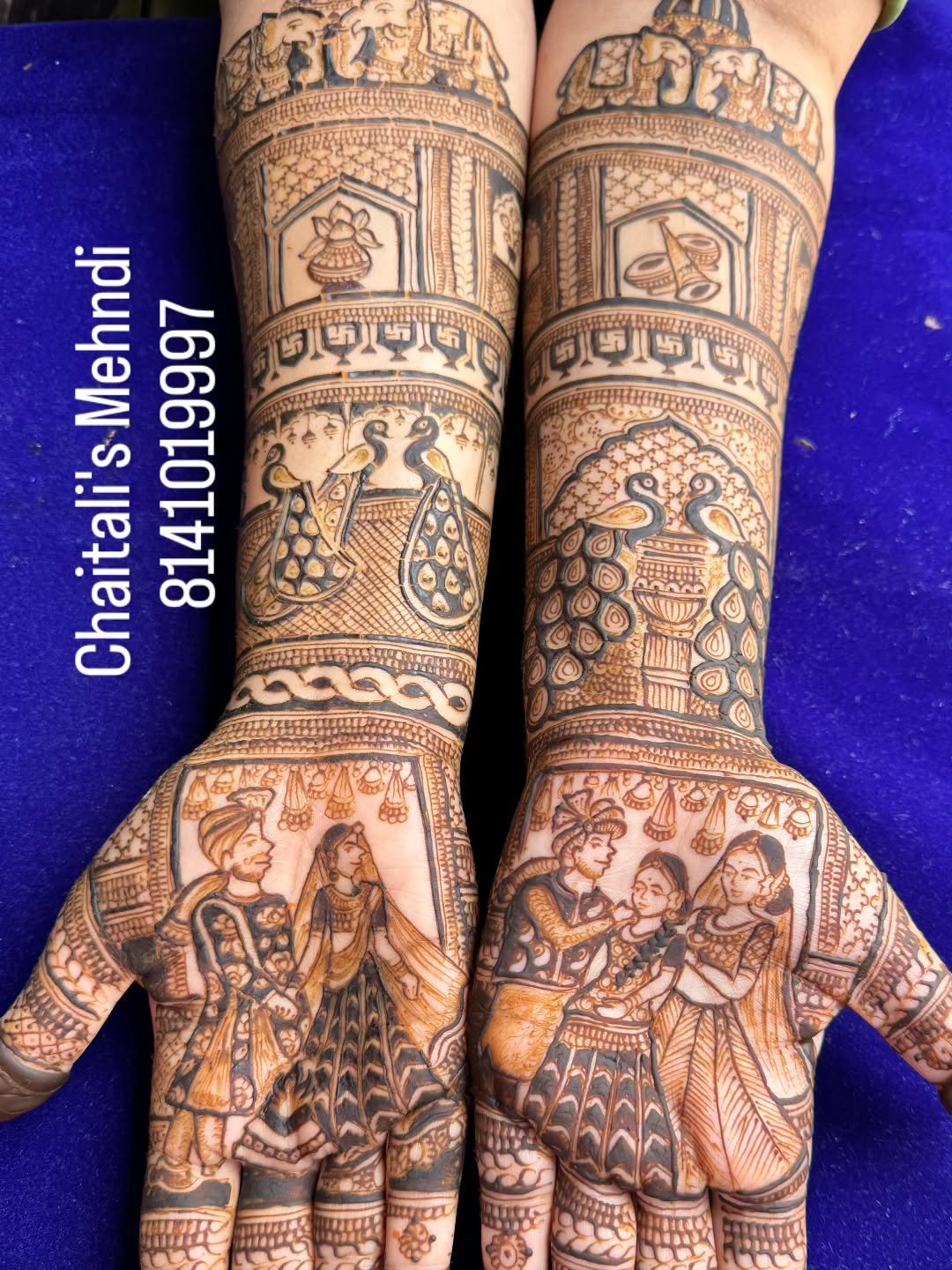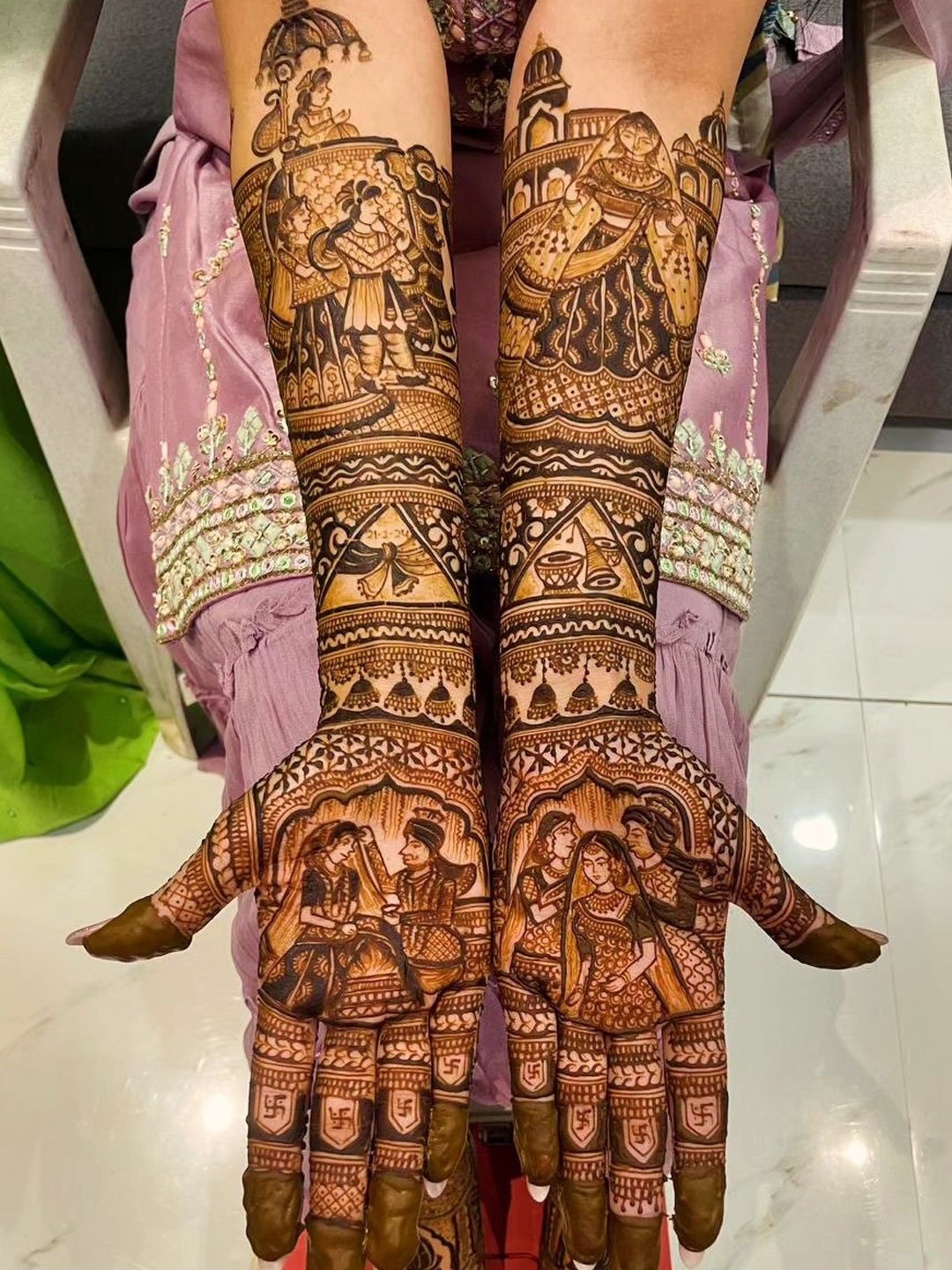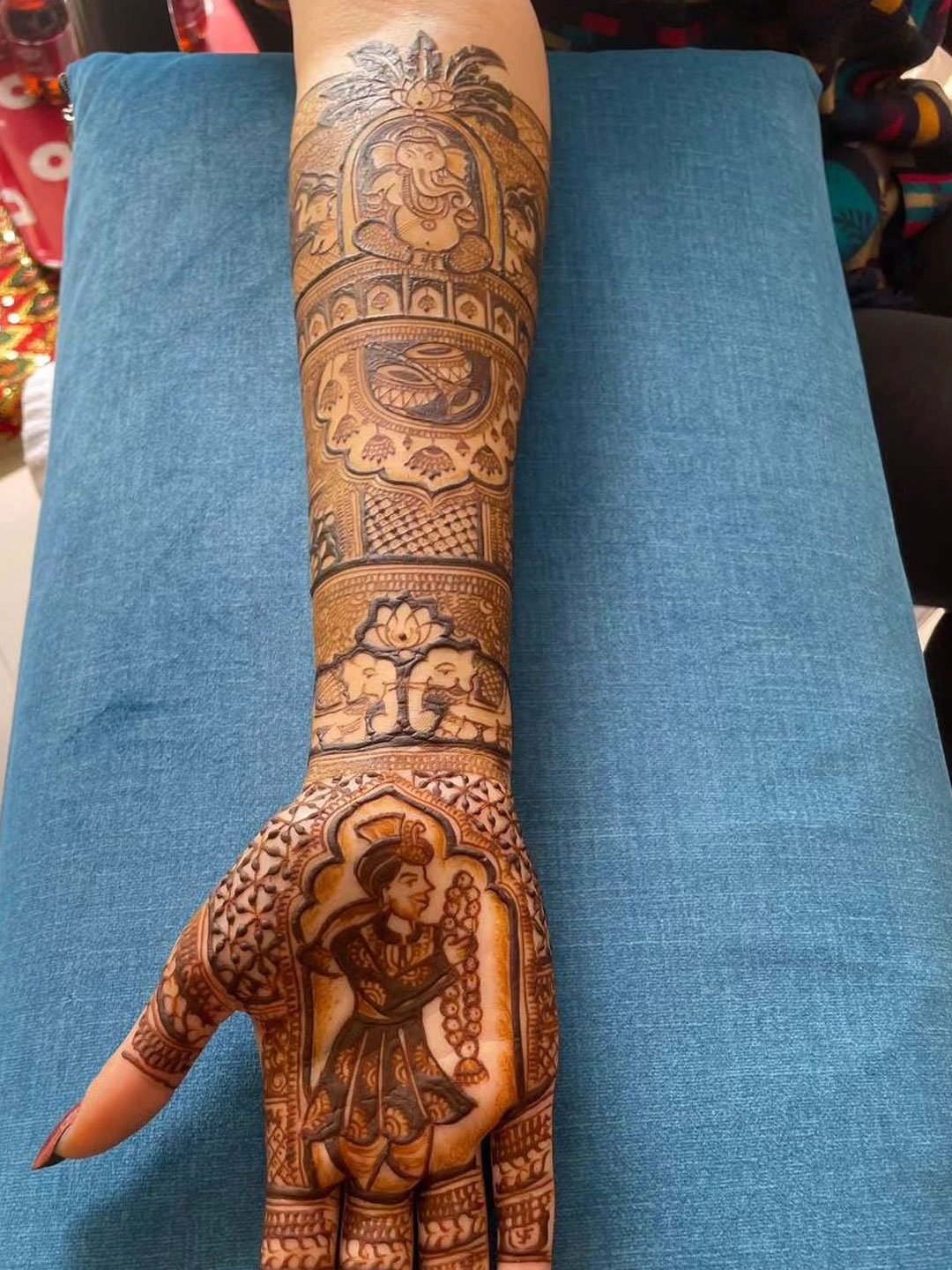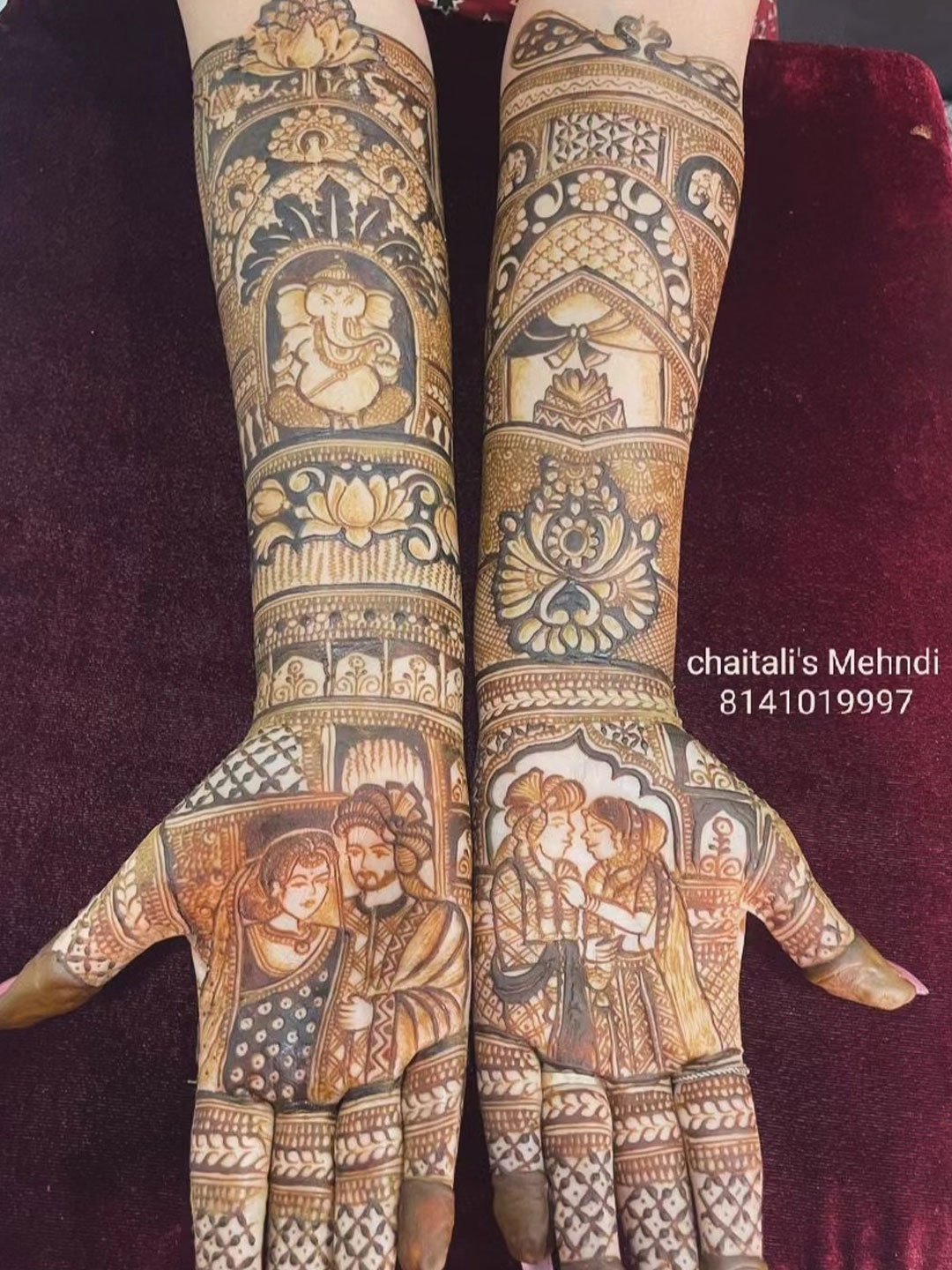
By the time the reception rolls around, your mehndi has already survived the mehndi ceremony, the haldi, the sangeet, and the wedding itself — days of dupatta friction, hand-washing, photographs, and a hundred handshakes with relatives you haven’t seen in years. So it’s no surprise that one question comes up in almost every bridal consultation at Chaitali’s Mehndi Art: “Should I get my mehndi redone for the reception?”
There’s no single right answer — it depends on how many days sit between your wedding and your reception, how your design has faded, and how much you’re planning to show your hands off in reception photos. This guide breaks down exactly how to decide, what “redoing” mehndi actually involves, and how to plan for it so you’re not making the call in a panic the night before.
1. Why This Question Comes Up So Often
Indian weddings rarely wrap up in a single day. Between the mehndi ceremony, haldi, sangeet, the wedding itself, and the reception — sometimes spread across a full week — a bride’s hands go through a lot. Mehndi that looked deep maroon-black on day one can look noticeably lighter by the time the reception photographer starts snapping close-ups of the couple’s hands during the ring exchange or the first dance.
Unlike portrait mehndi or fine bridal mehndi applied fresh for the wedding day, reception mehndi is really a maintenance and styling decision — not a full redesign in most cases. Understanding that distinction is what makes the decision easier.
2. How Much Does Mehndi Actually Fade By Reception Day?
Henna staining depends on several factors: the quality of the paste, how long it was left on, skin type, and how much the hands are washed or exposed to water and sanitizer in the days after application. On average:
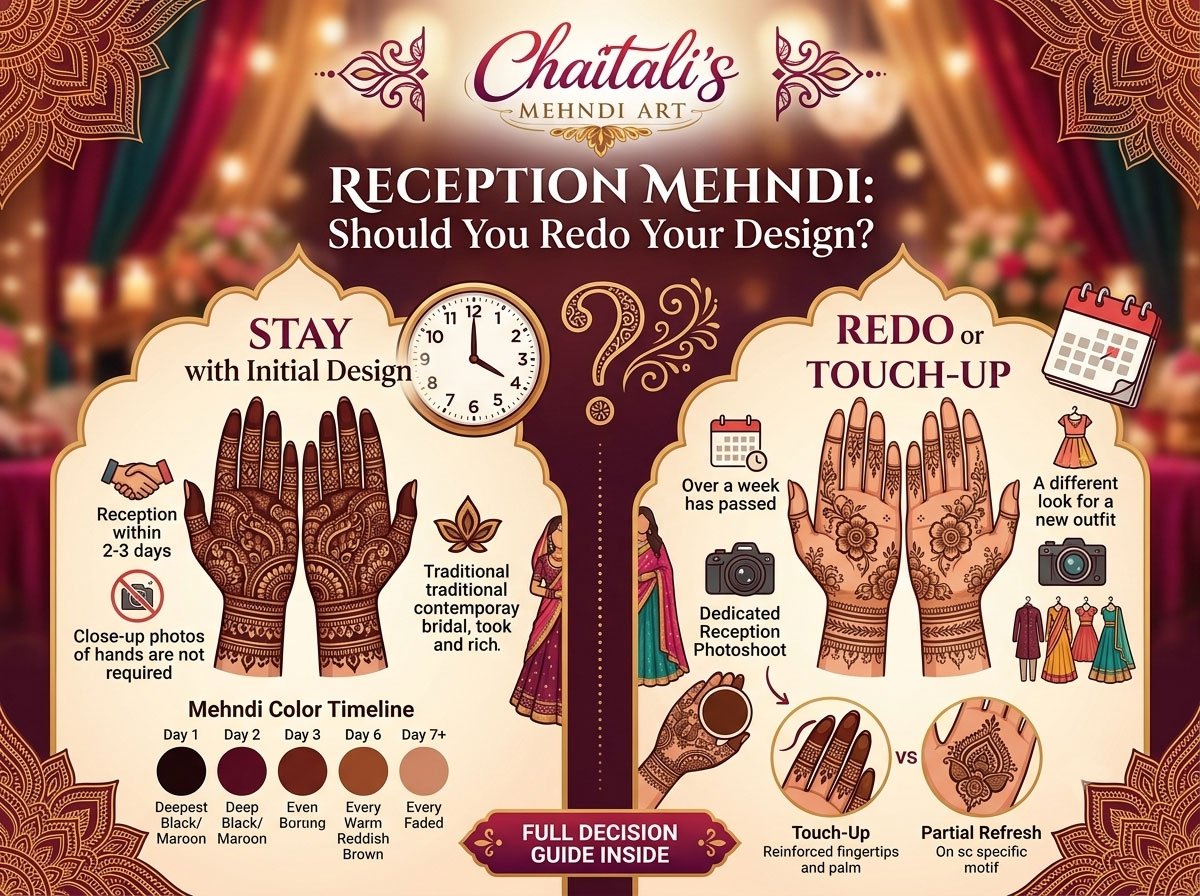
- Days 1–3 post-application: Colour is at its deepest, often a rich maroon-to-black.
- Days 4–7: Colour naturally mellows to a warm reddish-brown — still attractive, but visibly softer than day one.
- Beyond a week: Fading becomes more noticeable, especially on the palms, which see the most contact and washing.
If your reception falls within 2–4 days of your mehndi application, you’re likely still in good shape and may only need light touch-ups. If it’s a week or more later — common with weddings that span multiple cities or have a gap between the wedding and reception — a partial or full redo becomes worth considering.
3. Should You Redo It? A Simple Decision Framework
Here’s how to think about it rather than guessing:
Redo is probably unnecessary if:
- Your reception is within 2–3 days of your original mehndi application
- The color has mellowed but is still even and visible
- You’re not planning close-up hand photography (like a separate reception photoshoot)
A touch-up makes sense if:
- The color has faded unevenly — deep in some areas, patchy in others
- Fingertips have faded (a common early fade zone) while the rest holds color
- You want to freshen it up without redoing the entire design
A partial or full redo is worth it if:
- More than a week has passed since your original mehndi
- You’re doing a dedicated reception photoshoot with hand close-ups
- Your reception outfit or theme calls for a different, lighter design (many brides go for something simpler and more contemporary for the reception compared to bridal day)
- Your original design was very intricate/portrait-style and heavy fading is visually distracting rather than just “soft”
If you’re unsure where you fall, this is exactly the kind of thing worth flagging during your original booking consultation — an experienced artist can often predict how your mehndi will hold up based on your skin type and the number of days involved, the same way we walk brides through timing during our bridal mehndi booking process.
4. What “Redoing” Reception Mehndi Actually Looks Like
A common misconception is that redoing mehndi for the reception means repeating the entire elaborate bridal design from scratch. In practice, it’s rarely that heavy-handed. Reception mehndi redos usually fall into one of three categories:
A. Touch-Up Only
The artist reinforces faded areas — typically fingertips, palm centers, and edges — without disturbing the parts that are still holding strong color. This is the fastest option, often taking under an hour, and works well when the original design is largely intact.
B. Partial Refresh
Certain sections of the design (say, the back-of-hand motif or a portion of the forearm pattern) are redone or layered over, while other sections are left as-is. This is common when brides want their reception look a little lighter or less elaborate than their full bridal mehndi, without starting completely over.
C. Full Redo with a New Design
Some brides prefer a fresh, simpler design altogether for the reception — often opting for something more modern, minimal, or aligned with a different reception outfit and theme. This is essentially a new mehndi session and should be planned and booked like one, with its own time slot rather than squeezed in the morning of.
If you’re drawn to option C, it’s worth browsing styles ahead of time — florals remain a popular, elegant choice for a lighter reception look (see our guide on floral bridal mehndi designs for a romantic look), while others prefer carrying a version of their original bridal motif forward for visual continuity across wedding photos.
5. Timing: When to Book Your Reception Touch-Up
This is where most brides go wrong — treating the reception mehndi as a same-day, walk-in decision. In reality, it deserves its own slot on your wedding week schedule, just like your mehndi ceremony did.
General guidelines:
- Touch-up only: Can usually be scheduled the morning of the reception, allow at least 1–2 hours before your look is otherwise locked in (hair, makeup, outfit).
- Partial refresh: Best done the evening before or early morning of, since it needs a few hours of drying/setting time for good color.
- Full redo: Treat this as a separate mehndi session entirely — ideally the evening before the reception, giving the henna overnight to set and deepen, just as you would for your original bridal application.
If your wedding functions are spread across several days or cities, it’s worth discussing your full mehndi timeline — mehndi ceremony, wedding day, and reception — with your artist at the time of your initial bridal mehndi booking, rather than trying to arrange a reception touch-up separately at the last minute. Many brides bundle this into their original package for exactly this reason.
6. Making Your Reception Mehndi Last Until the Big Moment
Whether you’re keeping your original design or getting a partial redo, a few habits help the color hold up through your reception:
- Avoid excessive hand-washing with harsh soap in the days leading up to the reception — use gentler alternatives where possible.
- Apply a light layer of natural oil or balm (mustard oil, coconut oil, or a lip balm in a pinch) to the mehndi before events involving a lot of hand contact — it helps seal in color.
- Keep hands away from direct water for long stretches, especially swimming or long showers, in the 48 hours before your reception.
- Avoid hand sanitizer where possible, or apply it sparingly — the alcohol content accelerates fading.
- Wear gloves or wrap hands lightly overnight after any touch-up session, the same way you would after your original bridal mehndi, to lock in the deepest color before it’s exposed to daily wear.
These are the same aftercare principles we walk every bride through after her original bridal application — good aftercare in the first 48 hours matters more for final depth of color than almost anything else.
7. What If You Want a Completely Different Look for the Reception?
Some brides intentionally use the reception as an opportunity to switch things up — moving from a traditional, heavily detailed bridal design to something lighter, more modern, or thematically different for a reception outfit that might be a western gown, a contemporary lehenga, or a fusion outfit. If that’s your plan, it helps to think of the reception mehndi almost like a separate service:
- If your reception has a distinct theme or color palette, this is similar in planning terms to how brides approach festival mehndi or engagement mehndi — a lighter, more occasion-specific design rather than the full bridal treatment.
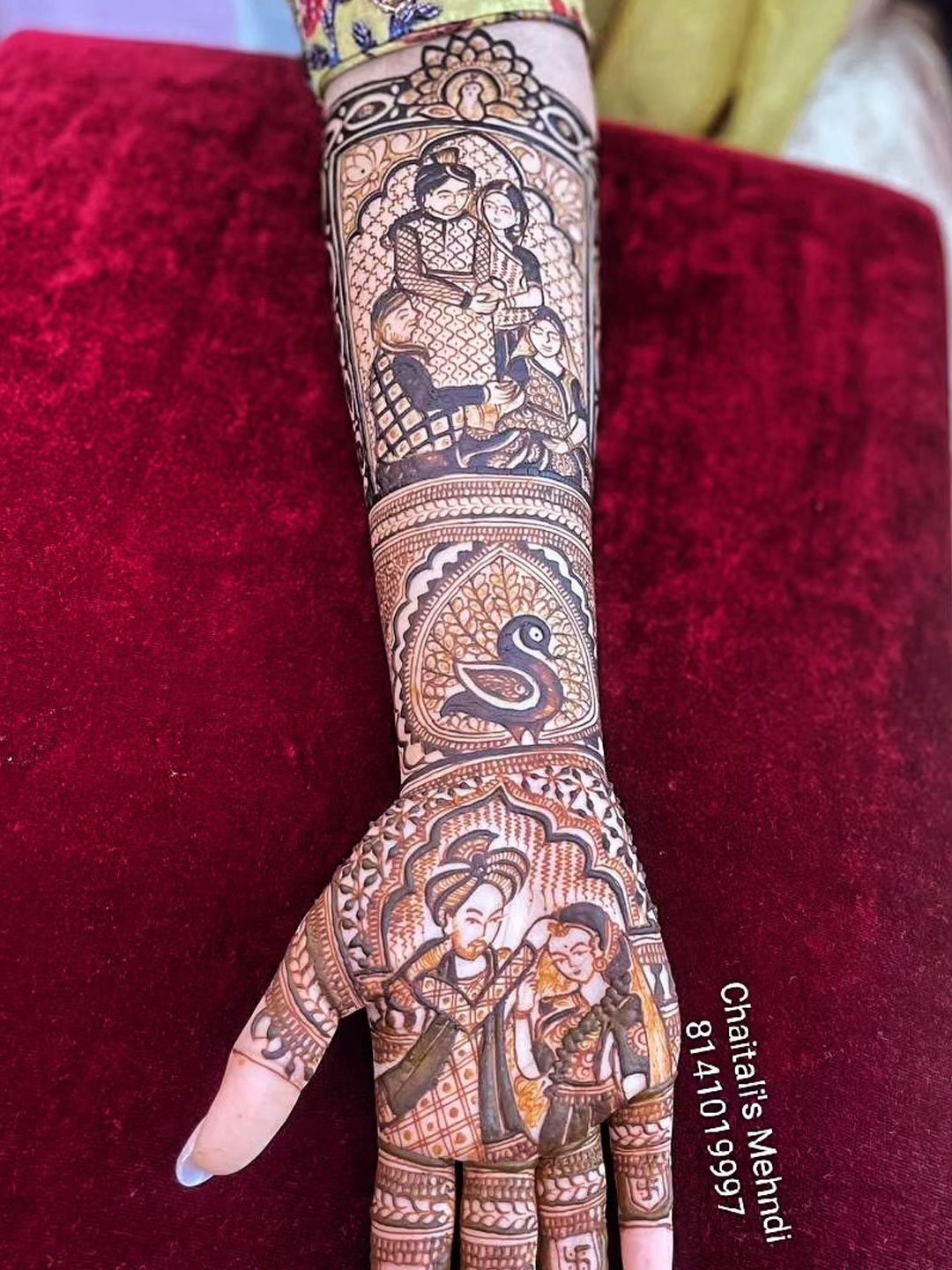
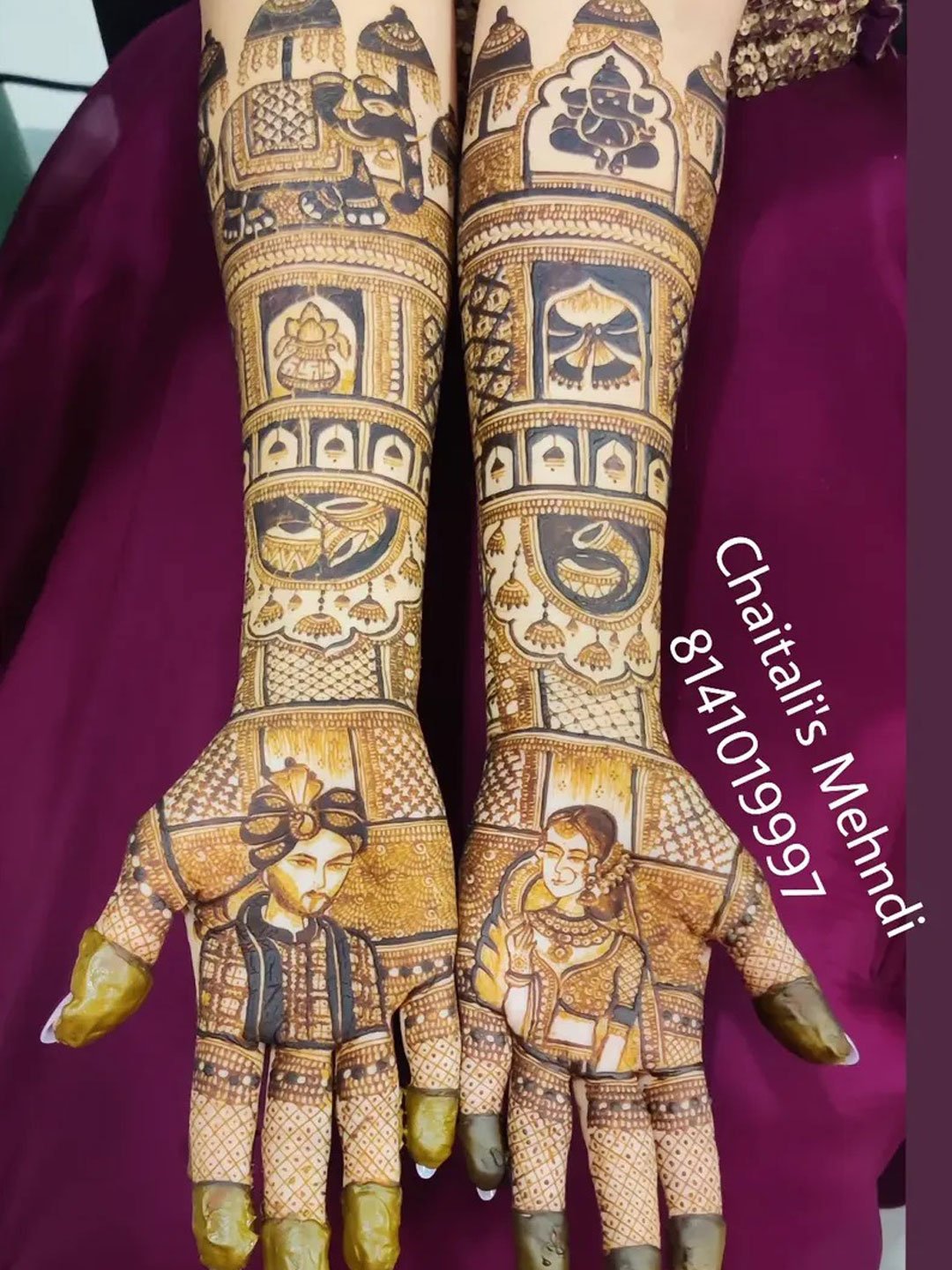
- If you loved a particular motif from your original bridal design — a portrait element, an initial, or a symbol — many artists can carry a smaller version of it into the reception design for continuity. This is a common request in our portrait mehndi sessions.
- If your reception includes extended family or a guest mehndi corner, that’s a separate planning consideration entirely — closer to group mehndi coordination than a personal touch-up.
Whatever direction you choose, communicate it early. A “surprise me” redesign the morning of your reception isn’t the moment for experimentation — that decision is best made during your original mehndi consultation, alongside your wedding-day design.
8. How Chaitali’s Mehndi Art Approaches Reception Mehndi
At Chaitali’s Mehndi Art, we don’t treat reception mehndi as an afterthought — it’s built into the wedding mehndi conversation from the start. When you book your bridal mehndi session with us, we walk through your full function calendar (mehndi ceremony, wedding day, and reception) so we can plan realistic touch-up timing, and flag whether a full redo makes more sense based on the gap between your functions.
- Honest fade assessment: We tell you upfront whether your design is likely to need a touch-up, partial refresh, or full redo by reception day — based on your skin type and function timeline.
- Flexible scheduling: Reception touch-ups and redos can be booked as part of your original package or scheduled separately, depending on your calendar.
- Design continuity: If you love your bridal motif, we can carry elements of it into a lighter reception design so your photos feel connected, not disjointed.
- Fresh henna for redos: Just like our approach to bridal mehndi, any full redo uses freshly hand-mixed henna prepared for depth of color — not leftover paste.
9. Final Thoughts
There’s no universal rule that says every bride must redo her mehndi for the reception — plenty of brides carry their original design through beautifully with nothing more than a light touch-up. The real decision comes down to timing, how visible your hands will be in reception photography, and whether you want a fresh look for a different outfit or theme.
The one thing worth avoiding is leaving the decision to the morning of your reception. Whether it’s a five-minute touch-up or a full evening-before session, plan it the same way you planned your original mehndi — with enough lead time for the color to set properly.
If you’re still finalizing your wedding week mehndi schedule, explore our full range of services — from bridal mehndi and portrait mehndi to engagement and festival mehndi — or browse more planning guides on our mehndi blog. And when you’re ready to plan your reception touch-up alongside your bridal mehndi, reach out to Chaitali’s Mehndi Art — we’ll help you map out a mehndi timeline that looks fresh from the first ceremony to the very last photograph.
Related Reading:
- How Far in Advance Should You Book a Mehndi Artist in Ahmedabad?
- Portrait Mehndi: Adding Couple Illustrations to Bridal Designs
- Floral Bridal Mehndi Designs for a Romantic Look
- Mehndi Ideas for Mehndi Ceremony Themes and Décor
Explore More: Mehndi Category | All Services | Contact Chaitali’s Mehndi Art