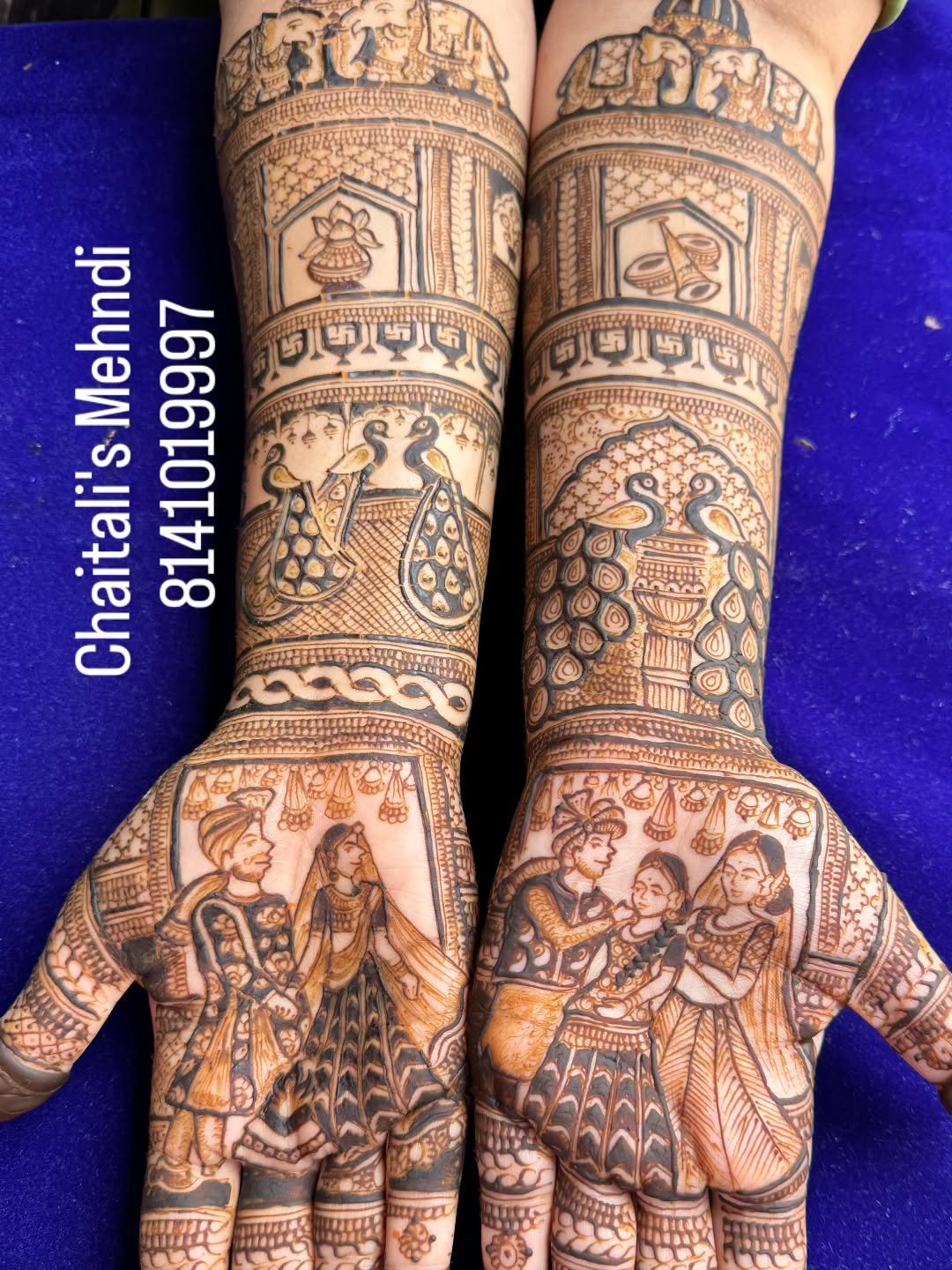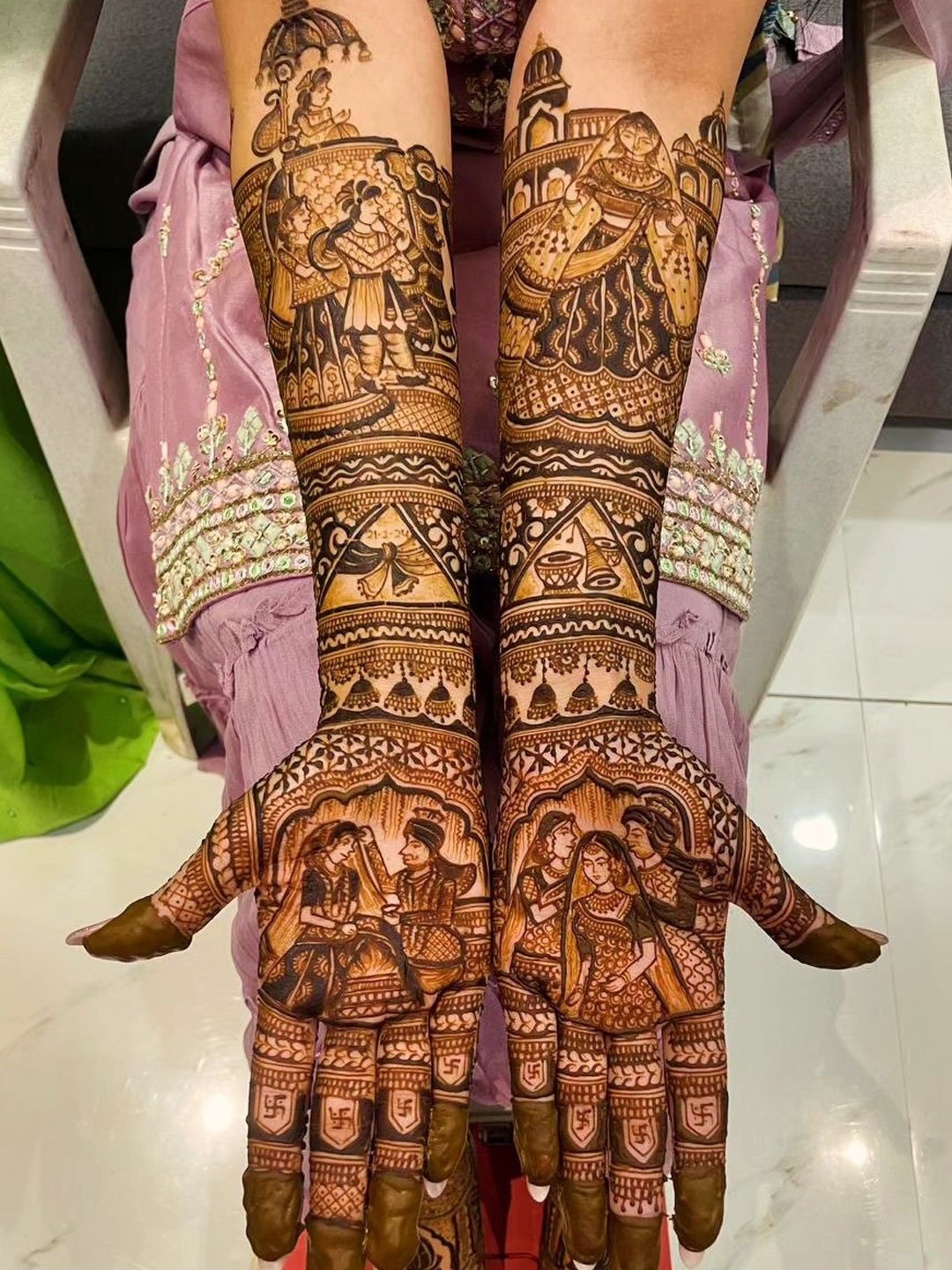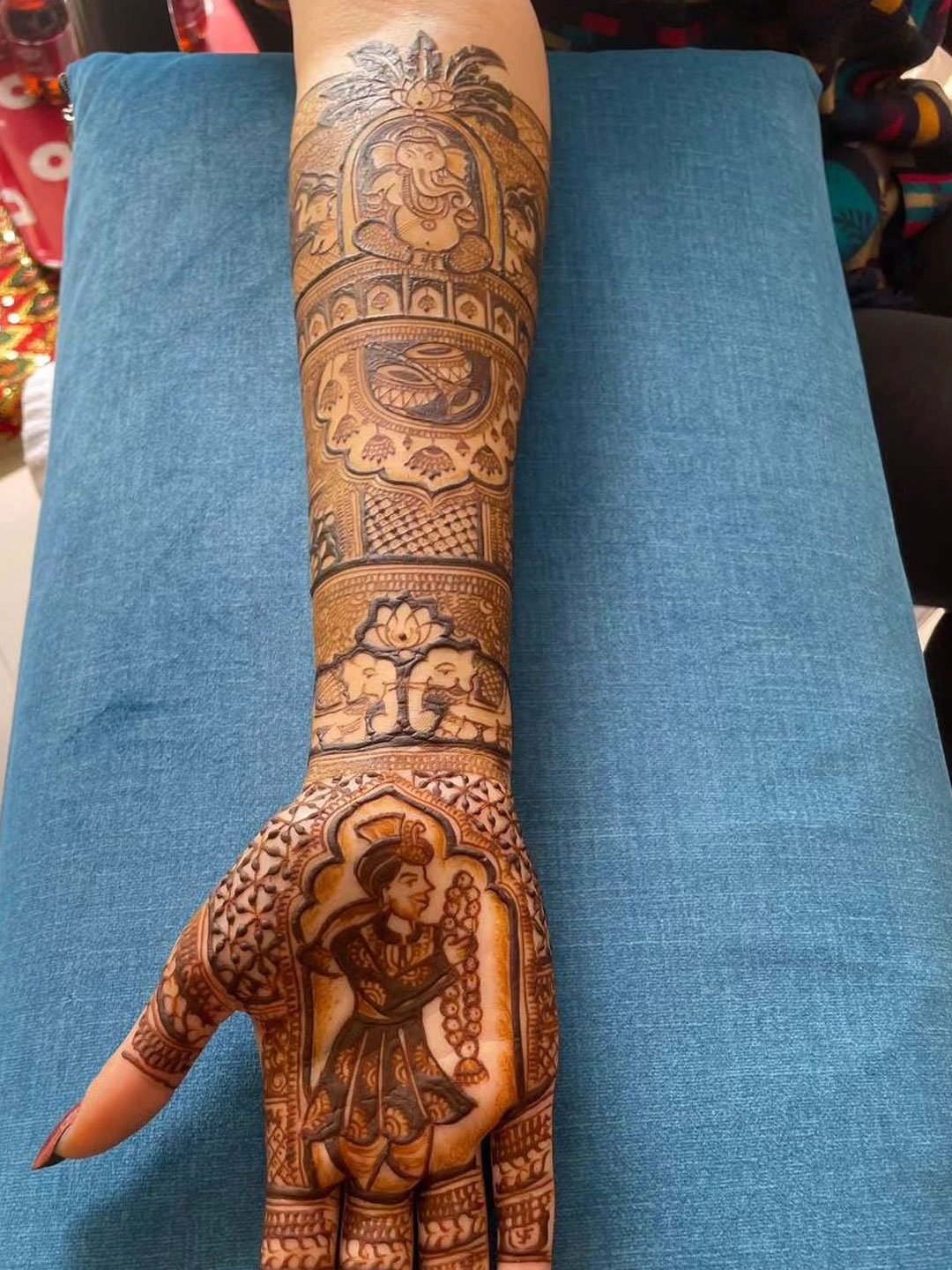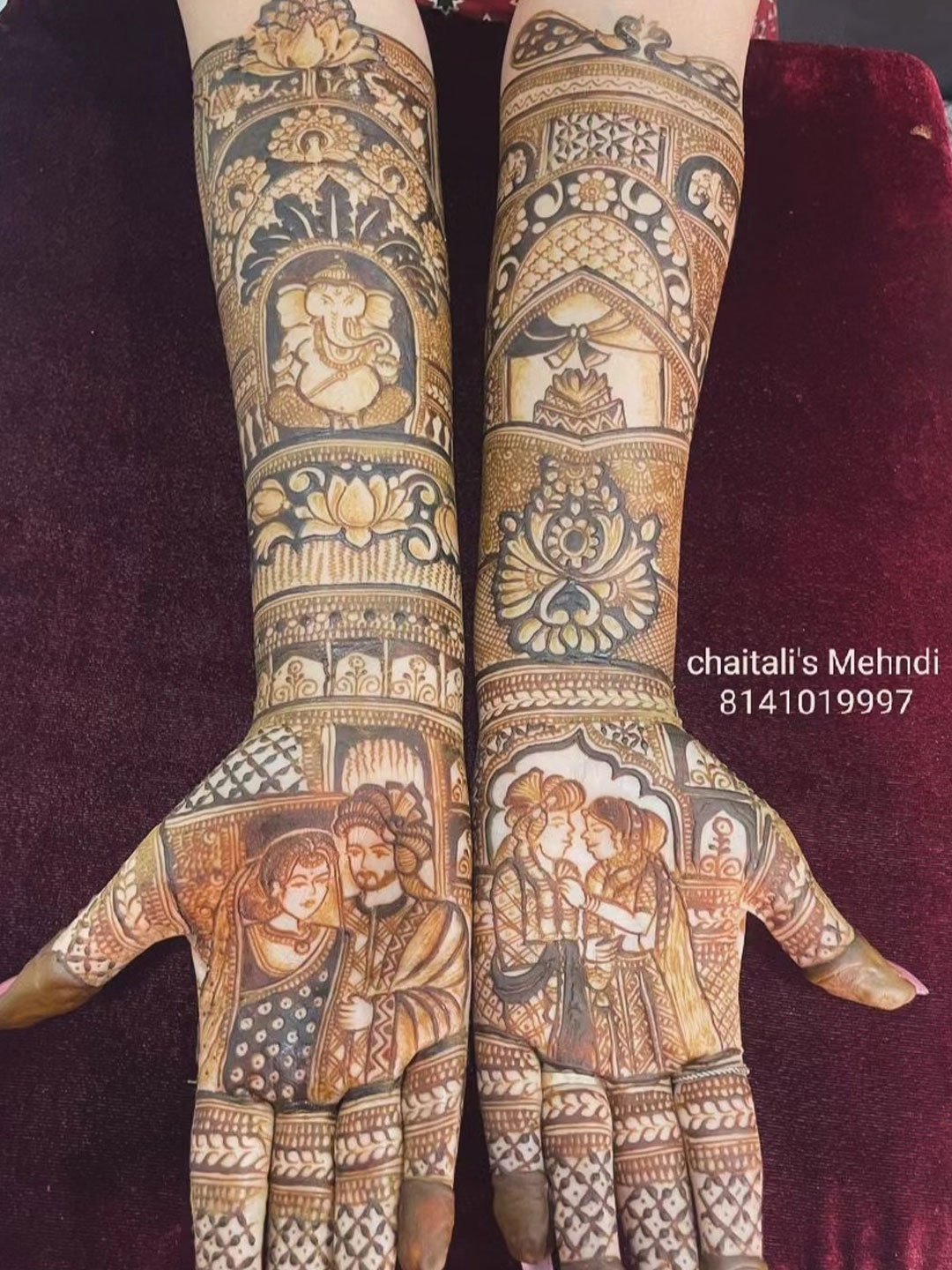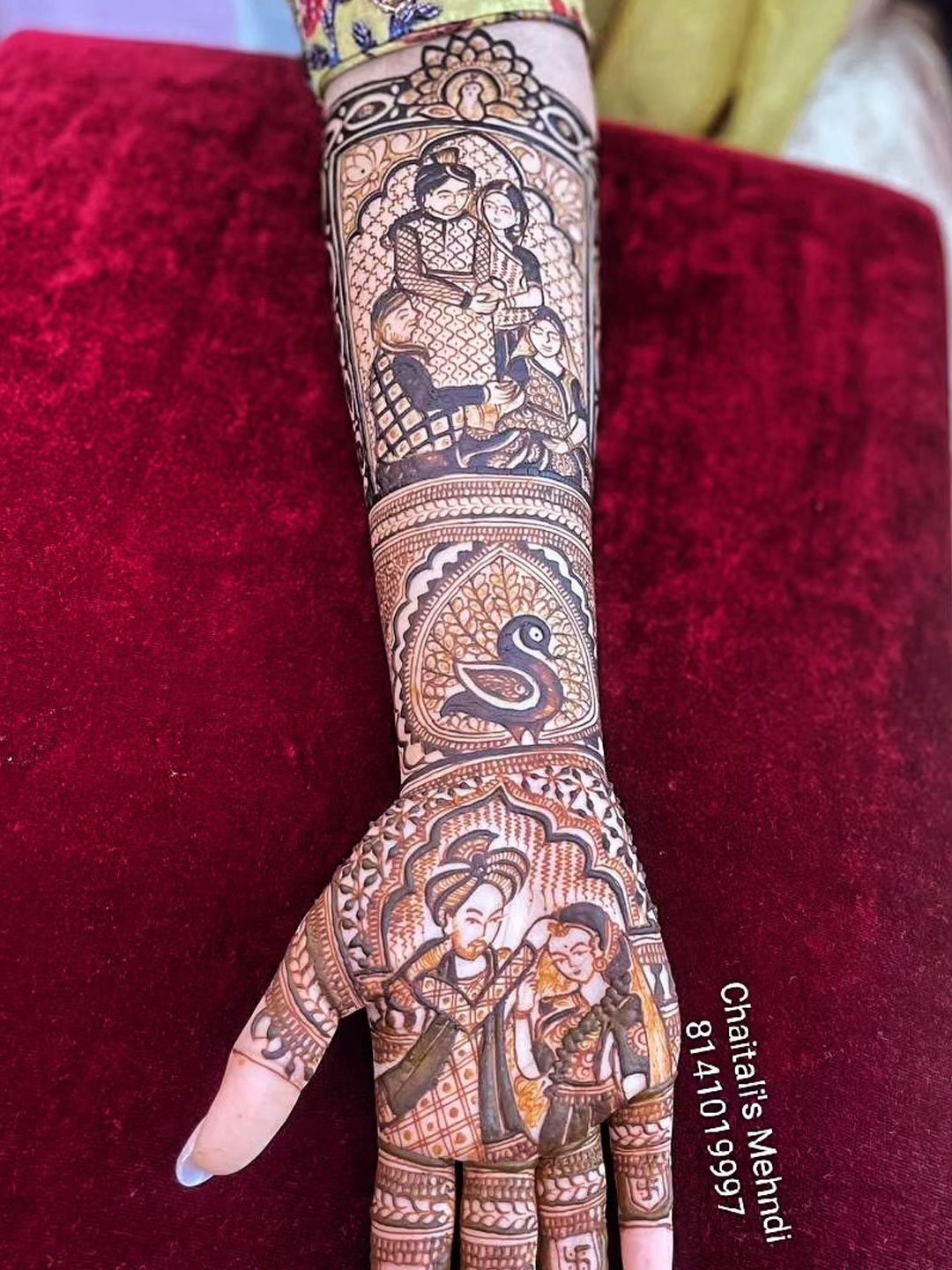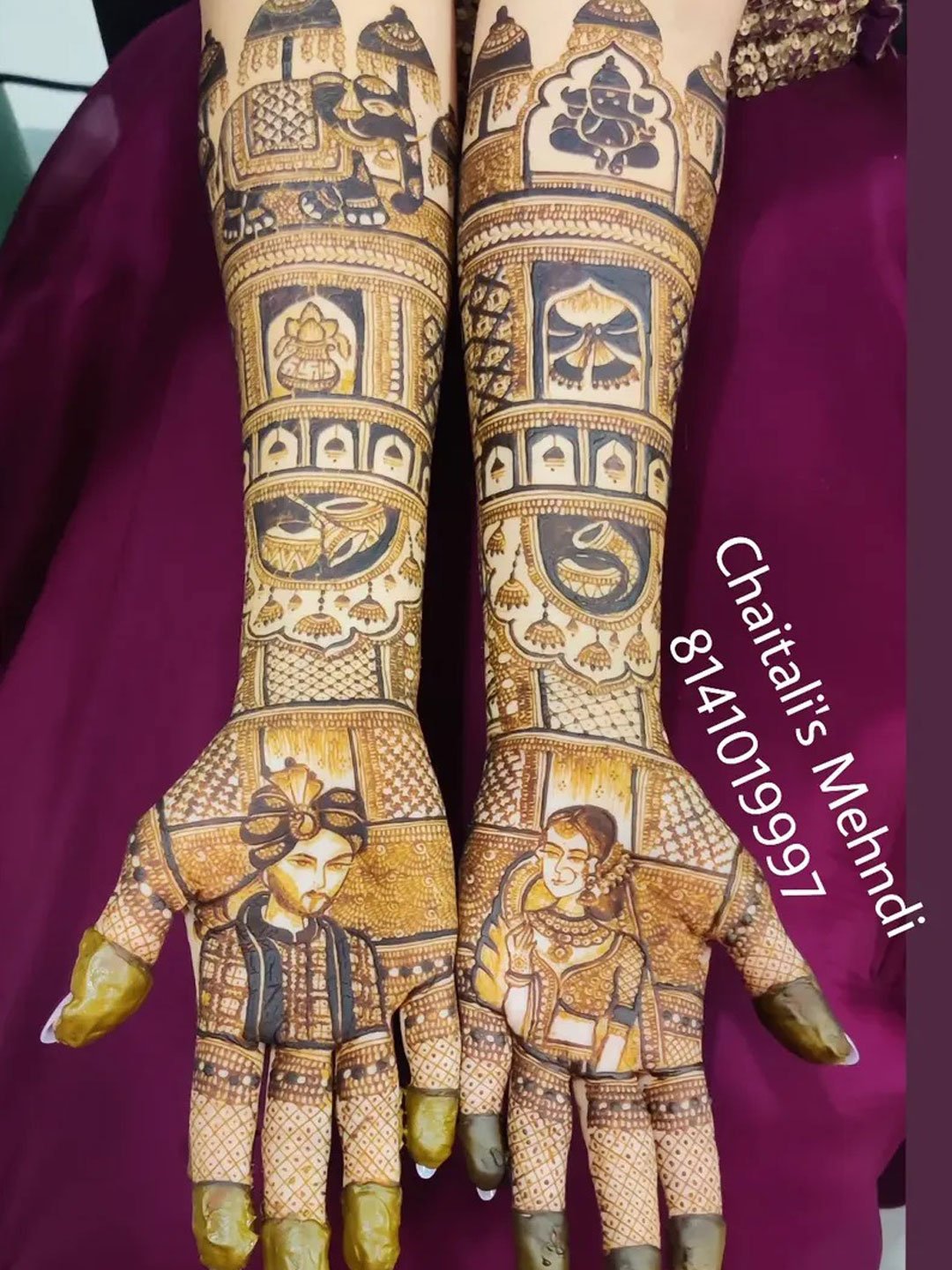
Every wedding conversation about mehndi starts with the bride — but ask any mother-of-the-bride, sister, or sister-in-law, and you’ll hear the same thing: family mehndi deserves just as much thought. It’s worn in nearly every wedding photo, from the haldi ceremony to the reception, and it needs to hold up through days of dancing, rituals, and non-stop hugging relatives.
This guide breaks down the best family mehndi designs for wedding functions — what actually works for different family members, how to plan group sessions without turning them into an all-day queue, and how to budget for it properly.
1. Why Family Mehndi Needs Its Own Planning
It’s easy to treat family mehndi as an afterthought — “we’ll figure it out on the day.” In practice, that’s how most mehndi-day chaos happens: mismatched design styles across sisters, mothers left waiting for hours while the bride’s session runs long, and rushed, thin designs on guests because there’s suddenly no time left.
Family mehndi for a wedding usually needs to account for:
- Multiple people with different comfort levels — a grandmother may want something light and traditional on the palm, while a younger cousin wants a full trendy sleeve.
- A tight timeline — most families want everyone done before the sangeet or mehndi ceremony actually starts, not still queuing when the music does.
- Coordinated but not identical designs — family mehndi looks best when there’s a visual theme (matching motifs, similar density) without every hand looking copy-pasted.
- Durability — family members are often more active during the wedding week (dancing, helping with logistics) than the bride, so the stain needs to hold up to more wear.
Getting this right means booking with intention, not last-minute improvisation. Our Sider Mehndi and Group Mehndi services are built specifically around this — coordinated designs, multiple artists working in parallel, and realistic time slots so no one is left waiting.
2. Best Mehndi Designs by Family Role
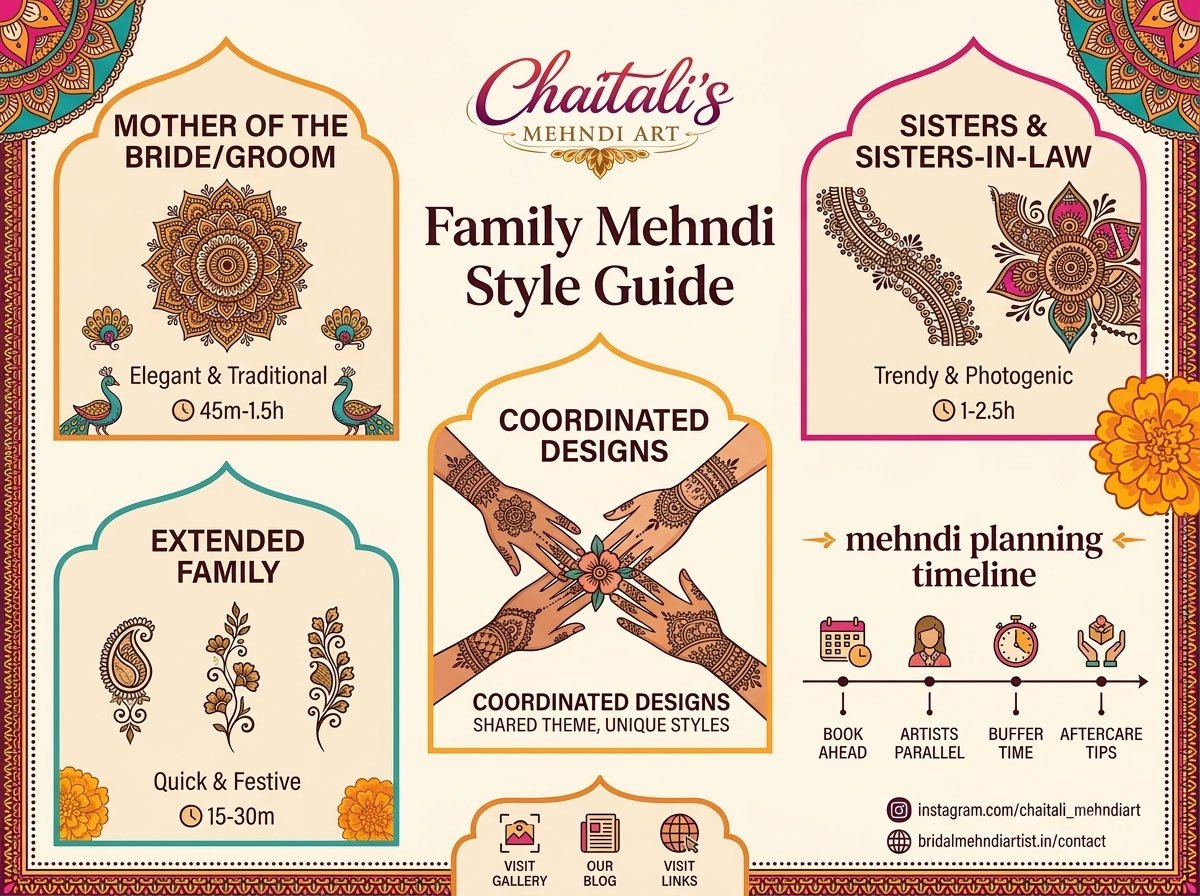
A. Mother of the Bride / Groom
Mothers generally prefer elegant, symmetrical designs that read as festive without being as elaborate as bridal work — since she’s often occupied with hosting duties and doesn’t have hours to sit still.
Recommended styles:
- Circular palm mandalas with floral detailing — visually rich but faster to apply than full-hand coverage
- Wrist-to-mid-palm florals that look complete in photos without covering the whole hand
- Traditional Rajasthani-Gujarati motifs (paisleys, kalash, small peacocks) for a classic, respectful look suited to her role in the ceremonies
Typical time: 45 minutes to 1.5 hours Typical starting price: ₹1,500 – ₹3,000
B. Sisters and Sisters-in-Law
This group usually wants something closer to bridal energy without the full 6-8 hour commitment — trendy, photogenic, but quicker to apply.
Recommended styles:
- Trail-style designs with negative space — visually striking in photos, faster than dense fill patterns
- Arabic-Indian fusion — bold floral vines with open space between elements, popular for sangeet and haldi looks
- Matching “sister set” motifs — a shared design element (like a common flower or peacock) repeated across each sister’s hand for a coordinated group photo
Typical time: 1 – 2.5 hours depending on coverage Typical starting price: ₹2,000 – ₹4,000
C. Sisters-in-Law (Bhabhi/Nanad specifically)
Since this group often takes an active role in wedding rituals (haldi, mehndi ceremony games, sangeet performances), designs need to balance detail with practicality.
Recommended styles:
- Front-hand-only coverage — skips the back of the hand for quicker application and less interference with rings/bangles worn during rituals
- Bandhej-inspired dot patterns combined with light florals — currently trending for a modern-traditional balance
Typical time: 1 – 2 hours Typical starting price: ₹1,500 – ₹3,500
D. Aunts, Cousins & Extended Family
For larger families attending sangeet or mehndi night functions, simpler and faster designs keep the overall session moving.
Recommended styles:
- Single-motif wrist or palm designs — a rose, a small mandala, or a paisley — quick to apply and still photograph well
- Arabic vine patterns along the fingers — a popular, low-time-commitment option for guests who want “a little something” without a long wait
Typical time: 15 – 30 minutes Typical starting price: ₹500 – ₹1,200
3. Coordinating Family Designs Without Making Them Identical
A common request we get is “we want our hands to match, but not look exactly the same.” Here’s how experienced artists usually approach this:
- Pick one shared motif (a specific flower, a peacock, a mandala style) that appears in every family member’s design, at different sizes and placements.
- Vary the density by role — mother and mother-in-law get slightly denser, more traditional coverage; younger sisters and cousins get airier, trendier versions of the same theme.
- Keep a consistent color story — since henna stain color doesn’t vary much, this usually comes down to design style (traditional vs. trail vs. minimalist) rather than actual color.
- Photograph hands together at the end — plan 10-15 minutes at the end of the session for a group hand photo before everyone disperses; this is often skipped and regretted later.
4. How to Plan the Timeline for Family Mehndi Sessions
For a typical mehndi ceremony or sangeet night with 8-15 family members needing mehndi, here’s a realistic planning framework:
| Group Size | Recommended Artists | Estimated Total Time |
|---|---|---|
| 1-4 close family members | 1 artist | 3-5 hours |
| 5-10 family members | 2 artists | 3-4 hours (parallel) |
| 10-15+ family + guests | 3+ artists | 3-5 hours (parallel) |
Planning tips:
- Schedule the bride’s session separately from family/group sessions wherever possible — bridal mehndi often runs long, and family members shouldn’t be stuck waiting behind it.
- Ask your artist team to sequence by role — mothers and close family first, extended guests later — so the most important people aren’t rushed at the end.
- Build in a buffer of at least 30-45 minutes before the actual function starts, since mehndi needs time to dry before hands can be used normally.
For larger guest lists specifically, our Group Mehndi service is designed around exactly this kind of multi-artist, parallel-session planning.
5. Family Mehndi vs. Bridal Mehndi: Key Differences
It’s worth being clear with your artist about which category each person falls into, since pricing and time estimates differ significantly:
- Bridal Mehndi — Full hand-to-elbow and foot coverage, highly detailed, often 4-8+ hours. See our Bridal Mehndi service →
- Sider/Family Mehndi — Coordinated but lighter coverage for the bride’s close family and friends. See our Sider Mehndi service →
- Group/Guest Mehndi — Quick, simple designs for larger guest counts at sangeet or mehndi night. See our Group Mehndi service →
- Engagement Mehndi — A separate lighter style for the bride specifically at engagement functions, distinct from full bridal work. See our Engagement Mehndi service →
If your family occasion is a baby shower or festival rather than a wedding, we also cover those separately under Baby Shower Mehndi, Festival Mehndi, and Karva Chauth Mehndi.
6. Aftercare Tips for Family Mehndi (Built for Busy Wedding Days)
Family members are usually more active during the wedding week than the bride, so stain longevity needs a slightly different approach:
- Apply family mehndi with enough buffer time — at least 2-3 hours before the function starts, so it can dry and be gently removed before active participation in rituals or dancing.
- Avoid tight jewelry immediately after application — bangles and rings can smudge fresh design edges before the paste fully sets.
- Use a light oil-and-sugar mix on top of dried paste to help it flake off naturally with a deeper stain, rather than washing it off early.
- Keep hands away from water for a few hours post-application, especially before events involving handwashing rituals like the mehndi ceremony itself.
7. Why Families Choose Chaitali’s Mehndi Art for Wedding Functions
Chaitali’s Mehndi Art works with Ahmedabad families to plan mehndi across the full wedding guest list — not just the bride. That means coordinated designs by role, multiple artists working in parallel to avoid long waits, and fresh hand-mixed henna so every family member’s stain holds up through the wedding week, not just the first day.
Browse real client work in our Gallery, learn more about our studio on the About page, or explore more planning guides on our Blog — including our detailed guides on choosing the best mehndi artist in Ahmedabad and booking a mehndi artist for destination weddings. Want to learn mehndi application yourself? Check out our Mehndi Classes, or browse henna and aftercare essentials in our Shop.
8. Frequently Asked Questions
What are the best mehndi designs for the mother of the bride? Elegant circular palm mandalas, wrist-to-mid-palm florals, or traditional Rajasthani-Gujarati motifs work well — they look festive and complete without requiring hours of sitting time.
How long does family mehndi take for a wedding function? It depends on group size and design complexity, but most family sessions run 45 minutes to 2.5 hours per person, with multiple artists working in parallel for larger groups.
How much does family mehndi cost compared to bridal mehndi? Family and sider mehndi typically starts around ₹1,500-₹4,000 per person, compared to ₹10,000-₹20,000+ for full detailed bridal mehndi.
Can family members have matching mehndi designs? Yes — a common approach is choosing one shared motif that repeats across everyone’s design at varying density and placement, so the group looks coordinated without being identical.
How many artists are needed for a large family mehndi session? As a rule of thumb, plan for one artist per 4-5 people if you want everyone finished within 3-4 hours; larger guest counts benefit from 3 or more artists working simultaneously.
9. Planning Family Mehndi for Your Wedding?
Family mehndi is easy to underplan and hard to fix last-minute. Booking a team that can handle coordinated designs, multiple family members, and a realistic timeline makes a real difference to how smoothly your mehndi function actually runs.
Get in touch with Chaitali’s Mehndi Art to plan your family and bridal mehndi together as one coordinated booking.
📍 Website: bridalmehndiartist.in 📸 Instagram: @chaitali_mehndiart 📞 Contact: bridalmehndiartist.in/contact
Chaitali’s Mehndi Art — Ahmedabad’s trusted mehndi studio for brides and families alike.