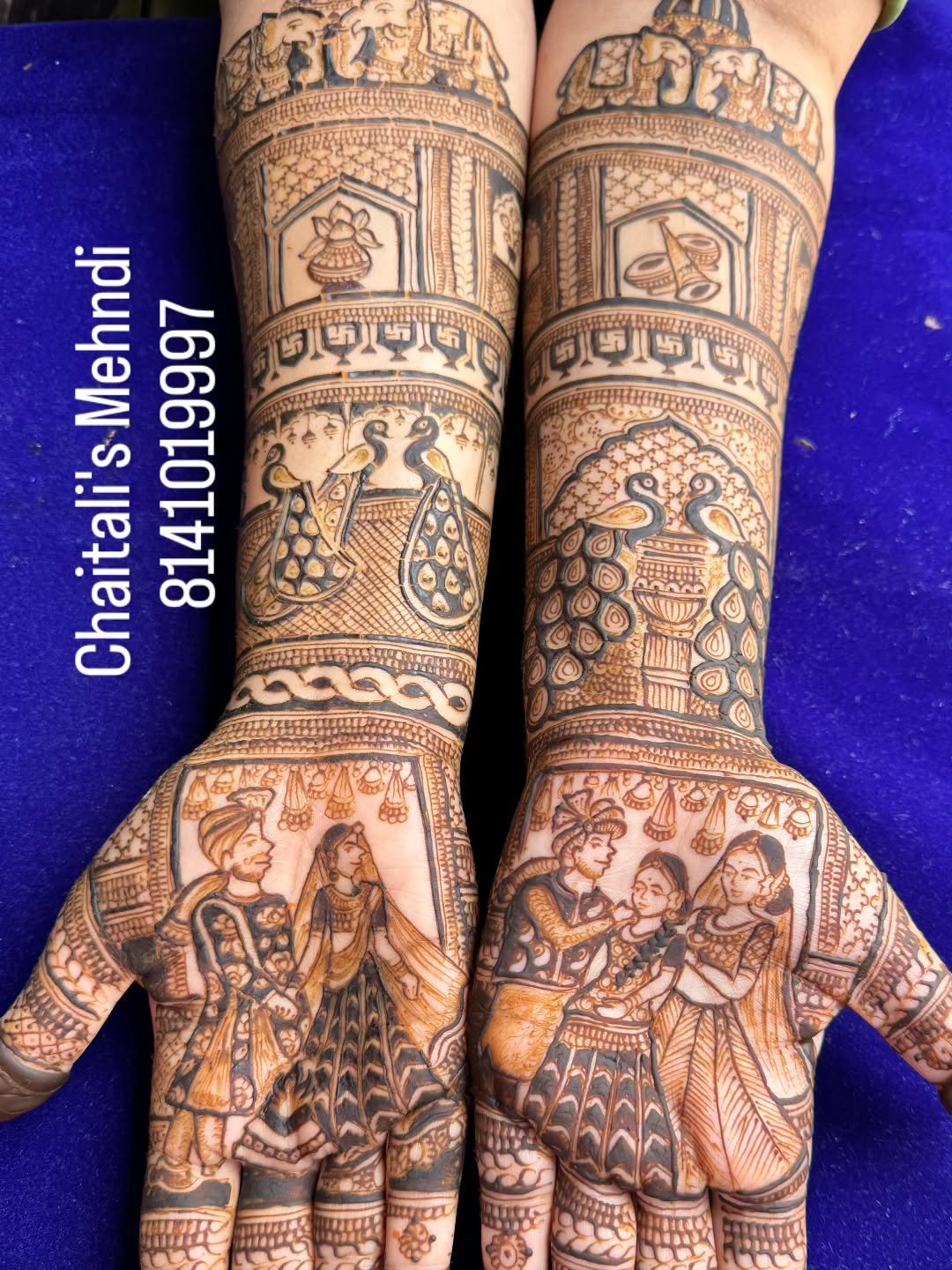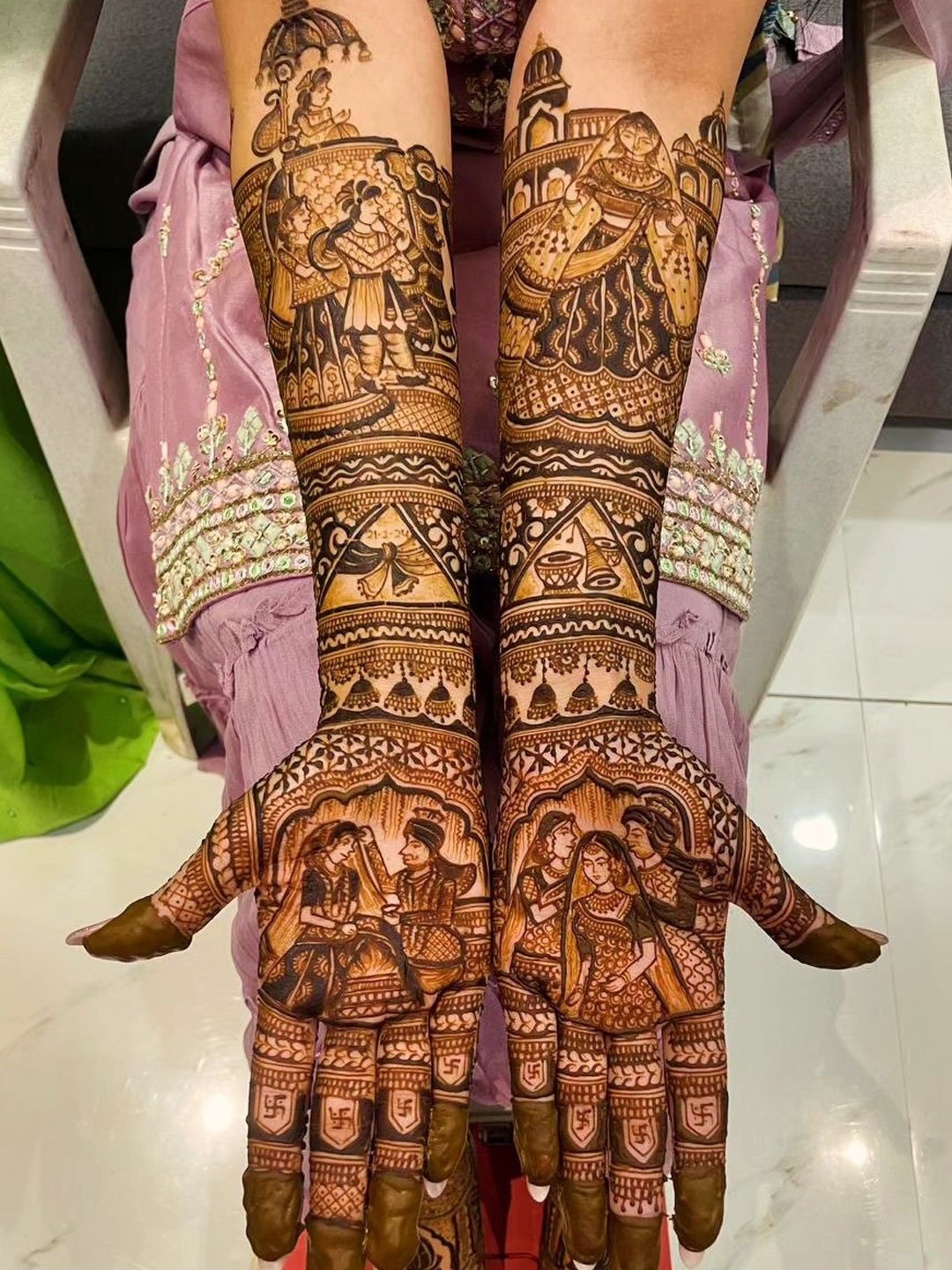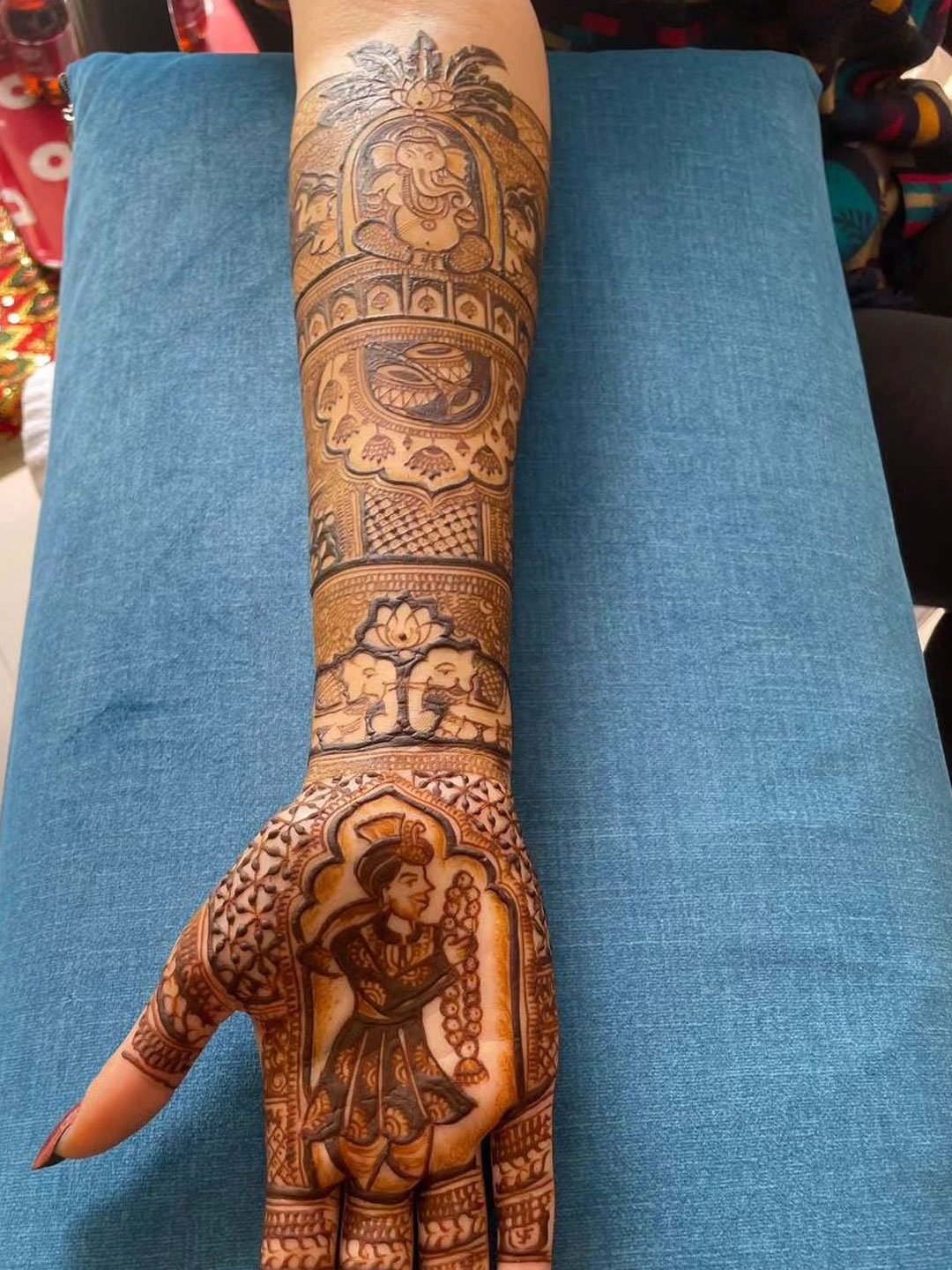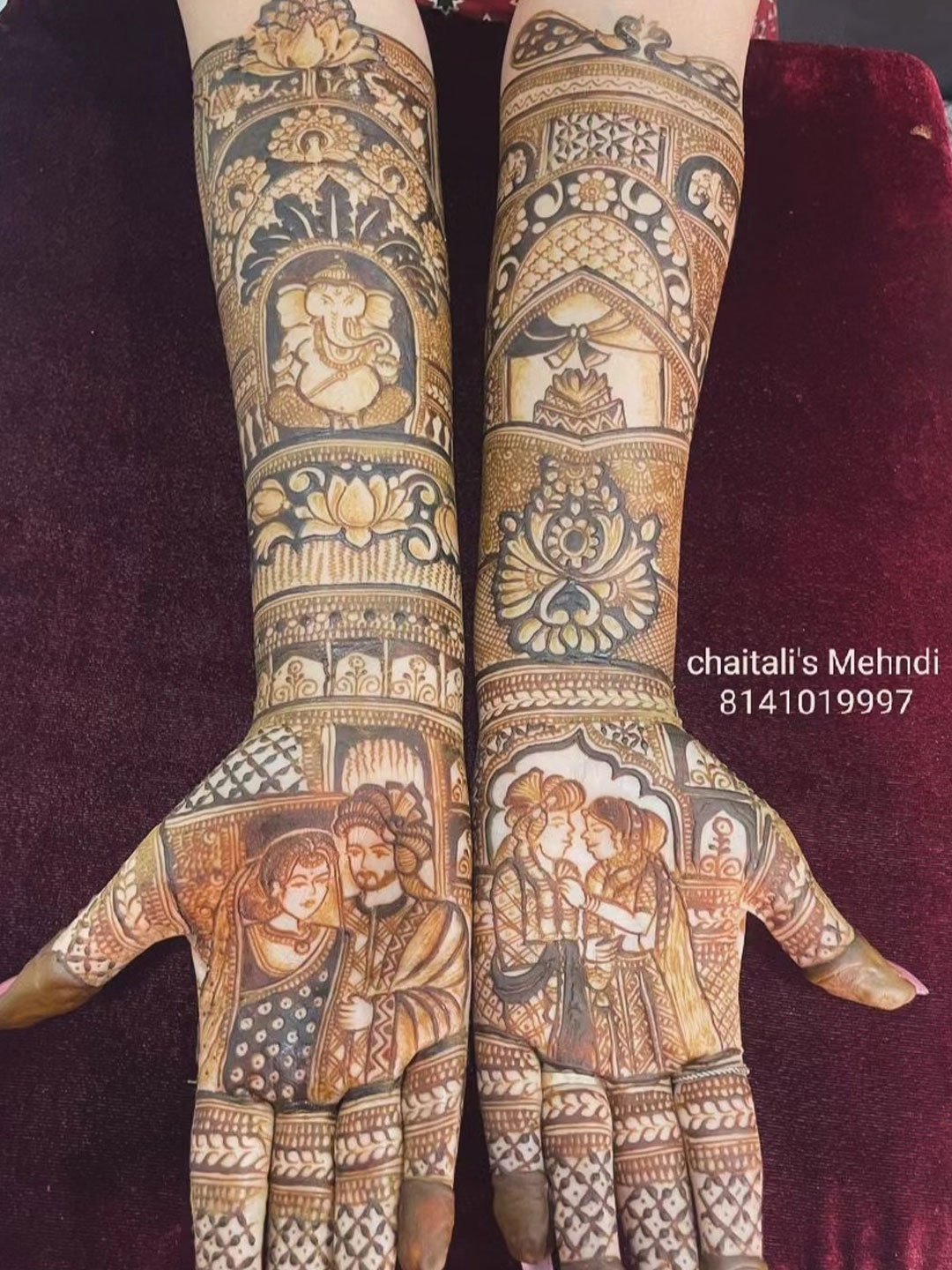
Introduction
Bridal mehndi has always been a canvas for tradition — but the modern bride is redefining what that canvas looks like. Instead of dense paisleys and free-flowing florals covering every inch of the hand, more brides today are asking for something cleaner, sharper, and unmistakably contemporary: geometric bridal mehndi.
Think perfectly aligned grids, crisp triangles, radiating hexagons, and mandalas built on mathematical precision rather than loose, organic curves. It’s the kind of henna that looks as striking on an Instagram grid as it does on your wedding day, and it’s fast becoming one of the most requested bridal mehndi styles of the season.
At Chaitali’s Mehndi Art, we’ve seen this shift first-hand. Brides walking in for consultations increasingly bring reference images with clean lines, negative space, and structured symmetry rather than the heavily-packed, traditional full-hand look. In this guide, we’ll break down what geometric bridal mehndi actually is, why it’s trending, the best design ideas to consider, and how to choose the right one for your wedding look.
What Is Geometric Bridal Mehndi?
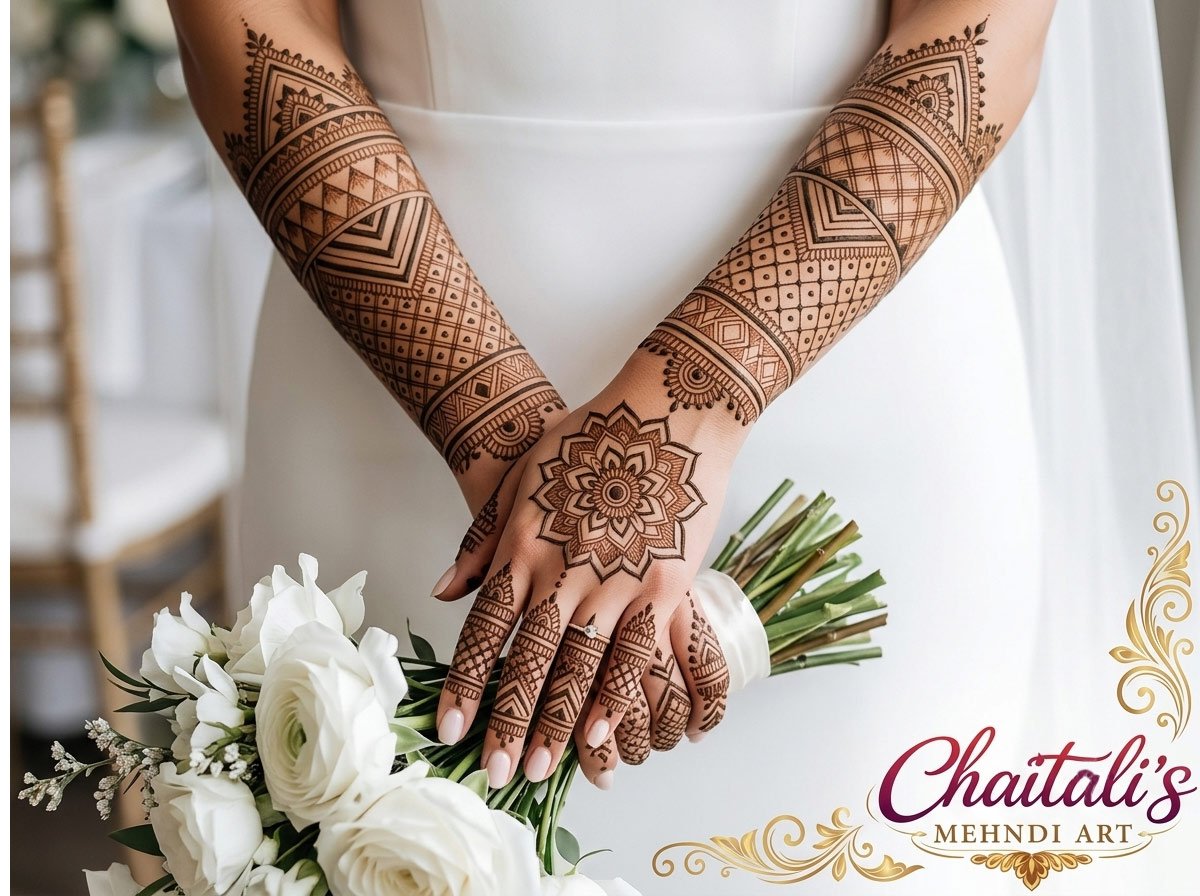
Geometric mehndi is a design style built around structured, repeatable shapes — triangles, hexagons, diamonds, chevrons, dots, and straight or gently curved grid lines — rather than the free-form florals and vines seen in traditional bridal henna.
Where classical bridal mehndi tells a story through paisleys, peacocks, and doli motifs, geometric mehndi tells its story through precision. Every angle is intentional. Every repeated shape is measured. The overall effect feels architectural, almost like wearable art deco or modern jewelry design translated into henna.
That doesn’t mean geometric mehndi has to feel cold or impersonal. Many brides blend geometric structure with softer traditional elements — a mandala core surrounded by fine floral fill, or a grid pattern that opens into a lotus at the center of the palm. The result is a design that feels rooted in tradition but styled for a 2026 wedding.
Why Modern Brides Are Choosing Geometric Mehndi
1. It Complements Minimalist Bridal Fashion
As more brides opt for cleaner silhouettes, lighter fabrics, and pared-back jewelry for their wedding functions, heavily dense bridal mehndi can sometimes feel visually at odds with the rest of the look. Geometric mehndi, with its structured negative space, pairs beautifully with contemporary bridal outfits — especially for cocktail functions, registry weddings, or fusion ceremonies.
2. It Photographs Beautifully
Wedding photography has changed. Close-up hand shots, ring detail shots, and macro photography of the mehndi itself are now a standard part of every wedding album. Geometric patterns, with their sharp lines and intentional symmetry, tend to photograph with more clarity and contrast than dense, curve-heavy traditional designs — especially in the tight crops brides love to share on social media.
3. It Offers a Faster Application Without Losing Impact
Because geometric mehndi often uses negative space intentionally rather than filling every millimeter of skin, it can be completed in less time than a full dulhan mehndi look — without looking any less bridal. This is a major draw for brides managing tight wedding-week schedules across multiple functions.
4. It’s Highly Personal and Customizable
Grids, triangles, and hexagons are essentially a blank structural framework — which makes them incredibly easy to personalize. Initials, wedding dates, or small symbols can be worked into the geometry itself, hidden in plain sight within the pattern (a favorite request we get at Chaitali’s Mehndi Art).
5. It Bridges Traditional and Contemporary Styles
For brides having a fusion wedding, or brides who want to honor tradition while still expressing a modern aesthetic, geometric mehndi acts as a bridge. It can be layered with Arabic florals, Rajasthani motifs, or classic bridal elements like the doli and kalash, while still keeping an overall structured, modern feel.
12 Geometric Bridal Mehndi Design Ideas
Here are some of our favorite geometric mehndi concepts to inspire your bridal look.
1. Grid-Line Full Hand
A structured grid pattern covers the palm and back of the hand in evenly spaced lines, with small motifs — dots, tiny florals, or symbols — placed within each square. This design offers full bridal coverage while keeping a distinctly modern, organized look.
2. Hexagonal Mandala Fusion
Instead of a traditional circular mandala, this design breaks the mandala into hexagonal segments radiating from the center of the palm. Alternating filled and unfilled sections create a striking, high-contrast graphic effect that still nods to classical mandala symbolism.
3. Triangle Cascade Wrist Design
A cluster of triangles, gradually decreasing in size, cascades from the wrist toward the fingers. This is a popular choice for brides who want geometric detailing without covering the entire hand — ideal for engagement or cocktail functions as well as the wedding day itself.
4. Negative Space Diamond Grid
Rather than filling the whole palm, this design uses an open diamond lattice with generous negative space between each shape. It’s a favorite for brides who love the “less is more” aesthetic while still wanting a defined bridal statement.
5. Geometric Jewelry Mehndi
Designed to mimic the look of rings, bracelets, and chains, this style uses fine dotted lines and angular linework to create the illusion of jewelry across the fingers and wrist. It pairs beautifully with minimal bridal jewelry for a coordinated, editorial look.
6. Chevron Sleeve Pattern
Bold chevron (zigzag) bands stack up the forearm, often paired with a denser floral or mandala centerpiece on the palm. This design is especially popular for brides who want their mehndi to extend past the wrist for photographs.
7. Radiating Sun Grid
A geometric sunburst — straight lines radiating outward from a central point, intersected by concentric squares or hexagons — creates a bold centerpiece for the palm. This design has strong visual impact and works well for brides who want a statement mehndi without excessive detailing.
8. Structured Peacock Silhouette
A geometric reinterpretation of the classic peacock motif, using angular linework and triangulated feather patterns instead of curved, organic lines. This design keeps a beloved traditional symbol while giving it a completely contemporary finish.
9. Fingertip Geometric Detailing
For brides who want a minimal look, small geometric shapes — triangles, dots, or thin grid lines — are placed only around the fingertips and first knuckle. This is an increasingly popular choice for brides layering mehndi with statement rings.
10. Architectural Border Design
Instead of covering the entire hand, this design uses a bold geometric border along the edge of the palm and fingers, framing the natural skin like a piece of structured artwork rather than filling it in completely.
11. Hidden Initials in Geometric Panels
Initials or a wedding date are worked directly into the geometric grid itself — disguised as part of the pattern until you look closely. This is one of the most requested personalized options at Chaitali’s Mehndi Art, combining the “hidden name” tradition with a distinctly modern format.
12. Indo-Arabic Geometric Fusion
Bold Arabic-style floral anchor points are connected using geometric grid work and angular borders, blending two popular aesthetics into one cohesive bridal design. This style suits brides who want the richness of Arabic mehndi with the clean structure of geometric patterns.
How to Choose the Right Geometric Design for Your Wedding
Consider your outfit silhouette. Structured, minimal bridal wear pairs beautifully with bold geometric mehndi, while heavily embellished lehengas may look better with a design that leaves more negative space so the mehndi doesn’t compete with the outfit.
Think about your wedding timeline. If you have multiple functions across several days, a design with generous negative space can be completed faster, leaving you time for other pre-wedding rituals.
Decide how personal you want it. Geometric mehndi is one of the easiest styles to personalize with hidden initials, dates, or symbols — let your mehndi artist know in advance if you’d like this included so it can be planned into the pattern from the start.
Match it to your photography priorities. If close-up hand and ring shots are a priority for your wedding photographer, a design with strong contrast and clean lines will photograph more crisply than a dense, all-over pattern.
Consult your artist early. Geometric bridal mehndi relies heavily on precise spacing and symmetry, so it’s worth booking a trial session before the wedding to finalize proportions and placement.
Geometric vs Traditional Bridal Mehndi: Which One Is Right for You?
| Factor | Geometric Mehndi | Traditional Bridal Mehndi |
|---|---|---|
| Visual style | Clean lines, symmetry, structured shapes | Flowing florals, paisleys, figures |
| Best suited for | Minimalist or fusion bridal looks | Classic, heavily embellished bridal looks |
| Application time | Often shorter, especially with negative space | Longer, especially for full dulhan coverage |
| Personalization | Very easy to hide initials/dates in the grid | Hidden names typically woven into vines or motifs |
| Photography | High contrast, crisp in close-ups | Rich and detailed, photographs well in full-hand shots |
There’s no wrong choice here — many brides at Chaitali’s Mehndi Art choose to blend both styles, using geometric structure as a modern frame around classic bridal elements like the peacock, lotus, or hidden groom’s name.
Why Book Your Geometric Bridal Mehndi with Chaitali’s Mehndi Art
Geometric mehndi demands precision — uneven spacing or misaligned lines are far more noticeable in a structured design than in a free-flowing traditional one. That’s where experience matters.
At Chaitali’s Mehndi Art, we specialize in custom bridal mehndi that blends artistic precision with your personal story, whether you’re looking for a fully traditional dulhan look, a clean modern geometric design, or a fusion of both. Every design is planned around your outfit, your wedding timeline, and the details you want hidden or highlighted within the pattern.
Ready to plan your geometric bridal mehndi? Explore more design inspiration and book your session at Chaitali’s Mehndi Art.
Frequently Asked Questions
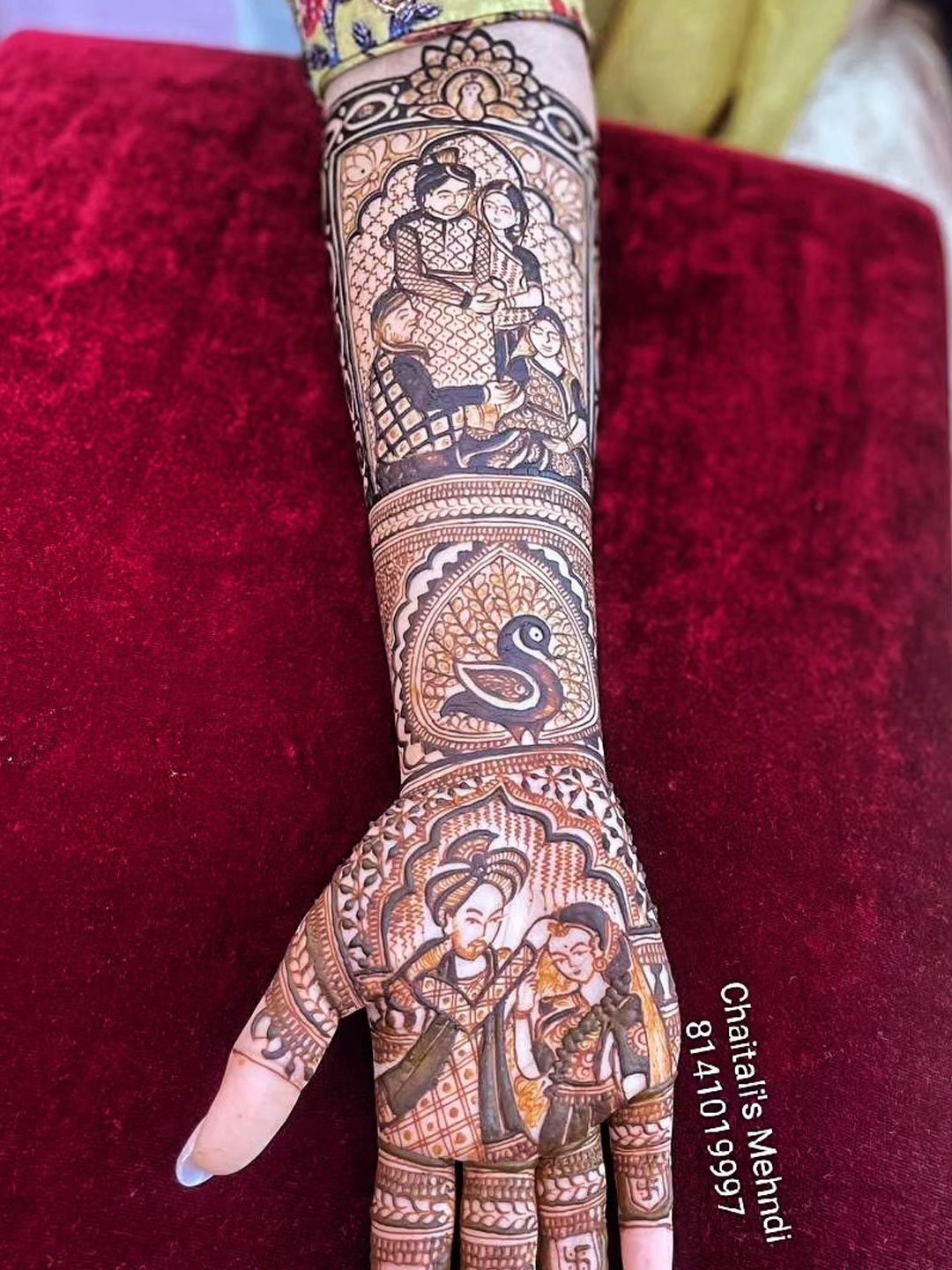
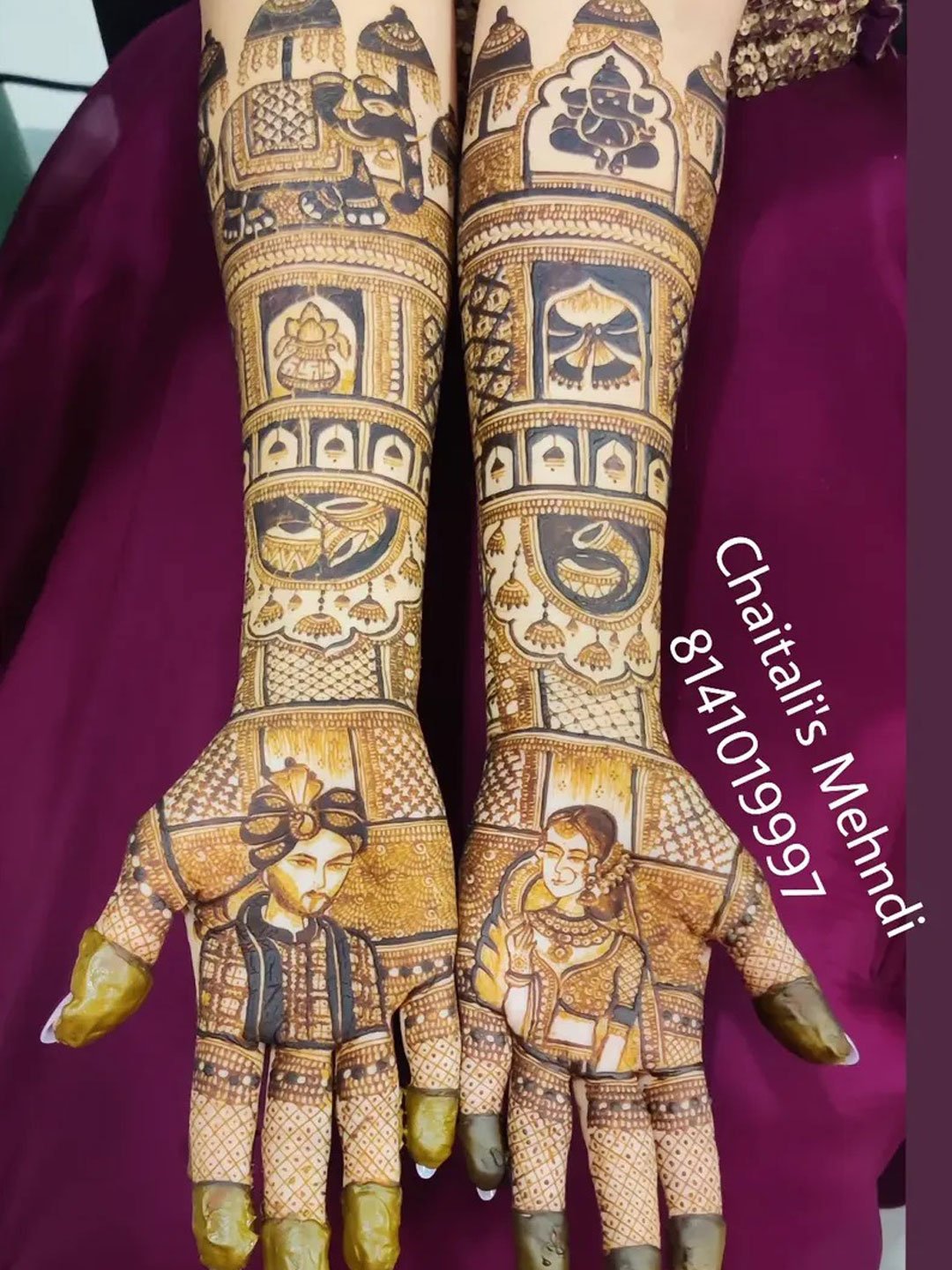
Is geometric mehndi suitable for a traditional Indian wedding? Yes. Many brides blend geometric structure with traditional motifs like peacocks, lotuses, or the doli, creating a design that respects tradition while feeling contemporary.
How long does a geometric bridal mehndi design take to apply? It depends on coverage. Designs using generous negative space can take noticeably less time than a full dulhan mehndi, while a full-hand geometric grid can take a similar amount of time to traditional full coverage.
Can a groom’s name be hidden in a geometric design? Yes — geometric grids and panels are actually one of the easiest formats to hide initials, names, or dates within, since the repeating structure naturally disguises lettering until you look closely.
Does geometric mehndi stain as dark as traditional designs? Staining depends on the henna paste quality and aftercare, not the design style. A well-prepared henna paste will stain just as richly on a geometric design as on a traditional one.
Is geometric mehndi a good option for a fusion or destination wedding? Absolutely. Its clean, structured look pairs well with contemporary bridal fashion and works across a range of ceremony styles, making it a popular choice for fusion and destination weddings.
Written by Chaitali’s Mehndi Art — bridal mehndi specialists based in Ahmedabad. Explore more bridal henna inspiration at bridalmehndiartist.in/blog.