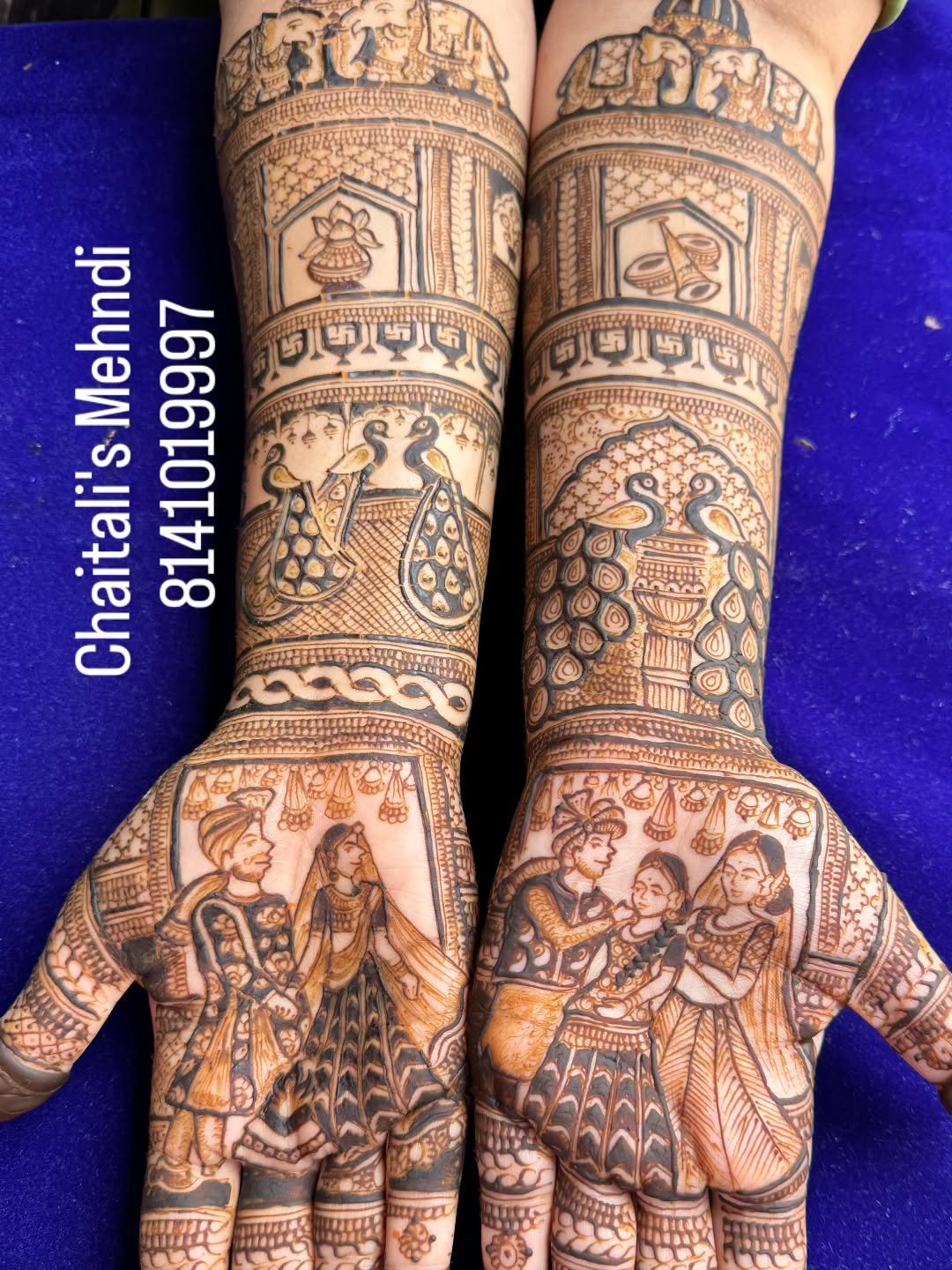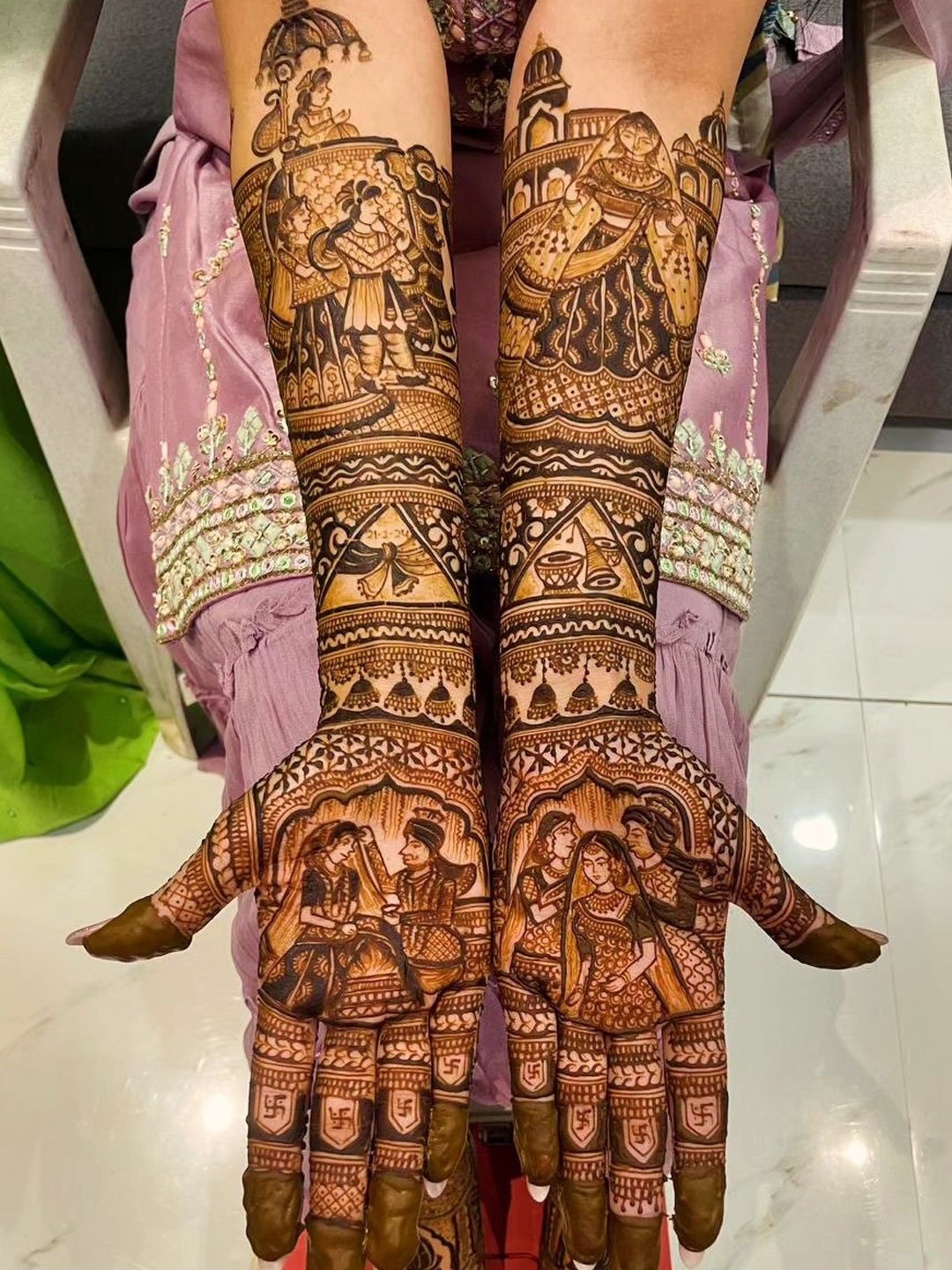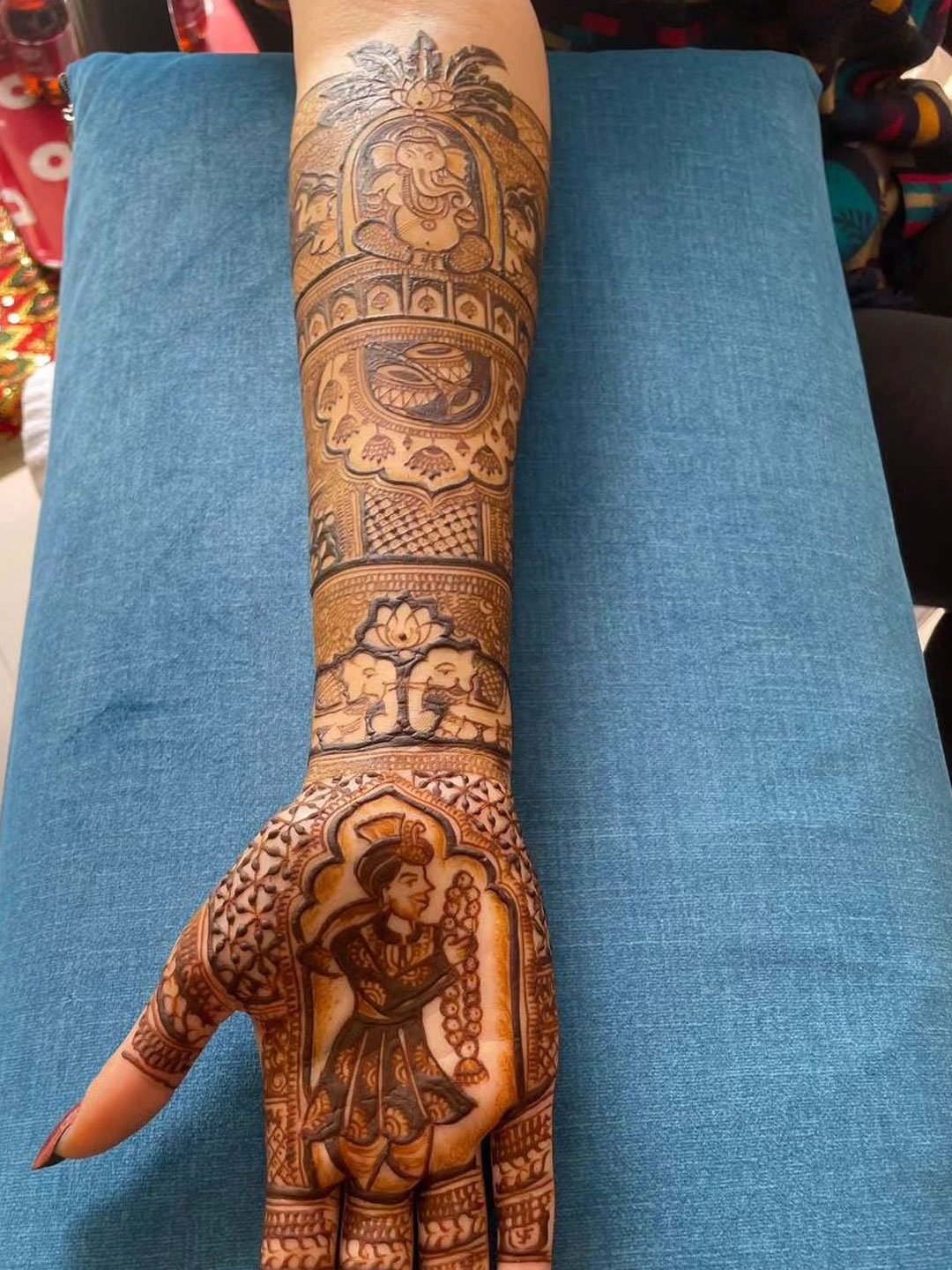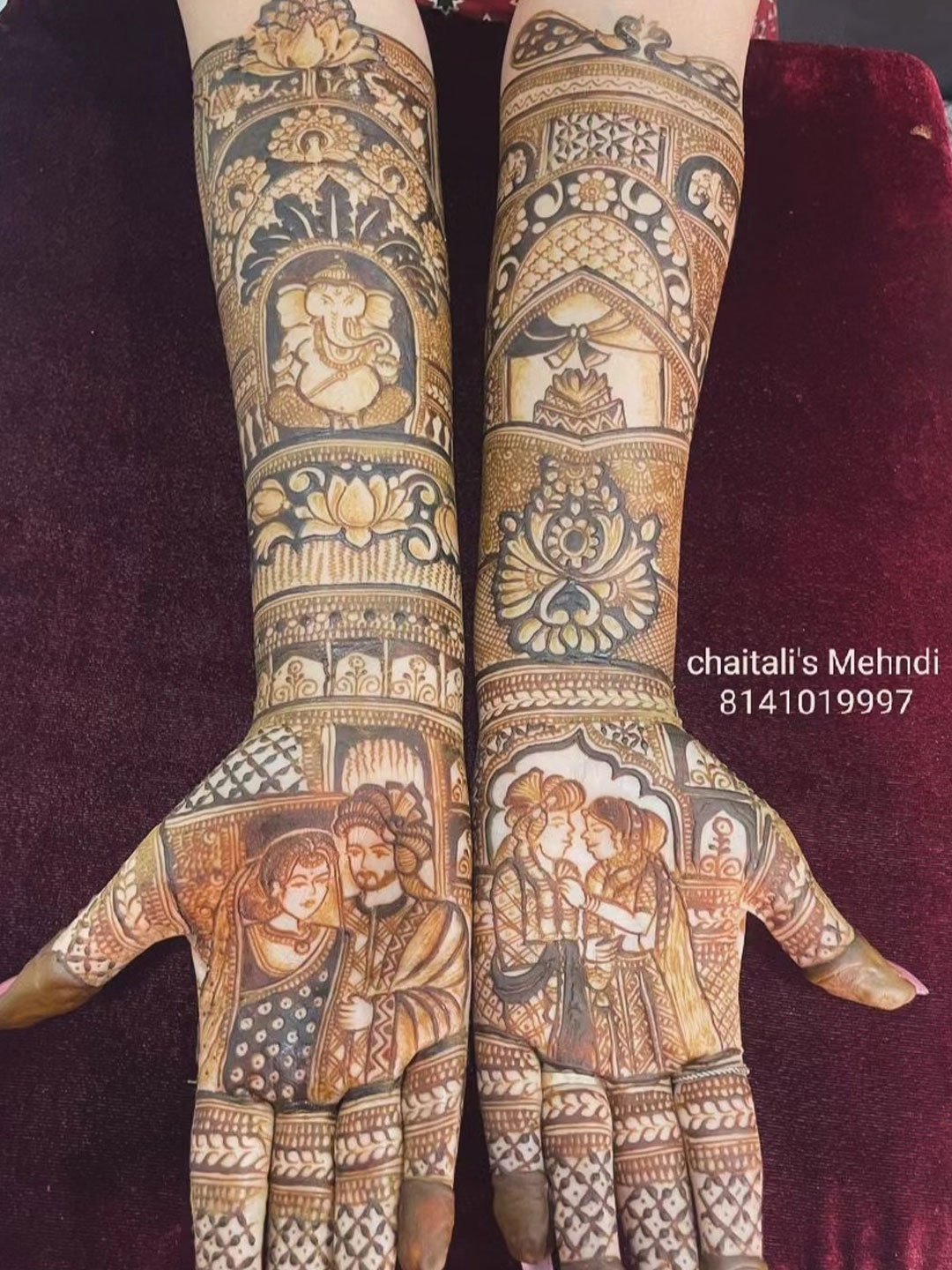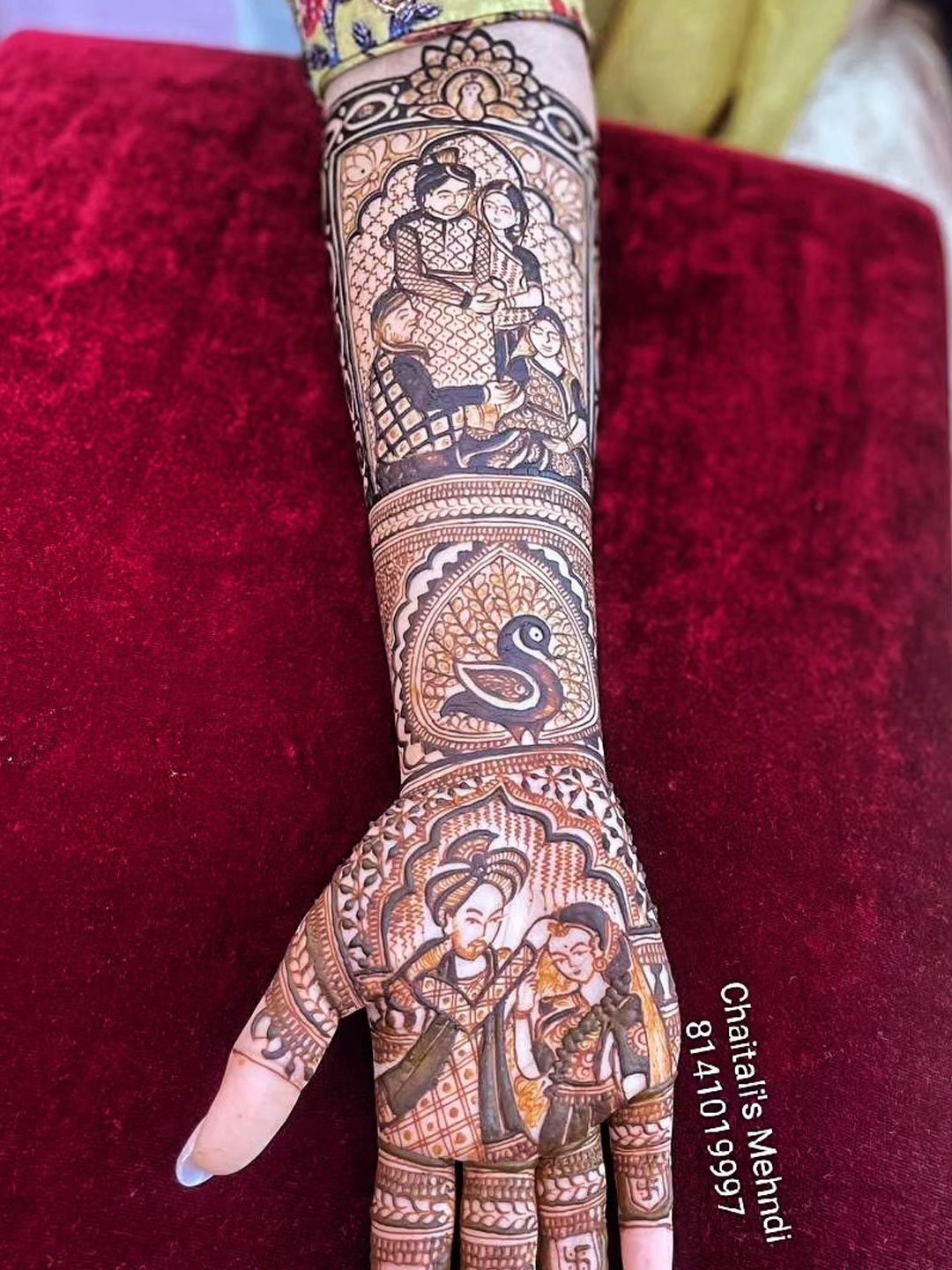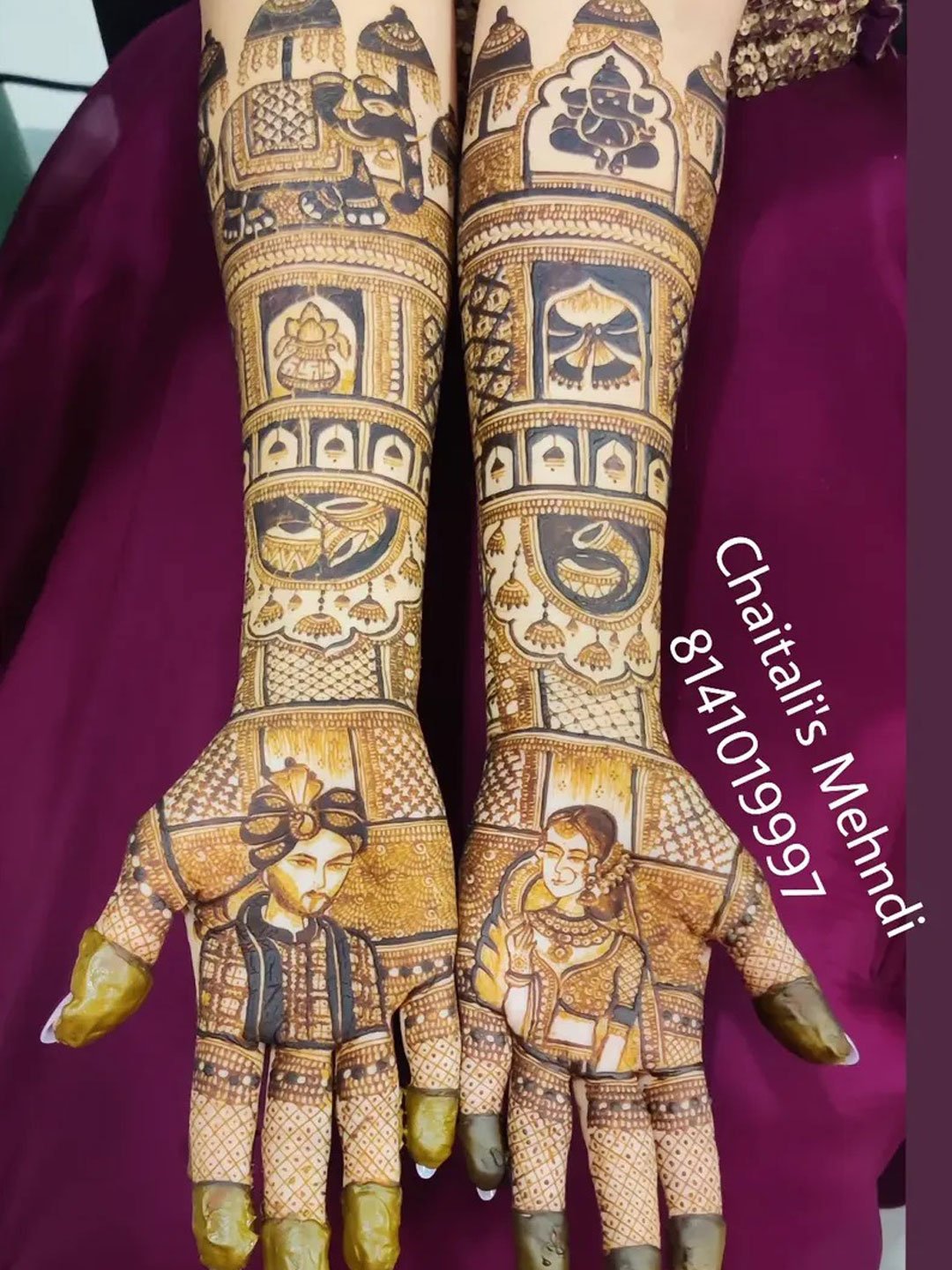
Ask a bride today what she wants on her hands, and you’ll rarely hear “just traditional” or “just modern” anymore. She wants both. She wants the paisleys her grandmother wore at her own wedding, sitting comfortably next to a clean geometric line she saw on Pinterest last week. That overlap — old motifs and new aesthetics sharing the same canvas — is what the industry has started calling fusion mehndi, and it’s quietly become the most requested style at every consultation we do.
Fusion mehndi isn’t a shortcut or a compromise. Done well, it’s harder to design than a purely traditional or purely modern pattern, because it asks an artist to understand why a motif exists before deciding how far it can be stretched. This post breaks down what fusion mehndi actually means, which combinations are working right now, and how to brief your artist so the final design feels intentional rather than accidental.
What Is “Fusion Mehndi,” Really?
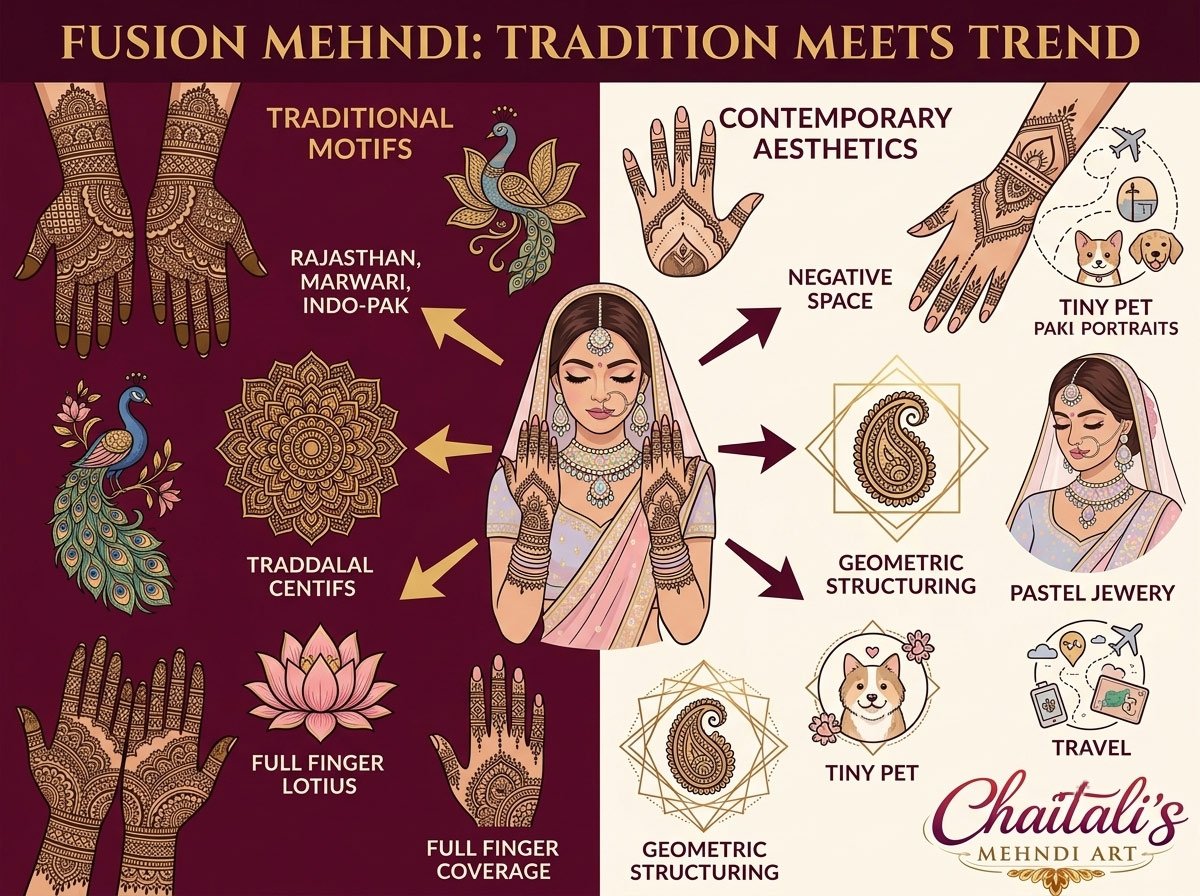
At its simplest, fusion mehndi takes recognizable elements from one or more traditional styles — Rajasthani, Marwari, Arabic, Indo-Pak — and reinterprets them using a contemporary visual language: negative space, asymmetry, fine linework, or minimal shading instead of dense fill.
It’s not the same as a purely modern design, which often abandons traditional motifs altogether in favor of abstract shapes. And it’s not the same as a purely traditional design, which follows established grid patterns — the checkerboard palm, the wraparound vine, the finger-tip trellis — with little deviation. Fusion sits in between. A bride might keep a traditional mandala as her palm’s centerpiece but let the rest of her hand breathe in open space instead of the customary wall-to-wall coverage. Or she might request an Arabic-style trail up the wrist that opens into a distinctly Indian floral burst at the center of the palm.
The result usually reads as “familiar, but not something you’ve seen before” — which, for a lot of modern brides, is exactly the point.
Why Fusion Designs Are Having a Moment
A few things are happening at once that explain the shift.
Brides are curating, not just choosing. Wedding planning today runs through mood boards, saved reels, and screenshots pulled from a dozen different sources — a cousin’s mehndi from three states away, an editorial shoot, a stranger’s Instagram post. Naturally, the references a bride brings in are already a mix of styles before she’s even sat down with an artist.
Outfits have changed. Contemporary bridal lehengas, pastel palettes, and minimal jewelry trends have shifted what “matching” mehndi looks like. A heavily traditional, ultra-dense pattern can visually compete with a delicate, structured outfit rather than complement it — so brides are asking for something that echoes tradition without overwhelming the rest of the look.
Destination and multi-day weddings. Many brides now have separate events — a mehndi ceremony, a cocktail night, a traditional pheras — each with its own aesthetic. Fusion designs let a bride keep one thread of visual identity (say, a signature motif) running across looks that otherwise range from fully traditional to distinctly modern.
Regional identity still matters. Even as trends shift, most brides don’t want to lose the cultural specificity of their mehndi entirely. Fusion is the middle path — it lets a bride say “this is still mine, still rooted in something,” while giving her room to personalize.
The Traditional Elements Worth Keeping
Not everything gets a modern makeover, and it shouldn’t. Certain traditional elements carry meaning or visual weight that a fusion design leans on for structure:
- The bridal centerpiece — usually a mandala, sun motif, or dense floral burst in the center of the palm. This anchors the entire hand and gives even a sparse, modern design a focal point.
- Finger detailing — full coverage on the fingers is one of the most recognizable markers of bridal mehndi specifically, as opposed to festival or party mehndi. Fusion designs often keep fingers traditionally dense even when the rest of the hand is minimal.
- Symbolic motifs — peacocks, lotus flowers, and hidden initials aren’t just decorative; they carry meaning brides still want represented, even inside a modern layout. We’ve written in more detail about how <a href=”https://www.bridalmehndiartist.in/peacock-motifs-in-bridal-mehndi-meaning-and-beauty/”>peacock motifs</a> continue to show up across very different design eras, and the same logic applies to almost every traditional symbol worth preserving.
- The wrist border — a defined boundary at the wrist (whether a bangle-style band or a scalloped edge) is often left untouched, since it frames the entire piece and gives an artist a clean line to work from when everything above it gets reinterpreted.
The Trend Elements Brides Are Borrowing
On the modern side, a handful of aesthetic choices show up again and again in fusion requests:
Negative space. Instead of filling every millimeter of the hand, fusion designs deliberately leave bare skin between elements. This alone is often what makes a design read as modern, even when every individual motif inside it is traditional.
Geometric structuring. Straight lines, triangles, and symmetrical grids replacing the flowing, organic curves typical of older styles. We covered this in depth in our piece on <a href=”https://www.bridalmehndiartist.in/geometric-bridal-mehndi-designs-for-a-modern-bride/”>geometric bridal mehndi</a> — many of the fusion requests we get are essentially a geometric framework built around one or two traditional focal motifs.
Jewelry-inspired linework. Mehndi that mimics the outline of rings, bracelets, and maang tikka chains has become a fusion staple, especially for brides who want their mehndi to visually “complete” their jewelry rather than exist separately from it. If this is a direction you’re considering, our post on <a href=”https://www.bridalmehndiartist.in/bridal-mehndi-with-finger-rings-and-jewelry-patterns/”>finger rings and jewelry patterns</a> goes deeper into how these designs are actually structured.
Fine-line Arabic influence. Bold, flowing floral trails — a hallmark of Arabic mehndi — are increasingly used as connective tissue between traditional Indian motifs, especially along the forearm or the sides of the palm, where dense traditional patterning would otherwise feel heavy.
Shading and gradient effects. Rather than flat, solid fill, some artists now use light shading techniques to give certain motifs (a lotus petal, a peacock’s tail) a subtle sense of depth — a technique borrowed from more contemporary illustrative mehndi styles.
Personal storytelling elements. Small, modern additions — a couple’s initials, a wedding date, a tiny motif referencing where they met — tucked into an otherwise traditional layout. This is one of the clearest markers of a fusion mindset: using tradition as the frame and personalization as the detail.
Popular Fusion Combinations Right Now
A few specific pairings have become popular enough that brides now request them by name during consultations:
Indo-Arabic fusion — dense traditional Indian centerpieces on the palm, transitioning into bold, sweeping Arabic floral trails up the arm. This is one of the most requested combinations because it balances intricacy on the hand with a bolder, more graphic statement on the arm.
Geometric-traditional fusion — traditional motifs (paisleys, mandalas, peacocks) placed inside geometric frames — triangles, hexagons, linear grids — instead of the usual free-flowing layout. It photographs exceptionally well, which is part of why it’s so popular for brides prioritizing their wedding shoot.
Minimalist-traditional fusion — a single, detailed traditional motif (often on the back of the hand) surrounded by generous negative space, sometimes with a delicate chain-like border. Popular with brides wearing simpler, contemporary outfits who don’t want their mehndi to visually outweigh the rest of their look.
Rajasthani-modern fusion — the bold, dense, checkerboard-style patterning associated with Rajasthani bridal mehndi, reinterpreted with cleaner lines and selective negative space rather than full coverage. Brides drawn to a heavier traditional look but wanting something slightly lighter often land here.
Fusion Mehndi for Different Body Parts
Fusion doesn’t have to (and often shouldn’t) look identical on every part of the body. It’s common for brides to go heavier and more traditional on the palms — where density reads as “bridal” — while allowing the design to open up and lean modern toward the fingers, wrist, or forearm.
The same logic extends beyond the hands. If you’re deciding how far to carry the design, our post on <a href=”https://www.bridalmehndiartist.in/foot-mehndi-designs-every-bride-needs-to-see/”>foot mehndi designs</a> is worth a look — feet are one of the easiest places to introduce a bold, modern motif without touching the more traditional detailing on your hands, since the two are rarely compared side by side in photographs.
And if you’re still deciding where the “main event” of your design should sit, it’s worth reading our breakdown of <a href=”https://www.bridalmehndiartist.in/front-hand-vs-back-hand-mehndi-which-should-you-choose/”>front-hand vs. back-hand mehndi</a> before your consultation — fusion designs in particular tend to look very different depending on which side carries the traditional density and which side carries the modern detailing.
How to Brief Your Mehndi Artist for a Fusion Look
The single biggest reason a fusion design ends up looking cluttered rather than intentional is a vague brief. “A bit traditional, a bit modern” gives an artist almost nothing to work with. A few things that help:
- Bring reference images from both ends of the spectrum, not just one blended example. Show your artist what “traditional” means to you and what “modern” means to you separately — it’s easier to merge two clear directions than to interpret one muddled one.
- Decide your non-negotiables early. Is there a specific motif — a peacock, a hidden initial, a family symbol — that has to be included? Naming this upfront means your artist can build the fusion elements around it rather than trying to squeeze it in later.
- Talk about density before design. Fusion is as much about how much negative space you want as it is about which motifs you choose. Decide roughly how “full” you want your hands to look before discussing individual patterns.
- Trust the transition zones. The hardest part of any fusion design is the point where traditional and modern elements meet — an experienced artist will often suggest a specific technique (a border, a shading gradient, a geometric frame) to make that transition intentional rather than abrupt. This is usually not the place to over-direct; let the artist’s experience guide the join.
- Do a trial if the design is ambitious. For anything combining multiple styles across a full bridal look, a trial session — even a partial one — helps confirm the visual balance before your wedding day, when there’s no room to adjust.
Things to Keep in Mind Before You Commit
Fusion mehndi photographs beautifully, but a few practical points are worth considering before you finalize a design:
- Application time can be longer, not shorter, than a purely traditional design — combining styles often requires more careful planning and precision, even with more negative space involved.
- Not every motif fuses well. Some traditional patterns are built on repetition and density; forcing them into a minimalist, open layout can weaken the motif’s visual impact rather than modernize it. A good artist will tell you honestly when a particular combination won’t hold up.
- Consider your full bridal timeline. If you have multiple events, decide which one gets the most elaborate fusion design and which ones can carry a simpler, related motif — this keeps your overall look cohesive without repeating the exact same design at every function.
Final Thoughts
Fusion mehndi works when it’s built on genuine understanding of both sides of the pairing — what a traditional motif means and why a modern technique earns its place next to it. It’s not about diluting tradition to make it trendier, or dressing up a modern design with a token traditional motif for authenticity. The best fusion pieces feel like they couldn’t have existed at any other point in time — rooted in something old, but unmistakably designed for the bride wearing them today.
At Chaitali’s Mehndi Art, fusion designs have become one of our most requested bridal services precisely because every bride’s mix of “traditional” and “modern” looks a little different. If you’re planning your wedding in Ahmedabad and want a design that blends your family’s traditions with your own personal style, we’d love to talk through it with you at your consultation.
Explore more design inspiration on our <a href=”https://www.bridalmehndiartist.in/blog/”>blog</a>, or get in touch to book your bridal mehndi consultation with Chaitali’s Mehndi Art.