Petite hands bring their own kind of charm to bridal mehndi — delicate, compact, and often better suited to fine, detailed work than brides realise. Yet many brides with smaller hands worry that intricate designs will look “too much,” or that a design copied straight from a tall, wide-palmed reference photo simply won’t translate the same way onto their hands. Neither concern is really about hand size. It’s about scale, proportion, and choosing patterns that were designed with a smaller canvas in mind.
The truth is that petite hands can carry almost any bridal mehndi style beautifully, from dense traditional coverage to airy minimalist work, as long as the scale of the motifs and the spacing between them are adjusted to suit the hand rather than borrowed unchanged from a larger one. This guide breaks down what actually changes when a hand is smaller, which design styles work especially well, and what to keep in mind when you sit down for your bridal mehndi consultation.
What Actually Changes on Petite Hands
A smaller hand doesn’t need a simpler design — it needs a rescaled one. The biggest mistake happens when a bride brings a reference photo taken from a much larger hand and asks for it to be replicated exactly. Motifs that were sized for extra palm space can end up crowding a petite hand, making the whole design feel heavy or cluttered instead of elegant.
Experienced artists work around three main adjustments for smaller hands: reducing the size of individual motifs so they sit comfortably within the available space, tightening the spacing between elements just slightly so the design doesn’t look sparse, and being more selective about how many focal points the design carries. A hand with less surface area simply can’t support five or six competing centrepieces the way a larger palm can — one strong focal point, supported by finer surrounding detail, tends to look far more polished.
None of this limits creativity. It simply means the artist is designing for the hand in front of them rather than resizing someone else’s template.
Design Principles That Flatter Petite Hands
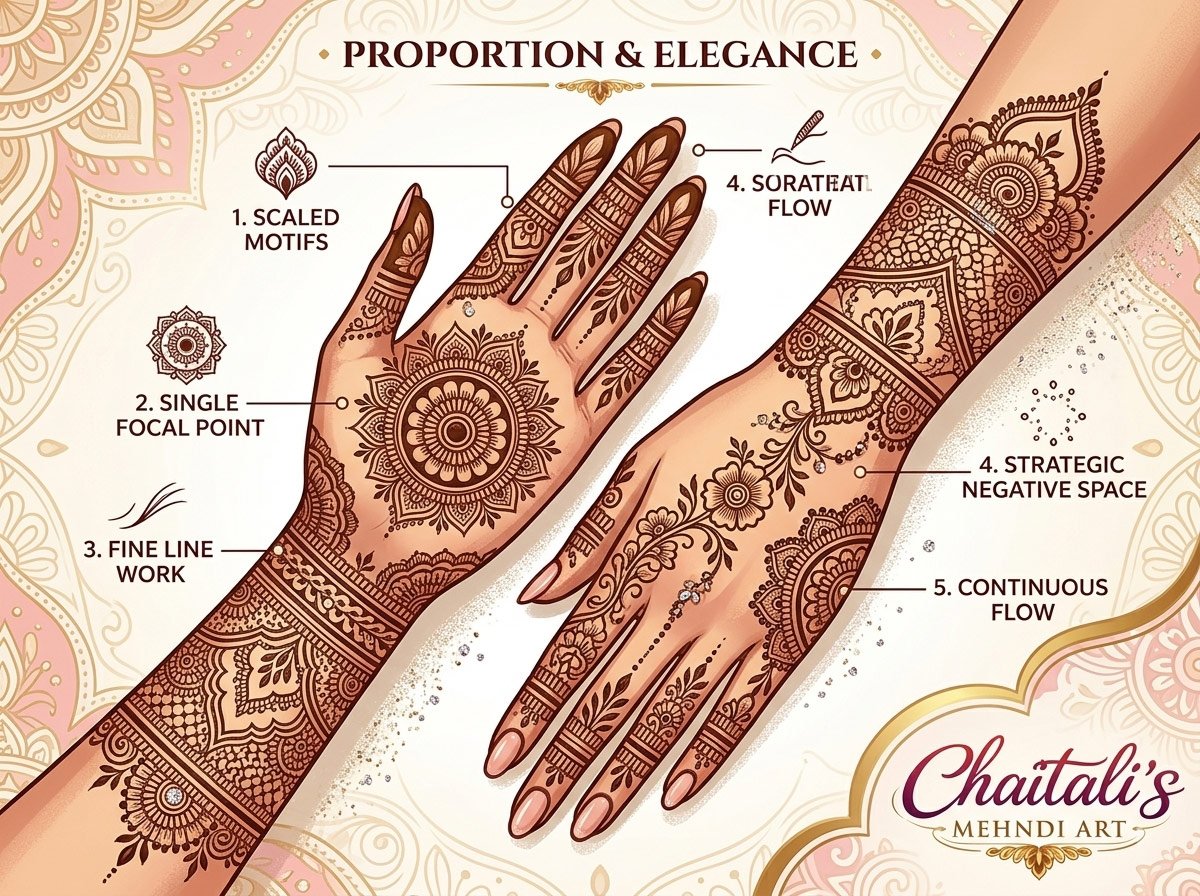
Finer line work throughout. Delicate, thin outlines read as intricate and refined on a smaller hand, while thick, bold linework can visually overwhelm the available space and make the design feel cramped rather than detailed.
One clear focal point. Rather than spreading several large motifs across the palm, back of hand, and wrist, choosing a single strong centrepiece — a mandala, a floral burst, or a portrait motif — gives the eye somewhere to land, with lighter supporting patterns filling the rest of the space.
Tighter, more compact motifs. Paisleys, florals, and jaali work scaled down slightly to suit the smaller canvas tend to look proportionate, whereas oversized motifs borrowed from a bigger hand can eat up space meant for balance and negative space.
Strategic negative space. Leaving small breathing gaps between clusters of detail keeps a petite hand looking elegant rather than densely packed, even when the overall coverage is still quite full.
Continuous flow over isolated blocks. Letting the design move smoothly from fingers to palm to wrist, rather than treating each section as its own separate motif, helps a smaller hand read as one cohesive composition instead of several competing pieces squeezed together.
Bridal Mehndi Designs Well Suited to Petite Hands
1. Compact Mandala Centrepiece
A single, well-proportioned mandala sized specifically to the palm becomes the natural focal point, with fine radiating linework extending toward the fingers and wrist so the whole design feels connected rather than isolated to one spot.
2. Fine Floral Trail Design
Small, delicate flowers and leaves trail across the back of the hand and up the fingers in a continuous line, offering rich detail without relying on any single oversized motif to carry the design.
3. Minimalist Wrist-to-Finger Vine
A slim vine pattern runs from the wrist through the fingers, using open space generously and keeping the motifs small and evenly spaced — a style that suits petite hands especially well since it doesn’t demand a wide palm to feel complete.
4. Scaled-Down Jaali Work
Net-like jaali patterns are reduced in scale so each cell of the lattice stays proportionate to the hand, giving the appearance of intricate coverage without the visual weight of larger geometric sections.
5. Single Paisley Palm Motif
One well-placed paisley, sized to sit comfortably within the centre of the palm, becomes the design’s anchor point, framed by finer detailing rather than being surrounded by several equally large competing shapes.
6. Delicate Fingertip Detailing
Fine, tapered patterns on each finger — small dots, thin vines, or narrow paisley tips — add richness to the overall look without requiring additional palm space, which is often the most limited area on a petite hand.
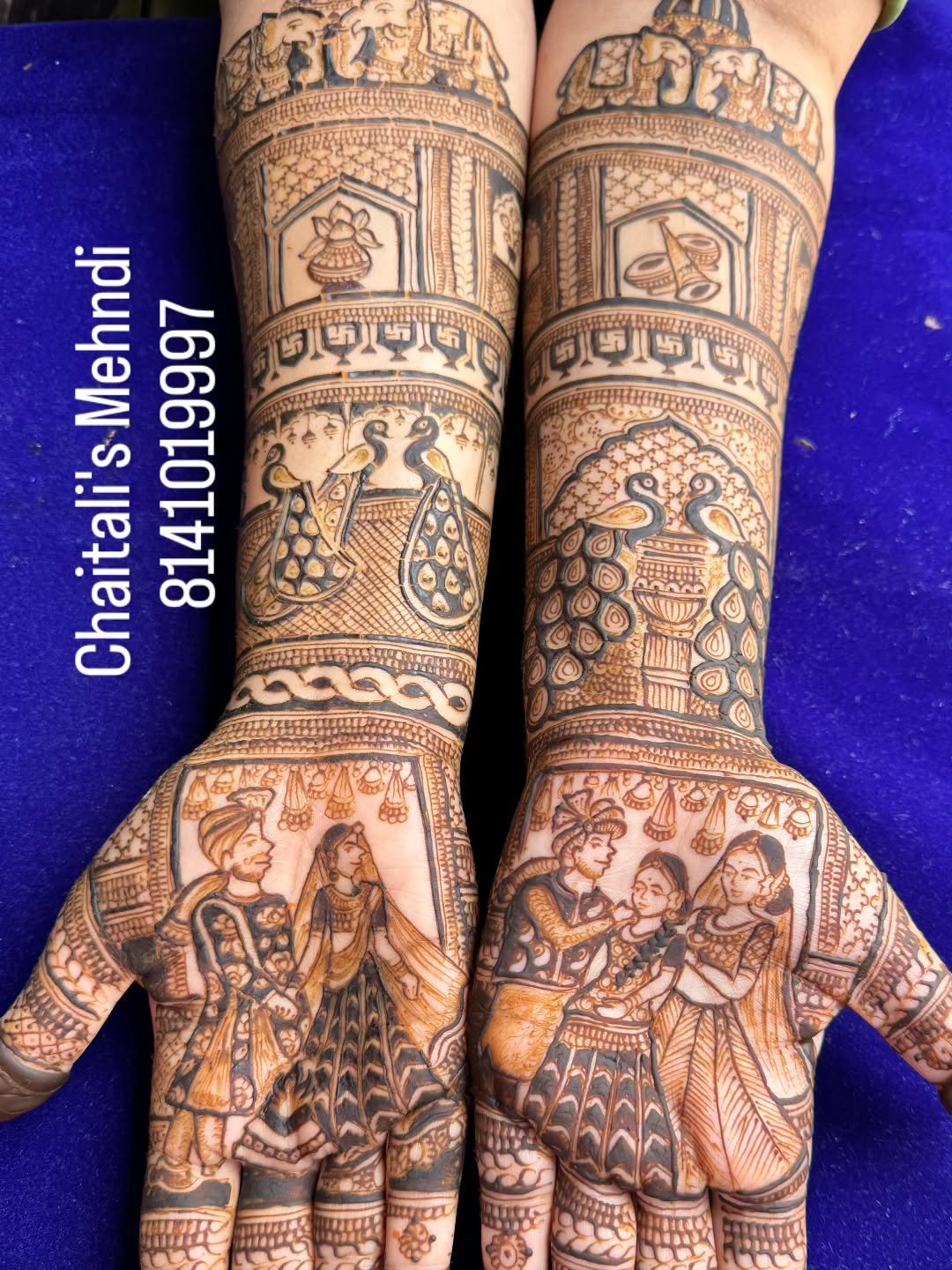
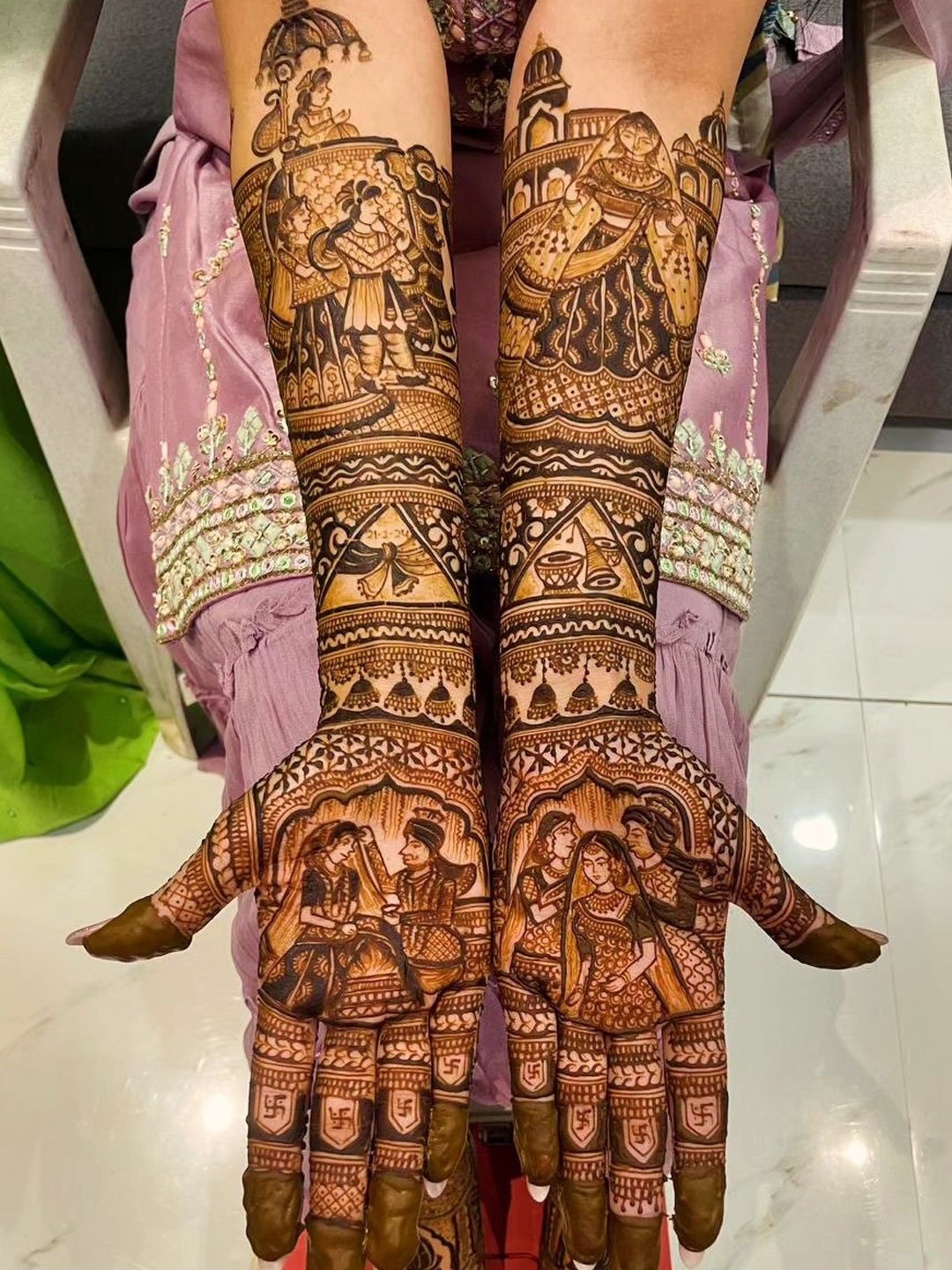
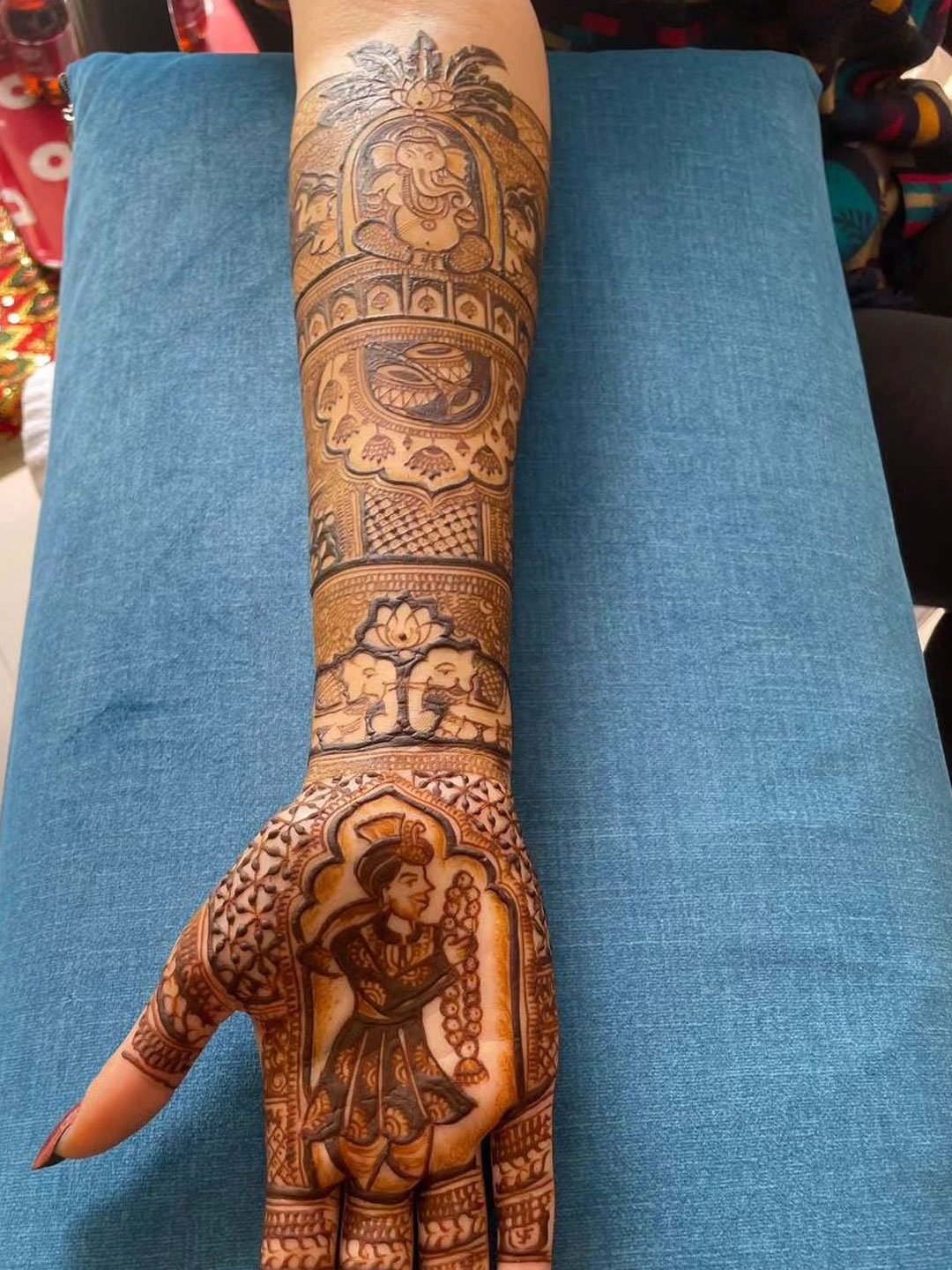
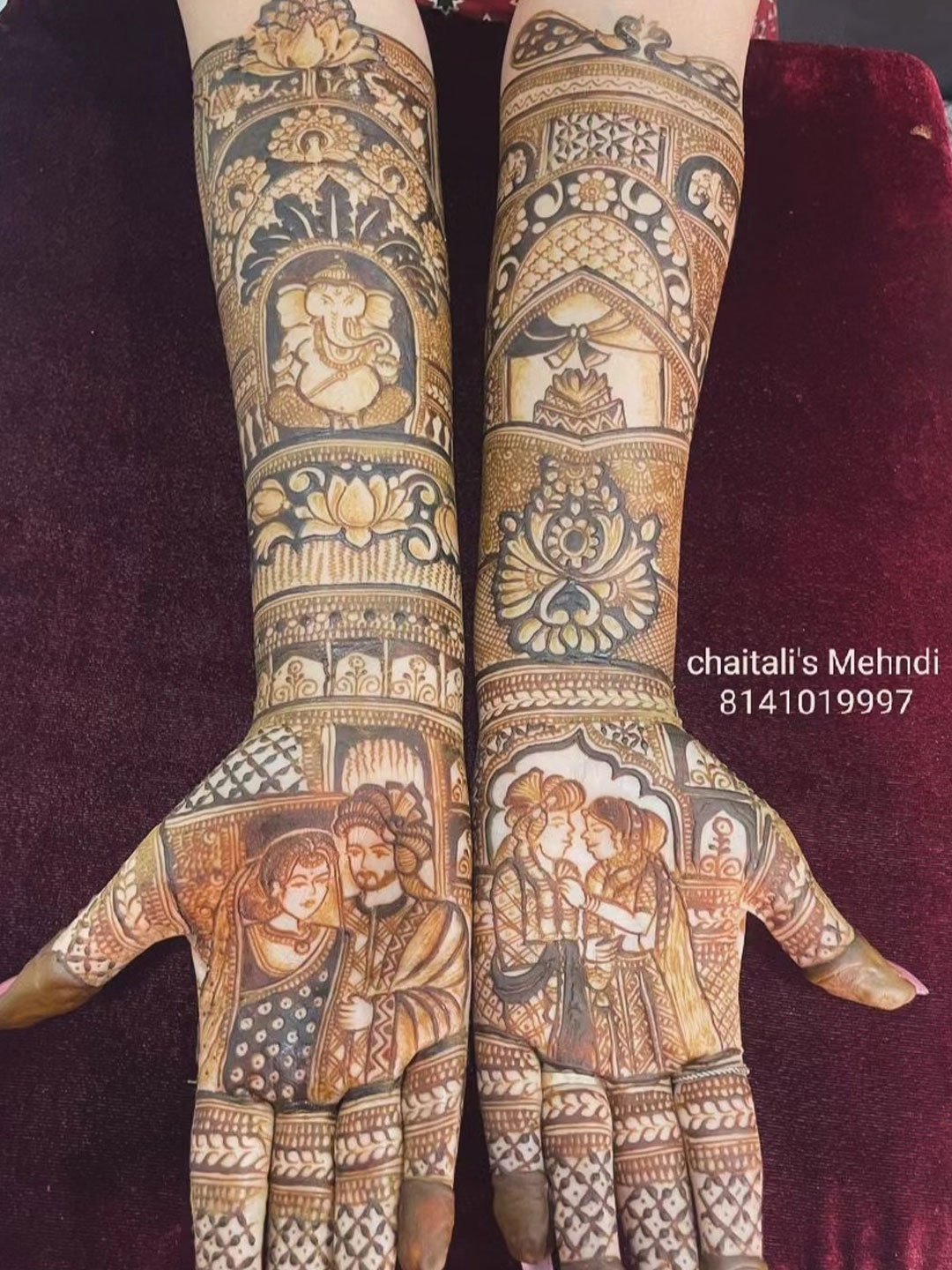
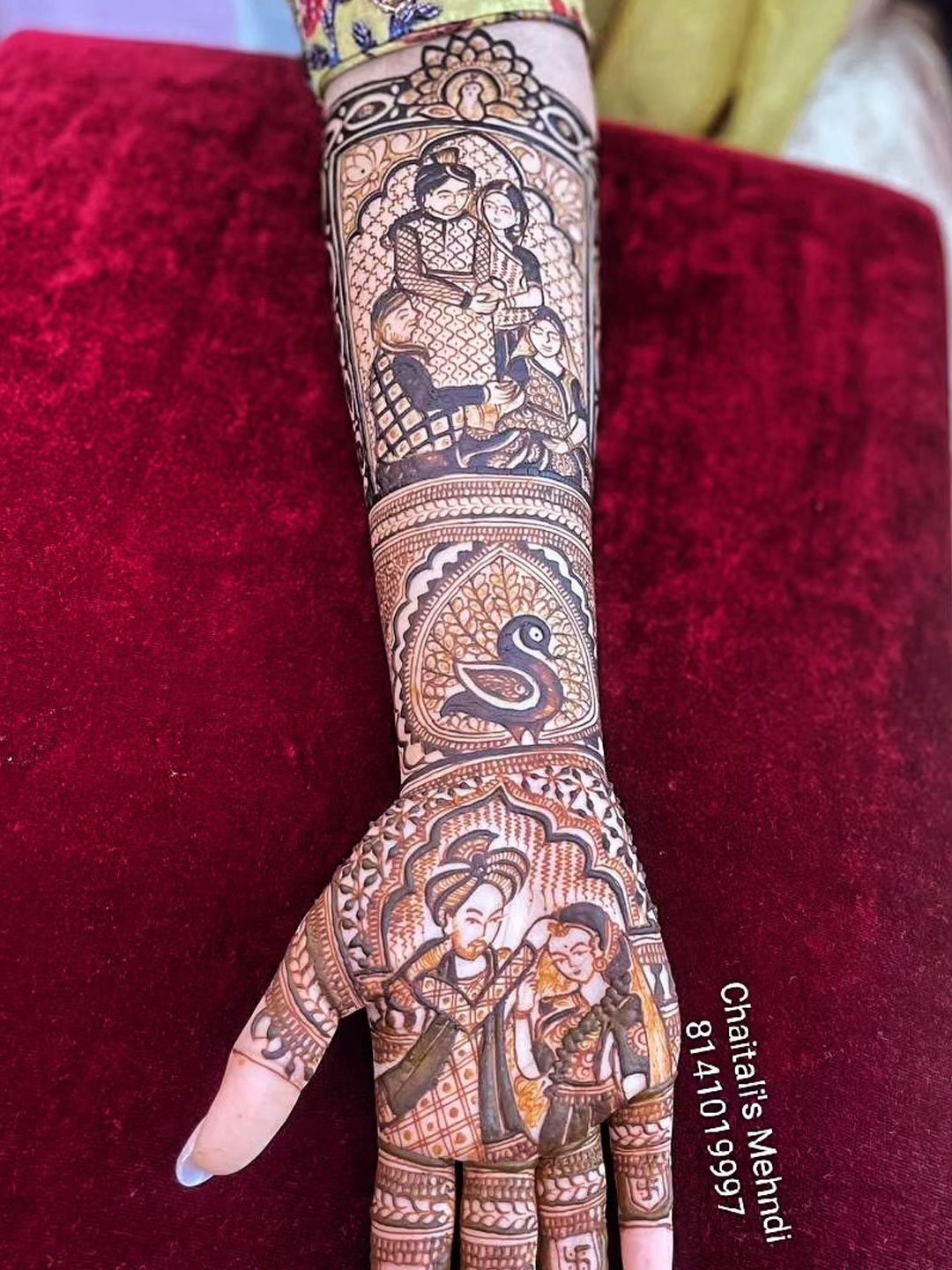
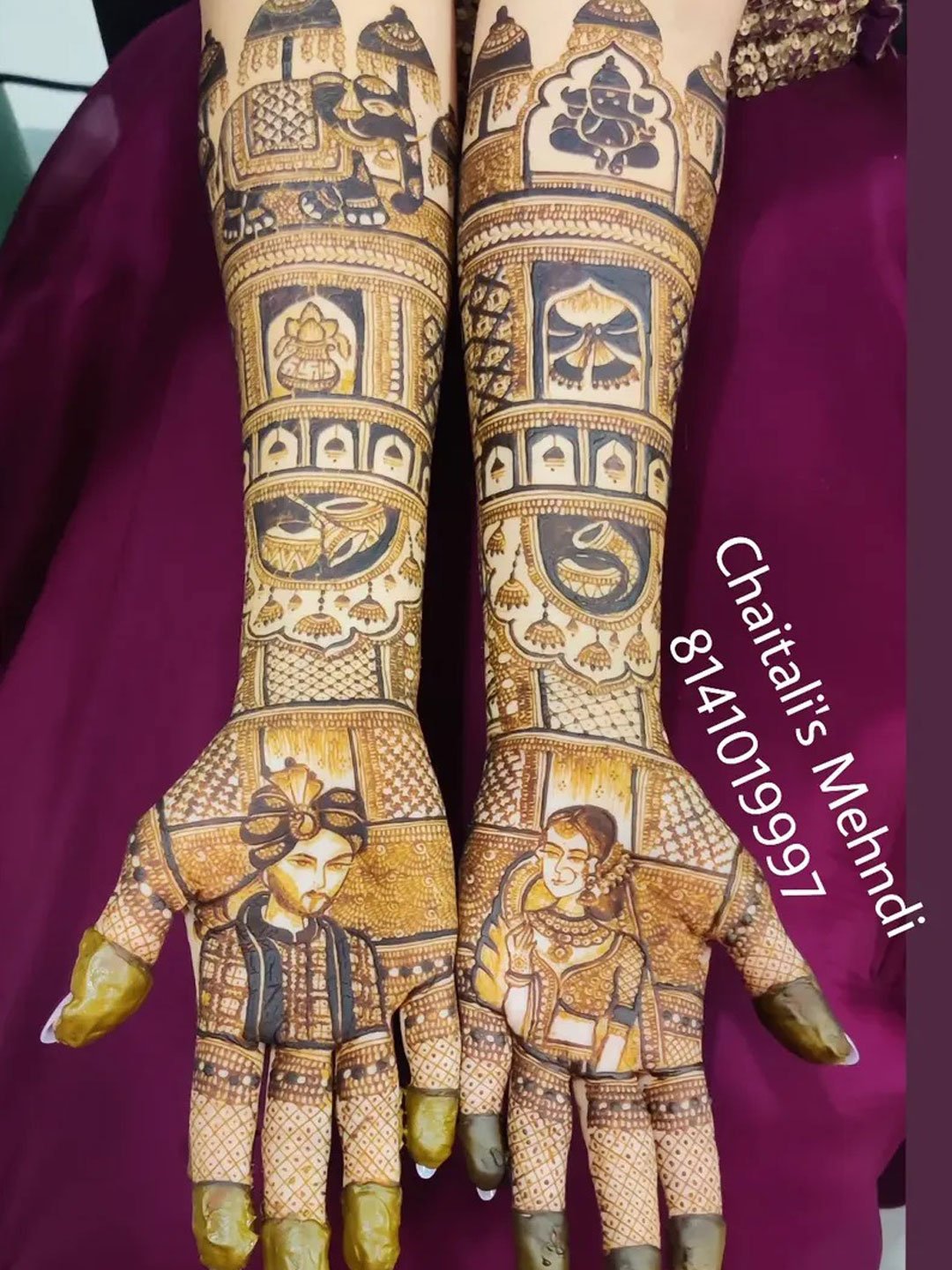
7. Compact Portrait Motif
For brides who want a portrait-style design, keeping the motif tightly scaled and framed by lighter surrounding linework allows the detail to remain sharp and legible rather than feeling squeezed onto a hand that’s too small for a larger version.
8. Bracelet-Style Wrist Design
A fine, detailed band at the wrist — worn like a mehndi bracelet — draws the eye to a naturally proportionate area of the hand and pairs beautifully with lighter finger and palm work above it.
9. Open Lace-Pattern Back-of-Hand
A light, lace-like pattern with generous negative space covers the back of the hand without dense fill, keeping the overall composition airy and well-suited to a smaller surface area.
10. Layered Fine-Line Geometric Design
Thin geometric linework, layered in small repeating sections rather than large blocks, offers a modern, structured look that stays proportionate even on a compact hand.
What to Be Mindful Of
A few design choices tend to work against petite hands, though none of them are strictly off-limits if a bride has her heart set on them.
Oversized centrepieces copied directly from larger reference photos often don’t leave enough surrounding space for balance, making the design feel disproportionate rather than intricate.
Too many competing focal points — several large motifs spread across the same small hand — can make the overall composition feel busy instead of cohesive.
Very thick, bold outlining throughout the design can visually shrink the available canvas further, since heavy lines take up proportionally more space on a smaller hand than they would on a larger one.
If a bride still prefers a bolder, denser look despite having smaller hands, that’s entirely possible — it simply calls for a more deliberate approach to scale and spacing rather than a straightforward copy of a design meant for a bigger hand.
Balancing Design Density With Hand Size
Since petite hands have less overall surface area, how the density of the design is distributed matters just as much as the individual motifs chosen.
A single strong focal point with lighter surrounding work tends to look more elegant than uniform heavy coverage across the entire hand, since it gives the design a clear visual hierarchy instead of competing for attention everywhere at once.
Extending design elements toward the wrist and forearm can be a useful way to add richness and visual length to the overall bridal look without overcrowding the hand itself, especially for brides who want a fuller finished appearance.
Matching finger and palm density helps the composition feel unified — heavily filled fingers paired with a sparse palm, or the reverse, can make a petite hand look unbalanced rather than proportionate.
Tips for Planning This With Your Artist
- Bring reference photos, but be open to resizing. It’s completely fine to bring inspiration images, but let your artist know you’re open to having the scale adjusted rather than replicated exactly, especially if the reference was on a noticeably larger hand.
- Ask to see the artist’s past work on similarly sized hands. Many portfolios showcase a range of hand shapes and sizes; asking specifically for examples closer to your own hand size gives a much clearer sense of how a design style will actually look.
- Discuss where you’d like the visual focal point to be. Deciding together whether the palm, back of hand, or wrist should carry the design’s main statement piece helps your artist plan proportions from the very first sketch.
- Talk about how far up the arm the design should extend. If you’re open to the design continuing past the wrist, this can be a useful way to add fullness without overcrowding the hand itself.
- Trust your artist’s judgement on scale. An experienced mehndi artist will naturally adjust motif size and spacing once they see your hand in person, so raising your priorities early lets them plan the entire composition around your hand from the start.
How Long Does Bridal Mehndi Take on Petite Hands?
Application time depends far more on design density and detail level than on hand size alone. A finely detailed design with lots of small motifs can, in some cases, take a similar amount of time as a bolder design on a larger hand, since precision work at a smaller scale still requires careful attention. That said, most petite-hand bridal designs fall within the same general timeframe as a standard bridal mehndi session, and your artist will be able to give you a clearer estimate once the design and desired coverage are finalised together.
Frequently Asked Questions
Do petite hands limit how detailed or dense my bridal mehndi can be? Not at all. Petite hands can carry very detailed, even densely covered designs — the key is scaling the motifs and spacing appropriately rather than avoiding intricate work altogether.
Should I choose a minimalist design just because my hands are small? Not necessarily. Minimalist designs suit petite hands well, but so do fuller, more traditional designs, as long as the motifs are proportioned correctly for the available space.
Will a design I saw online look the same on my hands? It will usually need some adjustment. Reference photos are a great starting point, but an experienced artist will typically resize and rebalance the design to suit your specific hand proportions rather than copying it exactly.
Can the design extend past my wrist if my hand feels too small for everything I want? Yes, extending detailing up the forearm is a common and effective way to add fullness to the overall bridal look without overcrowding the hand itself.
Does this apply to feet as well if I have small feet? Yes, similar scaling principles apply — motif size and spacing are adjusted to suit smaller feet in much the same way as they are for petite hands.
Final Thoughts
Petite hands are not a constraint in bridal mehndi — they’re simply a different canvas that calls for thoughtful scale and spacing rather than a direct copy of designs meant for larger hands. With the right focal point, finer linework, and a composition planned specifically around your proportions, a petite hand can carry a bridal mehndi design that looks every bit as rich, elegant, and complete as any other.
If you’re planning your wedding mehndi and want a design tailored specifically to your hand size and proportions, Chaitali’s Mehndi Art offers personalised bridal mehndi consultations, engagement mehndi, and portrait mehndi services across Ahmedabad. Get in touch to start planning a design built around exactly the hands you have.